
Last updated September 23, 2026
Insulation Cost Breakdown: The Pasadena Homeowner’s Reference for 2026
The lowest attic insulation quote you receive in Pasadena is almost certainly missing two line items: air sealing labor (typically $400-$900 in a pre-1980 home) and the blower-door test that would prove whether the air sealing worked. We’ve been in enough Pasadena attics, from Bungalow Heaven to the Caltech-adjacent streets near San Pasqual, to know that quotes with a 40 to 60 percent spread usually aren’t quoting the same job at all. This guide breaks down every cost component, assigns 2026 Pasadena-area ranges to each, and shows you how to reconstruct a comparable total from any bid you collect. For more guides & resources on attic insulation, explore our blog.
Quick Answer
Most complete attic insulation jobs in Pasadena run $2.80-$5.50 per square foot installed for blown-in materials, or $4.50-$8.50 for spray foam, with air sealing adding $400-$1,200 depending on attic complexity. A fully documented job including permits, HERS verification, and material disposal typically totals $3,500-$8,500 for a 1,500-square-foot Pasadena home. The variance comes from whether air sealing is priced as a separate line item or buried, omitted, or done poorly.
Table of Contents
- Why Pasadena Insulation Quotes Vary by 40-60 Percent
- Per-Square-Foot Costs by Material Type (2026 Pasadena Market)
- Existing Material Removal and Disposal Costs
- Air Sealing: The Hidden Line Item That Changes Everything
- Permits, HERS Rater Fees, and Pasadena Building and Safety
- Calculating Real Payback Using SCE Rate Data
- How to Read and Compare Insulation Quotes in Pasadena
- Common Mistakes to Avoid
- When to Call a Professional
- Frequently Asked Questions
Why Pasadena Insulation Quotes Vary by 40-60 Percent
In 2024 and 2025, we reviewed competitor quotes brought in by Pasadena homeowners for Topside Attic Insulation Pasadena home second opinions. The pattern was consistent: a $2,800 quote and a $5,200 quote for the same square footage, both claiming “complete attic insulation.” The difference wasn’t markup or greed. The lower quote excluded air sealing, excluded the blower-door test, used a lower R-value material, and assumed no existing material removal.
Pasadena’s housing stock amplifies this problem. The city has thousands of pre-1940 Craftsman bungalows with balloon framing, mid-century ranch homes with minimal original insulation, and 1970s-1980s construction with aging fiberglass batts. Each type presents different air sealing challenges. A 1920s Bungalow Heaven home has dozens of top plate penetrations, knob-and-tube wiring remnants, and chimney bypasses. A 1965 ranch in Hastings Ranch may have adequate insulation depth but failed seals around recessed can lights installed during a 1990s kitchen remodel.
The 2026 market has added pressure: LA County’s enhanced enforcement of CalGreen and Title 24 requirements means more jobs trigger permit and HERS verification costs that some contractors absorb silently and others ignore entirely. When a contractor omits these, the homeowner discovers the gap mid-project or fails inspection.
Here’s what a complete scope actually includes:
- Material and labor for specified R-value installation
- Air sealing of top plates, penetrations, can lights, and chimney chases
- Existing material removal and disposal (when required)
- Blower-door test - before and after - to verify air sealing performance
- Permit fees and HERS rater verification (when triggered by scope or code)
- Documented photo record of all work areas
Any quote missing one of these is not a comparable quote. It’s a different job.
Per-Square-Foot Costs by Material Type (2026 Pasadena Market)
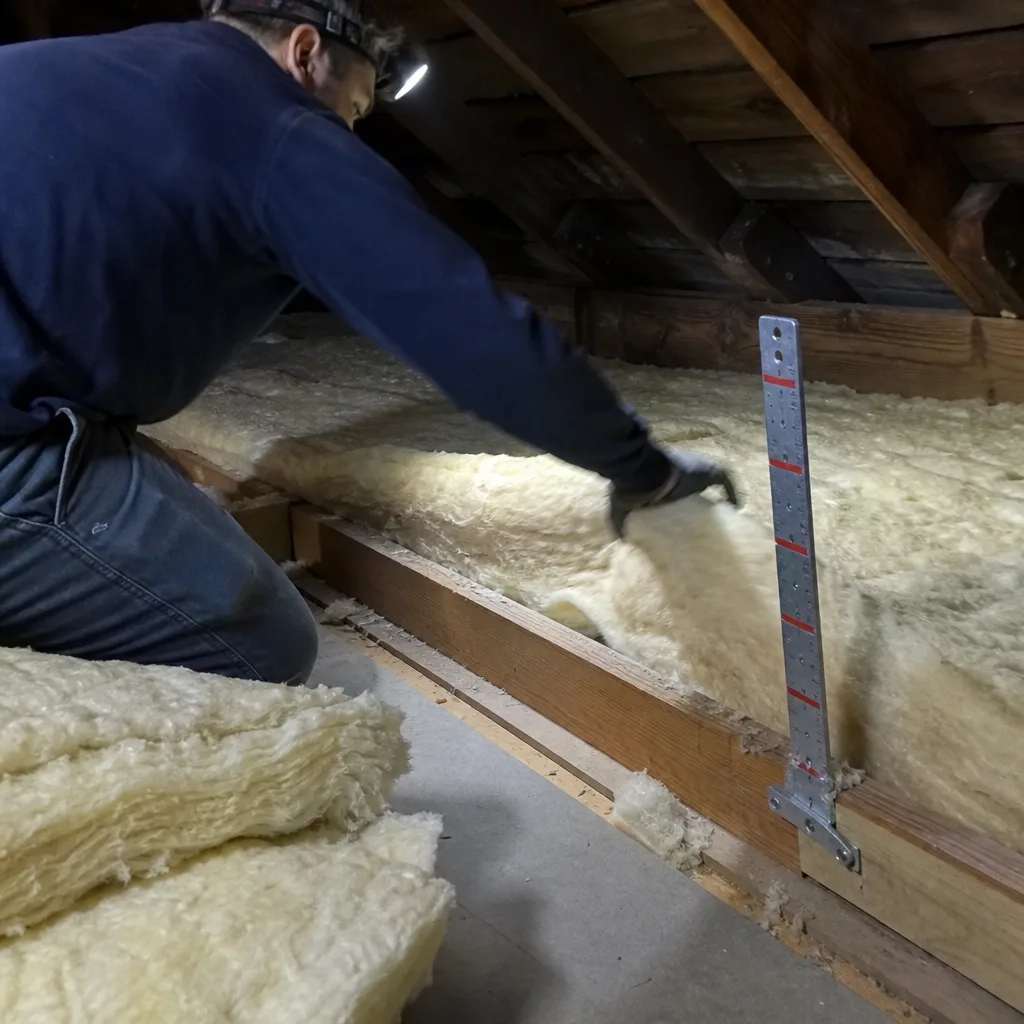
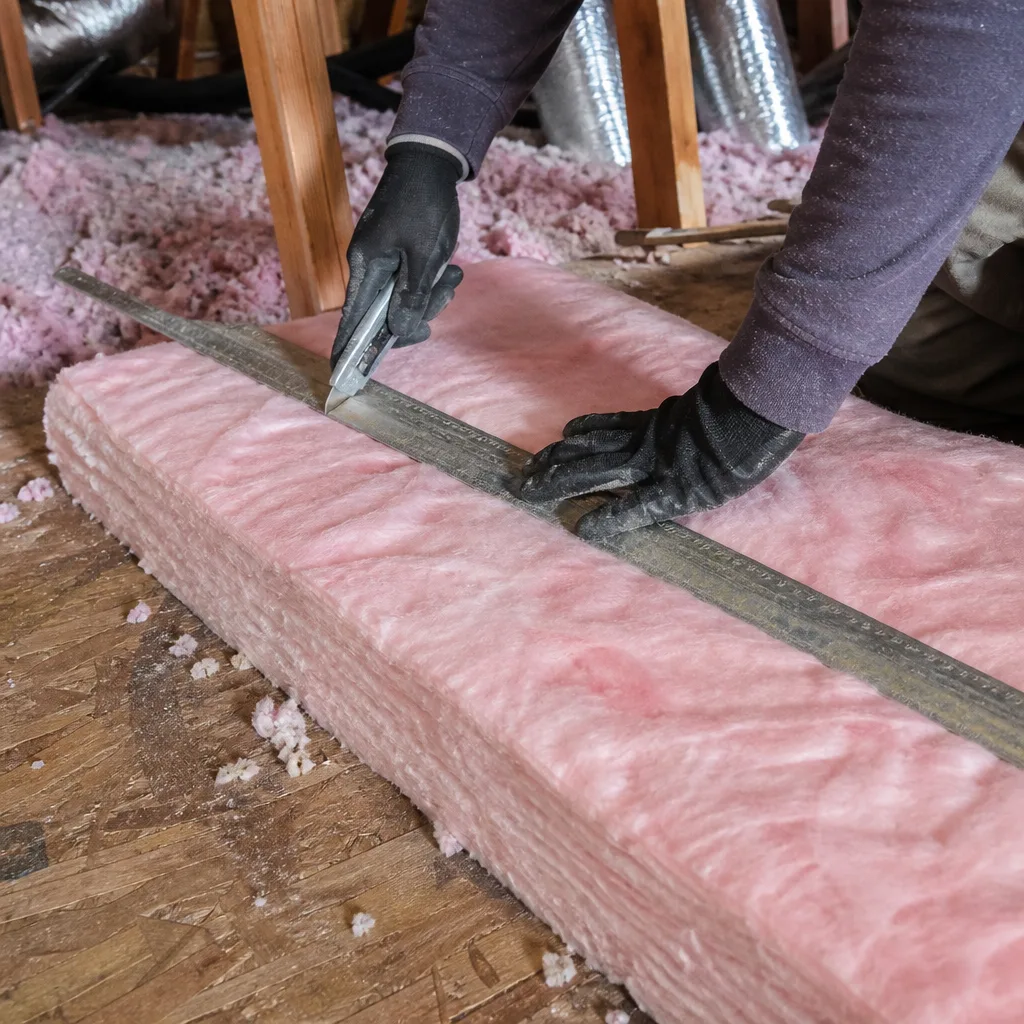
These are installed costs for attic application in the Pasadena market, based on our 2025-2026 pricing and verified against supplier increases from Johns Manville, Knauf, and Owens Corning. Prices assume a standard 1,500-square-foot attic with reasonable access and no unusual obstructions. Your actual quote may land outside these ranges based on access difficulty, existing conditions, and whether air sealing is included.
| Material | Installed Cost per Sq. Ft. | Typical R-Value Achieved | Best Application |
|---|---|---|---|
| Blown cellulose (GreenFiber or equivalent) | $2.80-$4.20 | R-38 to R-49 | Retrofit attics with air sealing completed first |
| Blown fiberglass (Knauf Jet Stream or Johns Manville Climate Pro) | $3.20-$4.80 | R-38 to R-60 | Attics requiring higher R-value per inch |
| Open-cell spray foam (Icynene or Demilec) | $4.50-$6.50 | R-13 to R-22 (per 3.5″) | Roof deck application, conditioned attics |
| Closed-cell spray foam | $6.50-$8.50 | R-19 to R-26 (per 3.5″) | Moisture-prone crawl spaces, rim joists, limited depth areas |
| Rockwool batts (Comfortbatt) | $3.50-$5.00 | R-23 to R-30 (per 5.5″) | Walls, knee walls, areas requiring fire resistance |
The material cost is only 35-45 percent of the total in most blown-in jobs. Labor, air sealing, setup, and cleanup dominate. In spray foam applications, material jumps to 55-65 percent of total cost due to chemical component pricing and specialized application equipment.
For a typical Pasadena retrofit, we see these total job ranges:
- Blown cellulose or fiberglass, attic only, with air sealing: $3,500-$5,500 for 1,500 sq. ft.
- Spray foam, roof deck, conditioned attic: $7,500-$14,000 for 1,500 sq. ft.
- Wall insulation (dense-pack cellulose or drill-and-fill): $2.50-$4.50 per sq. ft. of wall area, typically $4,000-$8,000 whole-house
These figures include our standard air sealing package. A quote without air sealing might appear 20-30 percent lower. It is not a savings.
Existing Material Removal and Disposal Costs
Not every Pasadena attic needs material removed. But many do, and the cost of skipping removal when it’s needed far exceeds the cost of doing it properly. Here’s when removal is required versus optional, and what it costs.
When Removal Is Required
- Asbestos-containing vermiculite: Common in pre-1980 homes, especially those with Zonolite-brand insulation. LA County requires licensed abatement. Cost: $8,000-$18,000 depending on attic size and containment complexity. Never add new insulation over vermiculite. The EPA maintains guidance; California adds HESIS notification requirements.
- Severely degraded cellulose or fiberglass: Water-damaged, rodent-contaminated, or compacted below half its original depth. In Pasadena’s occasional heavy rain years, roof leaks we discover during inspection have saturated insulation against top plates. Cost for standard removal and disposal: $1.20-$2.00 per sq. ft.
- Preparation for spray foam: Roof deck foam requires a clean substrate. Existing batts or loose fill must be removed. Cost: $1.00-$1.80 per sq. ft.
- Knob-and-tube wiring present: California electrical code prohibits burying active knob-and-tube under insulation. If the wiring is still live, an electrician must replace it before insulation proceeds. We coordinate this; the insulation removal exposes the wiring for inspection. Removal cost as above; electrical separate.
When Removal Is Optional
If existing fiberglass batts are dry, reasonably intact, and not compressed, we can often air seal over them and add blown material to achieve target R-value. This saves $1,000-$2,500 on a typical job. We document the condition with photos and note it in the written scope. Under Haven Standard: Have it in writing, you see our recommendation and the reasoning before deciding.
Disposal in Pasadena runs through LA County waste streams. Non-hazardous insulation debris goes to permitted construction and demolition facilities. We handle transport and disposal documentation; it’s included in our removal line item, not a surprise add-on.
Air Sealing: The Hidden Line Item That Changes Everything
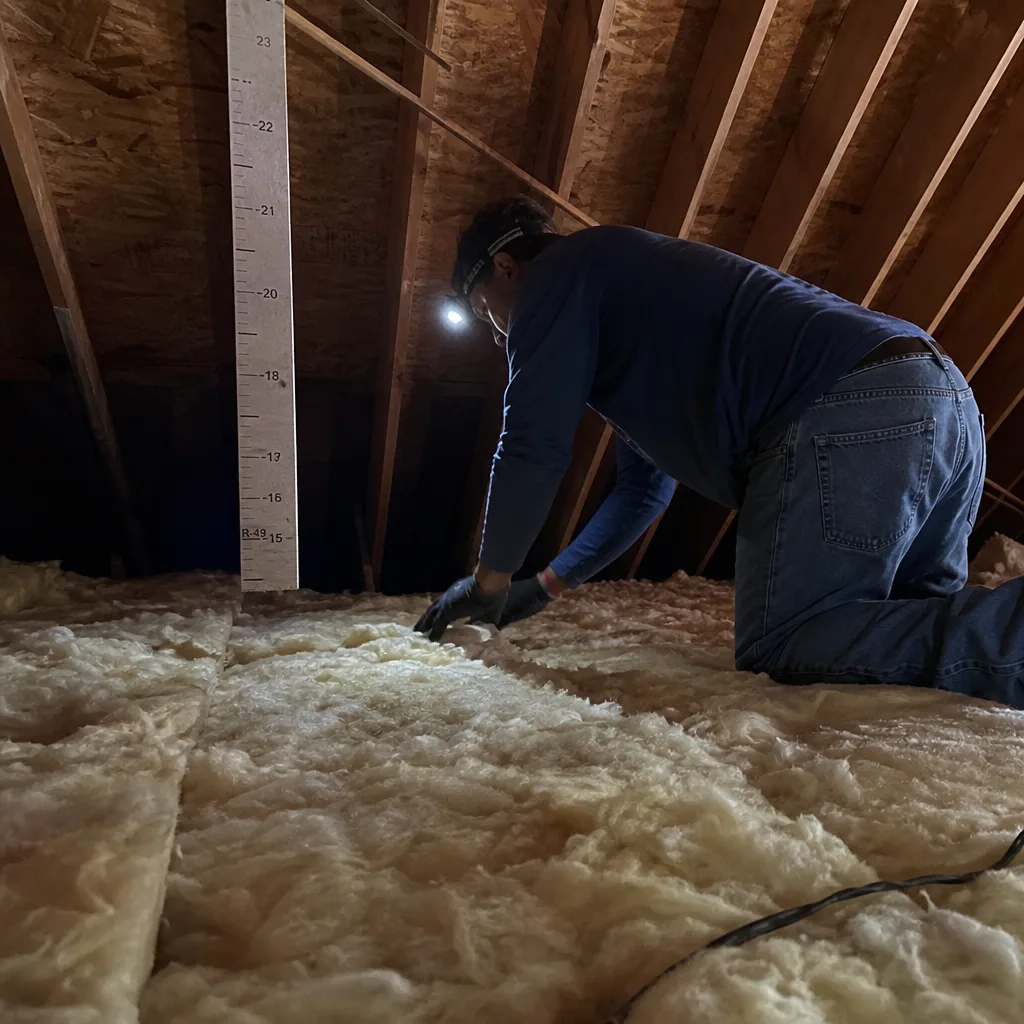
This is where most quotes diverge. Air sealing is the preparation work that happens before insulation goes in: sealing top plates where walls meet the attic floor, boxing out can lights with fire-rated covers, sealing around chimney chases, plumbing vents, electrical penetrations, and the attic access hatch itself. Without it, you’re blowing insulation over a sieve.
In a 1,500-square-foot Pasadena attic, a competent air sealing job requires 6-12 labor hours depending on construction era and complexity. Here’s how that breaks down:
- Pre-1940 home (Bungalow Heaven, Garfield Heights): 10-16 hours. Balloon framing, multiple chimney penetrations, irregular top plates, often knob-and-tube remnants. Cost: $700-$1,200.
- 1945-1975 ranch or tract home (Hastings Ranch, Chapman Woods): 6-10 hours. Standard platform framing, fewer penetrations, but often original can lights and bathroom vents. Cost: $500-$900.
- 1975-1995 home (various neighborhoods): 6-8 hours. Better original sealing but aging materials, often prior DIY work of questionable quality. Cost: $400-$750.
The blower-door test - a pressurization reading that shows, in one number, how much air your building envelope is losing - is how we verify the work. A typical pre-sealing reading in an unsealed Pasadena home runs 3,500-6,000 CFM50. After proper air sealing, we target 50 percent reduction or better, often landing at 1,800-2,800 CFM50. We publish these numbers on every applicable job. You receive the before-and-after readings in writing, with the photo record.
A quote that includes “air sealing” as a vague single line item with no blower-door verification is not a quote you can compare. Ask: how many hours of sealing labor? What penetrations are included? What CFM50 target? If the contractor cannot answer, the scope is undefined.
We will never blow insulation over an unsealed attic floor. Sealed first, then insulated. In that order. This is not an upsell. It is the prerequisite for the insulation to perform as rated.
Permits, HERS Rater Fees, and Pasadena Building and Safety
Pasadena Building and Safety operates under LA County’s broader Title 24 and CalGreen framework with city-specific fee schedules. Not every insulation job requires a permit. Many should have one, and some trigger HERS verification that cannot be self-certified by the installing contractor.
When Permits Are Required
- New construction or addition: Always. Insulation is part of the building envelope inspection sequence.
- Alteration exceeding 50 percent of ceiling or wall area: Typically requires permit. A complete attic replacement usually qualifies.
- Change of insulation type in conditioned space: May trigger if spray foam is applied to roof deck, converting vented to conditioned attic.
- Work in historic districts or landmark properties: Pasadena’s Historic Preservation Commission may require additional review for exterior-visible changes or certain building types.
Pasadena Building and Safety Fee Schedule (2026)
Based on current published schedules, permit fees for residential insulation work typically run:
- Minor alteration permit (insulation only): $180-$350
- Plan check fee (if required): $120-$200
- Inspection fees: $85-$150 per inspection (typically one or two)
Total permit package for a standard attic insulation job: $300-$600. Some contractors roll this into their total; others itemize. We itemize. Under Haven Standard: Have it in writing, you see every cost before work starts.
HERS Rater Requirements
HERS - Home Energy Rating System - verification is required for:
- Title 24 compliance on new construction and major alterations
- Utility rebate programs (SCE’s Energy Upgrade California incentives)
- Some mortgage-related energy improvement financing
HERS rater fees in the Pasadena market run $350-$650 for a standard attic job, depending on rater availability and whether multiple tests are needed. The rater is independent; they do not work for the insulation contractor. This is a feature, not a problem. Third-party verification prevents the conflict of interest that arises when the same company installs and certifies.
We coordinate HERS scheduling and include the fee in our written scope when required. We do not mark it up. The invoice comes from the rater directly.
Calculating Real Payback Using SCE Rate Data
National average payback figures are useless in Pasadena. Southern California Edison’s rate structure, Pasadena’s specific heating and cooling degree days, and local solar penetration all shift the math. Here’s how to calculate actual payback for a representative home.
The Representative Pasadena Home
1,800 square feet, built 1962, original R-11 attic insulation, gas furnace and central air. Annual heating and cooling: approximately 6,500 kWh and 450 therms. SCE’s current tiered rate schedule (as of early 2026) runs roughly $0.28-$0.42 per kWh depending on tier and time-of-use plan. Gas through SoCalGas: approximately $1.80-$2.40 per therm, variable with commodity pricing.
Step-by-Step Payback Calculation
- Establish baseline energy use: Review 12 months of SCE and SoCalGas bills. For our representative home: $2,400 annual heating/cooling portion of total bill (typically 45-55 percent of total in this climate).
- Model savings from air sealing + insulation upgrade: A proper job, verified by blower-door, typically reduces envelope-driven heating and cooling load by 20-35 percent. Conservative estimate: 25 percent.
- Calculate annual dollar savings: $2,400 × 0.25 = $600/year. At current SCE rates with expected annual increases of 4-6 percent, this escalates.
- Apply net job cost: Complete job at $4,800 (mid-range for blown fiberglass with air sealing, 1,500 sq. ft. attic). Less any rebates: SCE’s insulation rebates vary by program year; check current availability. Typical 2025-2026 rebate: $0.15-$0.30 per sq. ft. for attic insulation meeting R-38+.
- Simple payback: $4,800 ÷ $600 = 8 years. With 5 percent annual rate escalation and no rebate: approximately 6.5 years. With rebate and escalation: 5.5-6 years.
This assumes no other envelope improvements. If you also seal ductwork (common in Pasadena’s aging systems), payback shortens further. We measure duct leakage with our blower-door setup and can quantify that separately.
The key point: payback calculations that use national average electricity rates of $0.14/kWh understate your savings by half. Use your actual SCE bills.
How to Read and Compare Insulation Quotes in Pasadena
Given the variance problem, here’s a systematic method to normalize any set of quotes.
The Reconstruction Checklist
- Verify square footage: Measure yourself or compare to property records. Some contractors use conditioned floor area; others use attic floor area. These differ by 10-20 percent. Insulation is priced on attic floor area.
- Confirm R-value and material: “R-38 cellulose” is not interchangeable with “R-38 fiberglass.” Density, coverage, and air sealing interaction differ. Get the specific product name.
- Locate air sealing: Is it a separate line item with hours specified? Is it included in a lump “labor” figure? Is it absent? If absent, add $600-$1,000 to that quote for comparison.
- Check for blower-door testing: Before-and-after readings should be specified, not just “we test.” Ask for the CFM50 target.
- Identify removal and disposal: Is existing material addressed? Is asbestos testing mentioned for pre-1980 homes?
- Add permit and HERS: Are these included, excluded, or not mentioned? If not mentioned, they may be skipped illegally or added as change orders.
- Review documentation: What do you receive? A written scope, written warranty, photo record? Or just a final invoice?
After reconstruction, quotes usually converge to a 10-20 percent range, not 40-60 percent. The outlier low quote typically lacks $1,200-$2,500 in necessary scope.
We provide Attic Insulation in Pasadena with every component itemized in writing before work starts. No exceptions. Haven Standard Clause 1: flat price, written scope, written warranty before anyone lifts a tool.
Common Mistakes to Avoid
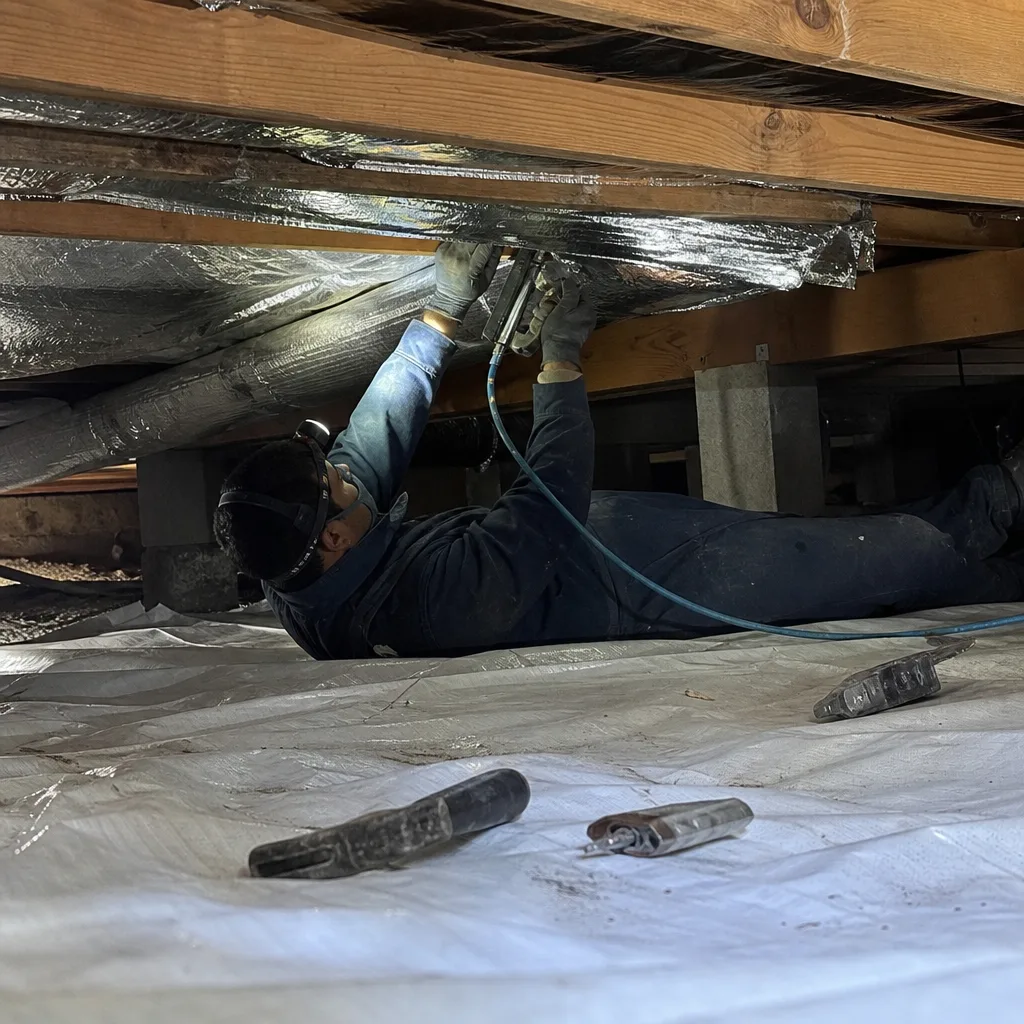
- Comparing quotes without reconstructing the scope: A $3,200 quote and a $5,400 quote are not comparable until you verify both include air sealing, testing, and proper R-value. The lower number often costs more in the long run.
- Adding insulation over unsealed air leaks: This is the most common error we correct in Pasadena homes. The new insulation performs poorly, and you cannot access the leaks later without removing what you just paid for.
- Ignoring vermiculite or asbestos: In the Linda Vista area and other pre-1960 neighborhoods, we’ve found vermiculite that homeowners assumed was “just old insulation.” Testing costs $150-$300. Skipping it risks health exposure and legal liability at resale.
- Accepting a quote with no written scope: Verbal promises about “we’ll seal everything up” evaporate when the crew is rushing to finish. Under Haven Standard: Have it in writing, the scope is the contract.
- Choosing material based on price alone: Blown cellulose and blown fiberglass perform similarly when installed correctly with air sealing. Spray foam costs more but solves specific problems (roof deck application, moisture control). Match material to application, not budget alone.
- Neglecting to claim available rebates: SCE programs change, but insulation rebates have been consistent. A $400 rebate left unclaimed extends payback by nearly a year. We help identify current programs.
- Hiring based on speed of availability alone: A crew available tomorrow may be available for a reason. In Pasadena’s peak summer season, quality contractors book 2-4 weeks out. Rush jobs skip preparation.
When to Call a Professional
Call when your energy bills are rising without rate increases, when rooms have persistent temperature differences, when you can see floor joists in your attic, or when you’re considering any roofing or HVAC work that will disturb the attic. These are the moments when envelope improvements compound with other upgrades.
Call if you’ve received multiple quotes that don’t align. We offer a Free Second Opinion on any written estimate - bring us a competing quote and we’ll read it with you, line by line, and show you what’s included, what’s missing, and what questions to ask.
Spray Foam Insulation in Pasadena and other specialized applications require assessment of moisture conditions, structural loading, and fire separation that DIY evaluation cannot reliably cover. The building code is specific; the material is unforgiving of poor application.
Topside Attic Insulation Pasadena offers free estimates in Pasadena. A live person answers calls 24/7. Call (213) 816-5351 to schedule. You’ll receive a written price before any work starts, a documented photo record when the crew leaves, and on applicable jobs, before-and-after blower-door numbers that prove what you paid for.
Frequently Asked Questions
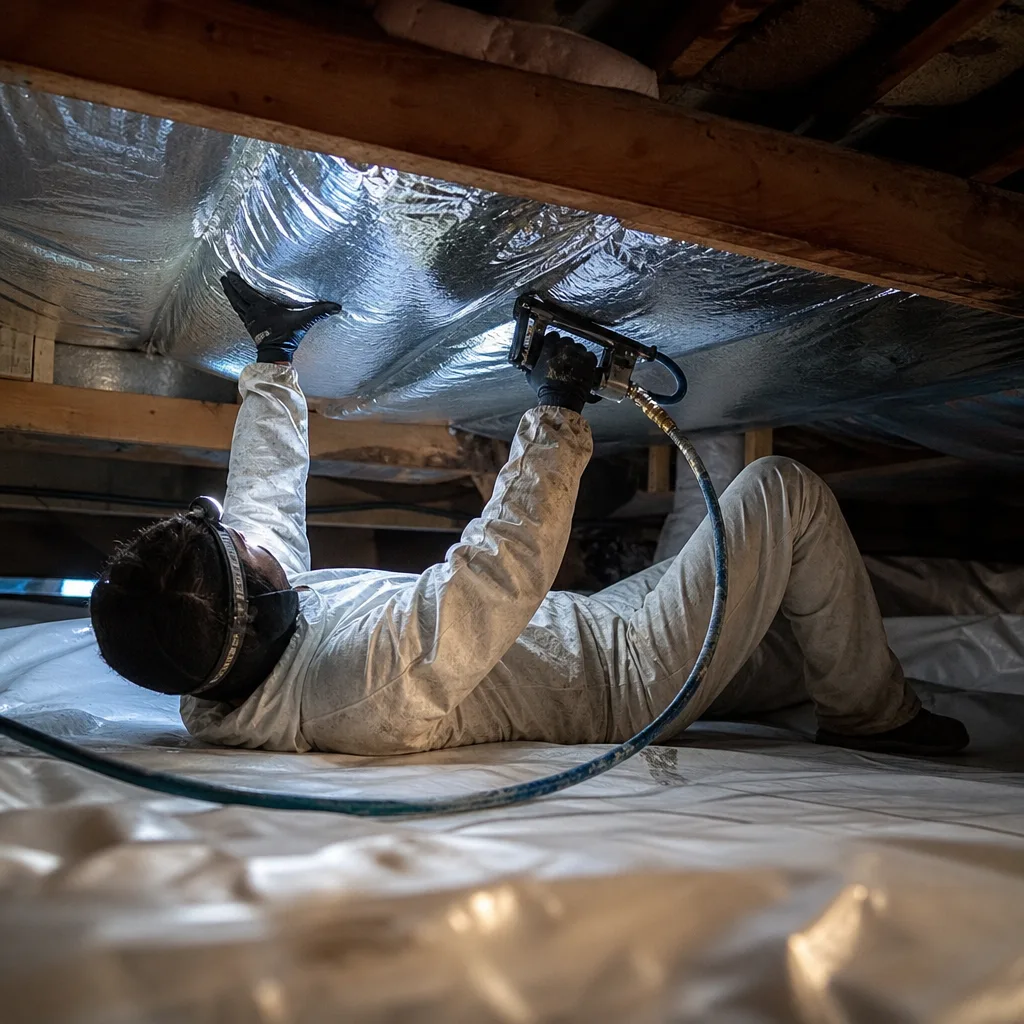
Most complete attic insulation jobs in Pasadena range from $3,500 to $8,500 for a typical 1,500-square-foot home, depending on material type and whether air sealing, removal, and permits are included. Blown cellulose or fiberglass with air sealing runs $3,500-$5,500; spray foam on a roof deck runs $7,500-$14,000. Call (213) 816-5351 for a written estimate specific to your home - estimates are free.
Repair, meaning adding new material over old, is cheaper when existing insulation is dry, intact, and not compressed - typically saving $1,000-$2,500. Replacement is required for water damage, rodent contamination, asbestos-containing vermiculite, or when spray foam application needs a clean substrate. We photograph existing conditions and specify our recommendation in writing before you decide.
No, and you should be wary of any contractor who can. A proper quote requires attic inspection, measurement, condition documentation, and written scope preparation. We typically schedule work 2-4 weeks after quote acceptance in peak season. Same-day work skips the inspection that identifies air leaks, moisture problems, or asbestos risks. Call (213) 816-5351 to schedule an inspection.
Permits are required for new construction, additions, and alterations exceeding 50 percent of ceiling or wall area. A complete attic replacement typically qualifies. Permit fees run $300-$600 through Pasadena Building and Safety. We pull permits when required and itemize the cost in your written scope. Unpermitted work can block resale or trigger required removal.
A blower-door test is a pressurization reading that shows, in one number, how much air your building envelope is losing. It matters for cost because it verifies whether air sealing - typically 15-25 percent of total job cost - actually worked. Without it, you’re paying for labor with no performance proof. We publish before-and-after readings on every applicable job. You receive them in writing.
Using actual SCE rates ($0.28-$0.42/kWh) and SoCalGas pricing, a proper air sealing and insulation job typically pays back in 5.5-8 years for a representative Pasadena home. This assumes 20-35 percent reduction in heating and cooling load, verified by blower-door. National average calculations using cheaper electricity rates understate real savings by half. Use your actual bills for accurate projection.
Open-cell spray foam runs $4.50-$6.50 per square foot installed in Pasadena; closed-cell runs $6.50-$8.50. Open-cell is vapor-permeable and suited to roof deck applications in conditioned attics. Closed-cell is vapor-closed, higher R-value per inch, and used where moisture control or structural rigidity matters, such as Crawl Space Encapsulation & Vapor Barrier in Pasadena applications. The material choice should follow the building science need, not price alone.
The Bottom Line
Insulation cost in Pasadena is not mysterious. It is specific: material at known per-square-foot rates, labor at documented hours, air sealing as a prerequisite with verified results, permits and HERS when required, and removal when conditions demand it. The 40-60 percent quote variance disappears when you reconstruct each bid against this framework. The lowest price is rarely the best value; the complete scope, documented and guaranteed, is. We’ve sealed and insulated over 9,000 homes since 2016, every one with a written price before work started and a documented record when the crew left. The 365-Day Done Right Promise applies to all completed work. If it’s not done right, we make it right.
Written by Wes Okafor, Owner at Topside Attic Insulation Pasadena, serving Pasadena since 2016.