
Last updated September 23, 2026
Insulation Permits, Codes & Inspections in CA: What You Need to Know
A homeowner in Pasadena replaces their attic insulation with the same R-value material, thinking it’s routine maintenance. Two years later, at resale, the buyer’s home inspector flags the work. The seller now faces a mandatory HERS inspection, a potential Title 24 compliance gap, and a closing delay that costs them their next purchase contingency. This happens because California’s energy code treats much of what looks like simple insulation replacement as a regulated alteration, not a repair. In this guide, we’ll map exactly which job types trigger permits, which require HERS verification, and what documentation chain protects you from the surprise that hits at the worst possible moment. For more guides & resources on attic insulation and home energy compliance, see our blog.
Quick Answer
Most insulation work in California requires a building permit if it alters the thermal envelope of an existing home. Under Title 24 Part 6, replacing insulation in attics, walls, or crawl spaces typically qualifies as a regulated alteration, which means you’ll need both a city permit and, in many cases, HERS rater verification of installed R-values and air-sealing performance. Maintenance repairs of less than 10 square feet, or like-for-like replacements that don’t change the assembly’s energy performance, may be exempt, but the burden of proving exemption falls on the homeowner.
Table of Contents
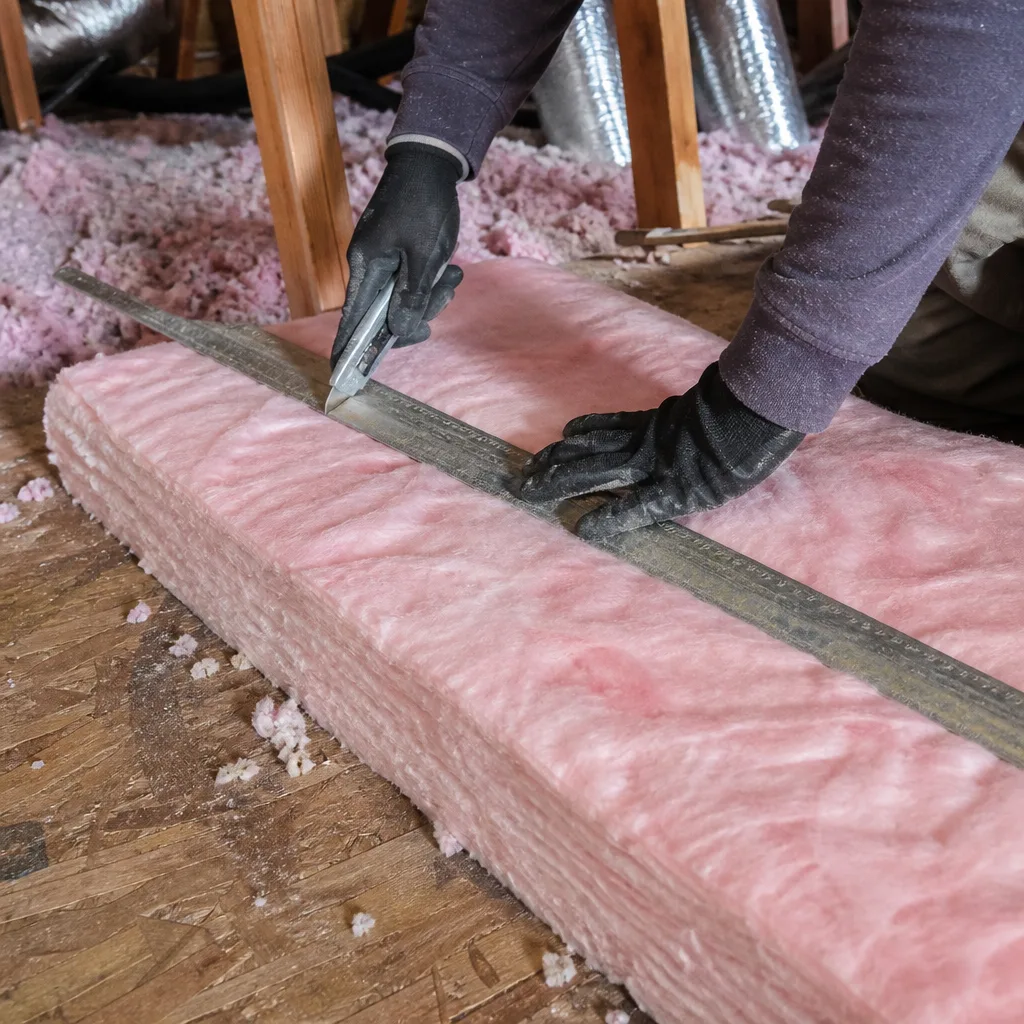
- Title 24 Part 6: The Triggers Homeowners Miss
- Permits vs. HERS: Two Different Sign-Offs
- Pulling a Permit in Pasadena: The Specific Steps
- DIY Insulation Work: Can You Pull Your Own Permit?
- How Unpermitted Work Gets Discovered at Resale
- The Documentation Chain: What to Keep and Where
- Common Mistakes to Avoid
- When to Call a Professional
- Frequently Asked Questions
- The Bottom Line
Title 24 Part 6: The Triggers Homeowners Miss
California’s Title 24, Part 6, the California Energy Code, governs energy efficiency in residential buildings. Most Pasadena homeowners assume it applies only to new construction. It doesn’t. The existing-building provisions, updated most recently in the 2022 code cycle, create compliance obligations for alterations that change or replace insulation in the thermal envelope.
The critical distinction is between a “repair” and a “regulated alteration.” A repair maintains the original energy performance. A regulated alteration changes it, or has the potential to. Here’s where homeowners get caught: removing old insulation, even to replace it with identical material, exposes the assembly. The code assumes that exposure creates an opportunity to improve energy performance, and it regulates that opportunity.
Three specific triggers matter for Pasadena homes:
- Attic insulation replacement: Removing and replacing insulation in an attic floor or roof assembly triggers HERS verification if the insulation covers more than 10 percent of the total ceiling area, or if the work disturbs the air barrier. In practice, this means nearly all full-attic jobs in Pasadena’s 1,200- to 2,400-square-foot homes.
- Wall insulation retrofit: Adding insulation to previously uninsulated walls, or replacing wall insulation during a remodel, requires compliance with the prescriptive R-value table or a performance-based compliance approach. Dense-pack cellulose from GreenFiber or fiberglass batts from Owens Corning both must meet the installed R-value, not the labeled R-value, which accounts for compression and framing factor.
- Crawl space changes: Encapsulating a vented crawl space, or adding insulation to crawl space walls, changes the thermal boundary of the home. This triggers both permit and HERS requirements, plus moisture management provisions that Pasadena’s Building and Safety division enforces strictly due to local soil conditions and winter rainfall patterns.
The “like-for-like” exemption does exist, but it’s narrower than most contractors describe. You must replace insulation with material of the same or lower thermal conductivity, the same or greater R-value, and you must not disturb the air barrier or vapor retarder. In our experience across more than 9,000 homes since 2016, we have seen exactly two jobs that genuinely qualified. Learn to spot problems early with our Insulation Warning Signs: A Pasadena Homeowner’s Reference Guide. Most attic floors in Pasadena homes built between 1950 and 1990 have no continuous air barrier, so any insulation removal exposes top plates, can lights, and penetrations that the code then requires to be sealed.
Climate matters too. Pasadena sits in California’s Climate Zone 8, which carries specific prescriptive R-value requirements: R-49 for ceilings, R-19 for wood-framed walls, R-30 for floors. If your existing insulation is below these values, and you disturb it, the code requires you to meet them or pursue a performance compliance path. The performance path, using approved software like CBECC-Res, requires a HERS rater to model the home and verify the as-built condition. Our Seasonal Insulation Care for Pasadena: Year-Round Homeowner’s Guide explains when to schedule this work.
We’ve documented this repeatedly in Pasadena neighborhoods from Bungalow Heaven to the Linda Vista hills. A homeowner starts with a simple insulation upgrade, discovers the compliance pathway mid-project, and faces a choice: stop work, pull permits, and hire a HERS rater, or proceed unpermitted and hope the gap never surfaces. The Haven Standard requires us to flag this before anyone lifts a tool, which is why every job begins with a written scope that identifies the compliance path and the documentation required.
Permits vs. HERS: Two Different Sign-Offs
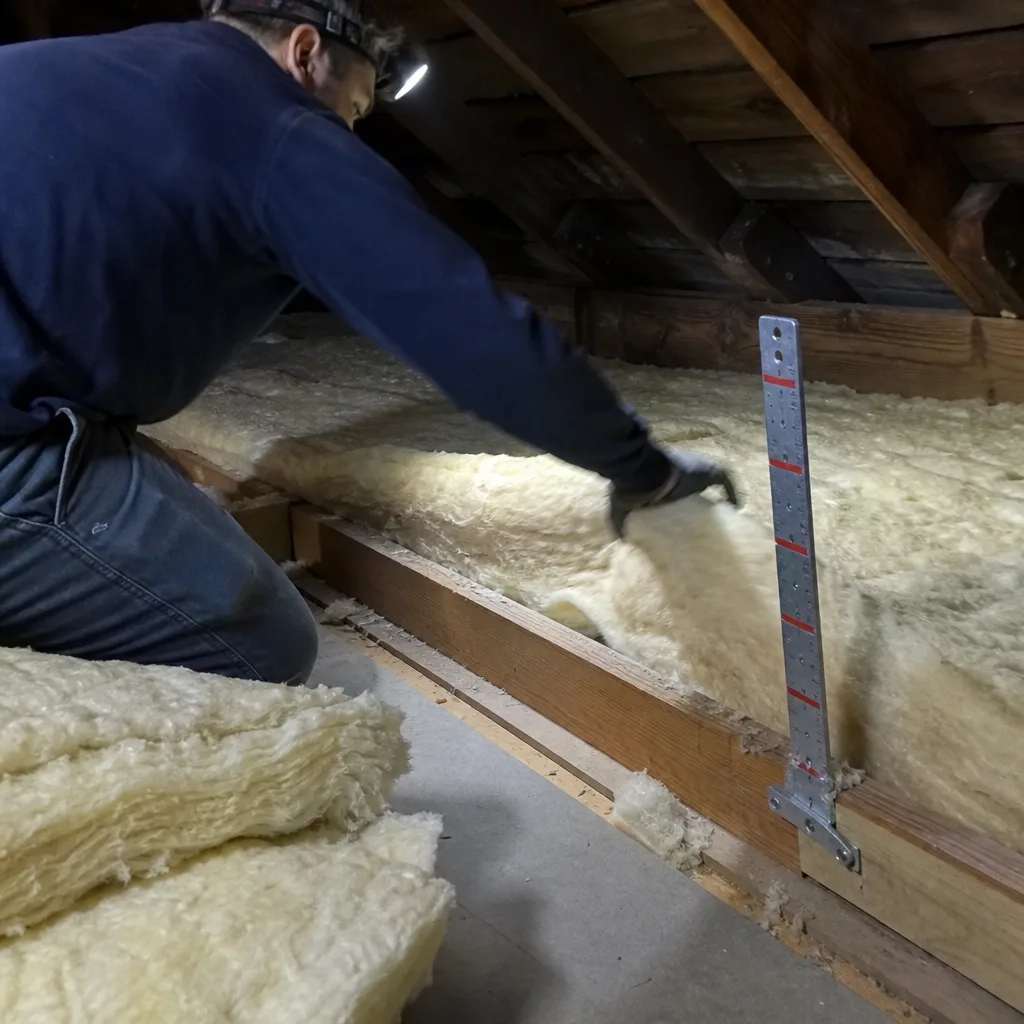
City building inspectors and HERS raters serve different functions, and many insulation jobs in Pasadena require both. Understanding the difference prevents the common error of pulling a permit but skipping HERS verification, or vice versa.
A city building inspector verifies that the work meets structural, fire, and life-safety codes. For insulation, this means checking that materials are installed to the manufacturer’s specifications, that required clearances from heat-producing fixtures are maintained, and that the permit scope matches what was built. The inspector does not measure thermal performance. They do not verify air leakage rates. They check that you installed what you said you would, safely.
A HERS rater is a certified third-party verifier trained to the California Energy Commission’s standards. HERS stands for Home Energy Rating System. The rater performs field verification and diagnostic testing that the code requires but the city inspector does not perform. For insulation work, this typically includes:
- Installed R-value verification: The rater measures insulation depth, checks for compression or voids, and calculates the effective R-value of the assembly. Labeled R-value and installed R-value are different numbers. A batt labeled R-30, compressed into a 2×8 cavity at 7.25 inches instead of the full 8.5 inches, performs at approximately R-26. The HERS rater documents the actual performance.
- Air sealing verification: For jobs that disturb the thermal envelope, the rater performs a blower-door test, a pressurization reading that shows, in one number, how much air the building envelope is losing. The 2022 code sets specific leakage limits for alterations: 5.0 air changes per hour at 50 Pascals (ACH50) for alterations, or 4.0 CFM50 per square foot of envelope area. The rater tests, documents, and registers the result in the California Home Energy Rating System database.
- Quality insulation installation (QII): For spray foam jobs, like those we perform using spray foam insulation in Pasadena, the rater verifies that the foam achieves full contact with all six sides of the cavity, that thickness meets the specified R-value, and that no voids or deficiencies exceed the tolerances in the code.
Which jobs need which sign-off? Here’s the breakdown for Pasadena:
- Attic insulation replacement (full): Building permit + HERS verification required. The HERS rater must verify installed R-value and, if the air barrier is disturbed, air sealing performance.
- Blown-in insulation top-off over existing: May be exempt from HERS if the existing insulation meets current R-value and the air barrier is not disturbed. Building permit may still be required depending on depth and coverage. We evaluate this during our free second opinion on any written estimate.
- Wall insulation retrofit: Building permit + HERS verification required. The QII inspection is mandatory for blown or sprayed applications.
- Crawl space encapsulation and vapor barrier in Pasadena
- Insulation removal only: Building permit may be required if the removal exposes structural or hazardous conditions. HERS not required unless replacement insulation follows.
The sequence matters. You cannot schedule HERS verification until the work is complete, but you cannot complete the work legally without the permit. The permit must list the HERS measures required. The HERS rater must be registered with the California Energy Commission and must not be employed by the contractor performing the work, to maintain third-party independence.
In our work across Pasadena, from the historic districts near the Rose Bowl to the hillside homes above the 210 freeway, we’ve found that HERS raters book 2-4 weeks out during peak seasons. Failing to schedule the rater before starting work can leave a job in permit limbo, with final inspection incomplete and the certificate of occupancy or completion withheld.
Pulling a Permit in Pasadena: The Specific Steps
Pasadena Building and Safety operates under the California Building Standards Code with local amendments. For residential insulation work, the permit process follows a specific pathway that differs slightly from neighboring cities like Alhambra or South Pasadena.
Here’s the exact sequence:
- Determine permit type: Most residential insulation work requires a Residential Alteration Permit, not a repair permit. The distinction: alteration changes the building’s energy performance; repair restores it to the pre-damaged condition. If you’re replacing insulation that has degraded, compressed, or been contaminated, and the replacement improves or restores the original R-value, that’s an alteration. If a pipe leak soaked a 4-square-foot section and you’re patching that exact area with identical material, that’s a repair.
- Prepare documentation: You’ll need a site plan showing the work area, a description of the existing and proposed insulation including manufacturer and product name, the installed R-value, and the HERS measures required. For attic work, include the square footage and the accessibility classification. For spray foam, include the foam class (Class I or Class II per building code) and the ignition barrier requirements.
- Submit application: Pasadena accepts applications online through the Pasadena Permits and Inspections portal, or in person at the One-Stop Counter at 175 N. Garfield Avenue. The base permit fee for residential alterations starts around $200-$400 depending on valuation, plus plan check fees if the job exceeds $5,000 in construction value. HERS registration fees, paid to the California Energy Commission, are separate and currently run $50-$150 per measure.
- Plan review: Simple insulation jobs may qualify for over-the-counter approval if the documentation is complete. Complex jobs, or those in historic districts or hillside areas with additional zoning overlays, require staff plan review. Plan review in Pasadena typically takes 5-10 business days for residential alterations.
- Pay fees and obtain permit: Once approved, pay the permit fee and post the permit card on site. Work cannot begin before permit issuance. Starting work without a permit triggers double fees and potential stop-work orders.
- Schedule inspections: For insulation jobs, Pasadena typically requires a rough inspection (before insulation is covered) and a final inspection. If HERS verification is required, the HERS rater performs their field verification, uploads results to the CHEERS database, and the city inspector confirms HERS compliance at final. The sequence is: complete work, HERS rater verifies, city inspector finalizes.
- Close permit: After final inspection approval, the permit is finaled in the system. Request a copy of the final inspection card for your records. This document transfers with the property and proves compliance.
Pasadena has specific requirements for fire-rated assemblies in multi-family buildings and for ignition barriers with spray foam in attics and crawl spaces. The city’s amendments to the California Residential Code are published in the Pasadena Municipal Code, Title 14. We keep current copies and reference them during scope development for every job.
One Pasadena-specific note: homes in the Hillside Management District or the Historic Landmark District may trigger additional review even for interior work. The planning department checks exterior changes, but interior alterations that affect structural load paths or fire-rated separations can require historic preservation clearance. We’ve encountered this in the Arroyo Seco area and near Old Town, where original construction methods create unexpected regulatory layers.
DIY Insulation Work: Can You Pull Your Own Permit?
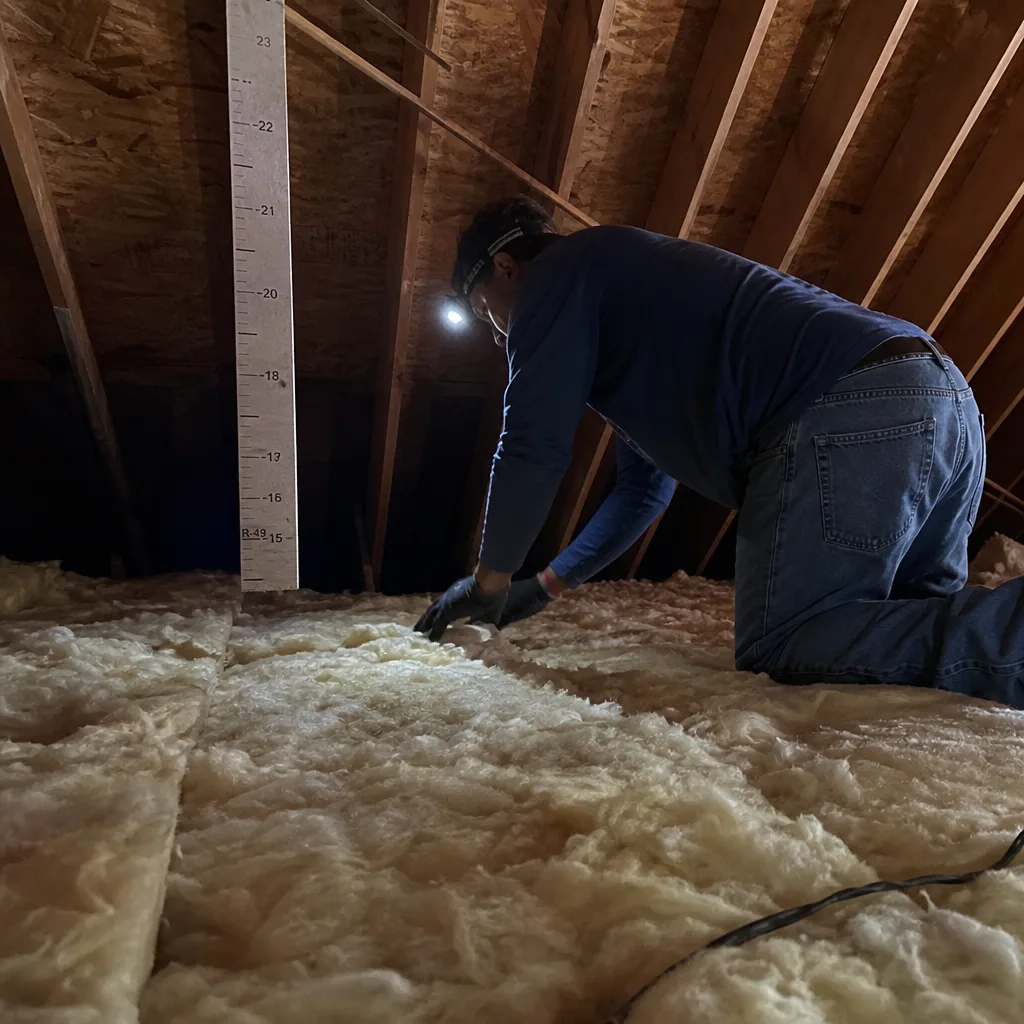
California law allows homeowners to pull their own permits for work on their owner-occupied, single-family residence. This is called an owner-builder permit. The exemption from contractor licensing does not exempt you from code compliance, inspection requirements, or HERS verification.
Here’s what owner-builders in Pasadena need to understand:
- You assume all contractor responsibilities: The permit application requires you to sign a statement acknowledging that you are responsible for code compliance, worker safety, and structural integrity. If the work fails inspection, you pay for corrections and re-inspection. If someone is injured on your property, your homeowner’s insurance may not cover claims related to unlicensed construction activity.
- HERS verification still required: You cannot perform your own HERS verification. You must hire a certified HERS rater, and the rater must be independent, not a friend or relative working informally. The CHEERS database tracks all verifications by rater ID, and the California Energy Commission audits a percentage of filings.
- Material sourcing matters: Big-box stores sell insulation labeled for DIY installation, but the labeled R-value is not the installed R-value. Owens Corning and Johns Manville publish installation guides specifying minimum thickness, coverage area per bag, and compression limits. GreenFiber’s cellulose products require specific machine settings for proper density. Without the blower-door test, a pressurization reading that shows, in one number, how much air your building envelope is losing, you cannot verify whether your air sealing meets the code threshold.
- Resale liability extends to you: The Transfer Disclosure Statement (TDS) required in California real estate transactions specifically asks about alterations, additions, and structural modifications without permits. Answering falsely exposes you to fraud claims. Answering truthfully about unpermitted work triggers the buyer’s right to demand correction, price reduction, or cancellation.
We’ve provided free second opinions on owner-builder jobs that stalled mid-project. The most common failure point is air sealing. A homeowner installs new Knauf fiberglass batts over an unsealed attic floor, passes the rough inspection because the insulation is visible and correctly placed, then fails the HERS verification because the blower-door reading shows excessive leakage through top plates, electrical penetrations, and the chimney chase. The correction requires removing insulation, sealing, re-testing, and reinstalling. The cost of the correction typically exceeds what professional installation would have cost initially.
The Haven Standard requires us to document what we find, not what we feel about it. On owner-builder consultations, we provide a written scope identifying the compliance path, the HERS measures required, and the documentation chain. Whether we perform the work or not, you leave with a written price before any work starts and a clear understanding of what leaving looks like.
How Unpermitted Work Gets Discovered at Resale
Unpermitted insulation work surfaces at resale through multiple channels, and the discovery method determines the remedy and the cost.
The Transfer Disclosure Statement (TDS): California Civil Code Section 1102 requires sellers to disclose material facts affecting property value. The TDS form specifically asks: “Are there any room additions, structural modifications, or other alterations or repairs made without required permits?” Insulation replacement that altered the thermal envelope qualifies. A seller who checks “no” falsely faces potential fraud liability. A seller who checks “yes” triggers buyer scrutiny.
The home inspection: Buyer’s inspectors in the Pasadena market routinely enter attics and crawl spaces. They document insulation type, depth, condition, and installation quality. An inspector who finds new Owens Corning batts over original 1950s wiring, with no permit history in Pasadena’s online permit database, flags this as a potential unpermitted alteration. The inspection report goes to the buyer, the buyer’s lender, and the buyer’s appraiser.
The appraisal: FHA and VA loans require appraisers to verify permit status for alterations affecting value or safety. Conventional loans increasingly use appraisal management companies that flag permit gaps. An appraiser who cannot verify a permit for attic insulation may condition the appraisal on permit confirmation, effectively halting the loan until resolved.
The HERS check: Some buyers, particularly in Pasadena’s environmentally conscious market, hire HERS raters for pre-purchase energy assessments. The rater accesses the CHEERS database. No HERS record for recent insulation work suggests the work was not verified, which means it likely was not permitted, which means it may not meet code.
The utility rebate clawback: If the original insulation work received utility rebates through programs like Energy Upgrade California, and the work was not properly permitted and verified, the utility may demand repayment. We’ve seen this with Southern California Edison customers who received rebates for attic insulation but lacked the required HERS documentation.
The cost of discovery at resale far exceeds the cost of compliance during installation. Retroactive permitting requires exposing the work for inspection, which may mean removing insulation, performing the verification testing, and reinstalling. In Pasadena’s competitive real estate market, a 2-week permit delay can kill a purchase contingency. The seller pays for the HERS rater, the permit fees, the re-inspection, and potentially the buyer’s extended rate lock or temporary housing.
We’ve documented this scenario in our work across Pasadena. The 365-Day Done Right Promise applies to our completed work, but we cannot warranty work we did not perform and cannot document. The protection is in the documentation chain, established at installation, maintained through inspection, and transferred with the property.
The Documentation Chain: What to Keep and Where
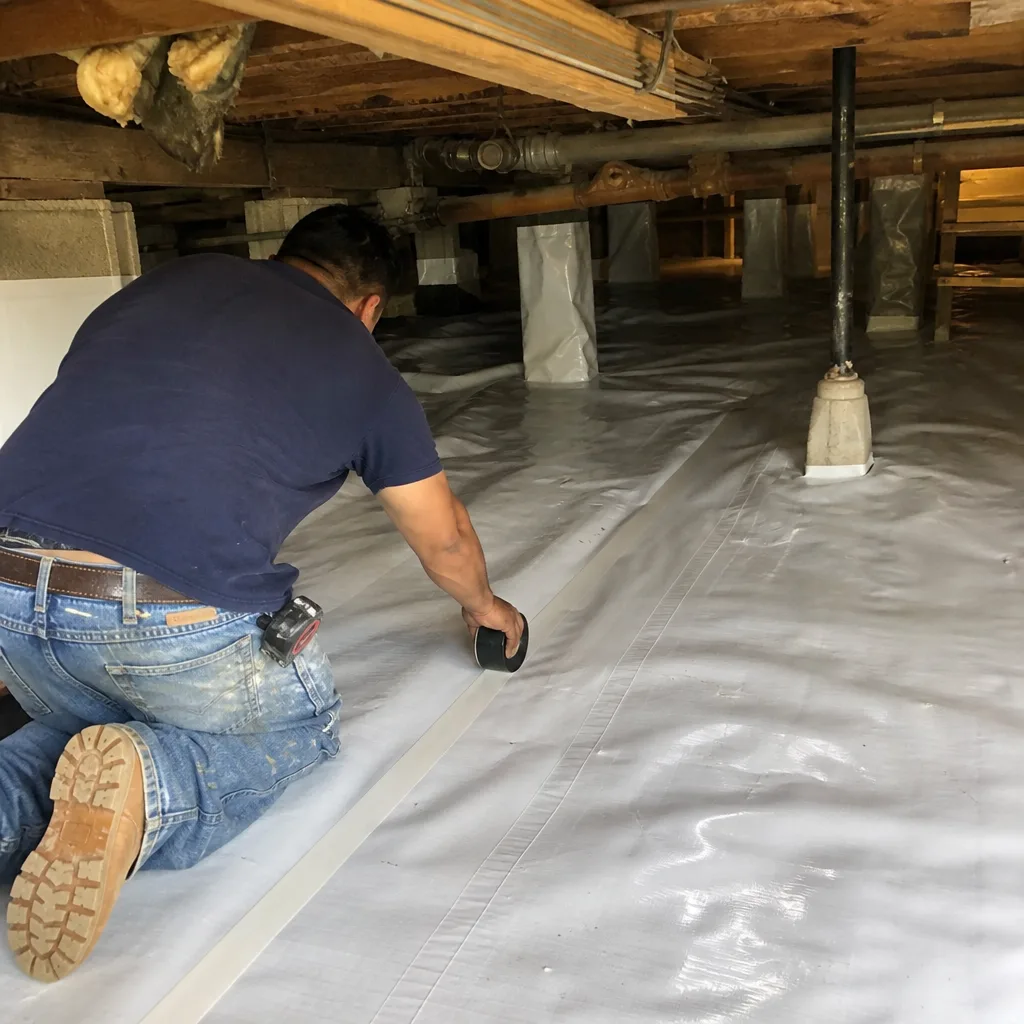
Compliance is only as good as the paper trail. A permitted, inspected, HERS-verified job provides no protection if the documentation is lost when the property sells. Use our Attic Insulation Maintenance Checklist for Pasadena Homeowners to stay organized. Here’s the specific chain we deliver on every job, and what homeowners should maintain:
Before work begins:
- Written scope of work, including the compliance pathway (prescriptive or performance)
- Written price before any work starts, with HERS costs itemized if applicable
- Permit application copy, showing the HERS measures listed
- Manufacturer specifications for installed materials (Owens Corning, Johns Manville, Knauf, or others)
During work:
- Documented Photo Record on every visit, showing before condition, air sealing details, insulation installation, and any conditions encountered (we include this on every job, not available on request)
- HERS rater field verification forms, signed and dated
- Blower-door test results, when applicable, showing before and after readings
After completion:
- Final inspection approval card from Pasadena Building and Safety
- HERS certificate or verification record from the CHEERS database
- Completed permit showing final status
- Written warranty and 365-Day Done Right Promise documentation
Store physical copies with your property deed or in a fireproof safe. Scan and store digital copies in cloud storage linked to your property address, not personal email that may change. When you sell, provide the complete package to your real estate agent for disclosure. The agent can then present permitted, verified, documented work as a property asset, not a liability.
In our experience, homeowners who maintain this documentation sell faster and with fewer contingencies. Buyers researching thoroughly, the 32-50 demographic that reads three-star reviews as carefully as five-star ones, recognize documentation as evidence of care. They prefer a text to a phone call, but they want the paper trail before they commit.
Common Mistakes to Avoid
- Assuming like-for-like replacement is exempt: The exemption is narrower than contractors advertise. If your attic has no continuous air barrier, and removing insulation exposes top plates or penetrations, you’ve disturbed the thermal envelope and triggered HERS requirements.
- Pulling a permit but skipping HERS: Pasadena’s building inspectors check code compliance; they do not perform blower-door tests or measure installed R-values. A permitted job without HERS verification is incomplete and non-compliant under Title 24.
- Hiring a contractor who “handles permits” without specifying HERS: Some contractors pull the building permit, complete the work, and never mention HERS. The permit finals, the work looks good, but the energy compliance gap surfaces at resale when the CHEERS database shows no record.
- Installing insulation over unsealed air leaks: This violates the fundamental sequence we follow: sealed first, then insulated, in that order. Envelope Insulation Co. will never blow insulation over an unsealed attic floor. The blower-door test proves the seal before insulation covers it.
- Using labeled R-value as installed R-value: A batt labeled R-38, compressed into a cavity too shallow or stapled too tight, performs at a lower R-value. HERS raters measure actual thickness and calculate effective performance. Specify installed R-value in your scope, not labeled.
- Neglecting ignition barriers with spray foam: Spray foam in attics and crawl spaces requires an ignition barrier or thermal barrier depending on access and use. Pasadena enforces this strictly. We’ve corrected jobs where foam was left exposed, creating a fire code violation that required covering or removal.
- Throwing away documentation: The permit card you filed in a drawer in 2019 is the proof of compliance the buyer’s inspector requests in 2026. Keep it with your property records, scan it, back it up.
When to Call a Professional
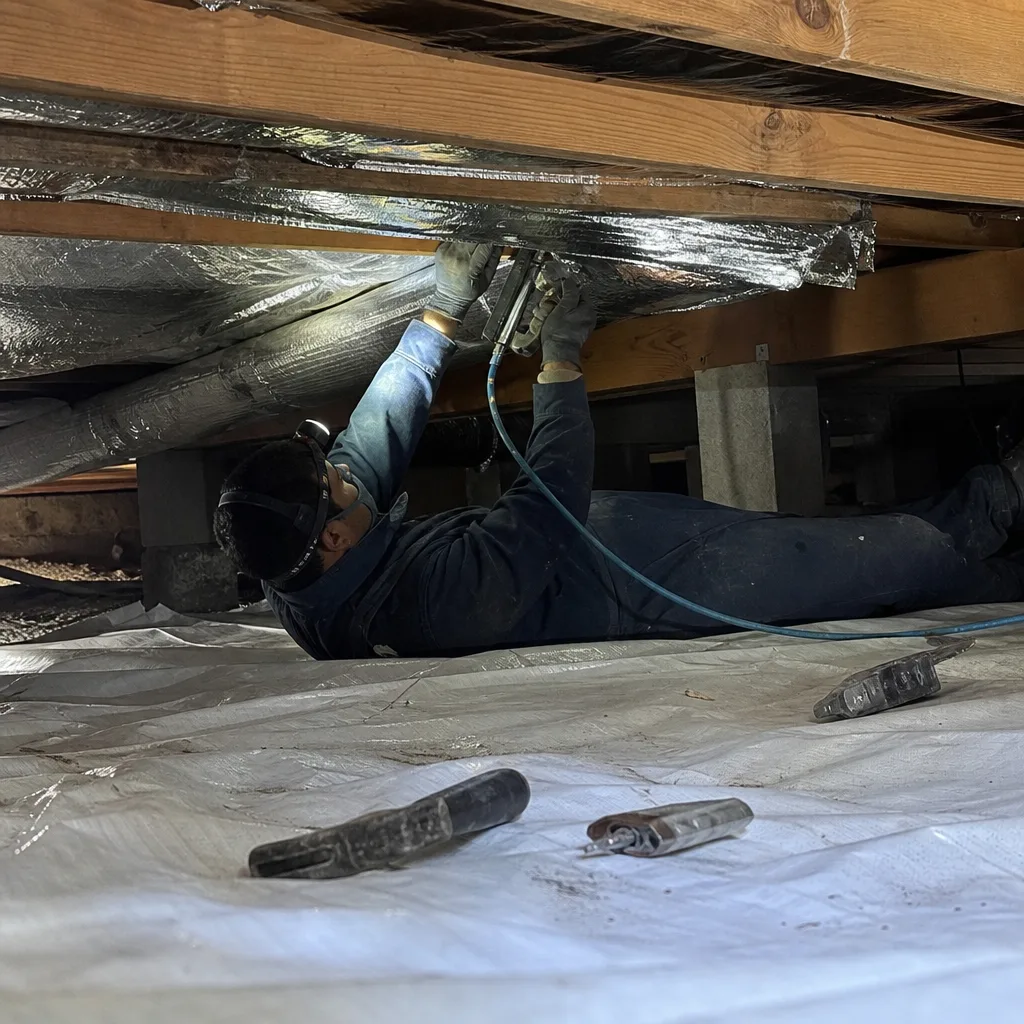
Call a professional when the job disturbs the thermal envelope, when HERS verification is required, when you’re uncertain whether your work qualifies as repair or alteration, or when you’re selling within five years and need clean documentation. The cost of professional installation with proper permitting and verification is typically recovered in faster sale times, fewer buyer concessions, and the utility rebates that unpermitted work cannot qualify for.
Topside Attic Insulation Pasadena offers free estimates in Pasadena, and we provide a free second opinion on any written estimate you’ve received from another contractor. We’ll read the scope with you, identify the compliance path, and explain what documentation you’ll have when the crew leaves. Call (213) 816-5351. A live person answers 24/7. You’ll get a written price before any work starts, a Documented Photo Record on every visit, and before-and-after blower-door numbers on every applicable job so you can verify the air-sealing result you paid for.
Frequently Asked Questions
Residential alteration permits for attic insulation in Pasadena typically run $200-$400 in base fees, plus plan check fees for jobs over $5,000 in construction value. HERS registration and rater fees are separate, usually $300-$800 depending on the number of measures verified. Call (213) 816-5351 for a written price on your specific job - estimates are free.
You can perform the work yourself as an owner-builder, but you cannot exempt yourself from permit or HERS requirements if the job qualifies as a regulated alteration. Maintenance repairs under 10 square feet with identical materials may be exempt, but most full-attic jobs in Pasadena trigger both permit and HERS obligations. The Haven Standard requires us to identify the compliance path in writing before any work starts.
A building inspector verifies structural, fire, and life-safety compliance. A HERS rater verifies energy performance: installed R-value, air leakage rates, and quality of installation. For most insulation work in Pasadena, you need both. The building inspector does not perform blower-door tests or measure thermal performance.
HERS verification is required for regulated alterations that disturb the thermal envelope and exceed the repair exemption. Indicators: the work covers more than 10 percent of the assembly area, changes the insulation R-value, or exposes and requires resealing of the air barrier. When we evaluate a job in Pasadena, we specify the HERS measures in the written scope.
You must disclose unpermitted alterations on the Transfer Disclosure Statement. The buyer’s inspector may flag the work, triggering demands for retroactive permitting, price reduction, or sale cancellation. Retroactive compliance often requires exposing the work, performing HERS verification, and reinspecting, at seller expense. Proper documentation at installation prevents this entirely.
Simple residential alterations with complete documentation may receive over-the-counter approval same-day. Jobs requiring plan review typically take 5-10 business days. Scheduling HERS raters adds 2-4 weeks during peak season. We coordinate permit submission and HERS scheduling before work begins to prevent delays.
The Bottom Line
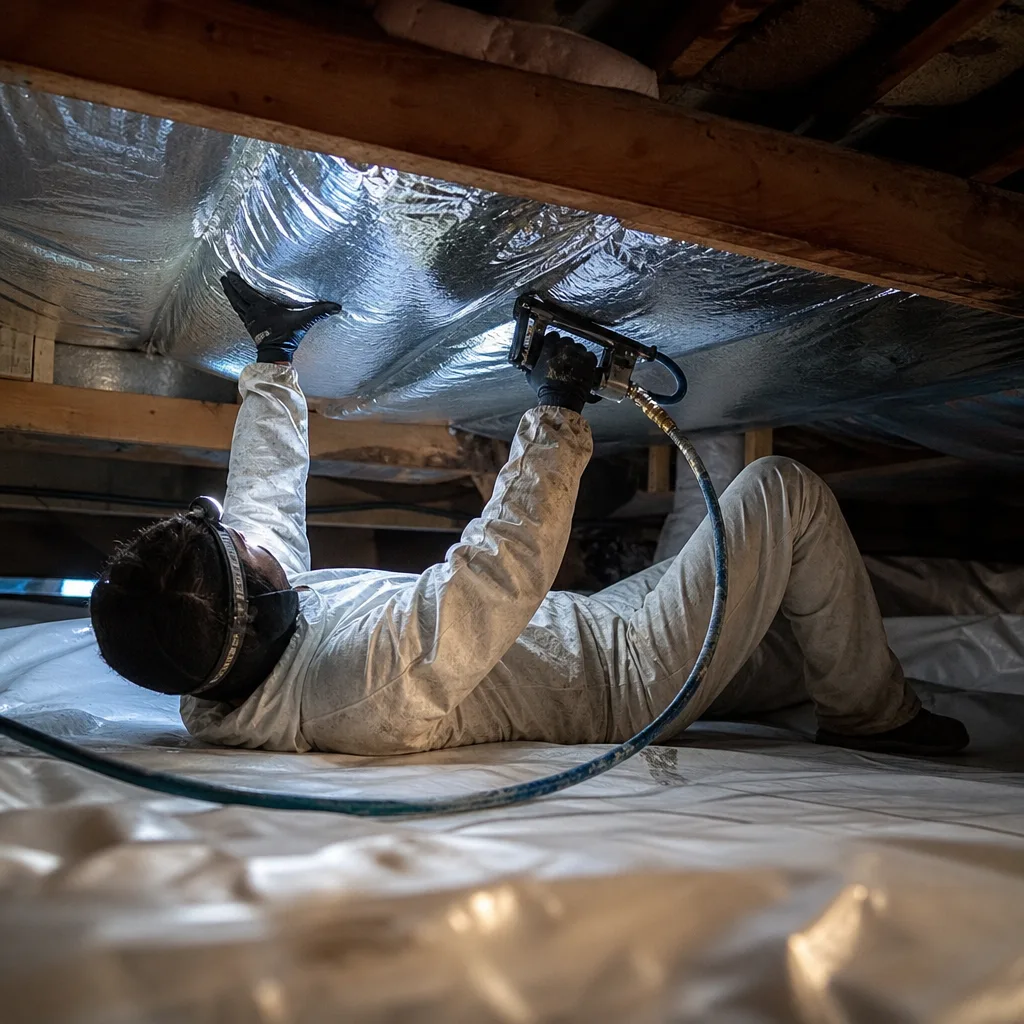
California’s Title 24 energy code treats most insulation replacement as regulated alteration, not maintenance repair. In Pasadena, this means building permits for structural and safety compliance, HERS verification for energy performance, and a documentation chain that protects you at resale. The homeowners who avoid surprises are those who understand the distinction before work begins, who demand written scopes that identify the compliance path, and who keep the permit record, HERS certificate, and inspection approvals with their property files. The cost of compliance during installation is predictable. The cost of discovery at resale is not.
Written by Wes Okafor, Owner at Topside Attic Insulation Pasadena, serving Pasadena since 2016.