
Last updated September 23, 2026
How to Hire a Insulation Contractor in Pasadena: A Step-by-Step Guide
Three contractors quote you R-38 blown-in for a Pasadena attic. One of them also offers a pre-installation blower-door test. That single differentiator predicts final energy performance better than price, brand, or years in business. We’ve sealed and insulated over 9,000 homes since 2016, and the pattern is consistent: homeowners who hire based on R-value alone end up with warm insulation and cold rooms. In Pasadena’s climate, where summer heat loads peak above 90°F for weeks and winter nights drop into the 40s, air leakage matters more than insulation depth. This guide - alongside our Insulation Warning Signs: A Pasadena Homeowner’s Reference Guide - gives you a concrete interview framework built around verifiable outputs, not promises.
Quick Answer
To hire an insulation contractor in Pasadena, verify CSLB licensure (C-2 preferred over B for thermal performance accountability), demand a written scope that specifies air-sealing materials and blower-door testing before any insulation is added, and compare bids on cost-per-verified-ACH50-reduction rather than cost-per-square-foot. The right contractor will seal first, insulate second, and document both.
Table of Contents
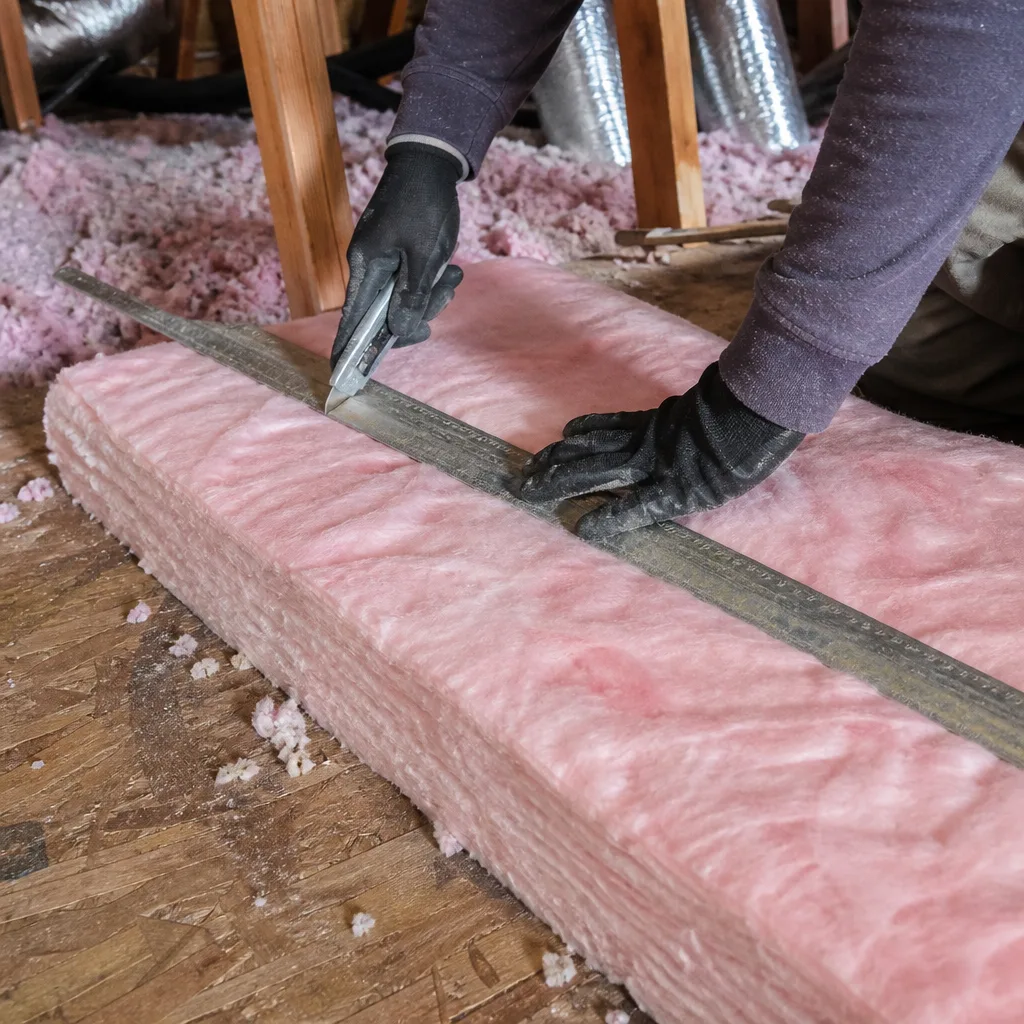
- Why R-Value Is the Wrong Starting Point in Pasadena
- Five Questions That Separate Air-Sealing-Capable Contractors from Insulation-Only Operators
- How to Verify License and Insurance on the CSLB Database
- What a Written Scope of Work Must Include Before Any Money Changes Hands
- Red Flags in the Quoting Process
- How to Compare Bids When the Scopes Differ
- Pasadena-Specific Climate and Code Considerations
- Common Mistakes to Avoid
- When to Call a Professional
- Frequently Asked Questions
- The Bottom Line
Why R-Value Is the Wrong Starting Point in Pasadena
R-value measures thermal resistance. It tells you how well a material resists heat flow. It tells you nothing about how much air is moving through that material, around it, or through the gaps it doesn’t cover.
In Pasadena, we see this constantly in homes built from the 1920s through the 1980s. A homeowner in Bungalow Heaven gets three quotes for R-38 blown-in fiberglass. Contractor A bids $2,800. Contractor B bids $3,400. Contractor C bids $3,200 but wants to run a blower-door test first - a pressurization reading that shows, in one number, how much air the building envelope is losing. Most homeowners pick A or B. Six months later, their energy bills haven’t moved much. The attic has 12 inches of fluffy material, but conditioned air is still escaping through unsealed top plates, can-light penetrations, and the chimney chase.
Here’s what actually happens. R-38 fiberglass in a vented attic with significant air leakage performs between R-20 and R-25 in real conditions. The air moving through and around the insulation carries heat with it. In Pasadena’s summer, that means your 75°F conditioned air is continuously replaced by 95°F attic air. In winter, the reverse. The insulation is doing its job. The building envelope isn’t.
The correct sequence is: measure air leakage, seal the leaks, then add insulation. Any contractor who quotes insulation depth before discussing air leakage is selling you a partial solution. At Topside Attic Insulation Pasadena home, we’ve documented this on over 9,000 jobs. The blower-door number - measured in CFM50, cubic feet per minute at 50 pascals of pressure - is the figure that matters. A typical unsealed Pasadena home reads 3,500 to 5,500 CFM50. After proper air sealing, that drops to 1,800 to 2,800. The insulation goes in after that reduction is verified.
We publish before-and-after blower-door numbers on every applicable job. The homeowner receives a documented record showing the performance change they paid for. This isn’t an upsell. It’s the foundation of the work.
Five Questions That Separate Air-Sealing-Capable Contractors from Insulation-Only Operators
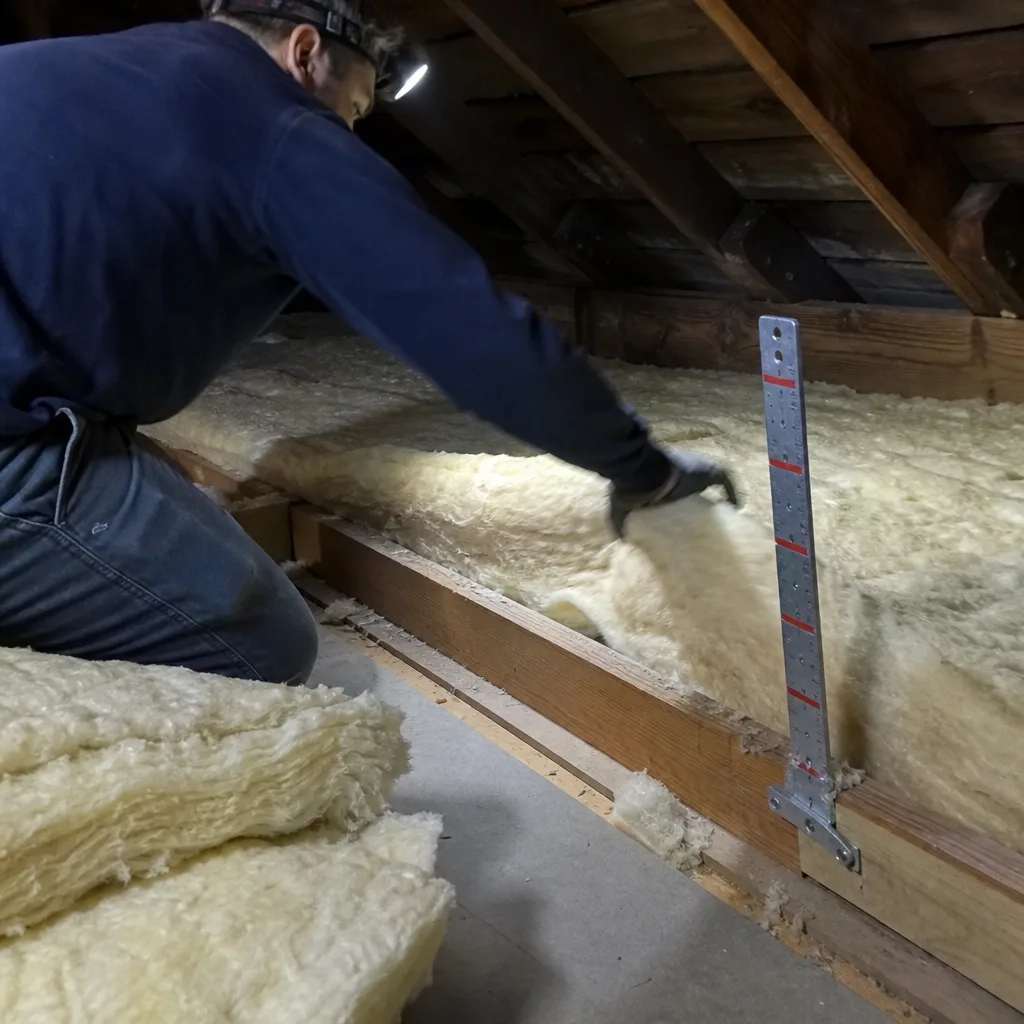
Use these five questions in your initial phone call or site visit. The specific answers that disqualify a bidder are noted after each.
1. “Will you run a blower-door test before quoting insulation depth?”
Disqualifying answer: “We don’t need to. We can tell from looking.” Or: “We do that after, if you want.”
A contractor who cannot quantify air leakage before specifying insulation cannot guarantee thermal performance. The blower-door test takes 20 to 30 minutes and reveals what visual inspection cannot: the cumulative effect of hundreds of small penetrations. In Pasadena’s older housing stock, especially in neighborhoods like Garfield Heights or the Linda Vista area, top plates are often unsealed, recessed can lights create direct paths to conditioned space, and plumbing and electrical penetrations are numerous. You need the number before the quote.
2. “What air-sealing materials do you use, and where?”
Disqualifying answer: “We spray some foam around the edges.” Or: “The insulation will seal it up.”
Specific materials matter. We use Owens Corning Foamular rigid foam for large gaps, acoustical sealant for top-plate joints, fire-rated caulk for chimney chases, and specialized LED-compatible covers for can lights. The contractor should name products and locations: top plates, electrical penetrations, plumbing stacks, chimney chases, duct boots, and the attic access hatch. “Some foam” is not a scope of work.
3. “Will you provide a written scope with a fixed price before work starts?”
Disqualifying answer: “We’ll give you a ballpark, then finalize after we start.” Or any verbal-only pricing.
Under Haven Standard Clause 1: flat price, written scope, written warranty before anyone lifts a tool. Every job we’ve done since 2016 began with a written price. The scope specifies penetration list, air-sealing materials by type, installed R-value, and blower-door pre/post when applicable. The homeowner knows what leaving looks like before we arrive.
4. “Do you handle permit requirements for jobs over Title 24 thresholds?”
Disqualifying answer: “Permits aren’t needed for insulation.” Or: “That’s your responsibility.”
In Pasadena, insulation work that alters the thermal envelope of an existing home may trigger Title 24 compliance requirements, particularly when combined with HVAC replacement or whole-home energy improvements. See Insulation Permits, Codes & Inspections in CA: What You Need to Know for deeper context. A contractor who won’t discuss permits is either unaware of code requirements or willing to work outside them. Either is disqualifying.
5. “Can I see a documented photo record from a recent job?”
Disqualifying answer: “We don’t take photos.” Or reluctance to share.
A contractor who documents nothing can prove nothing. We include a Documented Photo Record on every visit - before, during, and after - showing penetration locations, sealing work, insulation depth markers, and blower-door setup. This is included, not available on request.
How to Verify License and Insurance on the CSLB Database
California requires insulation contractors to hold a C-2 (Warm-Air Heating, Ventilating and Air-Conditioning) classification or a B (General Building Contractor) license for insulation work. The distinction matters for accountability on thermal performance jobs.
A C-2 licensee has passed a trade-specific examination covering thermal insulation materials, vapor barriers, and building science fundamentals. A B licensee is qualified for general construction but has not been examined on insulation-specific practices. For a job where air sealing and thermal performance are central, C-2 licensure indicates relevant technical depth. B licensure is acceptable if the contractor can demonstrate specific insulation expertise, but it is not equivalent.
To verify any contractor:
- Visit cslb.ca.gov and select “Check a License.”
- Enter the seven-digit license number. Do not accept “pending” or “applied” status.
- Confirm the license is Active, not Suspended or Expired.
- Check that Workers’ Compensation coverage is current if the contractor has employees. In California, this is mandatory for licensed contractors with workers.
- Review Disciplinary Actions and Bond History. A pattern of bond claims or recent disciplinary action is a signal to dig deeper.
- Verify the Business Name matches the name on the quote exactly. Some operators use multiple DBA names to obscure history.
In Pasadena, we’ve encountered homeowners who hired unlicensed operators advertising on neighborhood platforms. The work was substandard, the “warranty” evaporated, and the CSLB could not intervene because no license existed. Verification takes five minutes. Skipping it is expensive.
What a Written Scope of Work Must Include Before Any Money Changes Hands
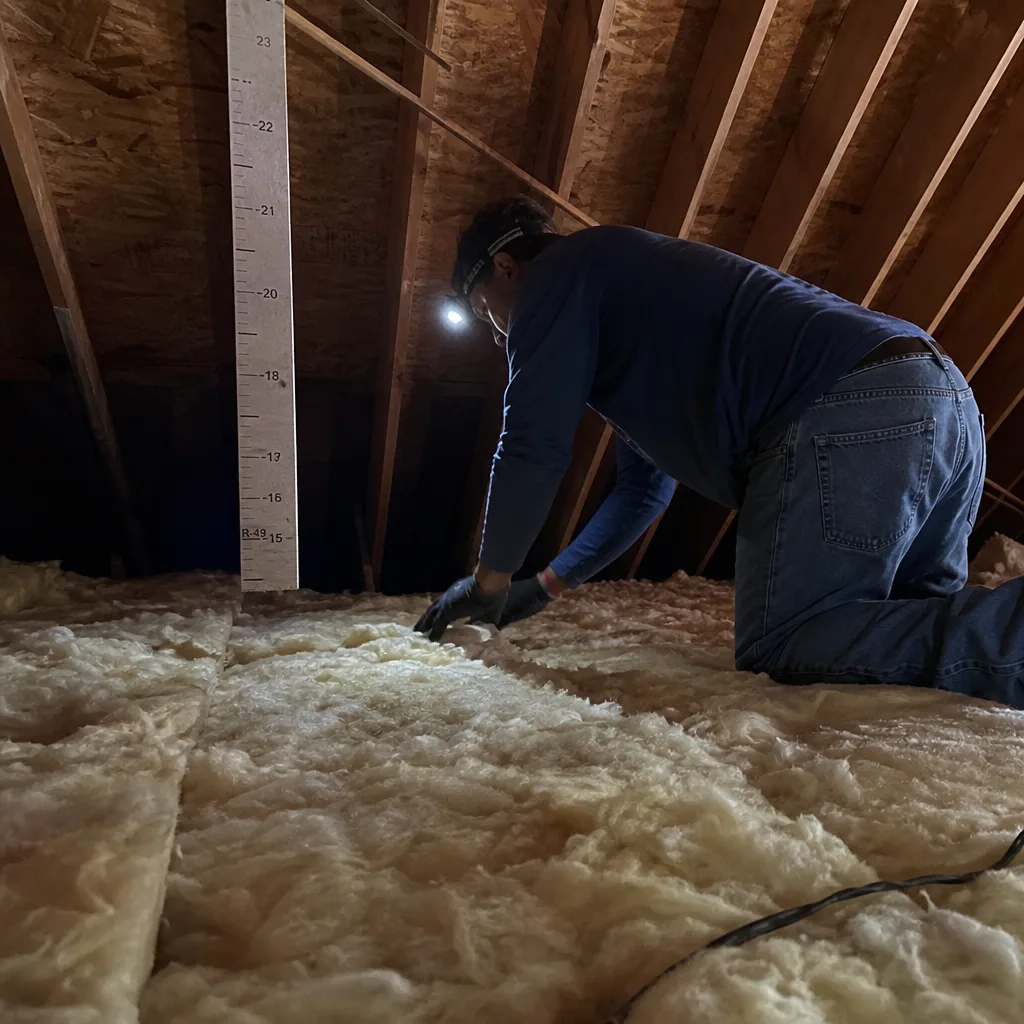
The written scope is your enforceable record of what was promised. Under Haven Standard, every job begins with one. Here is what it must contain for an insulation and air-sealing job in Pasadena.
- Penetration list: Every location to be sealed - top plates, electrical penetrations, plumbing stacks, chimney chases, duct boots, can lights, attic access hatch, and any other identified leakage points.
- Air-sealing materials specified by type: Not “foam” but “Owens Corning Foamular rigid foam,” “acoustical sealant,” “fire-rated caulk,” or equivalent. The material must match the application.
- Installed R-value with location: “R-38 blown-in fiberglass, attic floor, to depth of [X] inches.” Not “up to R-38” or “equivalent to R-38.”
- Blower-door pre/post when applicable: “Blower-door test before air sealing: [target CFM50]. Blower-door test after air sealing and before insulation: [target CFM50]. Final blower-door test after insulation: [target CFM50].”
- Material brands: We source from Owens Corning, Johns Manville, Knauf, Rockwool, CertainTeed, Icynene, Demilec, and GreenFiber. The scope names the specific product for your job.
- Permit responsibility: Who pulls the permit, who pays fees, and the permit number before work starts.
- Warranty terms: Duration, coverage, and process for claims. Our 365-Day Done Right Promise is included in writing.
- Total price, payment schedule, and start date: No open-ended terms. No “plus materials” or “time and materials” clauses.
The scope is not a marketing document. It is a technical specification. If a contractor resists putting details in writing, that resistance is information.
Red Flags in the Quoting Process
These patterns predict problems. We’ve seen them in competitor quotes reviewed during our Free Second Opinion service.
Verbal-only pricing. Any quote not delivered in writing can be revised, denied, or forgotten. Haven Standard Clause 1 requires a written price before any work starts. A contractor who won’t put numbers on paper is not preparing to stand behind them.
No permit discussion for jobs over Title 24 thresholds. In Pasadena, alterations to the thermal envelope combined with HVAC work often trigger compliance documentation. A contractor who never mentions permits is either uninformed or evading oversight.
R-value quoted before attic inspection. R-value requirements vary by joist depth, existing insulation condition, and accessible area. A contractor who quotes R-38 without measuring is guessing. The guess becomes your problem when the installed depth is inconsistent or insufficient.
“Insulation will seal the air leaks.” Blown-in fiberglass and cellulose do not air-seal. They filter air moving past them. Spray foam can provide air sealing at sufficient thickness, but only if specified and installed correctly. A contractor who conflates insulation with air sealing does not understand the distinction.
Pressure to decide immediately. No legitimate contractor needs a same-day commitment. We provide written quotes with no expiration pressure. Urgency theater - “this price is only good today” - is a sales tactic, not a service standard.
No mention of ventilation. Pasadena attics require balanced ventilation per building code. Adding insulation without addressing soffit, ridge, or gable ventilation can create moisture problems. A contractor who discusses insulation depth without ventilation strategy is incomplete.
How to Compare Bids When the Scopes Differ
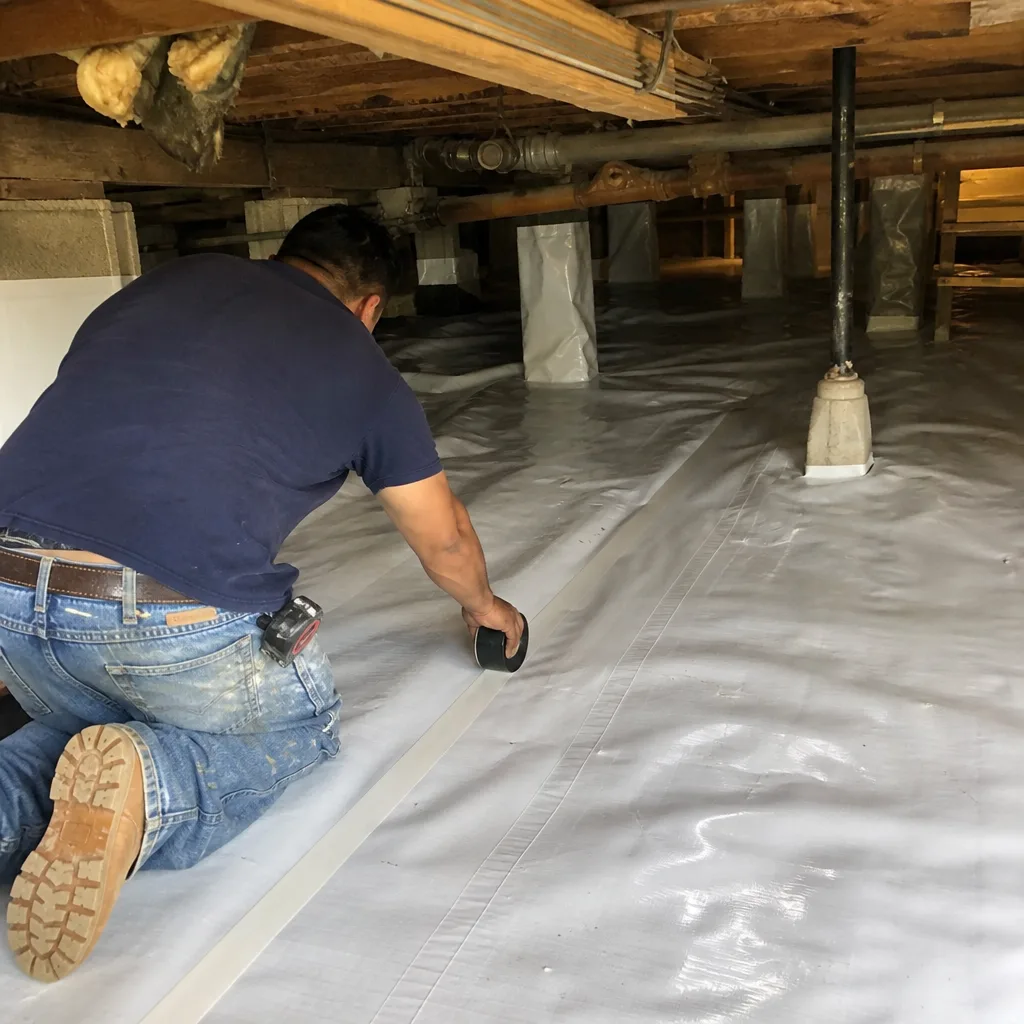
Homeowners often receive three quotes with three different scopes and struggle to compare them. The standard approach - cost per square foot - is misleading. It treats all insulation as equivalent and ignores air sealing entirely.
We recommend converting each bid to a cost-per-verified-ACH50-reduction. ACH50 - air changes per hour at 50 pascals - is the blower-door result normalized for building volume. It tells you how many times per hour the entire volume of air in your home would be replaced at test pressure. Lower is better.
Here’s the worksheet approach:
- Request a blower-door test from each bidder. If a bidder won’t do this, their bid cannot be evaluated on performance. Set it aside.
- Record the pre-work CFM50 and calculate ACH50. CFM50 × 60 ÷ building volume (cubic feet) = ACH50. A 2,000 square foot Pasadena home with 8-foot ceilings has roughly 16,000 cubic feet. At 4,000 CFM50, that’s 15 ACH50.
- Record the post-air-sealing target CFM50 and calculate target ACH50. A well-sealed home of this size might reach 2,000 CFM50, or 7.5 ACH50.
- Calculate ACH50 reduction: 15 − 7.5 = 7.5 ACH50 reduction.
- Divide total project cost by ACH50 reduction: $4,500 ÷ 7.5 = $600 per ACH50 reduction.
This normalizes bids with different scopes. Bid A might be cheaper per square foot but include no air sealing. Its ACH50 reduction is near zero. Bid B costs more but delivers verified air leakage reduction. The cost-per-ACH50-reduction reveals which bid actually buys performance.
We provide this calculation on every applicable quote. The homeowner sees the math, not just the price.
Pasadena-Specific Climate and Code Considerations
Pasadena sits in a Mediterranean climate zone with specific implications for insulation strategy. Summer design temperatures reach 95°F to 100°F. Winter design temperatures drop to 37°F. The diurnal swing - day-night temperature difference - can exceed 30°F in dry seasons. This means attic heat gain is significant, but nighttime cooling is also significant. A well-sealed envelope with appropriate insulation delays heat transfer long enough for natural ventilation to contribute.
Title 24, Part 6 of the California Energy Code sets minimum insulation requirements for altered buildings. For attic insulation in existing homes, the current standard is R-38 in climate zones where Pasadena is located. However, Title 24 also requires that alterations not reduce existing energy performance. If your home has deteriorated insulation that was originally R-19, replacing it with R-19 may comply with the nominal requirement but violate the performance preservation rule. A contractor should assess existing condition, not just quote minimum code.
Pasadena’s building department requires permits for work that alters the thermal envelope when combined with other regulated improvements. Standalone insulation replacement in an existing attic often does not require a permit, but the determination depends on scope. A contractor should know the threshold and discuss it proactively.
Local neighborhoods present specific challenges. In the Arroyo Seco area, homes from the 1910s to 1930s often have balloon framing with continuous wall cavities from basement to attic. Air sealing requires addressing the entire height, not just the attic floor. In San Rafael and Linda Vista, mid-century homes may have recessed can lights that are not IC-rated (insulation contact rated), requiring specialized covers before insulation can safely abut them. In East Pasadena and newer construction, attic access may be limited, affecting both inspection accuracy and installation method.
We account for these variables in our written scope. The Attic Insulation in Pasadena page details our specific approach by home era and construction type.
Common Mistakes to Avoid
- Hiring based on R-value quote alone. R-value without air sealing is a partial solution. In Pasadena’s climate, the air leakage often costs more in energy loss than insufficient insulation depth.
- Skipping the CSLB verification. Five minutes on the state database prevents weeks of dispute with an unlicensed or improperly insured operator.
- Accepting verbal pricing. A written price before any work starts is enforceable. A verbal “estimate” is a conversation, not a commitment.
- Ignoring ventilation. Adding insulation without ensuring soffit and ridge ventilation continuity can trap moisture. We’ve seen mold remediation costs exceed the original insulation job.
- Not asking for blower-door numbers. Without measurement, there is no verification. A contractor who won’t measure won’t be held accountable for results.
- Choosing the lowest bid without scope comparison. A $2,400 bid for insulation-only versus a $3,600 bid for sealed-and-insulated with blower-door verification are not comparable services. The cheaper bid often costs more in energy bills over five years.
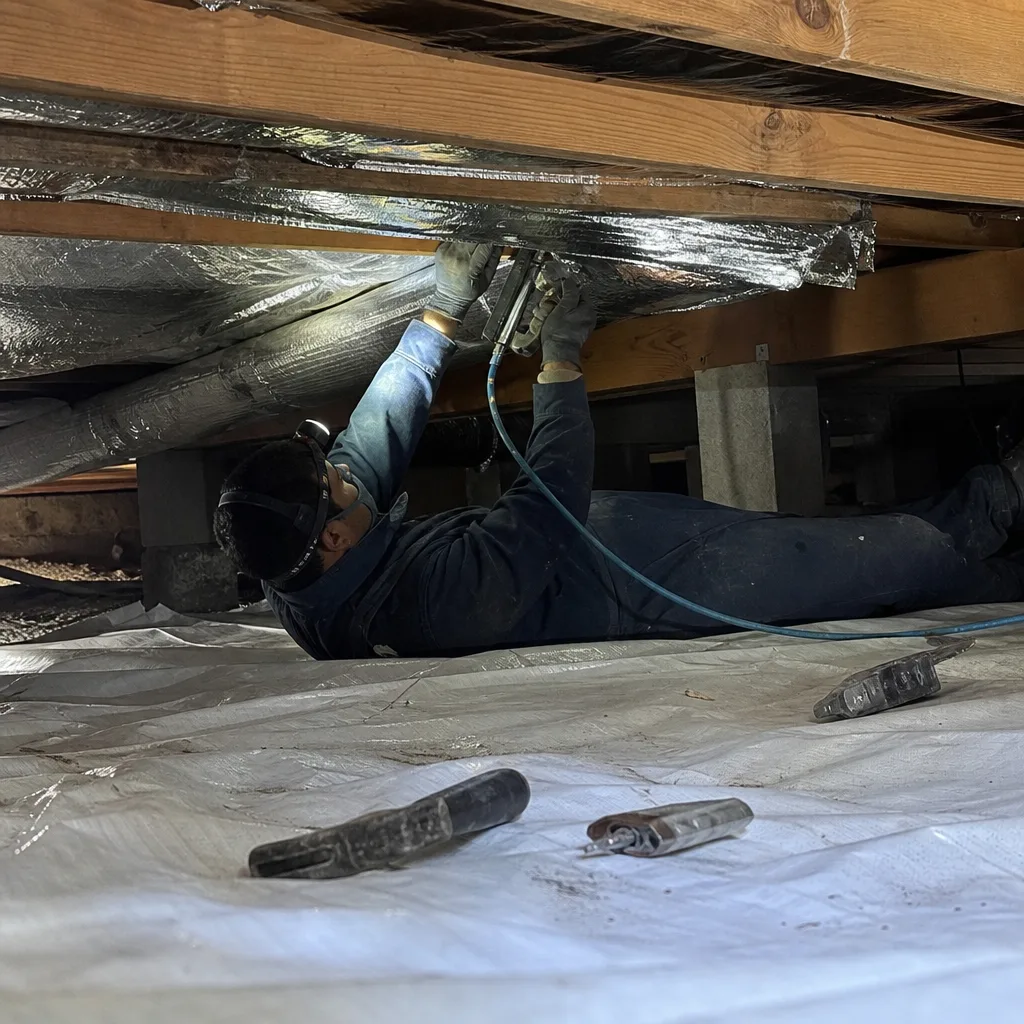
- Neglecting crawl space condition. In Pasadena’s hillside homes, particularly in areas like Hastings Ranch, crawl spaces contribute significantly to envelope leakage. Crawl Space Encapsulation & Vapor Barrier in Pasadena addresses this directly.
When to Call a Professional
Call a contractor when you notice uneven temperatures between rooms, energy bills increasing without rate changes, visible insulation degradation, or drafts from outlets and fixtures on upper floors. In Pasadena, these symptoms often peak in August and January, when HVAC systems work hardest against envelope deficiencies.
Also call before any HVAC replacement. A new, rightsized system in a leaky envelope will short-cycle, fail to reach set points, and degrade prematurely. Seal first, then size the equipment to the reduced load.
Topside Attic Insulation Pasadena offers free estimates in Pasadena. A live person answers calls 24/7 at (213) 816-5351. We’ll review any written estimate you’ve received - our Free Second Opinion service - and show you what the scope is actually buying. Explore more guides & resources to prepare for your call.
Frequently Asked Questions
Most attic insulation jobs in Pasadena homes between 1,200 and 2,500 square feet run between $2,800 and $5,500 when air sealing and blower-door verification are included. Jobs at the lower end typically involve adding blown-in fiberglass over existing insulation in a relatively tight envelope. Jobs at the higher end include extensive air sealing, can-light covers, and full-depth replacement. Call (213) 816-5351 for an exact quote - estimates are free.
Repair - adding material over degraded existing insulation - is cheaper upfront but often more expensive over time. In Pasadena’s climate, compressed, moisture-damaged, or rodent-contaminated insulation under new material reduces overall performance and can create health hazards. We assess existing condition during our initial inspection and document it with photos. Replacement is recommended when existing material is below R-19, contaminated, or unevenly distributed.
You need air sealing if your blower-door test reads above 2,500 CFM50 for a typical Pasadena home, or if you feel drafts from outlets, fixtures, or attic hatches. You need more insulation if the existing depth is below current Title 24 minimums and the envelope is already tight. Most Pasadena homes built before 1990 need both. A contractor who won’t test cannot tell you which applies.
A blower-door test is a pressurization reading that shows, in one number, how much air your building envelope is losing. A powerful fan mounts in an exterior door, depressurizes the house, and measures airflow through leaks. You need one because visual inspection cannot quantify total leakage. We run blower-door tests before and after air sealing on every applicable job, and we publish the numbers so you can verify the result.
Most residential attic jobs take one to two days. Day one: blower-door test, air sealing, and verification. Day two: insulation installation, final blower-door test, and documentation. Larger homes, complex rooflines, or jobs requiring insulation removal add time. We provide a specific schedule in our written scope.
Yes, Spray Foam Insulation in Pasadena is suitable for certain applications, particularly conditioned attics or spaces where R-value per inch is critical. Open-cell spray foam (Icynene, Demilec) provides air sealing and insulation in one application at approximately R-3.5 per inch. Closed-cell (Demilec, certain Johns Manville products) reaches R-6 per inch and adds structural rigidity. The choice depends on attic configuration, budget, and whether the space is vented or unvented. We specify the product and application in our written scope.
The Bottom Line
Hiring an insulation contractor in Pasadena is not about finding the lowest price per square foot. It is about finding a contractor who measures air leakage, seals before insulating, documents the work, and provides a written scope with a fixed price before anyone starts. The five questions in this guide separate operators who sell material from contractors who deliver performance. Verify the license. Demand the blower-door number. Read the scope. Compare bids on cost-per-verified-ACH50-reduction. The contractor who welcomes this scrutiny is the one prepared to stand behind the result.
We’ve operated under The Haven Standard since 2016: written price, written scope, written warranty, documented record. Every time.
Written by Wes Okafor, Owner at Topside Attic Insulation Pasadena, serving Pasadena since 2016.