
Last updated September 23, 2026
The Complete Guide to Insulation in Pasadena
Most Pasadena attics already have insulation. The problem is that insulation sitting on top of unsealed penetrations performs closer to R-10 than the R-38 printed on the bag - a gap that no additional blown-in material will fix. We’ve measured this ourselves in homes from Bungalow Heaven to Linda Vista, where the existing layer looks adequate until a blower-door test reveals 3,000+ CFM50 of leakage through gaps the homeowner can’t see from the hatch. This guide maps every assembly - attic, walls, crawlspace, ducts - against Pasadena’s actual Climate Zone 10 requirements and explains why air sealing has to precede every R-value conversation.
Quick Answer
Insulation in Pasadena works differently than in colder climates because California Climate Zone 10 punishes the same attic with summer radiant heat and mild winter losses simultaneously. The most cost-effective approach for most Pasadena homes is: seal all attic bypasses first, then install R-38 to R-49 blown-in insulation over the top, with a radiant barrier if the roof has direct sun exposure and limited existing ventilation. For a detailed Insulation Cost Breakdown: The Pasadena Homeowner’s Reference for 2026, expect $2.80 to $4.50 per square foot for a complete attic job including air sealing, with payback in 6 to 10 years at current SCE rates.
Table of Contents
- Why Pasadena’s Climate Zone 10 Changes the Math
- Air Sealing First: The Step Competitors Skip
- Attic Insulation: R-Values That Actually Pay Back in Pasadena
- Radiant Barriers and Tile Roofs: What the Product Literature Gets Wrong
- Walls, Crawlspaces, and Ducts: The Hidden Losses
- What Documentation a Complete Job Produces
- Costs and Payback: Pasadena-Specific Numbers
- Choosing Materials: Fiberglass, Cellulose, or Spray Foam
Why Pasadena’s Climate Zone 10 Changes the Math
California divides the state into 16 climate zones. Pasadena sits in Zone 10, a narrow band with fewer than 2,500 heating degree days and summer design temperatures reaching 95°F. This matters because insulation’s job description changes based on which load dominates.
In cold climates, the goal is simple: slow conductive heat loss from the conditioned space to the outside. R-value rules everything. In Pasadena, conductive winter loss is real but modest - a 1,500 square foot home might see only $80 to $120 in annual heating costs even with mediocre attic insulation. Summer cooling dominates the utility bill, and summer heat arrives through multiple paths simultaneously:
- Radiant heat from roof decking - asphalt shingles on a south-facing Pasadena attic can reach 160°F in August
- Duct leakage - supply ducts in a 130°F attic lose 15% to 30% of cooling capacity before air reaches the register
- Air infiltration - stack effect pulls 110°F attic air down through recessed lights and top plates whenever the system runs
- Conductive gain through under-insulated ceilings - the only factor R-value addresses directly
Title 24, California’s energy code, mandates minimum R-38 in attics for new construction and re-roof projects in Zone 10. But the code minimum is a floor, not an optimum. Our energy audits in Pasadena’s 91104 and 91105 ZIP codes show that homes with R-19 and no air sealing often perform worse than homes with R-30 and comprehensive sealing - because the unsealed home is effectively cooling its attic all summer.
The cost-recovery calculation also shifts in Zone 10. In a cold climate, doubling attic insulation from R-19 to R-38 might save $400 annually. In Pasadena, the same upgrade saves $180 to $240 in cooling costs, but only if the attic is sealed first. Without sealing, the savings drop to $60 to $90 because conditioned air escapes as fast as the insulation slows conduction.
This is why we treat Climate Zone 10 as a distinct problem set, not a milder version of Zone 12 or 14. The solutions overlap, but the priorities and payback timelines do not.
Air Sealing First: The Step Competitors Skip
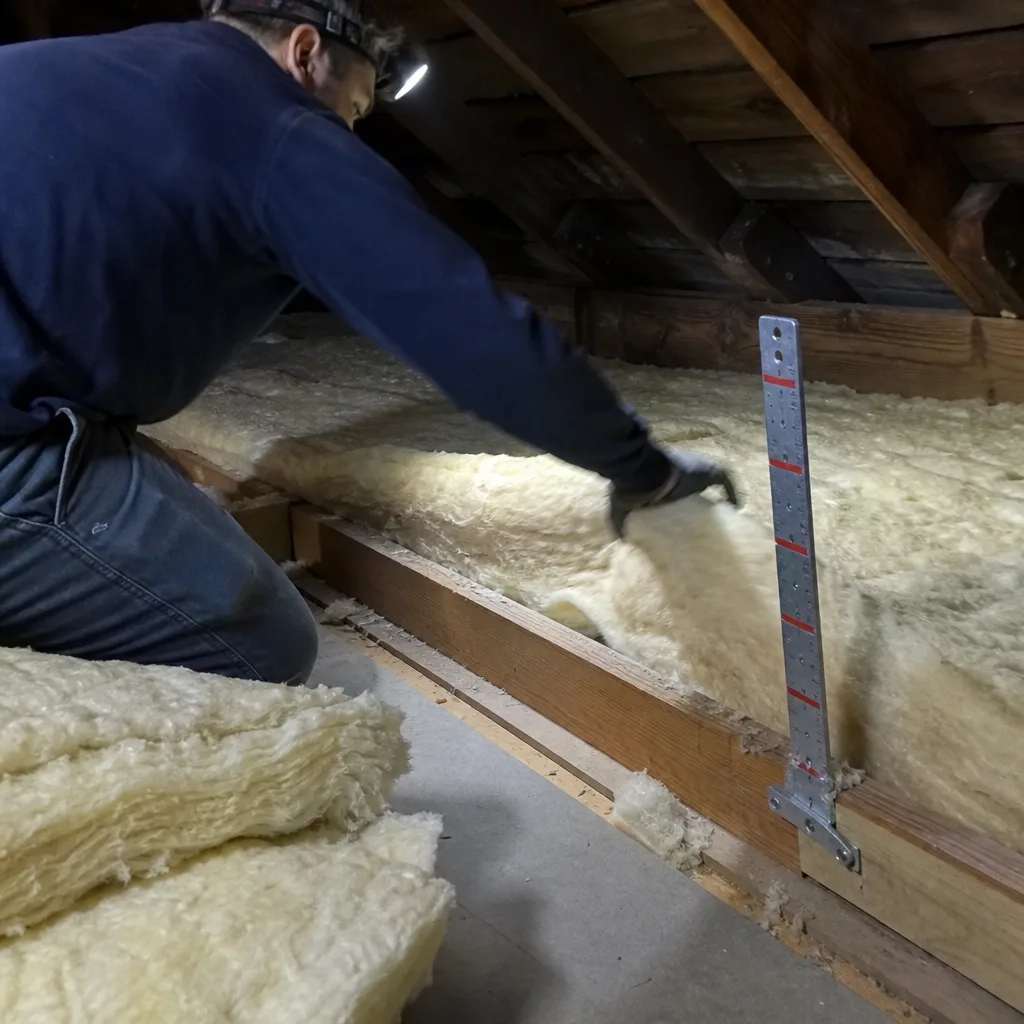
We will never blow insulation over an unsealed attic floor. This is not an upsell; it is a hard prerequisite under The Haven Standard. The reason is measurable and we’ve documented it on over 9,000 homes since 2016.
A blower-door test - a pressurization reading that shows, in one number, how much air your building envelope is losing - tells the story. In a typical pre-1980 Pasadena home, we see 3,500 to 5,500 CFM50 before any work begins. After sealing attic bypasses alone, that number drops 25% to 40%. The insulation hasn’t changed; the effective performance of the insulation has.
The specific bypass locations that dominate in Pasadena’s housing stock:
- Top plates - the horizontal framing member where interior walls meet the ceiling. In balloon-framed Pasadena bungalows, these gaps can run continuous for 20+ feet, connecting conditioned space directly to the attic. We seal with fire-rated caulk or spray foam, depending on gap width.
- Recessed can lights - pre-2010 IC-rated fixtures still leak 2 to 5 CFM50 each. A kitchen with six cans is a 15 to 30 CFM50 hole in the ceiling. We replace non-IC fixtures with airtight LED housings or seal with pre-formed covers.
- Plumbing and chimney chases - the framed box around a vent stack or fireplace flue often has a 1/2-inch to 2-inch gap at the ceiling plane. In Pasadena’s 1920s Craftsman homes, these chases are frequently unsealed from basement to attic.
- HVAC platform and duct penetrations - the return air platform in the attic is often a plywood box sitting on a leaky frame. The flex duct boot connections add more leakage points.
- Attic access hatch or pull-down stair - a 1/4-inch gap around a 22×30 inch hatch leaks as much as a 12-square-inch hole. We build insulated, weatherstripped boxes or replace pull-downs with airtight alternatives.
The sealing process takes 4 to 8 hours in a typical Pasadena attic, depending on accessibility and the number of penetrations. We photograph every location before and after. The homeowner receives these photos, plus the blower-door pre/post readings, in their Documented Photo Record.
Only after this step is complete do we discuss adding insulation. To do otherwise is to bury the leaks where they cannot be fixed later without removing the new material.
Attic Insulation: R-Values That Actually Pay Back in Pasadena
California Title 24 requires R-38 minimum in attics for new construction and re-roof projects. For retrofit work without roof removal, R-30 is permitted but not advisable in Pasadena’s cooling-dominated climate. Our cost-recovery modeling, based on actual SCE rate schedules and 10-year weather data from the Pasadena Water and Power service territory, shows the following:
| Starting Condition | Upgrade To | Installed Cost (1,500 sq ft attic) | Estimated Annual Savings | Simple Payback |
|---|---|---|---|---|
| Unsealed, R-11 to R-19 | Sealed + R-38 | $4,200 - $6,750 | $280 - $420 | 10 - 15 years |
| Partially sealed, R-19 to R-30 | Fully sealed + R-49 | $3,800 - $5,400 | $180 - $260 | 15 - 22 years |
| Unsealed, R-11 to R-19 | Sealed only, no insulation add | $1,800 - $2,800 | $140 - $220 | 8 - 13 years |
| Sealed, R-30 existing | R-38 to R-49 top-off | $2,100 - $3,200 | $80 - $140 | 15 - 28 years |
The table reveals something counterintuitive: in Pasadena, air sealing alone often pays back faster than insulation alone. The sealed + R-38 combination is the sweet spot for most homes starting with R-19 or less. Homes already at R-30 with good sealing see diminishing returns; we advise these homeowners to address walls, ducts, or crawlspaces before adding more attic material.
Neighborhood context matters. In Madison Heights and South Lake, where 1940s and 1950s homes often have original R-11 batts compressed by decades of storage traffic, the full sealed + R-38 package is almost always justified. In newer construction near Chapman Woods, where R-30 was standard from the 1990s forward, we more often find that duct sealing and minor air sealing yield better returns.
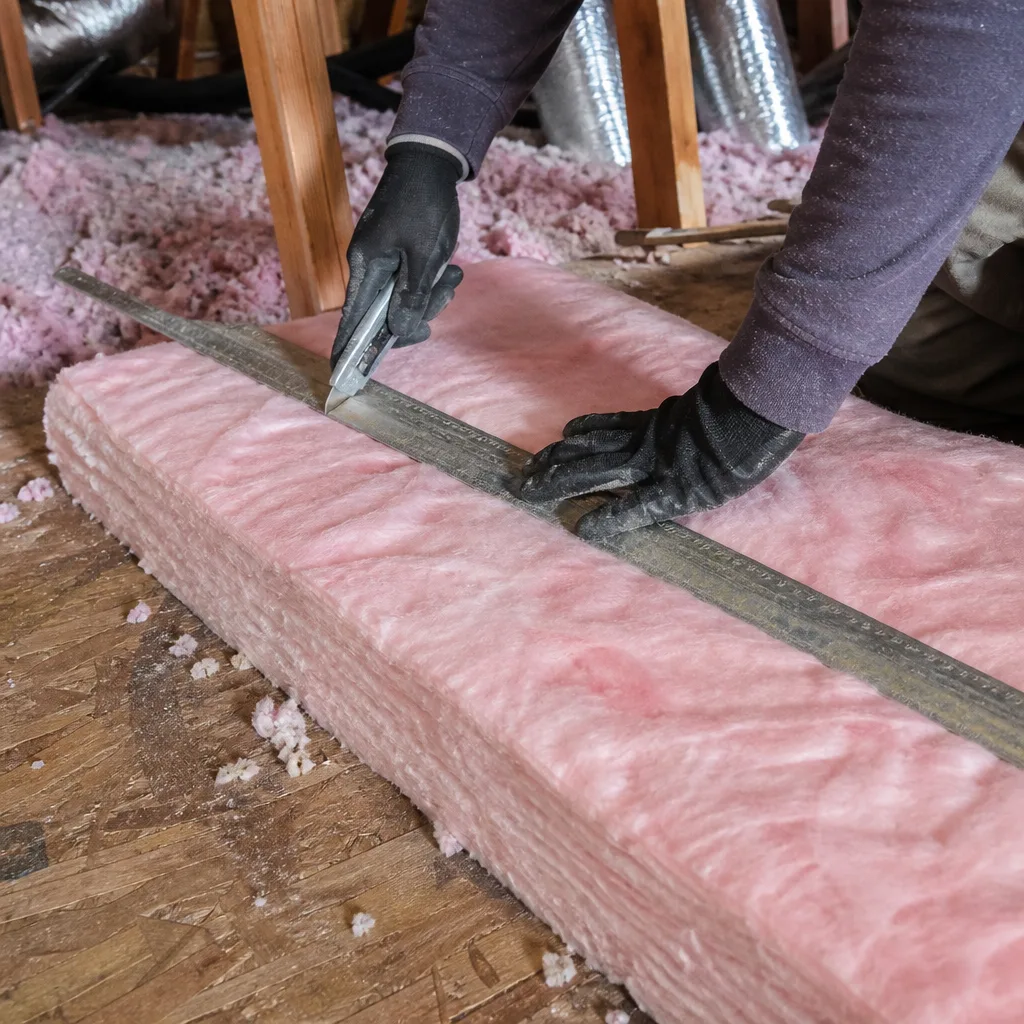
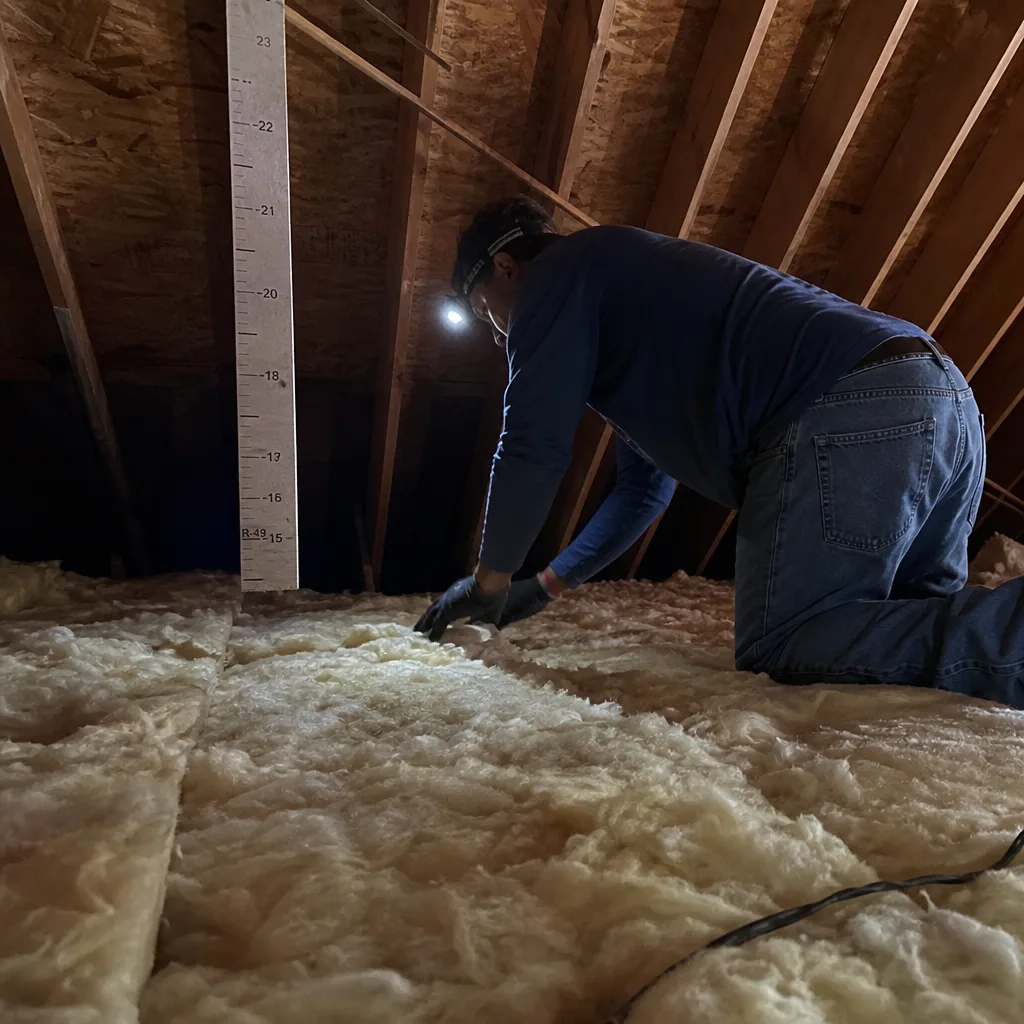
We install blown-in fiberglass or cellulose for most attic top-offs. Both materials achieve R-38 at approximately 10 to 12 inches depth for fiberglass, 8 to 10 inches for cellulose. We source from Owens Corning, Johns Manville, Knauf, and GreenFiber depending on availability and the specific application. No proprietary lock-in.
Attic Insulation in Pasadena covers our full process for this assembly.
Radiant Barriers and Tile Roofs: What the Product Literature Gets Wrong
Radiant barrier manufacturers typically show performance data for asphalt shingle roofs with dark colors and poor ventilation. In that scenario, a radiant barrier - a reflective foil layer that blocks radiant heat transfer - can reduce attic temperatures 20°F to 30°F. The product literature then generalizes this to all climates and roof types.
Pasadena breaks this generalization in two ways.
First, clay and concrete tile roofs, common in Pasadena’s Spanish Colonial and Mediterranean Revival housing stock, already perform differently than asphalt. The tile’s thermal mass and the air gap between tile and decking moderate peak temperatures. We’ve measured attic temperatures in tile-roofed Pasadena homes that run 10°F to 15°F cooler than comparable asphalt-roofed homes at the same sun exposure. The radiant barrier’s incremental benefit shrinks accordingly.
Second, the interaction between radiant barriers and blown-in insulation depends on installation geometry. A radiant barrier laid on the attic floor, atop existing insulation, becomes a dust collector within 3 to 5 years in Pasadena’s dry climate. Dust accumulation degrades reflectivity from 0.9 to 0.3 or lower. A radiant barrier stapled to the underside of roof rafters avoids this problem but complicates future insulation additions and can trap moisture if attic ventilation is marginal.
Our approach in Pasadena:
- Tile roofs with adequate ventilation (ridge + soffit vents, net free area ≥ 1:300): radiant barrier rarely justified; prioritize air sealing and R-38+ insulation
- Asphalt shingle roofs, dark color, poor ventilation: radiant barrier on rafters can help, but only after sealing and insulation are addressed
- Flat or low-slope roofs (common in Mid-Century Modern pockets near Poppy Peak): radiant barrier typically not applicable; focus on rigid foam above deck or interior spray foam
When we do install radiant barriers, we use perforated products that allow vapor transmission and document the pre/post attic temperature with infrared imaging. The homeowner sees the measurement, not the marketing claim.
Walls, Crawlspaces, and Ducts: The Hidden Losses
Attics dominate the insulation conversation, but walls and crawlspaces account for significant loads in Pasadena’s older housing stock. And ducts, when present in the attic, can erase R-38 gains entirely.
Walls
Pre-1960 Pasadena homes typically have no wall insulation. 2×4 studs with lath and plaster, sheathing, and siding provide roughly R-4 to R-5 effective. Dense-pack cellulose or fiberglass injection can raise this to R-13 in a 2×4 cavity. The challenge is access: exterior walls must be drilled from outside (siding removed or drilled through) or interior drywall must be opened.
We recommend wall insulation in Pasadena when:
- The home has no existing wall insulation and the siding is being replaced anyway
- Interior remodeling opens walls for other trades
- Blower-door testing shows significant leakage through the wall plate, indicating connected cavities
Standalone wall insulation without these conditions rarely pays back in Zone 10. The annual savings for a 1,500 square foot home runs $60 to $100 at current rates, while the disruption cost is substantial.
Crawlspaces
Pasadena’s hillside homes in Linda Vista, San Rafael Heights, and parts of Bungalow Heaven often have vented crawlspaces with dirt floors. In summer, these spaces pull warm, humid air across cool floor joists; in winter, they ventilate against the conditioned floor above. The result is cold floors, moisture issues, and rodent access.
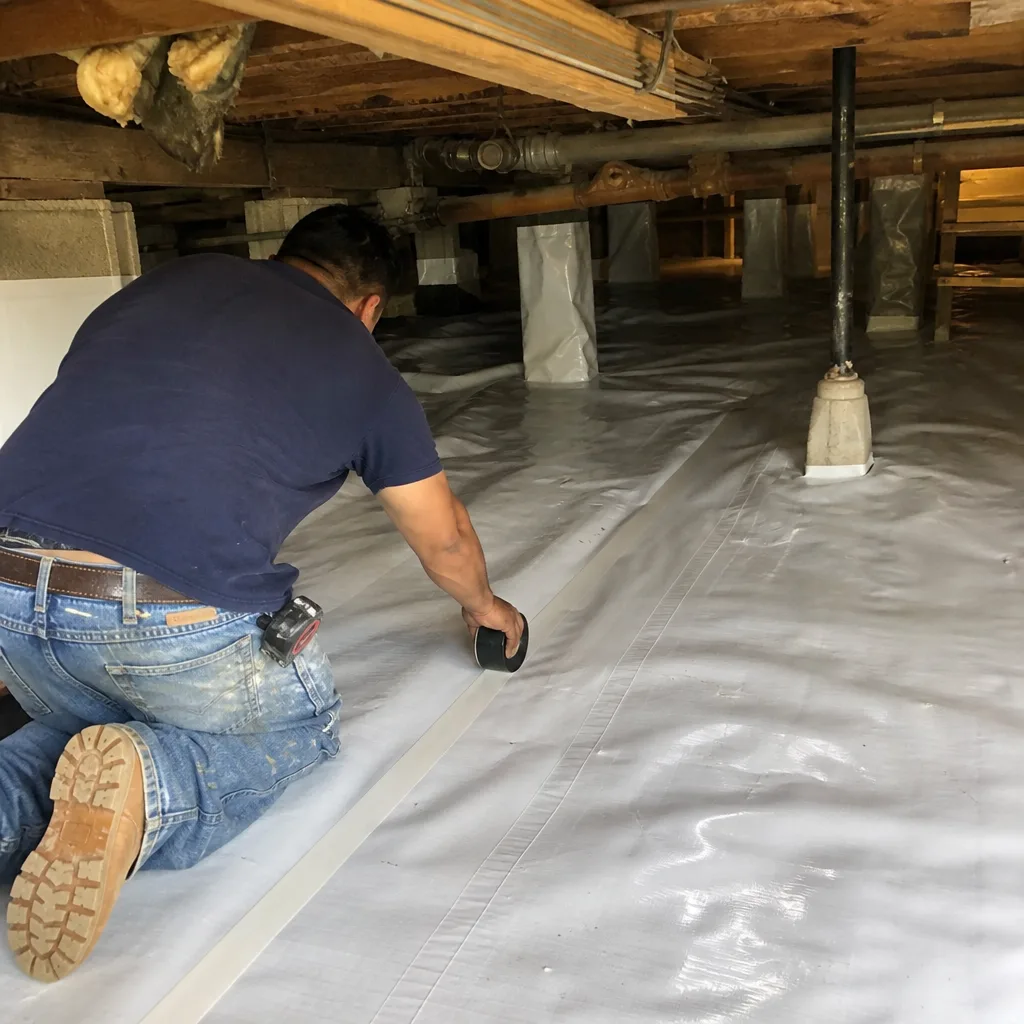
Crawl Space Encapsulation & Vapor Barrier in Pasadena addresses this assembly directly. Encapsulation - sealing vents, installing a vapor barrier over the dirt floor, and insulating the perimeter walls - converts the crawlspace to conditioned space. We see floor temperature improvements of 8°F to 12°F and measurable reductions in first-floor humidity.
Ducts in Attics
This is where R-38 attic insulation gets undermined. A typical 3-ton air conditioning system in Pasadena moves 1,200 CFM through ducts in a 130°F attic. If those ducts leak 15% on the supply side, 180 CFM of 55°F air never reaches the rooms. The system runs longer. The attic insulation’s conductive benefit is swamped by the convective loss.
We measure duct leakage with a duct blaster - a calibrated fan that pressurizes the duct system and measures airflow through leaks. In Pasadena homes with original 1970s to 1990s ductwork, we typically see 20% to 35% total leakage. After sealing with mastic and replacing degraded flex duct, we target 5% or less. The before/after number goes in the documentation package.
Duct sealing alone, without any insulation upgrade, can improve effective system capacity 10% to 20%. In homes where the air conditioner is marginally sized for the load, this can avoid a premature replacement.
What Documentation a Complete Job Produces
Every job we complete in Pasadena closes with documented evidence, not a handshake. Under The Haven Standard, the homeowner receives:
- Written scope and written price - before any work starts. This is Clause 1. No exceptions, no verbal estimates, no “we’ll figure it out when we get up there.”
- Blower-door test results - on applicable jobs, the pre-work CFM50 reading, the post-sealing reading, and the post-insulation reading if insulation affects the envelope. A typical Pasadena bungalow might show 4,200 CFM50 pre-work, 2,800 CFM50 after sealing, and 2,750 CFM50 after insulation (the insulation itself does not seal, but we verify no new leaks were created).
- Installed R-value certificate - stating the material type, manufacturer, bag count or board feet, and achieved depth or thickness. We use this for Title 24 compliance documentation when permits are required.
- Permit sign-off - Title 24 alterations in California require permits for insulation work that exceeds $1,000 in value or involves envelope modifications. We pull permits, schedule inspections, and deliver the signed card.
- Documented Photo Record - every visit, every job, included automatically. Photos show: access condition, existing insulation depth, each sealed bypass location, installed material depth measurement, and final attic condition. These are timestamped and delivered electronically.
- Written warranty - the 365-Day Done Right Promise, with specific coverage terms for materials and workmanship.
The homeowner knows what leaving looks like before we arrive. This is not a customer service gesture; it is quality control. A crew that knows every joint will be photographed works differently than one that does not.
Costs and Payback: Pasadena-Specific Numbers
We name price ranges because a written price before any work starts is Haven Standard Clause 1. These figures reflect our actual 2023-2024 job data for Pasadena homes between 1,200 and 2,500 square feet:
| Scope | Price Range | Typical Conditions |
|---|---|---|
| Attic air sealing only | $1,800 - $2,800 | Accessible attic, 10-25 bypasses, no insulation add |
| Attic sealing + R-38 blown-in (fiberglass) | $4,200 - $6,200 | 1,500 sq ft attic, R-11 to R-19 existing, standard access |
| Attic sealing + R-49 blown-in (cellulose) | $4,800 - $7,200 | Same, with cellulose premium and higher density |
| Spray foam, open-cell, roofline | $8,500 - $14,000 | Full encapsulation, 3-5 inches, includes prep and cleanup |
| Crawlspace encapsulation | $4,500 - $8,500 | 1,000-1,500 sq ft dirt floor, vapor barrier, wall insulation |
| Duct sealing + minor repair | $1,400 - $2,600 | Duct blaster test, mastic sealing, 2-3 flex duct replacements |
| Insulation removal + replacement | Add $1.20 - $2.00/sq ft | Contaminated or degraded material, rodent damage, etc. |
Payback depends on starting condition, utility rates, and occupancy patterns. A family in a 1920s Pasadena home with R-11, no sealing, and 2,500 kWh summer cooling bills will see faster returns than a couple in a 1990s townhome with R-30 and modest usage. Our general guidance: sealed + R-38 pays back in 6 to 10 years for the worst-performing homes, 10 to 15 years for mid-grade starting points. Beyond 15 years, we recommend prioritizing other measures unless comfort is the primary driver.
SCE’s current tiered rates and Pasadena Water and Power’s residential schedule are the basis for these calculations. We update our models annually and can run a specific home through the analysis during a free estimate.
Choosing Materials: Fiberglass, Cellulose, or Spray Foam
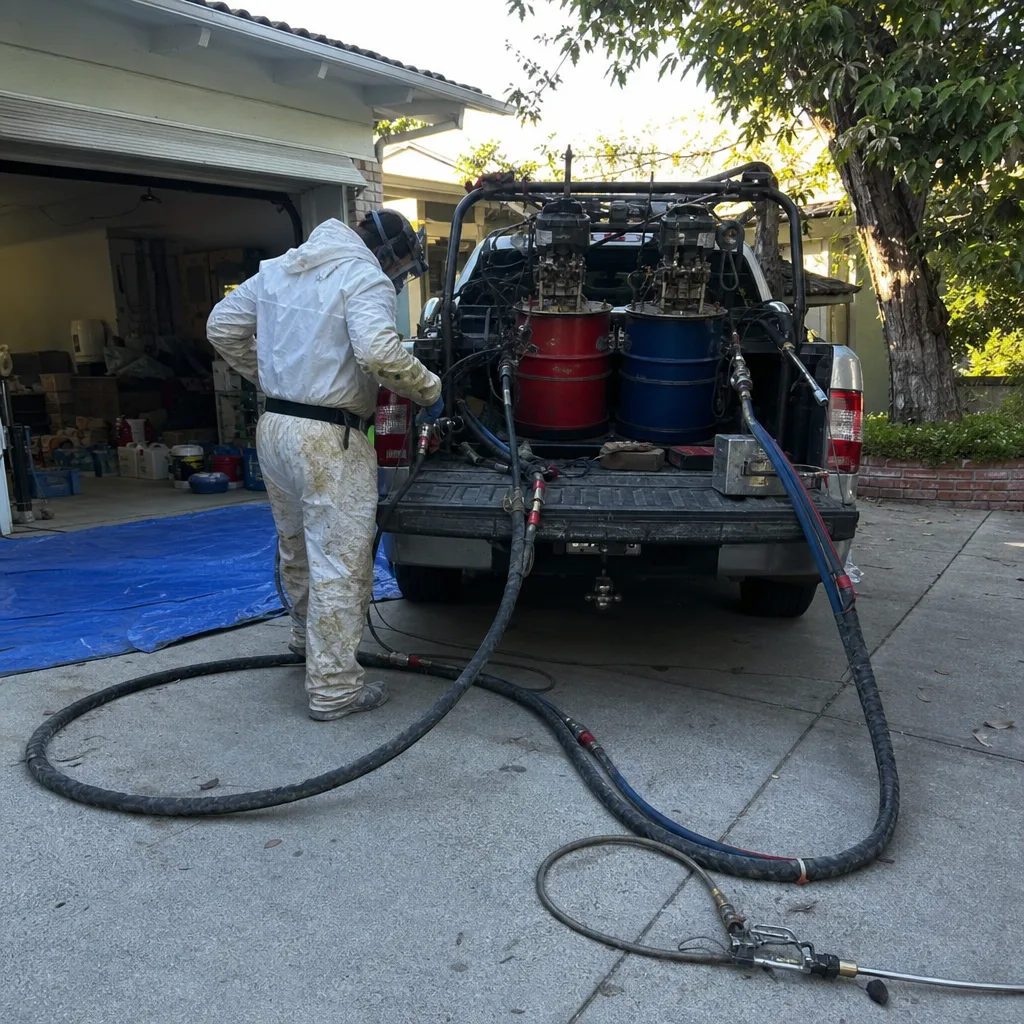
We source from Owens Corning, Johns Manville, Knauf, Rockwool, CertainTeed, Icynene, Demilec, and GreenFiber. No exclusive arrangements. The right material depends on the assembly, the budget, and the performance target.
Blown-In Fiberglass
Loose-fill fiberglass achieves R-2.2 to R-2.7 per inch depending on density. For R-38, we install 12 to 14 inches. It does not settle significantly, resists moisture damage, and is the lowest-cost option for attic top-offs. We use it in Pasadena when the attic is already reasonably clean, the budget is tight, and the primary goal is conductive resistance.
Blown-In Cellulose
Cellulose - recycled paper treated with borate fire retardant - achieves R-3.2 to R-3.8 per inch. R-38 requires 10 to 12 inches. It settles 10% to 20% over the first year, which we account for in initial depth. Cellulose’s advantages: better air flow resistance (it slows convection within the insulation layer), slightly better sound attenuation, and lower embodied energy. We use it in Pasadena for homeowners prioritizing these characteristics or when we’re dense-packing walls.
Spray Foam
Open-cell spray foam (Icynene, Demilec) at 3.5 inches achieves R-13 and acts as an air barrier. Closed-cell at 2 inches achieves R-12 to R-14 and is a vapor barrier. In Pasadena, we use spray foam primarily for:
- Roofline encapsulation in homes where the attic is being converted to conditioned space
- Rim joist and crawlspace sealing where access is limited
- Wall cavities in remodels where drywall is open
Spray Foam Insulation in Pasadena details our applications. We do not recommend spray foam as a default attic solution; the cost premium is rarely justified in Zone 10 for standard attic floors, and improper application can create moisture traps.
Rigid Foam Board
Polyiso or XPS boards are used for cathedral ceilings, flat roofs, and exterior foundation insulation. In Pasadena’s Mid-Century Modern homes with low-slope roofs and minimal attic space, rigid foam above the deck during re-roofing is often the only practical way to achieve code-minimum R-value.
Common Mistakes to Avoid
- Blowing insulation over unsealed bypasses. This buries the leaks permanently. We’ve removed 12-inch cellulose layers to access top plates that should have been sealed first - a $2,000 correction that could have been a $400 initial step.
- Ignoring the hatch. A pull-down stair without an insulated, weatherstripped box leaks as much as a 6-inch diameter hole. We see this skipped in roughly half of competitor jobs we review during free second opinions.
- Compressing batts into irregular joist bays. R-30 batts compressed to 4 inches perform at R-11. Blown-in material conforms to the cavity and maintains rated thickness.
- Installing radiant barriers on attic floors. Dust accumulation in Pasadena’s dry climate renders these ineffective within a few years. Rafter-mounted or skip entirely.
- Adding insulation without addressing duct leakage. A home with R-49 and 25% duct leakage will cool less efficiently than a home with R-30 and tight ducts. We measure first.
- Skipping permits for Title 24 work. Unpermitted insulation work complicates resale and may void insurance coverage. We pull permits on all qualifying jobs.
- Using moisture-sensitive materials in vented crawlspaces without vapor barriers. Fiberglass batts between joists in a dirt-floor crawlspace become mold reservoirs. Encapsulate first, then insulate.
When to Call a Professional
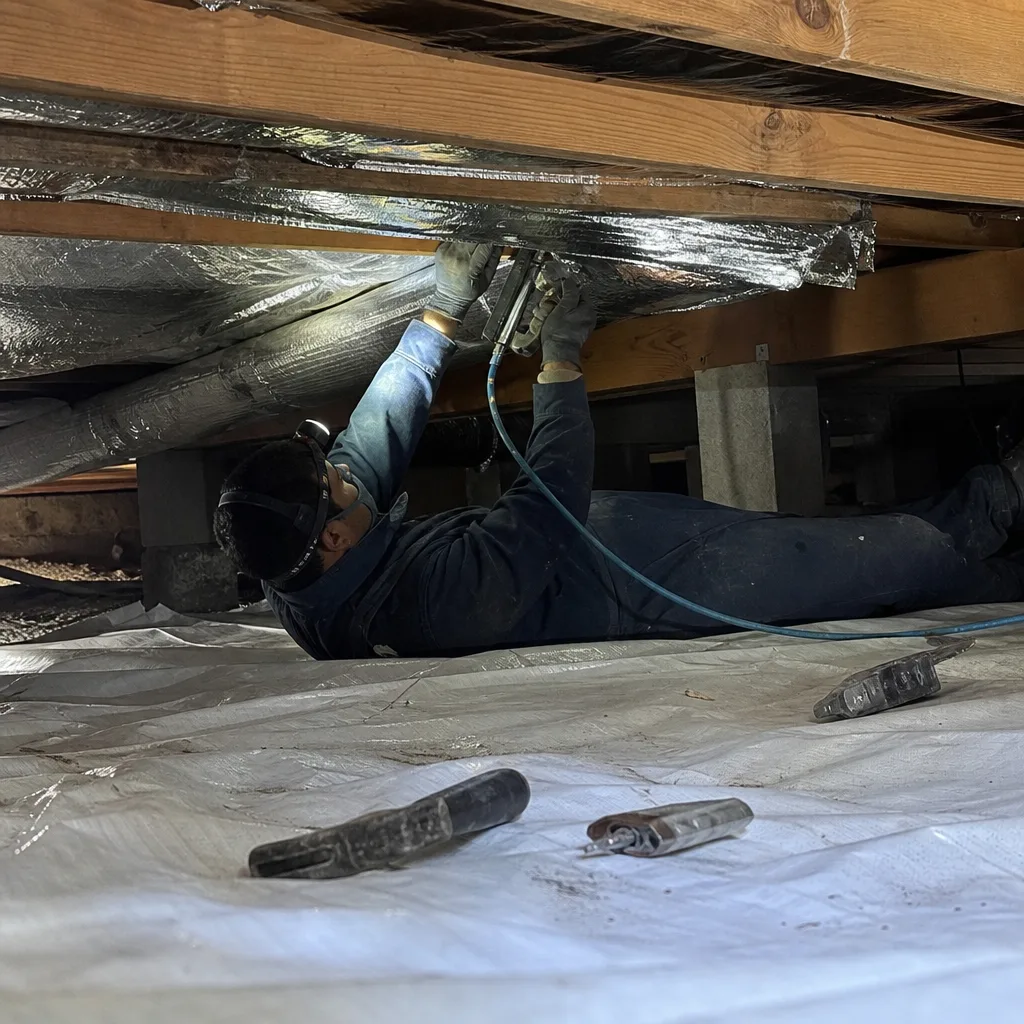
Call a professional when the attic shows signs of moisture damage, rodent activity, or degraded material that requires removal; when the home was built before 1980 and has never had a blower-door test; when summer cooling bills exceed $300 monthly for a home under 2,000 square feet; or when you’re considering spray foam, which requires specialized equipment and training for safe application. See our guide on How to Hire a Insulation Contractor in Pasadena: A Step-by-Step Guide for what to look for. High-tension garage door springs, electrical panel work, and gas line modifications are genuinely dangerous - we coordinate with licensed trades when these are encountered, and we recommend against homeowner attempts.
Topside Attic Insulation Pasadena home - we offer free estimates in Pasadena and surrounding communities. A live person answers calls 24/7 at (213) 816-5351, or you can request a callback by text. We also provide free second opinions on any written estimate from another contractor; bring us the scope and we’ll read it with you.
Frequently Asked Questions
Not sure whether to tackle this yourself? Read our DIY vs Professional Insulation: The Pasadena Homeowner’s Decision Guide. Most complete attic jobs in Pasadena run $4,200 to $6,750 for a 1,500 square foot attic including air sealing and R-38 blown-in insulation. Sealing-only work ranges $1,800 to $2,800. The exact price depends on existing conditions, access difficulty, and material choice. Call (213) 816-5351 for a written estimate - estimates are free and include a blower-door reading if applicable.
Repair is cheaper only when the existing material is dry, uncontaminated, and evenly distributed at R-19 or better. In Pasadena, we more often find that 30- to 50-year-old batts are compressed, displaced by storage traffic, or compromised by rodent activity. Replacement with new blown-in material, installed over properly sealed bypasses, typically outperforms repair by a wide margin. We assess this during our initial inspection and document the condition with photos. For more guides & resources on Pasadena home performance, visit our blog.
A typical Pasadena attic - air sealing plus blown-in insulation - takes one to two days. Day one: sealing, blower-door verification, and preparation. Day two: insulation installation, final depth verification, and cleanup. Spray foam roofline work may extend to three days for cure time. We provide a written schedule with the price before work starts.
California Title 24 requires R-38 minimum in attics for new construction and re-roof projects in Climate Zone 10. For retrofit work without roof removal, R-30 is the code minimum but we recommend R-38 to R-49 for cost-effective performance given Pasadena’s cooling loads. Wall insulation in new construction must meet R-13 in 2×4 construction or R-19 in 2×6.
Yes, but only when combined with air sealing. Insulation slows conductive heat gain from a 130°F attic to a 75°F living space. Without sealing, convective airflow through bypasses bypasses the insulation entirely. We’ve measured attic floors with R-38 batts that were delivering R-12 effective performance due to unsealed can lights and top plates. Seal first, then insulate - the order is not negotiable.
Yes, for work exceeding $1,000 in value or involving envelope modifications. The City of Pasadena Building Division requires permits for insulation upgrades that include air sealing, material removal, or R-value changes. We pull permits, schedule inspections, and deliver the signed compliance card. Unpermitted work may complicate future sale or insurance claims.
The Bottom Line
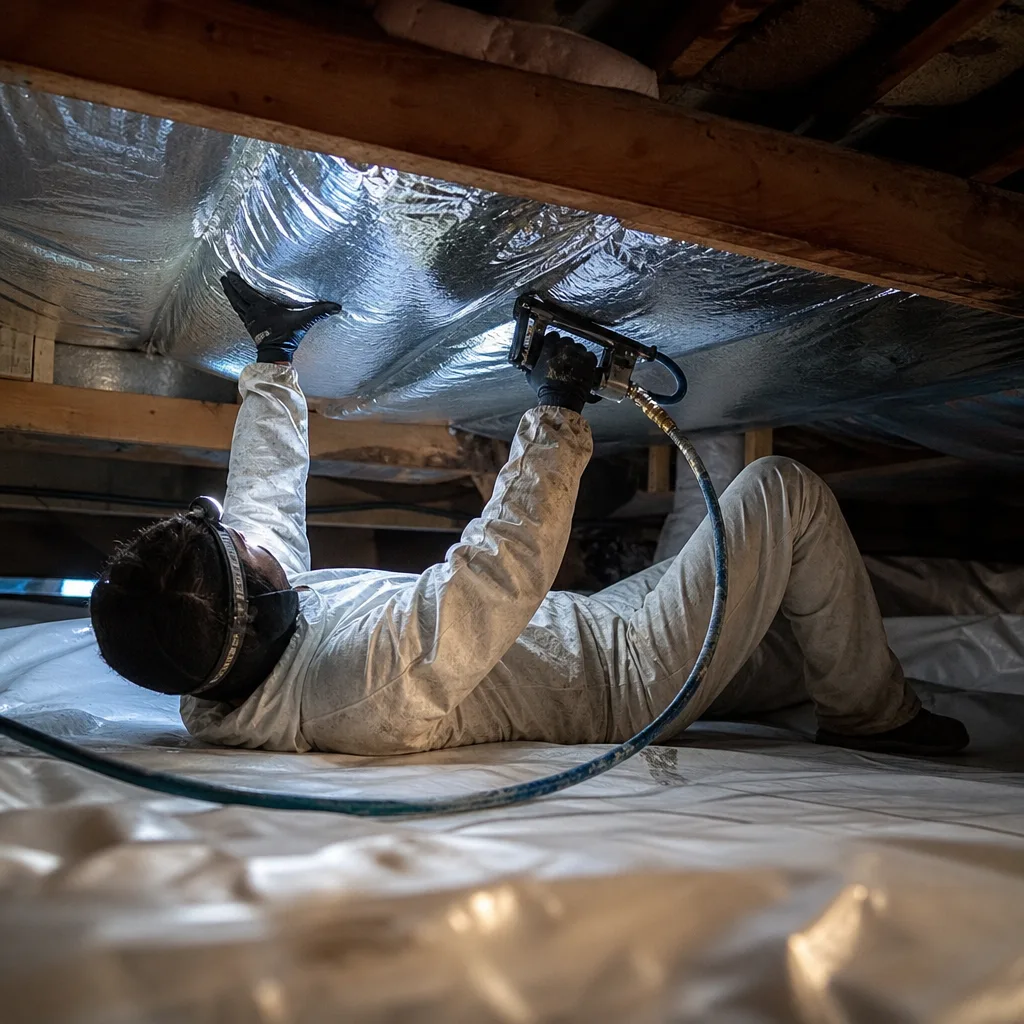
Pasadena’s Climate Zone 10 demands a different insulation strategy than colder regions. The priority order is fixed: seal attic bypasses first, verify with a blower-door test, then add insulation to R-38 or higher. Radiant barriers help in specific roof types but are not universal. Duct sealing often outperforms additional insulation in homes with attic ducts. Every job should produce documentation - blower-door numbers, installed R-value certificate, permit sign-off, and photo record - so the homeowner can verify what was done. We’ve applied this approach to over 9,000 homes since 2016, with a written price before every job and a 365-Day Done Right Promise after.
Call (213) 816-5351 for a free estimate in Pasadena. A live person answers 24/7, and we offer free second opinions on any written estimate you’ve received.
Written by Wes Okafor, Owner at Topside Attic Insulation Pasadena, serving Pasadena since 2016.