
Last updated September 23, 2026
Insulation Warning Signs: A Pasadena Homeowner’s Reference Guide
A $200 spike in your July electricity bill is not an insulation warning sign. It is the end of a deterioration sequence that started in your attic 18 months earlier, and was visible to anyone who looked. In Pasadena’s climate, where June gloom gives way to triple-digit August afternoons and winter nights can dip below 40°F, insulation failures progress through predictable physical stages long before they register on a utility statement. This guide maps the earlier signals, the ones you can spot with a flashlight, an infrared thermometer, and a Saturday morning walk-through. For a broader overview, see The Complete Guide to Insulation in Pasadena. We’re not talking about feeling a draft. We’re talking about reading your ceiling plane like a diagnostic report.
Quick Answer
The earliest insulation warning signs in a Pasadena home are physical, not financial: thermal bridging visible as 8-12°F temperature strips along ceiling joists on summer mornings; pest-compromised insulation with distinct odor and scatter patterns; condensation at the ceiling plane during June gloom that mimics ice damming in snow climates; and duct sweat on attic HVAC lines that signals simultaneous duct leakage and insulation failure. A blower-door reading above 2,000 CFM50 in a 1,500-square-foot home confirms the envelope is leaking conditioned air at a rate that will produce measurable utility penalties within two billing cycles.
Table of Contents
- How to Spot Thermal Bridging with an Infrared Thermometer
- Pest-Compromised, Age-Compressed, and Moisture-Damaged Insulation
- The Pasadena Equivalent of Ice Damming: June Gloom Condensation
- Duct Sweat as a Dual Diagnostic
- The Blower-Door Number That Predicts Your Next Bill
- Crawl Space and Rim Joist Warnings
- Common Mistakes to Avoid
- When to Call a Professional
- Frequently Asked Questions
How to Spot Thermal Bridging with an Infrared Thermometer
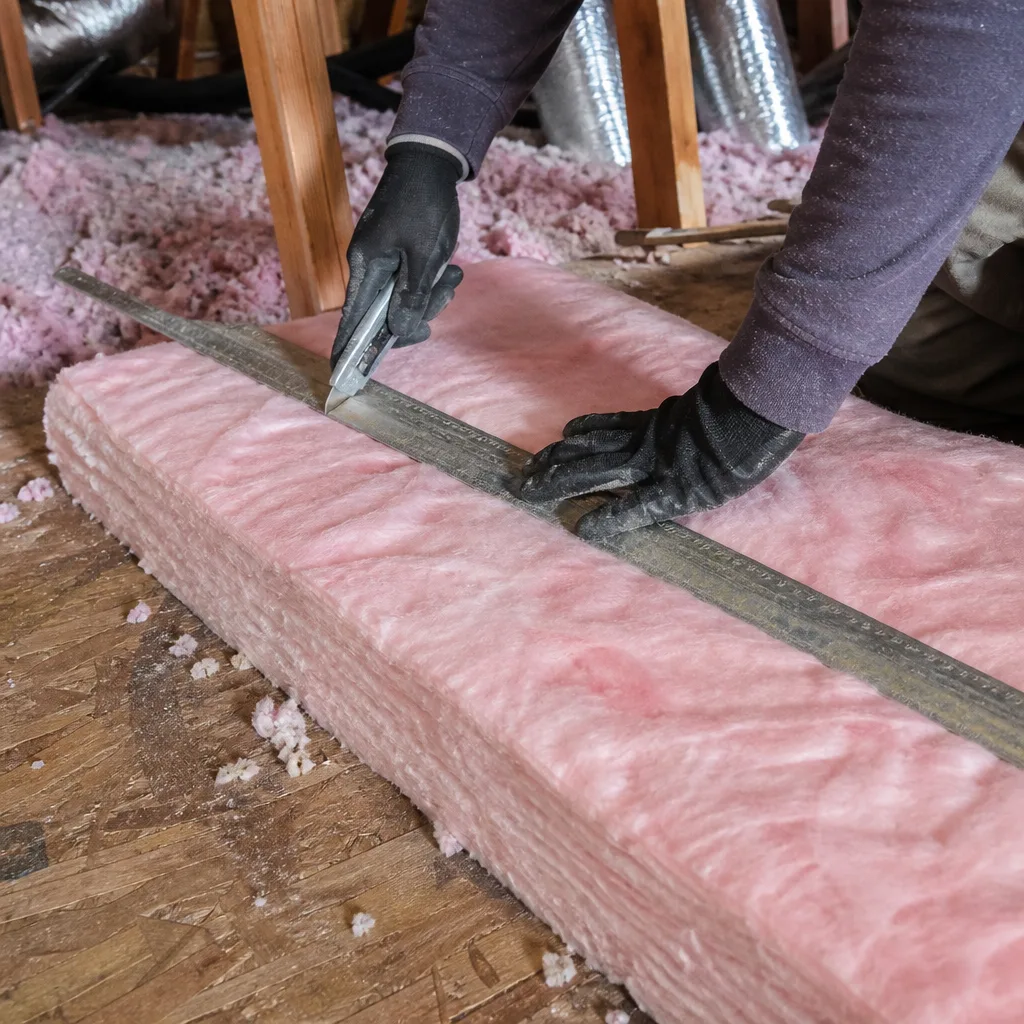
Thermal bridging is the path of least resistance heat takes through your building envelope, and in a Pasadena attic, the most common bridge is right above your head. Ceiling joists, typically framed at 16 or 24 inches on center, compress insulation or leave it thinner at the wood member than in the cavity between joists. Wood conducts heat roughly four times faster than fiberglass batts. The result is a strip of ceiling that runs warmer in summer and cooler in winter than the surrounding surface.
Most homeowners never notice this with a hand. The delta is subtle, usually 5-15°F. But an infrared thermometer, the kind available for $30-50 at any hardware store in Pasadena or online, makes it visible.
When and How to Measure
Timing matters more than equipment quality. Pasadena’s diurnal temperature swing, especially in spring and fall, creates the ideal measurement window between 6:00 and 8:00 a.m., before solar gain warms the roof assembly. For seasonal timing tips, read our Seasonal Insulation Care for Pasadena: Year-Round Homeowner’s Guide. In summer, measure before 7:00 a.m. In winter, any morning after a clear night works.
- Set the thermometer to emissivity 0.95 (the default for most painted drywall).
- Stand in the center of a room, aim at the ceiling midway between two joists, and record the temperature.
- Aim directly at the ceiling where a joist runs beneath, and record that temperature.
- Move to three other rooms, including one on the north side and one on the south side of the house.
What the Numbers Mean
- 0-4°F difference: Normal. The insulation layer is continuous enough that joist conduction is not dominant.
- 5-7°F difference: Early warning. Insulation has settled, compressed, or was never installed to full depth at the joist line. Energy penalty is present but small.
- 8-12°F difference: Action threshold. This is the range where we begin recommending intervention. In our work across Pasadena, from Bungalow Heaven to the Madison Heights flats, this delta correlates with attic insulation that has fallen below R-19 in a cavity originally built for R-30 or higher.
- 13°F or greater: Significant failure. The insulation may be missing entirely at the joist, wet, or disturbed. This is also the range where mold risk at the ceiling plane becomes real.
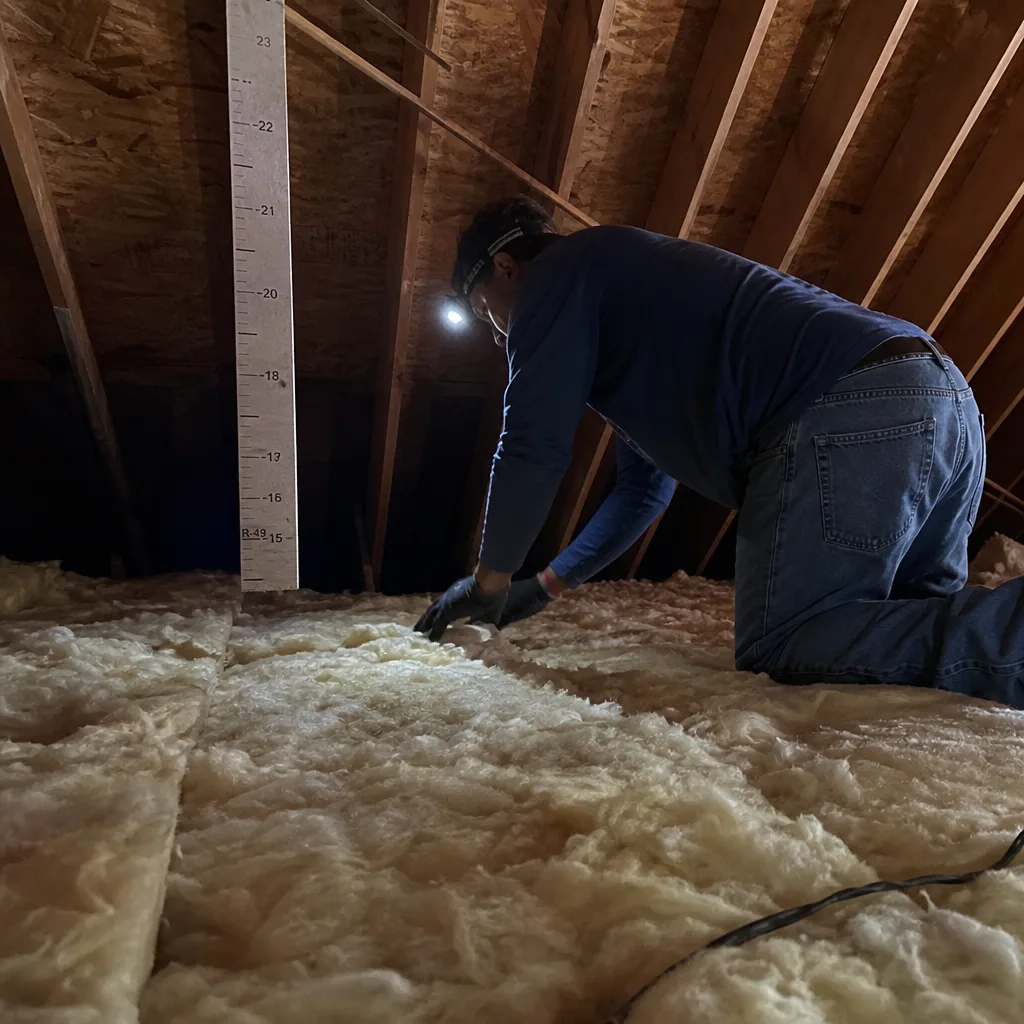
We documented a home in the Chapman Woods area last spring where the homeowner had measured 14°F deltas across their master bedroom ceiling. The blower-door test read 3,800 CFM50. After air sealing the top plates, can lights, and a plumbing penetration, then blowing GreenFiber cellulose to R-38, the post-work blower-door reading was 2,100 CFM50 and the thermal bridging delta dropped to 3°F. The homeowner received before-and-after blower-door numbers, a written scope, and a photo record showing the sealed top plates and the depth gauge in the new insulation. See our Attic Insulation Maintenance Checklist for Pasadena Homeowners for what to track after installation.
Attic Insulation in Pasadena covers the full range of upgrade options if your measurements fall in the action range.
Pest-Compromised, Age-Compressed, and Moisture-Damaged Insulation
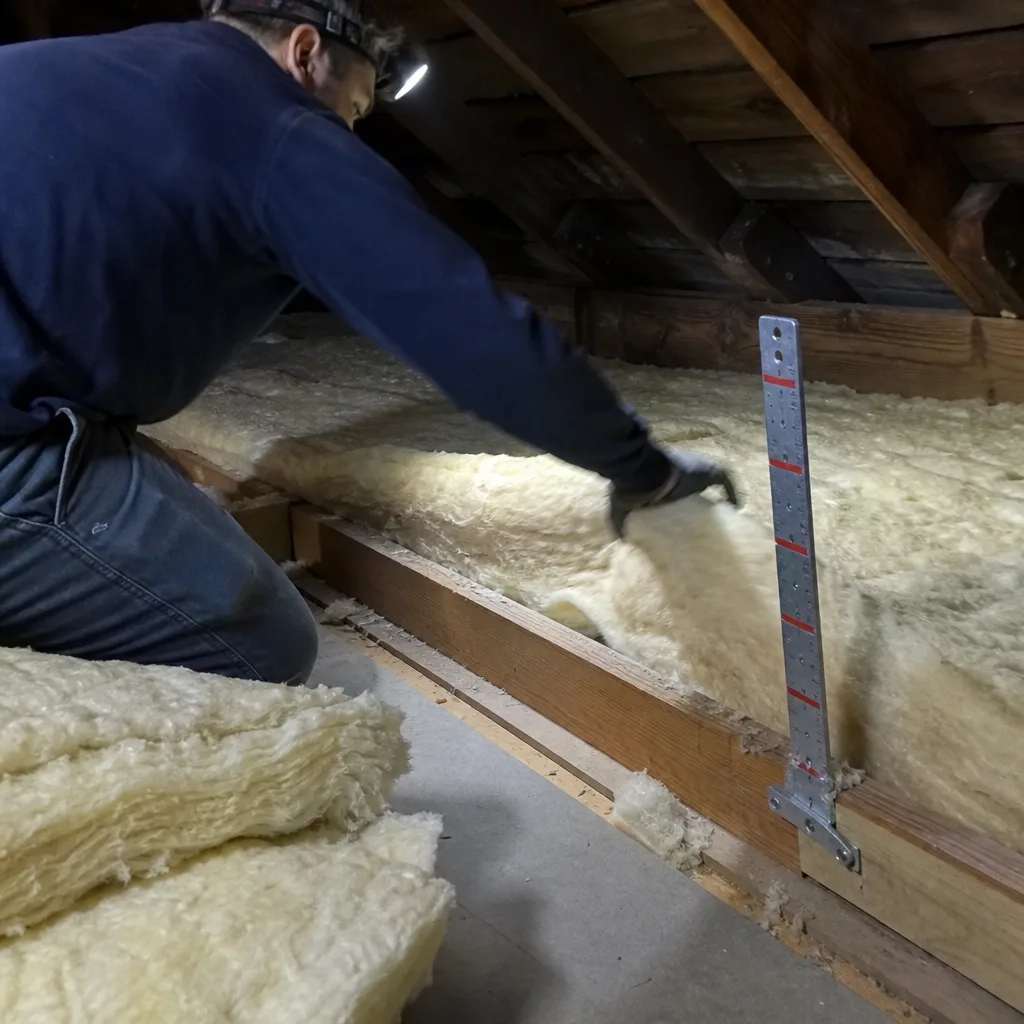
Not all failed insulation looks the same, and the remediation path depends entirely on which failure mode you’re seeing. In Pasadena’s older housing stock, particularly the pre-1940 Craftsman and Spanish Revival homes in neighborhoods like Garfield Heights and the Arroyo Seco-adjacent areas, we regularly encounter all three types in a single attic. Each has a distinct appearance, odor, and required response.
Pest-Compromised Insulation
Rodents, most commonly roof rats in Pasadena’s mature tree canopy, nest in insulation for the thermal mass and shred it for nesting material. The visual signature is unmistakable once you’ve seen it: tunnels and chambers carved through batt or loose-fill insulation, with scatter patterns of droppings concentrated near the tunnel mouths. The odor is ammonia-forward, distinct from mustiness. In advanced cases, urine saturation has crystallized on the insulation surface, producing a white or yellowish crust.
Remediation requires removal, not topping. Blowing new insulation over pest-compromised material traps the contamination, continues the odor, and provides fresh nesting material. We remove the affected insulation, sanitize the substrate, rodent-proof the attic with metal flashing and sealant at all entry points, then install new material. Topside Attic Insulation Pasadena home assessments include a documented photo record of entry points found and sealed.
Age-Compressed Insulation
Fiberglass batts lose loft over decades. The original R-30 batt, 9.5 inches thick at installation, compresses to 4-6 inches through a combination of gravity, foot traffic during maintenance, and the natural binder breakdown in fiberglass. The visual is uniform flattening, sometimes with the paper facing still intact and legible. There is no odor. The material is not contaminated, merely thinned.
In Pasadena’s postwar tract housing, particularly the 1,000-1,400 square-foot homes in the Hastings Ranch and Jefferson Park areas, we find original 1950s-1970s batts compressed to R-11 equivalent or less. These can often be left in place and topped with blown-in cellulose or fiberglass to achieve target depth, provided the attic floor has been air sealed first. Under Haven Standard Clause 1, we provide a written scope specifying whether removal or topping is recommended before any work starts.
Moisture-Damaged Insulation
Wet insulation is the most urgent of the three. The visual signature is staining, often brown or gray, with the insulation clumping or matting rather than springing back when compressed. In fiberglass, the binder releases and the fibers separate. In cellulose, the material packs into dense, irregular cakes. The odor is musty, not ammonia.
Moisture source must be identified before any insulation work proceeds. Common sources in Pasadena include: bathroom exhaust fans vented into the attic rather than through the roof (a code violation we see in roughly 30% of pre-1990 homes); roof leaks at valley flashings or penetrations; and condensation from air leakage during June gloom periods, discussed in the next section. Installing new insulation over a moisture source guarantees mold growth and structural decay.
Our crews carry moisture meters and document readings on the photo record. Any reading above 20% wood moisture content triggers a hold on insulation work until the source is resolved.
The Pasadena Equivalent of Ice Damming: June Gloom Condensation
Ice damming is a northern climate phenomenon: warm attic air melts snow at the roof peak, water runs to the cold eave, refreezes, and backs up under shingles. Pasadena does not have ice damming. Pasadena has the same physics, expressed differently, and it happens in June.
Here’s the mechanism. During June gloom, Pasadena experiences marine layer intrusion that can hold morning temperatures below 65°F for days while the interior of a home remains at 72-75°F from overnight conditioning. If the attic floor is not airtight, conditioned air leaks upward through can lights, top plates, electrical penetrations, and the chimney chase. This warm, moisture-laden air hits the underside of the roof deck, which has been cooled by the marine layer. The dew point is reached. Condensation forms.
Unlike ice damming, this condensation does not produce dramatic icicles. It produces water stains at the ceiling plane, musty attic odors, and in chronic cases, mold on the roof deck sheathing. The homeowner notices a brown spot on the ceiling in July, calls a roofer, and is told the roof is sound. The problem is not the roof. The problem is air leakage at the attic floor meeting a temperature differential.
How to Spot the June Gloom Signature
- Water stains that appear or worsen after overcast periods in late spring, not after rain events
- Stains concentrated below can lights, bathroom fans, or interior wall lines (where top plates leak)
- Attic sheathing that is damp to the touch on June mornings but dry by afternoon
- Mold growth on the north-facing roof deck slope, where solar gain is slowest to arrive
The fix is air sealing, not more insulation. Adding insulation without sealing the leaks increases the temperature differential at the condensation surface and can worsen the problem. This is why Envelope Insulation Co. will never blow insulation over an unsealed attic floor. The sequence is: seal first, then insulate. On applicable jobs, the before-and-after blower-door numbers document how much of the leakage we eliminated.
In a 2023 job near the Caltech campus, the homeowner had lived with periodic ceiling stains for four years, had the roof inspected twice, and was considering interior repainting when we found 1,200 CFM50 of leakage through can lights and top plates alone. After sealing and reinsulating, the blower-door dropped from 3,400 to 1,900 CFM50. No new stains in two years.
Duct Sweat as a Dual Diagnostic
Condensation on attic ductwork in August is not a plumbing leak. It is a simultaneous diagnostic of two failures: the duct is leaking conditioned air, and the attic lacks sufficient insulation to keep the duct surface above dew point.
In Pasadena, where August afternoons regularly reach 95-105°F and attic temperatures can exceed 140°F, duct sweat is common in homes built before Title 24 energy code improvements tightened duct sealing requirements. The mechanism is straightforward. A supply duct carrying 55°F air has a surface temperature of roughly 60-65°F if the duct is well-insulated and the attic is ventilated. If the duct leaks, the cold air escapes into the attic, and the duct surface temperature drops further. If attic insulation is thin or missing above the duct chase, the surrounding air temperature rises. When the duct surface hits dew point, water beads and drips onto the ceiling below.
What Duct Sweat Tells You
The location of the sweat matters. Sweat on the supply plenum or main trunk indicates a large leakage site, often at a seam or connection. Sweat distributed along flexible duct runs suggests the inner liner has separated from the insulation jacket, a common failure in ducts older than 15 years. Sweat only at the registers, where ducts penetrate the ceiling, indicates the boot is not sealed to the drywall and conditioned air is leaking into the wall cavity.
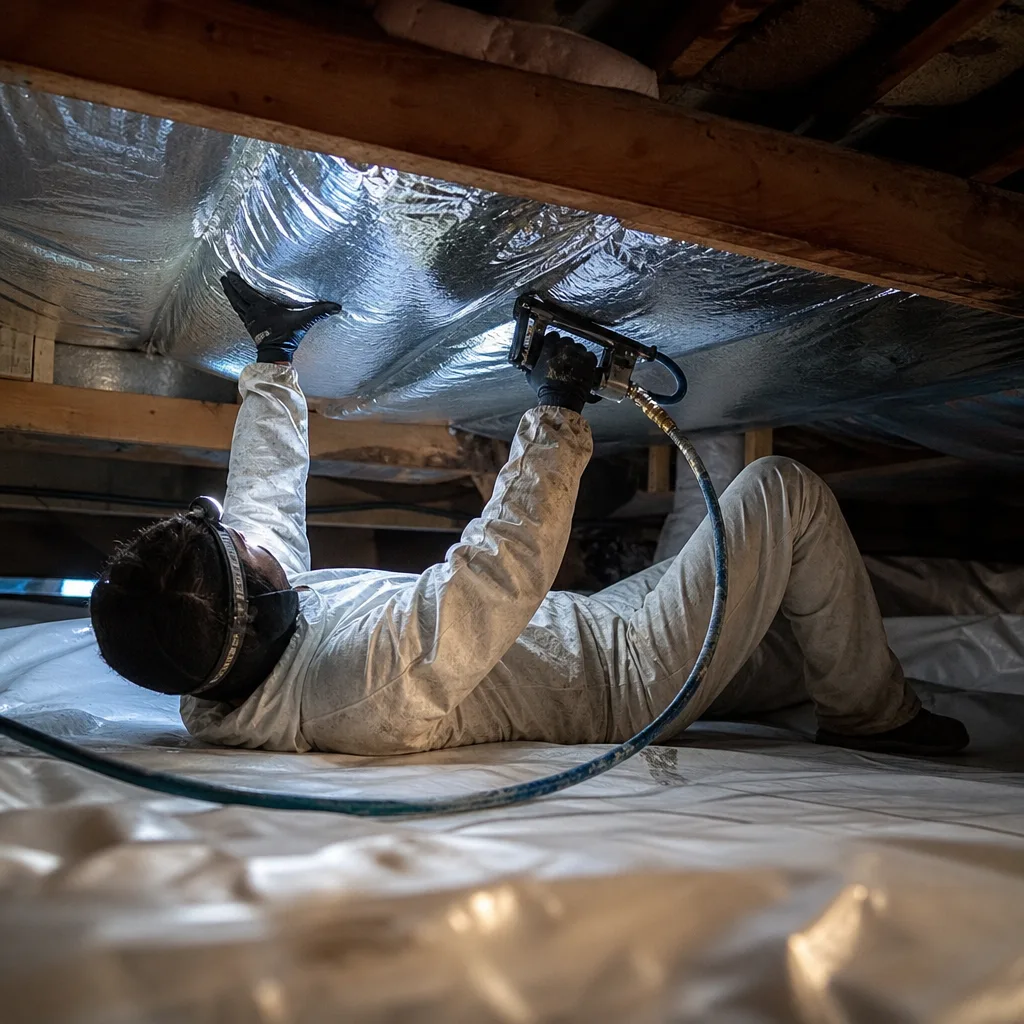
Each pattern points to a different repair. Sealing the duct with mastic or replacing flex runs is the first step. But duct sealing without addressing attic insulation leaves the root cause: the attic is still hot enough to drive condensation on any surface below 70°F. In our Spray Foam Insulation in Pasadena work, we sometimes recommend spray foam on the roof deck rather than the floor, converting the attic to conditioned space and eliminating the temperature extreme entirely. This is a significant investment, typically $8,000-14,000 for a Pasadena home, but it solves duct sweat permanently and reduces HVAC load.
For floor-insulated attics, the standard approach is air sealing, duct sealing with mastic (not tape alone, which fails in attic heat), then blowing insulation to bury the ducts at R-38 or greater. The homeowner receives blower-door numbers, duct leakage test results where applicable, and photos of the sealed and buried ductwork.
The Blower-Door Number That Predicts Your Next Bill
A blower-door test, a pressurization reading that shows in one number how much air your building envelope is losing, is the most objective insulation warning sign available. It is not a theory. It is a measurement, taken with a calibrated fan and a manometer, that every homeowner can understand: how many cubic feet of air leak out per minute at a standard pressure of 50 Pascals.
In a 1,500-square-foot Pasadena home, the CFM50 number predicts energy performance with surprising accuracy.
| CFM50 Range | Condition | Typical Annual Energy Penalty | Common Leakage Sites |
|---|---|---|---|
| Under 1,200 | Tight, modern construction or previously sealed | Minimal | Minor window/door leakage |
| 1,200-2,000 | Acceptable for pre-1990 homes | $200-400 | Recessed lights, fireplace damper, door weatherstrip |
| 2,000-3,500 | Action threshold for most Pasadena homes | $500-900 | Attic floor, top plates, duct boots, garage-ceiling interface |
| 3,500-5,000 | Significant leakage, comfort issues likely | $900-1,500 | All of above plus unsealed crawl space, rim joists, whole-house fan |
| Over 5,000 | Severe, often pre-1950 with no air sealing history | $1,500+ | Multiple major leakage paths, possible structural gaps |
The 2,000 CFM50 threshold is where we begin recommending comprehensive air sealing and insulation upgrades in Pasadena’s climate. Above this number, the home is exchanging its entire volume of conditioned air with outside air more than once every three hours under test pressure. At normal operating pressures, this translates to continuous energy loss that no thermostat adjustment can overcome.
Our crews have tested over 9,000 homes since 2016. The average pre-1970 Pasadena home tests between 2,800 and 4,200 CFM50 before work. After air sealing and insulation, the typical result is 1,600-2,200 CFM50. The homeowner receives the before-and-after numbers in writing, with the photo record showing the sealed locations.
Crawl Space and Rim Joist Warnings
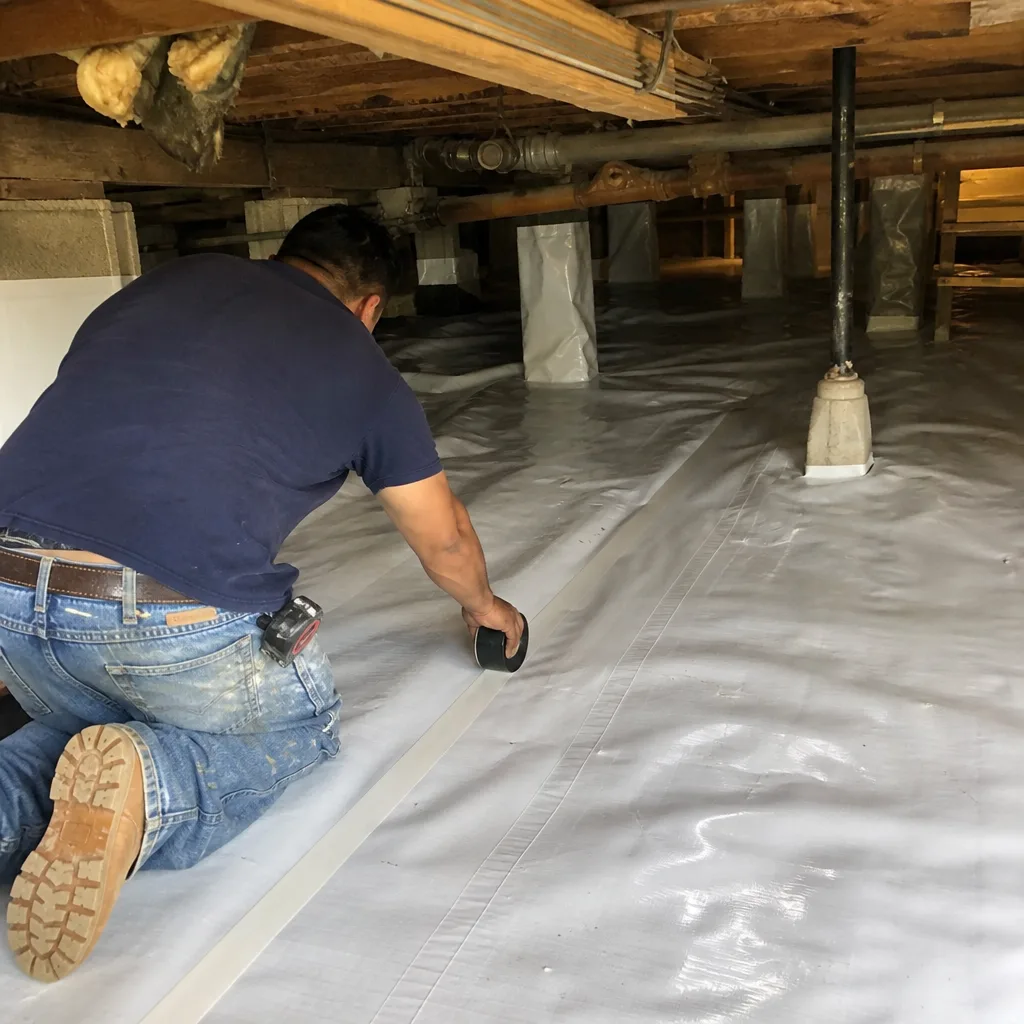
Not all insulation failure happens overhead. In Pasadena’s hillside homes, particularly in the San Rafael and Linda Vista areas where raised foundations are common, the crawl space is often the dominant leakage path. Rim joists, the perimeter framing where the floor system meets the foundation, are rarely sealed in homes built before 1990. In winter, cold air enters here. In summer, warm, moist air enters and condenses on ductwork and floor joists.
Crawl Space Warning Signs
- Cold floors in winter, particularly at exterior walls, even when the thermostat reads 70°F. This indicates missing or failed rim joist insulation.
- Musty odors rising from floor registers in homes with under-floor HVAC ducts. The crawl space air is being drawn into the return system.
- Visible moisture or efflorescence on foundation walls, especially on north and east exposures where solar drying is minimal.
- Sagging or fallen insulation between joists, common with fiberglass batts installed without proper fasteners or support wire.
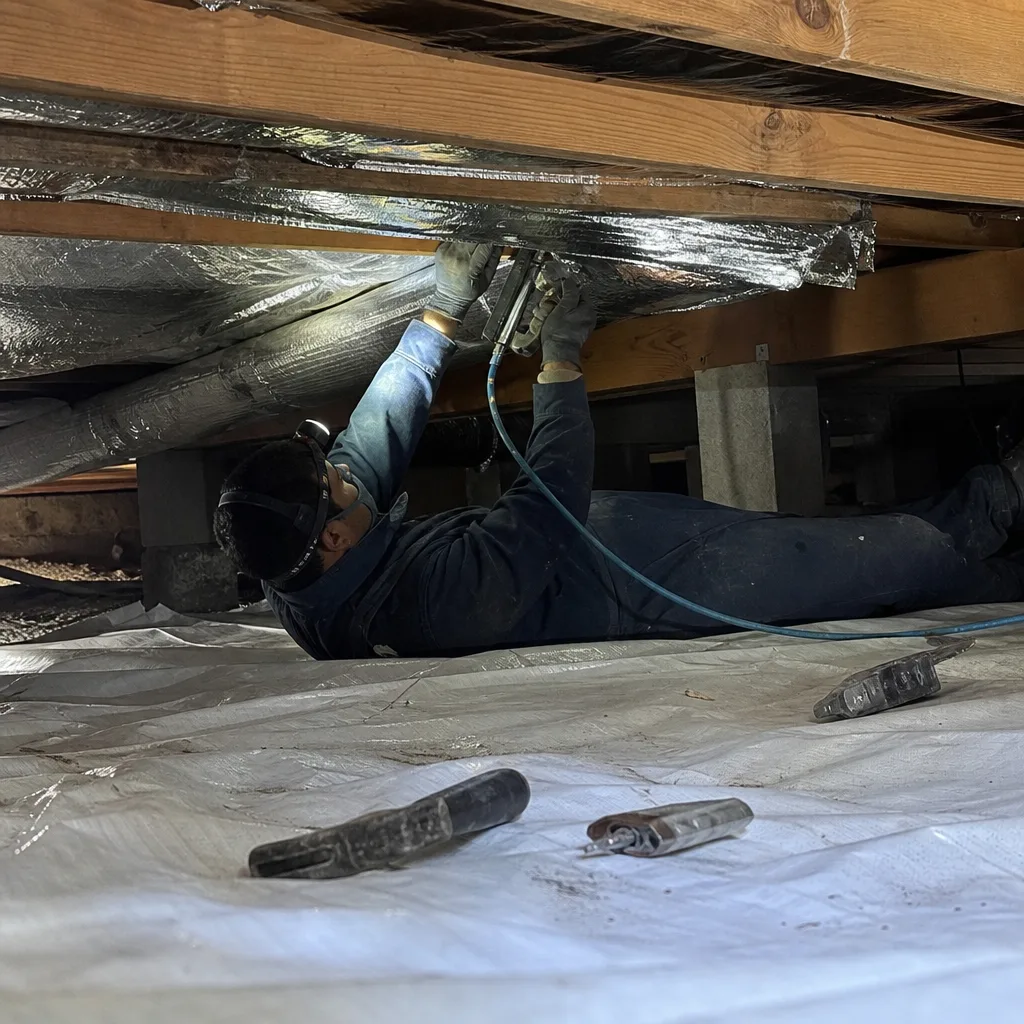
Crawl Space Encapsulation & Vapor Barrier in Pasadena addresses the full solution for homes where the crawl space is the primary envelope failure. Encapsulation, which seals the crawl space from ground moisture and outside air, often produces more dramatic comfort improvement than attic work in these specific homes. We evaluate both locations and recommend the priority sequence in the written scope.
Materials for crawl space work include closed-cell spray foam at the rim joist (Icynene or Demilec products, selected for the specific moisture conditions), vapor barrier at the ground surface, and conditioned air supply if the encapsulation is complete. The homeowner receives photos of the sealed rim joists and the vapor barrier installation, plus blower-door numbers showing the envelope improvement.
Common Mistakes to Avoid
- Measuring at the wrong time of day. Infrared thermometer readings taken after 10 a.m. in Pasadena are useless; solar gain has warmed the roof assembly and erased the thermal bridging signal. Measure before 8 a.m.
- Adding insulation over wet or pest-compromised material. This is the most expensive mistake we are called to fix. The new insulation becomes contaminated, the moisture problem worsens, and the eventual removal cost doubles.
- Sealing attic vents to “keep heat in.” Attic ventilation is required by California code for moisture control. Sealing vents without converting the attic to conditioned space traps humidity and voids material warranties.
- Ignoring the ductwork. Duct sweat is not a roofing or plumbing issue. Treating it as such leads to repeated service calls while the actual problems, duct leakage and inadequate attic insulation, continue.
- Accepting a quote without a written scope. Under Haven Standard, every job begins with a written price, written scope, and written warranty. Verbal estimates allow scope reduction after contract signing.
- Assuming all insulation is the same. Owens Corning fiberglass, GreenFiber cellulose, and spray foam products each have specific applications. Installing the wrong material for the cavity and condition wastes money and can create new problems.
- Skipping the blower-door test. Without a number, you cannot verify that air sealing worked. We publish before-and-after blower-door readings on every applicable job so the homeowner has documented proof of improvement.
When to Call a Professional
Call when you have measured thermal bridging above 8°F, found moisture or pest damage in the attic, seen duct sweat, or simply want a baseline blower-door number for a home you purchased without energy documentation. Explore more guides & resources on our blog before you call. In Pasadena’s competitive housing market, many 2015-2025 purchases were flips or estate sales with no insulation history.
Topside Attic Insulation Pasadena offers free estimates in Pasadena. A technician will inspect the attic and crawl space, take blower-door and moisture readings where indicated, and deliver a written scope with flat pricing before any work is discussed. Call (213) 816-5351. Live person answers, 24/7. No voicemail loops.
Frequently Asked Questions
Most complete attic insulation replacements in a Pasadena home between 1,200 and 2,000 square feet run $4,500 to $8,500, including removal of old material, air sealing, and installation of new blown-in insulation to R-38. Homes requiring pest remediation, moisture damage repair, or spray foam at the roof deck fall at the higher end or above. We provide a written price before any work starts, and we offer a free second opinion on any competing written estimate. Call (213) 816-5351 for a specific quote.
Topping existing insulation is appropriate only when the current material is dry, uncontaminated, and evenly distributed. In Pasadena’s older homes, we find that roughly 40% of attics we inspect have conditions, moisture damage, or compression that makes topping inadvisable. We document the existing condition with photos and specify in the written scope whether removal or topping is the correct approach.
Current California Title 24 standards require R-38 minimum for attic insulation in the Pasadena climate zone, with R-49 recommended for new construction. Many homes built before 1990 have R-11 to R-19, and even homes from the 1990s-2000s often have R-30 that has compressed below effective R-25. The written scope specifies the target R-value and the installed depth required to achieve it with the selected material.
Insulation failure is one of several causes of high cooling loads in Pasadena. HVAC system efficiency, duct leakage, and thermostat settings all contribute. The blower-door test isolates envelope leakage from these other factors. If the CFM50 is below 2,000, your insulation and air sealing are likely not the primary drivers. If above 2,500, envelope improvement will produce measurable savings. We test and report the number so you can make an informed decision.
Open-cell spray foam at the roof deck, converting the attic to conditioned space, is worth considering if: your HVAC ducts are in the attic and experiencing repeated sweat or leakage issues; the attic floor has complex geometry that makes floor air sealing difficult; or you plan to use the attic for storage and need a temperature-stable environment. Cost is typically 2-3x floor insulation. We evaluate each home and recommend the approach with the best return in the written scope, with no proprietary product lock-in. Icynene and Demilec products are among those we specify when spray foam is selected.
A typical attic insulation replacement, including removal, air sealing, and new blown-in installation, is completed in one day for homes up to 2,500 square feet. Larger homes or those requiring extensive pest remediation may extend to two days. The crew arrives on schedule, you receive a text when they are on the way, and you receive the documented photo record and blower-door numbers before they leave.
The Bottom Line
The warning signs that matter are the ones you can measure and see before the bill arrives. Thermal bridging above 8°F on your infrared thermometer. Duct sweat in August. Condensation at the ceiling plane during June gloom. A blower-door number above 2,000 CFM50. Each of these is an early signal that your building envelope is leaking conditioned air and will continue to do so at increasing cost. The fix is not more thermostat adjustment. It is air sealing first, then insulation, in that order, with documented proof that the leakage was found and fixed.
Topside Attic Insulation Pasadena has sealed and insulated over 9,000 homes since 2016. Every job began with a written price and ended with a documented record. The 365-Day Done Right Promise applies to all work. Call (213) 816-5351 for a free estimate, or bring us a competing written estimate for a free second opinion.
Written by Wes Okafor, Owner at Topside Attic Insulation Pasadena, serving Pasadena since 2016.