
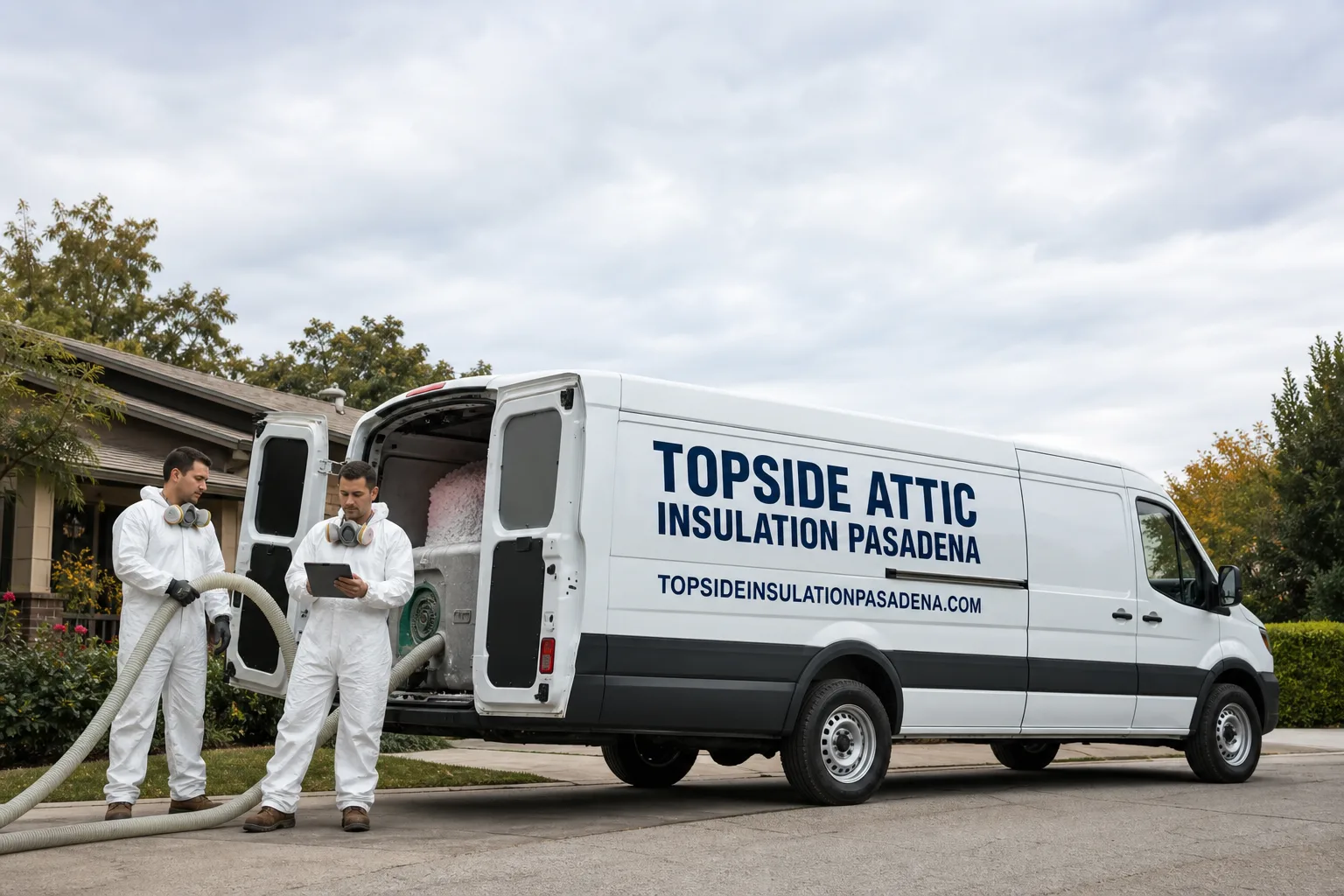
How Much Does Crawl Space Encapsulation & Vapor Barrier Cost in Pasadena?
Crawl Space Encapsulation & Vapor Barrier services in Pasadena, CA typically run between $3,500 and $8,500 for a standard single-family home, with most jobs landing closer to $5,000-$6,500 once a full vapor barrier, rim joist sealing, and any needed moisture remediation are included. A vapor barrier-only installation - without full encapsulation - costs less, usually $1,200-$2,800 depending on square footage and access conditions. Because Pasadena sits in the San Gabriel Valley foothills where seasonal ground moisture, clay soil, and limited crawl space clearance are common, the details of your specific crawl space matter more than the size of your house.
Crawl Space Encapsulation & Vapor Barrier Cost Breakdown (2026)
The table below reflects what homeowners in Pasadena are paying in 2026. These aren’t national averages padded with a local disclaimer - they’re based on what jobs in this market actually involve, from older Craftsman homes in the Bungalow Heaven neighborhood with tight 18-inch clearances to larger mid-century ranch homes in San Rafael Hills where crawl spaces are deeper but often hold standing water after winter rains.
| Service Component | Typical Pasadena Price Range | Notes |
|---|---|---|
| Vapor barrier only (20-mil poly sheeting) | $1,200 – $2,800 | Ground coverage only; no sealing to walls or rim joists |
| Full encapsulation, small crawl space (under 1,000 sq ft) | $3,500 – $5,000 | Includes liner, wall coverage, seam tape, and basic air sealing |
| Full encapsulation, mid-size crawl space (1,000-1,800 sq ft) | $5,000 – $7,500 | Most common range for Pasadena single-family homes |
| Full encapsulation, larger crawl space (1,800+ sq ft) | $7,500 – $12,000+ | Applies to larger older homes; price rises with access difficulty |
| Rim joist insulation and sealing (add-on) | $400 – $900 | Spray foam applied to the rim joist cavity; reduces floor drafts |
| Existing insulation removal (fiberglass batts) | $600 – $1,800 | Required when old batt insulation has absorbed moisture or shows rodent activity |
| Crawl space drainage or sump installation | $1,500 – $4,000 | Needed when ground water is present, not just humidity |
| Dehumidifier installation (crawl-space rated) | $1,200 – $2,200 | Often recommended after encapsulation in partially conditioned spaces |
| Crawl space vent sealing | $200 – $600 | Foam board plugs for existing foundation vents; part of full encapsulation scope |
| Mold treatment/sanitization | $500 – $2,500 | Depends on extent; required before any new liner or insulation goes in |
The single biggest variable in Pasadena is crawl space access. Homes built before 1960 - a large portion of the housing stock in neighborhoods like Madison Heights, Lamanda Park, and Linda Vista - often have access hatches barely large enough for a technician, clearances under 24 inches, and decades of debris that has to come out before work can begin. That physical difficulty adds labor hours. A job that takes three workers one day in a newer home can take the same crew two days in a tight 1940s bungalow. When you’re comparing quotes, check whether the written scope accounts for access conditions specifically, not just square footage.
Under Haven Standard Clause 1 at Envelope Insulation Co., you receive a flat written price before anyone enters your crawl space. No “we’ll know more once we’re under there” adjustments mid-job.
What Affects Crawl Space Encapsulation & Vapor Barrier Pricing in Pasadena
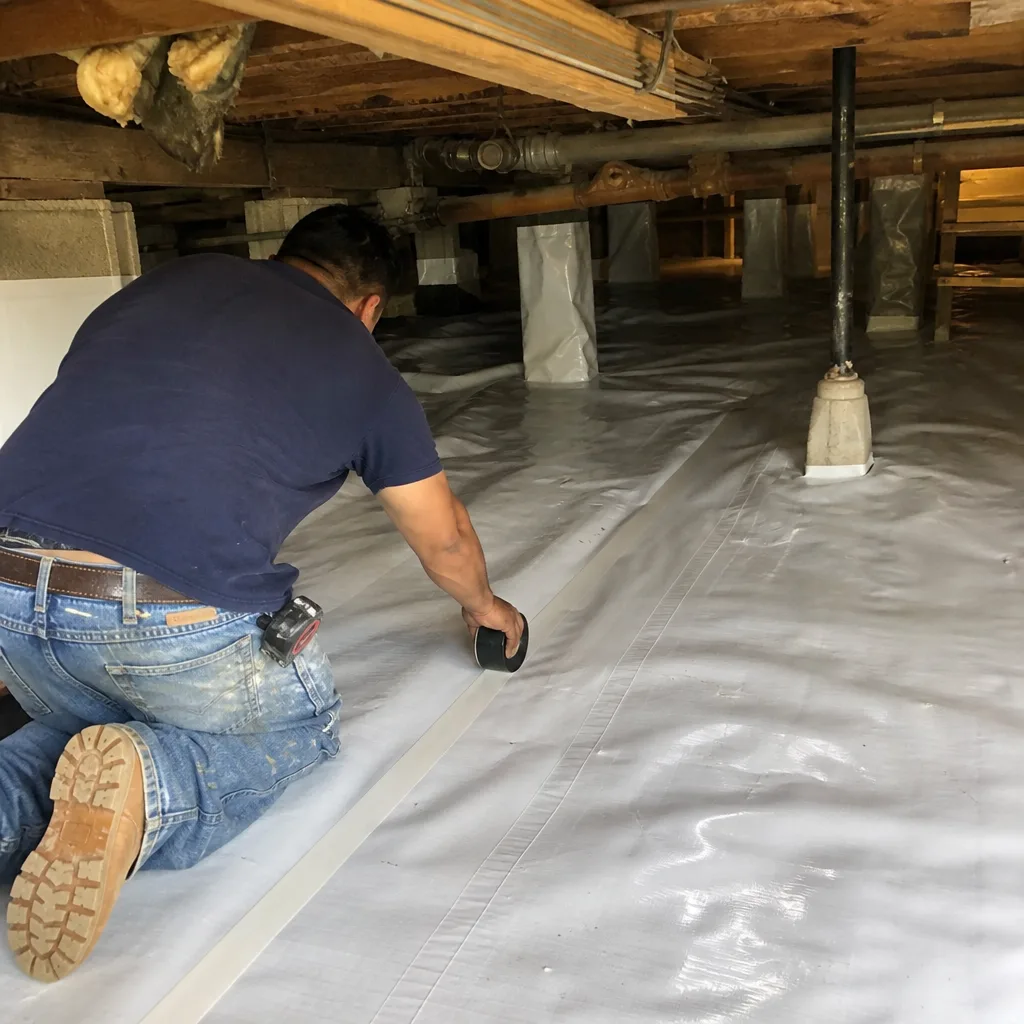
Six factors consistently move the price up or down on Pasadena jobs. Some are universal; a few are specific to this city’s soil, climate, and housing age.
- Crawl space square footage and height clearance. Square footage drives material cost linearly - more floor area means more liner. But height clearance drives labor cost exponentially. A 16-inch clearance means technicians are working on their stomachs the entire job, which roughly doubles the time required compared to a 36-inch clearance. Pasadena has a lot of pre-1960 homes with low clearances, particularly in the Bungalow Heaven historic district and along the streets south of Colorado Boulevard.
- Existing moisture and mold conditions. If the inspection finds standing water, active efflorescence on the foundation walls, or mold on the subfloor joists, remediation has to happen before encapsulation. That’s not an upsell - putting a liner over an active moisture problem traps the problem. Remediation adds $500-$2,500 depending on scope. Pasadena’s wet winters (January 2023 brought over 10 inches of rainfall in a two-week period) push moisture into crawl spaces that were perfectly dry the year before.
- Vapor barrier thickness (mil rating). A 6-mil poly sheet costs a fraction of a 20-mil reinforced liner, and the performance gap is significant. Thinner barriers puncture during installation and degrade faster under the abrasion of rocks and debris. Most contractors offering unusually low quotes are pricing 6-mil material. A 12-mil to 20-mil reinforced liner with taped seams and wall coverage is the standard for encapsulation that’s meant to last.
- Rim joist and foundation wall coverage. True encapsulation includes sealing the rim joist - the framing that sits on top of your foundation wall - with closed-cell spray foam, and covering the foundation walls with liner material from the ground up to the mudsill. Stopping at the ground is a vapor barrier, not encapsulation. Some quotes omit wall coverage to hit a lower number. Verify the scope in writing before signing anything.
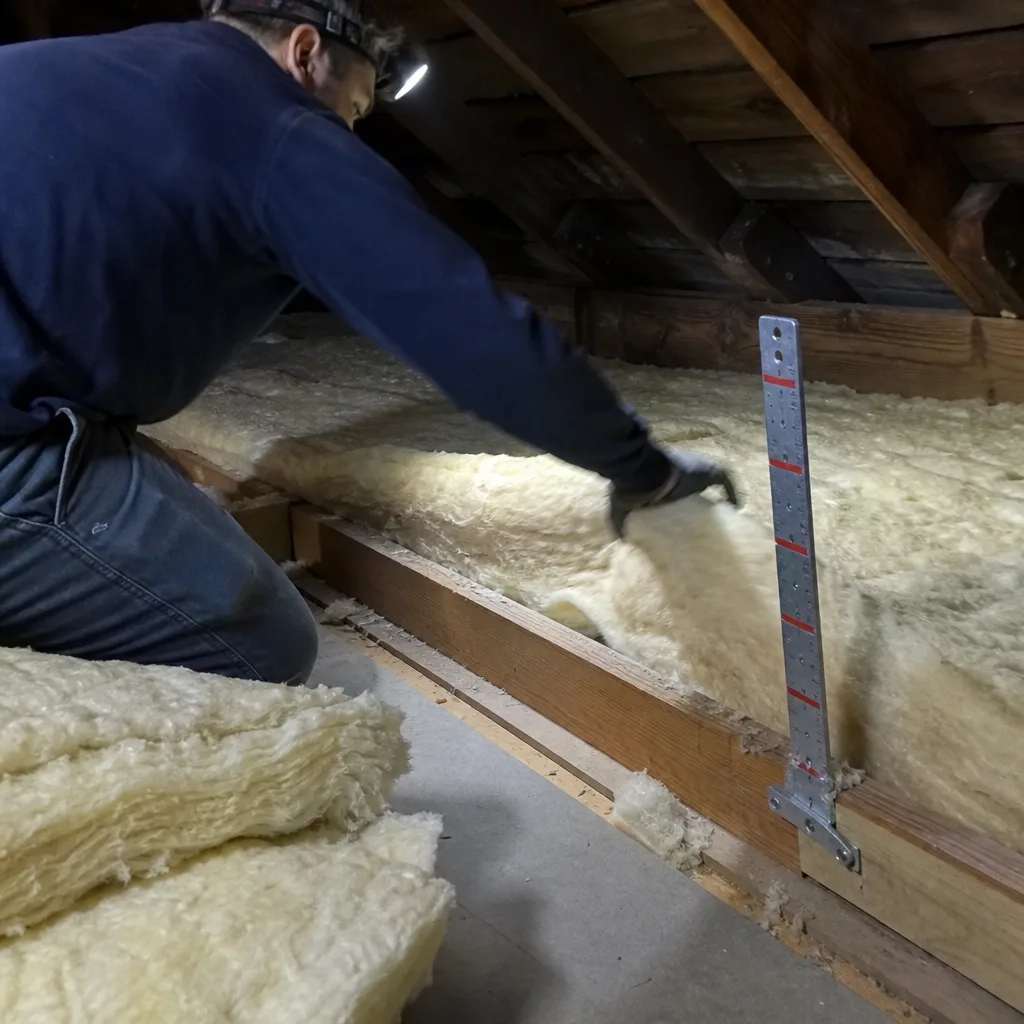
- Existing insulation removal. Fiberglass batt insulation installed between floor joists - common in Pasadena homes built between 1960 and 1985 - absorbs moisture and provides a perfect habitat for rodents once it’s compromised. That material has to come out before a liner goes in, and removal, bagging, and disposal adds $600-$1,800 to the job. Homes in areas like Hastings Ranch that saw rodent activity during the 2021-2022 drought displacement cycle often need both removal and sanitation.
- Ventilation strategy after encapsulation. Once a crawl space is sealed, it’s no longer exchange-ventilated with outside air. Depending on whether the space is being conditioned (connected to your HVAC system) or left sealed but unventilated, you may need a crawl-space dehumidifier to manage residual moisture vapor. In Pasadena’s climate, where August humidity spikes during monsoon patterns, a dehumidifier rated for the space size is often the right call. Budget $1,200-$2,200 for the unit and installation.
How to Save on Crawl Space Encapsulation & Vapor Barrier
Encapsulation is not an area where cutting corners pays off. A liner installed over wet ground, or a vapor barrier without rim joist sealing, tends to create a false sense of security while the moisture problem continues. That said, there are legitimate ways to control what you spend.
Get the scope defined in writing before you compare prices
Two quotes for “crawl space encapsulation” can differ by $2,000 and be quoting completely different scopes of work. One might include wall liner coverage, taped seams, and rim joist spray foam. The other might mean a single layer of 6-mil poly laid on the dirt. You cannot compare those prices as if they’re the same product. Require a written scope on every quote before you evaluate the number.
Envelope Insulation Co. offers a free second opinion on any written estimate. Bring us a competitor’s quote and we’ll read through it line by line with you - not to disparage the other contractor, but to help you understand exactly what you’re being offered for the money. Call (213) 816-5351 to schedule that conversation at no cost.
Address moisture before it requires remediation
If you’ve noticed musty odors under the house or seen condensation on floor joists during a home inspection, acting before mold develops saves real money. Active mold remediation adds $500-$2,500 to a job that would otherwise be straightforward encapsulation. In Pasadena, the window after the rainy season closes (typically March through May) is a good time to inspect and act before summer bakes whatever moisture was deposited in winter.
Bundle with related building-envelope work
If your home also needs attic air sealing or attic insulation work, scheduling both at once reduces mobilization costs. A crew already at your Pasadena address can move between the crawl space and the attic without a separate setup, which typically saves $200-$500 compared to two separate jobs. This is relevant for homes in neighborhoods like South Pasadena-adjacent areas (Monterey Hills) or the older stock near Caltech, where both the attic and the crawl space are frequently original construction.
Check for utility rebates
Southern California Edison and SoCalGas both operate rebate programs that have historically included insulation and air-sealing improvements. Eligibility and amounts change, so verify current offers directly with the utility before your job. A qualified energy audit - which Envelope Insulation Co. provides as part of its building-envelope services - can identify which improvements qualify and document the baseline performance required for rebate submission.
Don’t skip the inspection to save time
A proper crawl space inspection before pricing takes 30-60 minutes and is the only way to give you an accurate written price. Skipping it to get a faster quote usually means the price is a guess, and guesses get revised upward mid-job. The free written estimate from Envelope Insulation Co. includes a physical inspection under your home, not a calculation based on square footage alone.
FAQs - Crawl Space Encapsulation & Vapor Barrier Cost
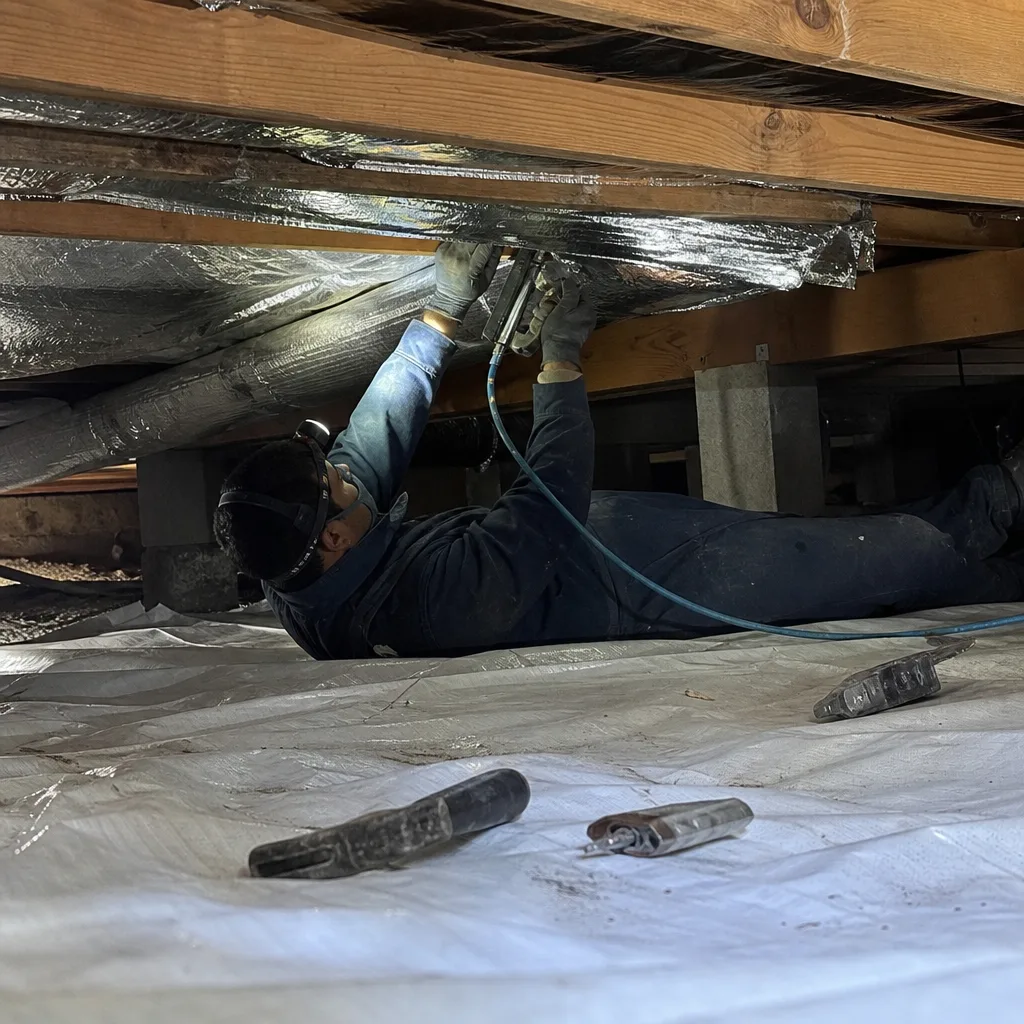
How much does crawl space encapsulation cost in Pasadena, CA in 2026?
Most full encapsulation jobs in Pasadena run between $3,500 and $8,500, with the majority of single-family homes falling in the $5,000-$6,500 range. Smaller, accessible crawl spaces with no existing moisture damage come in at the lower end. Homes with tight clearances, active moisture, or insulation that needs to be removed first move toward the higher end. A vapor barrier-only installation without full encapsulation typically costs $1,200-$2,800. Call (213) 816-5351 for a written estimate specific to your home’s crawl space dimensions and conditions - there’s no charge for the estimate or the inspection.
What’s the difference between a vapor barrier and full encapsulation, and does the price difference matter?
A Crawl Space Vapor Barrier is a poly sheet laid on the crawl space floor to reduce ground moisture evaporation. Full encapsulation goes further: the liner is lapped up the foundation walls and sealed, the rim joist is air-sealed with closed-cell spray foam, all foundation vents are plugged, and every seam in the liner is taped. The price difference is roughly $2,000-$5,000 for most Pasadena homes, and for most situations the encapsulation is worth it. A vapor barrier alone doesn’t address the moisture that enters through foundation walls or through foundation vents during humid periods. If your goal is to protect floor joists and subfloor from long-term moisture damage, encapsulation is the more durable solution. If your crawl space has genuinely minimal moisture exposure and you’re working with a tight budget, a vapor barrier is a reasonable interim step.
Does Pasadena require a permit for crawl space encapsulation?
The City of Pasadena Building and Safety Division generally does not require a permit for vapor barrier or encapsulation work that doesn’t alter structural elements. However, sealing foundation vents is a code-relevant change in some jurisdictions because it modifies the ventilation strategy for the underfloor space, and work that includes electrical connections for a dehumidifier does require a permit. If your job includes any electrical work or structural modifications, permits are required and should be pulled by the contractor. Envelope Insulation Co. identifies permit requirements as part of the written scope before any work starts – this is a standard part of the Haven Standard written price process, not something that surfaces as a surprise after the job begins.
How long does crawl space encapsulation take for a typical Pasadena home?
A straightforward encapsulation on a 1,200-1,500 square foot crawl space with reasonable access typically takes one to two days. Homes with low clearance (under 24 inches), debris removal, mold treatment, or existing insulation removal add time. In practice, tight pre-1960 crawl spaces in areas like Bungalow Heaven or near Old Town often run a full two-day job even at moderate square footage because the physical difficulty of working in confined spaces slows every phase. The written scope you receive before work starts will include a timeline estimate, not a vague “a day or two” answer.
Is crawl space encapsulation worth the cost in Pasadena’s climate?
For most Pasadena homes with a dirt crawl space, yes. Pasadena’s climate creates a specific problem: winters are wet enough (15-18 inches of annual rainfall, concentrated in December through March) to push significant ground moisture into the crawl space, and summers are hot and dry enough that wood subfloor materials cycle through repeated moisture stress. That cycle is what causes floor squeaks, subfloor warping, and the kind of joist deterioration that shows up as a problem during a home inspection when you’re trying to sell. Encapsulation reduces that moisture cycling, which extends the service life of your floor system and reduces conditions that attract subterranean termites – a real concern in San Gabriel Valley soil. The energy efficiency improvement from reducing conditioned air loss through the floor is a secondary benefit. For Pasadena homes where the crawl space is also where HVAC ducts run, keeping those ducts in a controlled environment rather than a wet one meaningfully reduces energy loss.
What the Job Looks Like, Start to Finish
Knowing what a contractor is actually going to do under your home helps you evaluate whether the price is reasonable. Here’s how Envelope Insulation Co. runs a crawl space encapsulation job in Pasadena.
Step 1: Inspection and written scope
Before any price is given, a technician goes into the crawl space and documents what’s there: existing moisture levels, any mold or pest evidence, current insulation condition, foundation wall material, vent locations, clearance measurements, and access conditions. That inspection produces a written scope and a flat written price. Nothing about your price changes once work begins, unless you add scope. That’s Haven Standard Clause 1, and it applies to every job.
Step 2: Prep work
Any debris, failed insulation, or damaged material is removed and bagged before the liner goes in. If mold treatment is needed, that happens at this stage, before any new material is installed. This phase is where Pasadena jobs most often take longer than expected - the volume of debris in crawl spaces that haven’t been accessed in 20+ years is consistently higher than homeowners realize, and it all has to come out.
Step 3: Liner installation
The vapor barrier liner – typically 12-mil to 20-mil reinforced poly – is laid on the ground floor and run up the foundation walls. Seams are overlapped by at least 12 inches and sealed with compatible tape. The liner is attached to the foundation wall with adhesive and mechanical fasteners. Every penetration through the liner (pipes, support posts, columns) is sealed individually.
Step 4: Rim joist and vent sealing
Closed-cell spray foam is applied to the rim joist cavity – the band of framing that sits on top of your foundation wall. This is one of the most significant air and moisture intrusion points in an older Pasadena home, and skipping it undermines the rest of the encapsulation. Foundation vents are sealed with foam board cut to fit and sealed at the perimeter.
Step 5: Documented photo record and walkthrough
When the crew is done, you receive a documented photo record of the completed work - before photos showing the existing conditions and after photos showing every phase of the installation. You don’t have to take our word for what’s under your house. The record is standard on every job, included without being asked for, and delivered digitally before the crew leaves the property. On jobs where the crawl space work connects to air-sealing improvements in the building envelope overall, we can run a blower-door test – a pressurization measurement that shows in a single number how much conditioned air the building envelope was losing before and after the work was completed.
Why Air Sealing Comes Before Insulation - Every Time
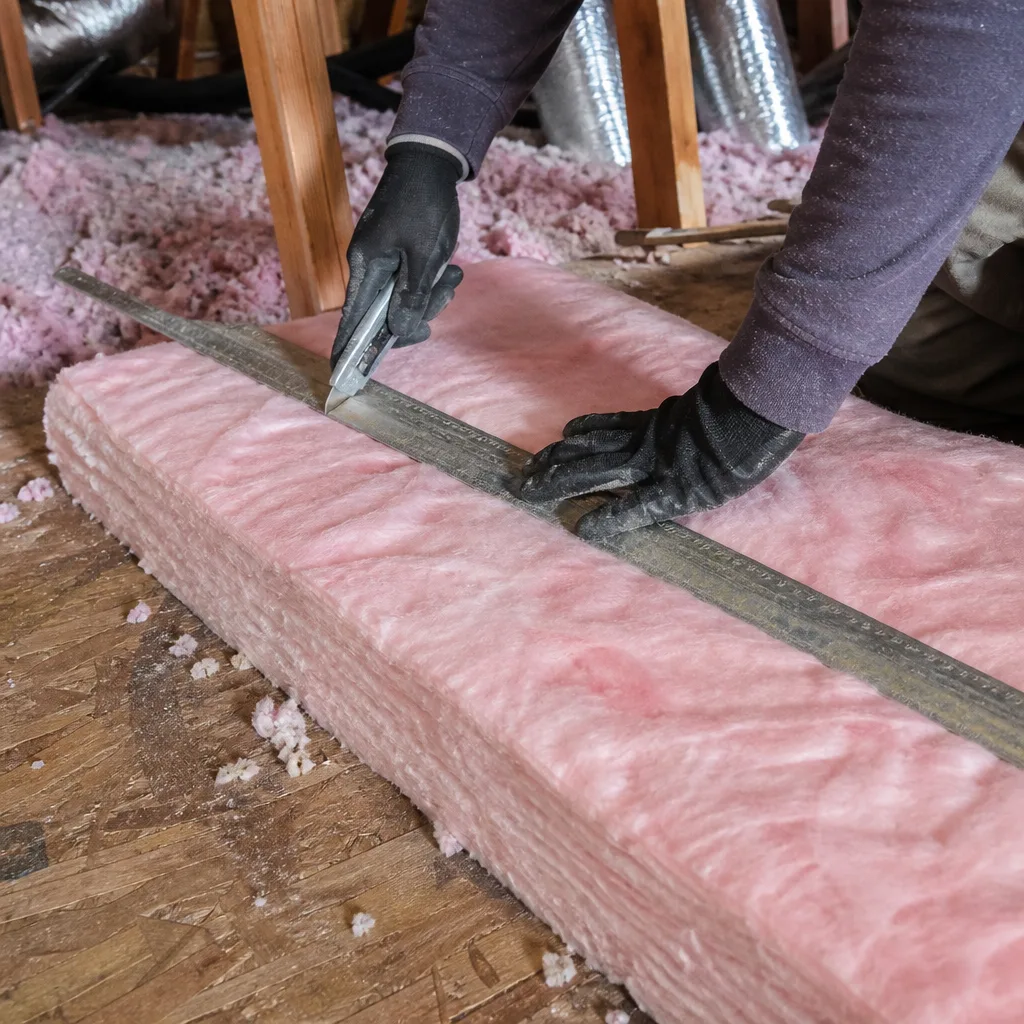
This point is worth being direct about because it affects your outcome. Many contractors install Crawl Space Insulation without addressing air movement first. Insulation slows the transfer of heat through a material, but it does nothing to stop air moving through gaps, cracks, and penetrations. If conditioned air from your living space is flowing through gaps in the subfloor into the crawl space (or vice versa), adding R-value to the floor joists doesn’t fix that problem. It insulates around the leak instead of stopping it.
At Envelope Insulation Co., air sealing is a prerequisite, not an add-on. Under our Crawl Space Encapsulation & Vapor Barrier in Pasadena service, rim joist sealing and penetration sealing happen before any insulation or liner material is installed. This is how we’ve operated since Wes Okafor founded the business in 2016, and it’s the standard we hold across all 9,000+ jobs completed since then.
The difference shows up in performance. It also shows up in the blower-door numbers, when applicable - if your home has a full building envelope evaluation that includes a blower-door test before and after work, the data will show whether the air-sealing work actually reduced infiltration. That’s a number you can point to, not a claim you have to take on faith.
Comparing Crawl Space Encapsulation Quotes in Pasadena
If you’re collecting multiple quotes in the Pasadena area, the price is only one line of comparison. Before you evaluate which number is better, check the following against each written scope:
- What mil rating is the liner material? (6-mil vs. 12-mil vs. 20-mil is a significant quality difference)
- Does the scope include wall coverage, or just floor coverage?
- Is rim joist sealing included, or is it a separate line item?
- Are foundation vents being plugged and sealed?
- If existing insulation needs removal, is that in the price or an adjustment after the job starts?
- What is the warranty on the liner material and the labor?
- Will you receive documentation - photos, written scope - when the job is done?
Envelope Insulation Co. offers a free second opinion on any written estimate you’ve received. Wes Okafor and the team will go through a competitor’s quote with you line by line so you understand what each price is actually buying. There’s no obligation, and it takes about 20 minutes. Call (213) 816-5351 to set that up.
Key Takeaways
- Crawl space encapsulation in Pasadena costs $3,500-$8,500 for most single-family homes; vapor barrier only runs $1,200-$2,800.
- The biggest local cost drivers are crawl space height clearance, existing moisture or mold conditions, and whether old fiberglass insulation needs to come out first.
- Pasadena’s wet winters and older housing stock make proper encapsulation a meaningful investment - not just for energy efficiency, but for protecting floor framing and subfloor materials over the long term.
- A vapor barrier and full encapsulation are not the same product. Know which one you’re being quoted before comparing prices.
- Any quote that isn’t a flat written price with a defined scope should be treated as a starting number, not a final one.
- Envelope Insulation Co. provides a written price before any work starts, a documented photo record when the job is complete, and a 365-Day Done Right Promise on all completed work.
- For homes across Pasadena - from the historic bungalows in Bungalow Heaven to the ranch homes in Hastings Ranch - our process starts with a physical inspection under your home, not a square footage estimate over the phone.
To learn more about the full service or to see what’s involved beyond the crawl space, visit our home page for the complete list of building-envelope services Envelope Insulation Co. provides across the Pasadena area.
Schedule a Free Crawl Space Inspection and Written Estimate
If you’re trying to understand what’s going on under your Pasadena home - or if you already have a quote and want a second opinion before you commit - call Envelope Insulation Co. at (213) 816-5351. A technician will inspect the crawl space, document existing conditions with photos, and give you a flat written price with a full scope before any work is scheduled. No work starts without your written approval. The inspection and estimate are free. The 365-Day Done Right Promise applies to every job that follows.
Wes Okafor leads every project under the Haven Standard that Envelope Insulation Co. has operated by since 2016. If you’ve had a frustrating experience with a contractor who changed the price once work started, or who left without documentation of what was done, the process here is built specifically to prevent those situations - in writing, before anyone starts.
Written by Wes Okafor, Owner at Envelope Insulation Co. (operating as Topside Attic Insulation Pasadena), serving Pasadena, CA since 2016.
Pricing reflects the Pasadena market as of 2026. Topside Attic Insulation Pasadena offers free estimates - call (213) 816-5351.
What Our Customers Say
"Two other companies quoted to blow more insulation on top of what was there. These were the only ones who said the existing material had to come out first, and explained why."
- Clifford E."The winter gas bill dropped by about a third. They had estimated a quarter, so they under-promised."
- Genevieve R."Crawl space encapsulation done properly. Photographs of the vapour barrier at every seam, and the damp smell in the hallway is gone."
- Ainsley P.