
Blown-In Attic Insulation in Pasadena, CA
Blown-in attic insulation in Pasadena typically costs between $1,400 and $3,200 for a standard single-story home, takes one day to complete, and brings most attics up to the R-38 minimum California Title 24 requires. For a detailed breakdown, see our How Much Does Attic Insulation Cost? (2026 Price Guide) - Pasadena, CA. If your attic has less than 8 inches of existing insulation or none at all, blown-in is usually the most cost-effective way to get there.
At Topside Attic Insulation Pasadena, we don’t load the blower hose until the attic floor is sealed. Every top plate, recessed light housing, and plumbing or electrical penetration gets air-sealed first – then we blow the insulation. That’s not an upsell we offer after the estimate; it’s the only sequence we perform. Call us at (213) 816-5351 and we’ll send Wes Okafor or a named technician to give you a flat written price before any work begins.
This page covers the blown-in process we use in Pasadena specifically – materials, pricing, local code considerations, and honest answers to the questions we hear most often. If you want the broader picture of what’s involved in an attic project, our Attic Insulation in Pasadena page covers the full scope.
When You Need Blown-In Attic Insulation
Blown-in insulation – loose-fill cellulose or fiberglass blown under pressure through a large-diameter hose – fits a specific set of conditions better than Attic Batt Insulation or boards do. Here are the situations where it makes the most sense for Pasadena homes:
- Your attic floor has existing insulation below R-19. Many Pasadena homes built in the 1950s through the 1980s were insulated to standards that didn’t anticipate the San Gabriel Valley’s summer heat loads. We regularly read attics in neighborhoods like San Marino-adjacent Madison Heights and the older craftsman blocks near Bungalow Heaven that measure R-11 or lower. Topping up with blown-in adds R-value without requiring a full tear-out.
- The attic floor has irregular framing, cross-bracing, or HVAC equipment in the way. Batt insulation needs clean, unobstructed bays to perform. Blown-in fills around obstructions – trusses, ductwork, electrical junction boxes – without gaps. In Pasadena’s older Craftsman and Spanish Colonial homes, irregular framing is the rule, not the exception.
- You’re seeing high cooling bills despite a functional HVAC system. If your system is sized correctly but your electric bills spike in July and August, the attic is almost always part of the problem. Pasadena summer afternoons push attic temperatures above 140°F on south-facing roofs. Thin or absent insulation turns your ceiling into a radiant heat source.
- Rooms on the top floor are noticeably warmer or cooler than the rest of the house. This is one of the clearest signs the attic floor isn’t doing its job. In the Hastings Ranch neighborhood, where we’ve worked on a number of mid-century single-stories, this is a common complaint through June, July, and August.
- You’re replacing HVAC equipment and want to right-size the new system. An undersized attic insulation layer forces HVAC contractors to oversize equipment to compensate. Adding R-value before the equipment swap gives the HVAC contractor accurate load numbers and usually reduces both the equipment cost and the monthly operating cost.
- Your home is approaching a sale or refinance inspection. Los Angeles County requires attic insulation to meet Title 24 minimums as a condition of certain permit-required work. Getting documentation of your R-value now – including the before-and-after blower-door numbers we provide on applicable jobs – gives you something concrete to hand the inspector or buyer.
Our Blown-In Attic Insulation Process
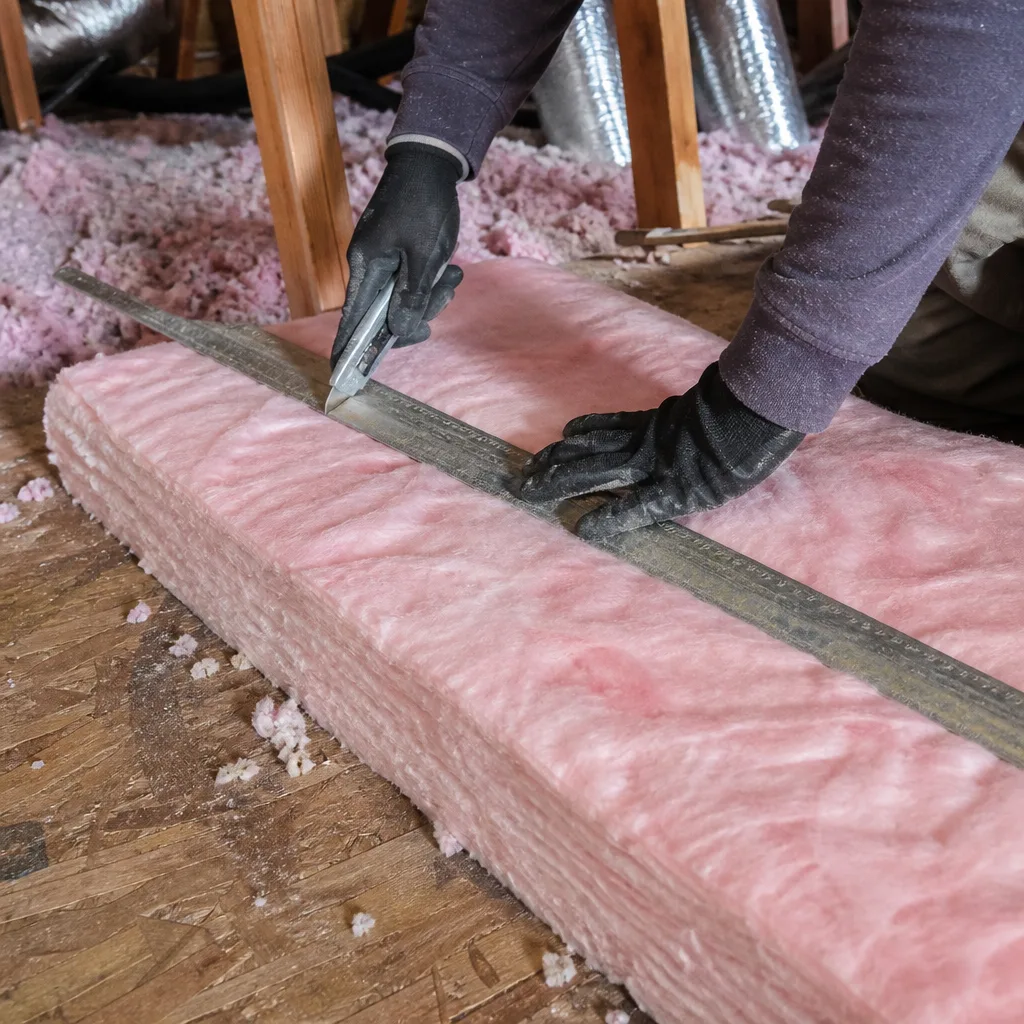
Every job we run in Pasadena follows the same documented sequence. The order isn’t negotiable – air sealing and Attic Baffles & Ventilation Prep come before insulation, every time, because blown-in insulation does not stop air movement. It only slows conductive heat transfer. If the attic floor leaks air into the conditioned space, piling more insulation on top doesn’t fix that; it buries the problem.
- Pre-work blower-door test and attic inspection. Before we touch anything, we run a blower-door test – a pressurization measurement that reads, in a single CFM50 figure, how much conditioned air the building envelope is losing. We photograph the attic floor, measure existing insulation depth at multiple points, note any wet insulation, pest activity, disconnected ductwork, or open soffits. This becomes part of the Documented Photo Record you receive when the crew leaves.
- Air sealing – every penetration, every top plate. Using two-part spray foam and fire-rated caulk where applicable, we seal recessed light cans (IC-rated or converted to IC-rated), top-plate gaps between wall cavities and the attic, plumbing chases, electrical runs, and any attic hatch perimeter. In a typical 1,800-square-foot Pasadena home, this step alone can account for 30 to 50 percent of the measurable air-sealing result. Under the Haven Standard, this step is documented before insulation is blown – you can see what was sealed in your photo record.
- Dam installation at attic hatch and eave baffles. We install a rigid dam around the attic access to keep loose fill from spilling into the living space, and we verify or install ventilation baffles at each rafter bay along the eave line. Pasadena’s Title 24 requires maintaining a clear ventilation channel from soffit to ridge; blocking it with insulation creates moisture and mold conditions, especially in the wetter winters the area sees in La Nina years.
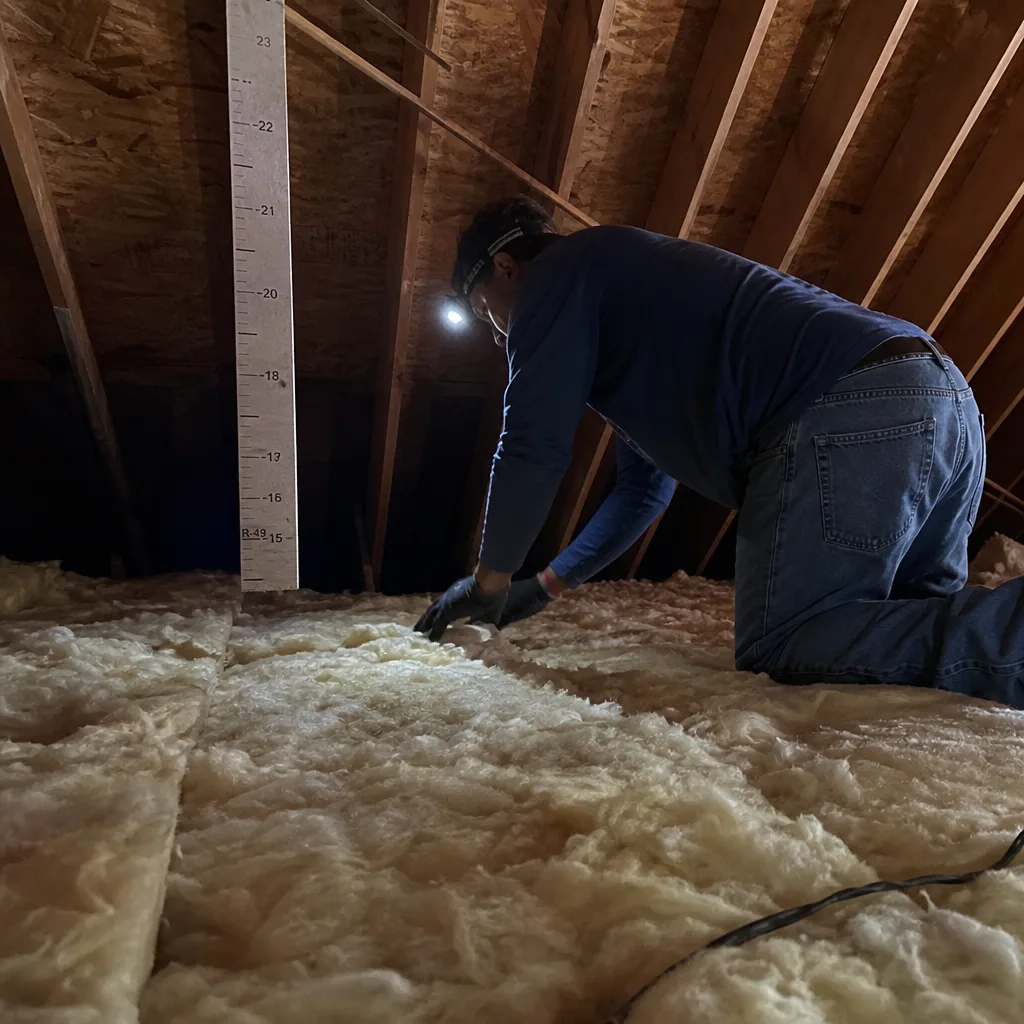
- Blown-in installation to specified depth. We calculate the bag count needed to reach your target R-value – R-38 for most Pasadena homes to meet current California Title 24, or R-49 if you’re targeting an efficiency improvement beyond code. We use GreenFiber cellulose or Owens Corning blown fiberglass depending on the attic conditions and your preference. Depth rulers are installed every 300 square feet so the final depth is verifiable. The crew does not leave until the depth meets or exceeds the written scope.
- Post-work blower-door test. After the insulation settles and the attic access is closed, we run a second blower-door test. Both readings – before and after – go into your written report. If the numbers don’t show a meaningful reduction, we find out why before we pack up. We publish these before-and-after figures because they’re the only objective measure of whether the air-sealing step actually worked.
- Final documentation and written warranty delivery. You receive a Documented Photo Record, both blower-door readings, a copy of the written scope showing the agreed R-value target and materials used, and the written 365-Day Done Right Promise. Under Haven Standard Clause 1, your written price was delivered before any of this started. Nothing in the final invoice should be a surprise.
Blown-In Attic Insulation Pricing in Pasadena
Blown-in attic insulation in Pasadena runs between $1,400 and $3,200 for most residential jobs. The range is wide because attic square footage, existing insulation depth, air-sealing complexity, and access conditions all affect the final number. Here’s how the pieces typically break out:
| Job Component | Typical Cost Range |
|---|---|
| Blown-in insulation only (material + labor, 1,000-1,200 sq ft attic to R-38) | $900 - $1,500 |
| Blown-in insulation only (1,500-2,000 sq ft attic to R-38) | $1,200 - $2,200 |
| Attic air sealing (top plates, can lights, penetrations) | $350 - $700 |
| Removal of existing degraded insulation before new blown-in | $500 - $1,100 |
| Blower-door test (before and after, both readings documented) | Included on applicable jobs |
A few things that push the cost toward the higher end in Pasadena specifically:
- Low attic clearance. Many single-story homes in South Pasadena-adjacent blocks and older sections of Altadena have less than 24 inches of working clearance. Crew productivity drops, and the job takes longer.
- Existing insulation condition. Wet, rodent-contaminated, or vermiculite-mixed insulation (occasionally found in pre-1980 Pasadena homes) has to come out first. We don’t blow new material over compromised existing product.
- Number of recessed lights. A 1990s remodel that added 12 or more recessed cans to the ceiling means 12 or more penetrations to seal. Each one takes time and material. We don’t skip them.
- Upgrading from R-38 to R-49. If you’re pushing beyond the Title 24 minimum – something we see more often on homes with west-facing roof planes in Arcadia-adjacent zip codes – the additional material cost is roughly $0.10 to $0.15 per square foot per R-value point.
Under Haven Standard Clause 1, you get a flat written price before anyone starts. No estimates that expand once the crew is in the attic. If the scope changes after we open the attic – say we find wet insulation that wasn’t visible from the access hatch – we stop, photograph it, and present a revised written scope before continuing.
For an exact number on your Pasadena home, call (213) 816-5351. The estimate is free, the price is written, and we’ll give you a Free Second Opinion on any competing written quote you’ve already received.
What Insulation Material Do We Use?
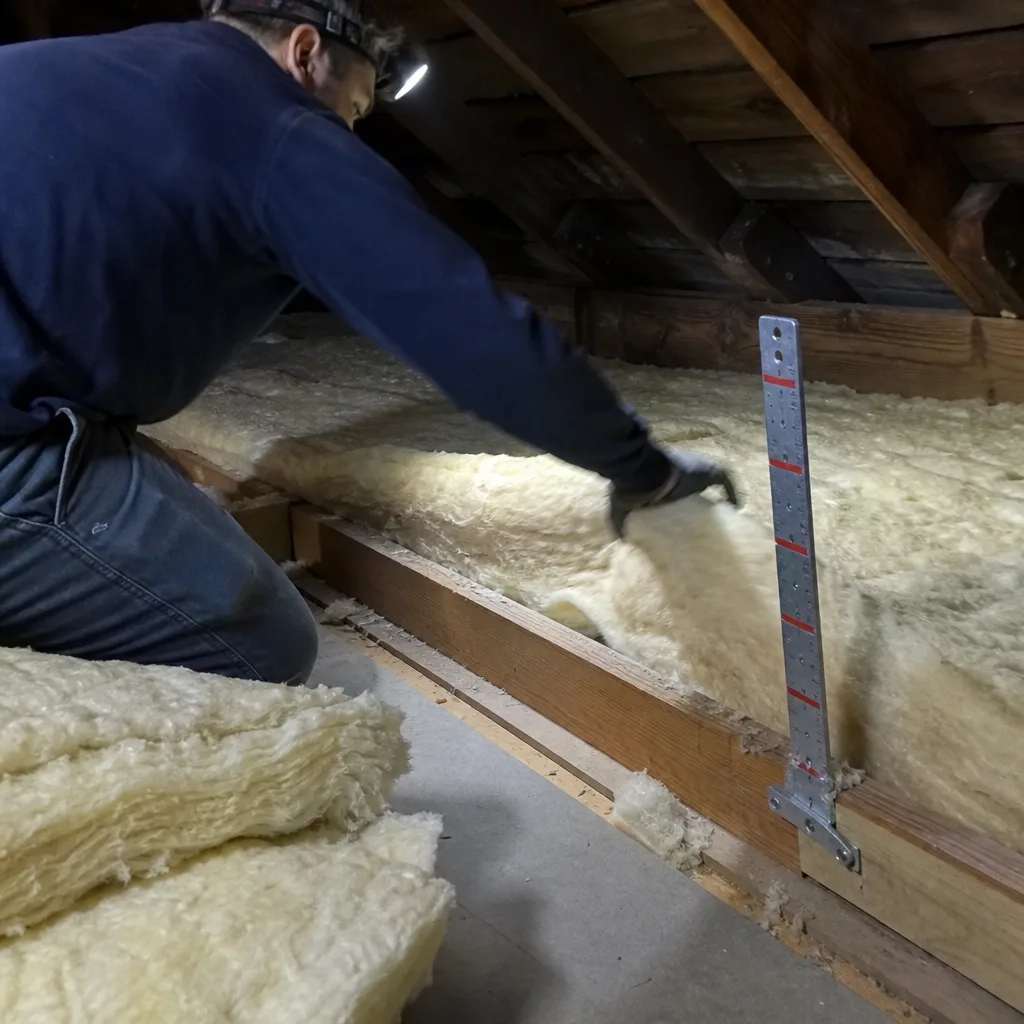
We use blown cellulose and blown fiberglass depending on the job. For most Pasadena attics, we default to GreenFiber recycled cellulose – it has a higher density than fiberglass at equivalent R-values, which gives it slightly better resistance to convective air movement within the insulation layer itself. In attics where moisture history is a concern, or where the homeowner specifically requests it, we use Owens Corning blown fiberglass, which doesn’t absorb moisture and is easier to inspect for settling over time.
We source from Owens Corning, GreenFiber, Johns Manville, and Knauf, among others. We don’t have a proprietary material lock-in, which means the material recommendation on your written scope is based on your attic’s conditions – not on what we ordered too much of this month.
California Title 24 and Pasadena Permit Requirements
California’s Title 24 energy code sets R-38 as the minimum for attic insulation in Climate Zone 9, which covers Pasadena and most of the San Gabriel Valley. If you’re adding insulation as part of a permitted remodel, the building department may require documentation that the new insulation meets that minimum. The written scope and photo record we provide at job completion can serve as that documentation.
For most blown-in top-up jobs – adding insulation to an existing attic without opening walls or ceilings – a building permit is not required in Pasadena. If you’re doing a full removal and replacement in conjunction with permitted work, permit requirements apply. We’ll flag this during the estimate if it’s relevant to your project.
Key Takeaways
- Blown-in attic insulation in Pasadena costs $1,400 to $3,200 for most homes, depending on square footage and air-sealing complexity.
- Air sealing comes first – always. Blown-in insulation doesn’t stop air movement; it only resists conductive heat transfer.
- California Title 24 requires R-38 minimum for attic insulation in Pasadena’s Climate Zone 9.
- Before-and-after blower-door readings are included on applicable jobs – both numbers go into your written documentation.
- You get a written price before any work starts, a Documented Photo Record when the crew leaves, and a 365-Day Done Right Promise on all completed work.
- We use GreenFiber cellulose and Owens Corning blown fiberglass – chosen by attic condition, not by inventory.
FAQs – Blown-In Attic Insulation
How much does blown-in attic insulation cost in Pasadena?
Most blown-in attic insulation jobs in Pasadena run between $1,400 and $3,200 for a standard single-story home, with attic air sealing included. Smaller attics or simple top-up jobs (adding a few inches to existing insulation in good condition) can come in under $1,200. Jobs that require removing old contaminated insulation first, or that involve low-clearance attics with heavy can-light penetrations, typically land in the $2,000 to $3,200 range. The written price you receive before we start will itemize each component so you know exactly what you’re paying for. Call (213) 816-5351 for a free estimate on your specific home.
Do I need to remove my old insulation before adding blown-in?
Not always. If the existing insulation is dry, free of pest contamination, and not made from vermiculite (which carries asbestos risk in some pre-1980 Pasadena homes), we can blow new material directly over it to bring the total depth up to the target R-value. If it’s wet, compressed below half its original depth, or showing rodent activity, it comes out first – blowing over compromised insulation doesn’t fix the underlying problem and can trap moisture. We photograph the existing conditions during our inspection so you can see what we found and why we made the recommendation we did.
Can blown-in insulation reduce my energy bills in Pasadena’s climate?
Yes, and the reduction is measurable. Pasadena sits in a climate zone where attic temperatures regularly exceed 130°F to 140°F on south- and west-facing roofs in July and August. Thin insulation turns that heat directly into a cooling load on your HVAC system. Adding R-value slows that transfer, and the before-and-after blower-door numbers we document show the air-sealing improvement as a separate, verifiable result. Homeowners in Pasadena’s older neighborhoods – Bungalow Heaven, Madison Heights, Linda Vista – often see meaningful drops in cooling-season electric bills within the first summer after the work, though the exact amount depends on your HVAC efficiency, duct condition, and usage patterns.
How long does blown-in attic insulation installation take in Pasadena?
Most jobs in Pasadena are completed in a single day. A straightforward top-up on a 1,500-square-foot attic with moderate air-sealing needs typically takes four to six hours from setup to final blower-door reading. Larger homes, low-clearance attics, or jobs that include insulation removal can run into a second day. The written scope we deliver before we start will include the estimated timeline so you know what to plan for. We give you a named technician and a text when they’re on the way – under the Haven Standard, that’s how every job in Pasadena starts.
Talk to Topside Attic Insulation Pasadena
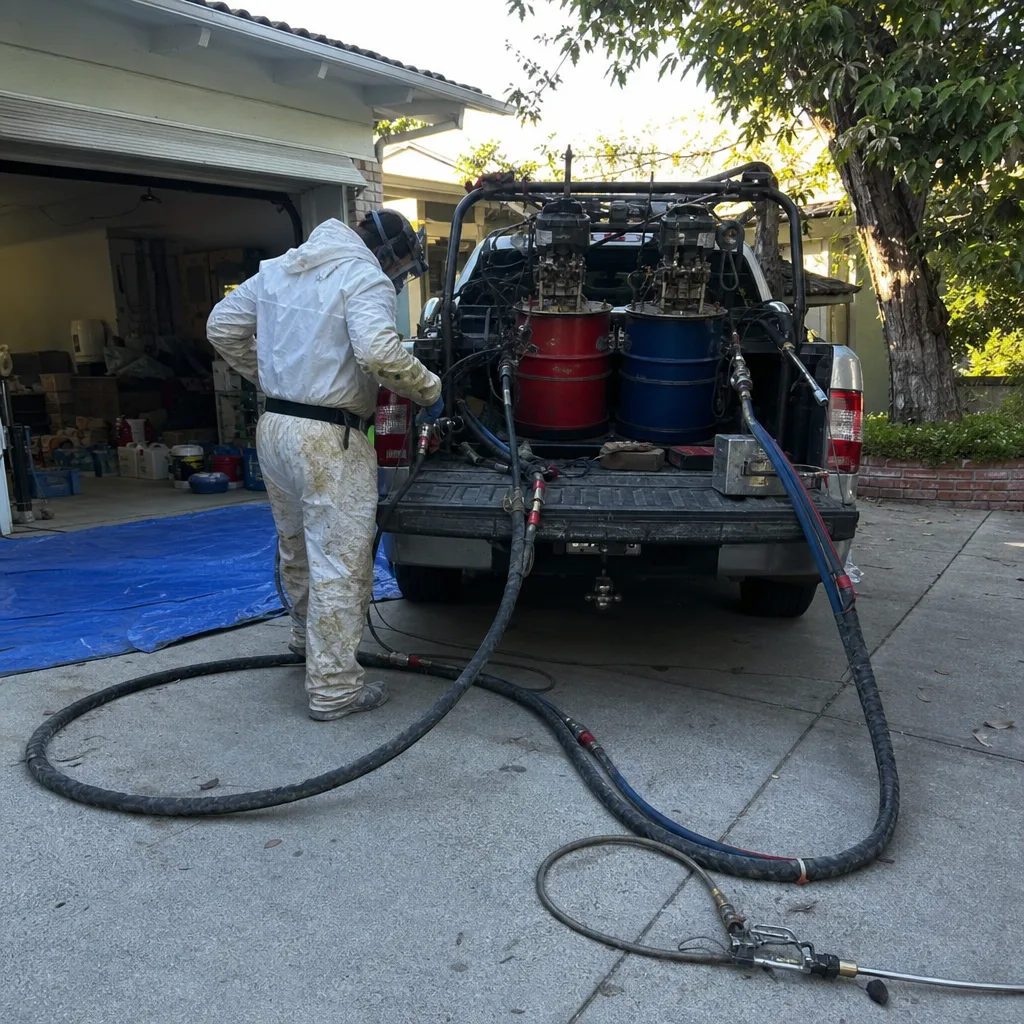
If your Pasadena home is losing conditioned air through an undersized or aging attic, blown-in insulation from our Attic Insulation services – done in the right sequence, with documented results – is one of the most direct ways to address it. Wes Okafor and the team at Topside Attic Insulation Pasadena have been running this process under The Haven Standard since 2016. Every job starts with a written price and ends with documented before-and-after numbers you can verify yourself.
We also offer a Free Second Opinion on any written estimate you’ve already received. If another contractor gave you a quote, bring it to us and we’ll read through it with you line by line – no obligation to hire us afterward.
Call (213) 816-5351 to schedule a free estimate. A live person answers, no voicemail loop. If you’d rather start with a text, that works too.
For a broader look at attic work in this area, visit our home page or explore the full Attic Insulation in Pasadena service page.
Written by Wes Okafor, Owner at Topside Attic Insulation Pasadena, serving Pasadena.