
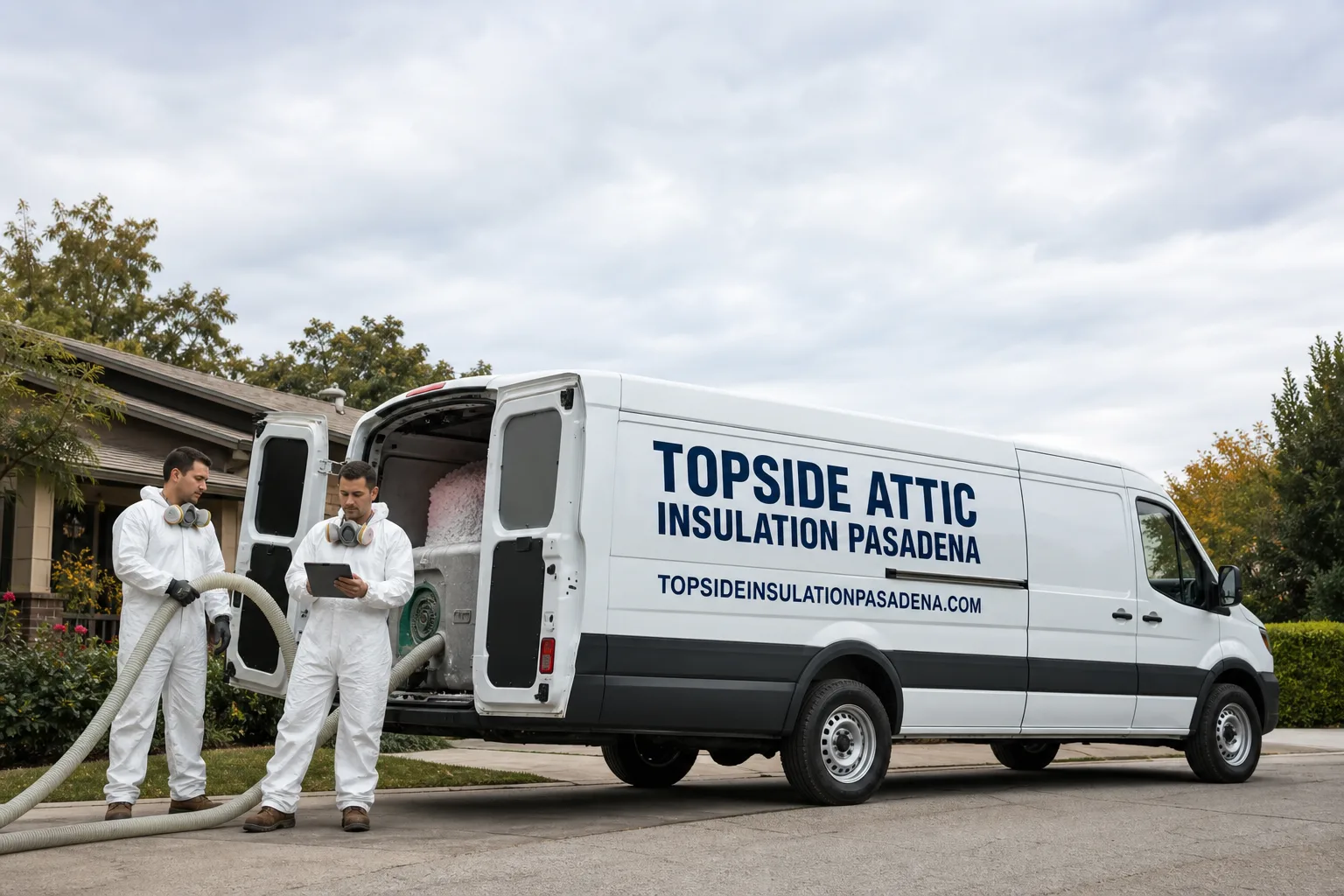
How Much Does Attic Insulation Cost in Pasadena, CA?
Attic insulation in Pasadena, CA typically costs between $1,800 and $4,500 for a standard single-story home with 1,000-1,500 sq ft of attic floor space, with most jobs landing around $2,400-$3,200 when blown-in fiberglass or cellulose is the chosen material. Homes in Pasadena’s older stock – craftsman bungalows in Bungalow Heaven, post-war ranches in San Rafael Hills, and mid-century builds near Caltech – often need air sealing completed before insulation goes in, which adds $400-$900 to the total but is required work, not an optional add-on. If your attic is accessible, has no existing damage, and needs only an Attic Insulation Top-Up to current California code (R-38 to R-60), you’re likely toward the lower end of that range.
Attic Insulation Cost Breakdown (2026)
Most Pasadena homeowners want a number before they pick up the phone. Here’s how the cost breaks down by material type, scope, and square footage. These ranges reflect actual market pricing in the San Gabriel Valley for 2026 – not national averages pulled from a trade database.
| Scope / Material | Typical Price Range (Pasadena, 2026) | Notes |
|---|---|---|
| Blown-in fiberglass (1,000 sq ft attic) | $1,200 - $1,900 | Fast install; good for open, accessible attics |
| Blown-in cellulose (1,000 sq ft attic) | $1,100 - $1,750 | Higher recycled content; common in older Pasadena homes |
| Blown-in fiberglass or cellulose (1,500 sq ft attic) | $1,800 - $2,900 | Most common size range for single-story homes in Pasadena |
| Blown-in fiberglass or cellulose (2,000+ sq ft attic) | $2,400 - $4,200 | Two-story, large craftsman, or estate-style homes |
| Attic air sealing (top plates, can lights, penetrations) | $400 - $900 | Required before insulation on any unsealed attic floor |
| Spray foam insulation (rim joists, specific sealing points) | $600 - $1,800 | Targeted application; not typically used wall-to-wall in attics |
| Radiant barrier installation | $800 - $1,800 | High value in Pasadena summers; reduces heat gain through roof deck |
| Old insulation removal (per 1,000 sq ft) | $700 - $1,500 | Required if existing material is damaged, contaminated, or compressed below R-19 |
| Full project: remove, air seal, re-insulate (1,500 sq ft) | $3,200 - $5,800 | Complete attic envelope restoration; most comprehensive scope |
What Pushes the Price Up
In Pasadena specifically, a few things reliably add cost. Homes built before 1978 sometimes have vermiculite mixed into existing insulation or other materials that need testing before removal – that’s a separate cost item if it comes up. Attics with a low pitch or knee-wall framing (common in craftsman and Spanish colonial revivals near Prospect Square and Madison Heights) take longer to work in, which affects labor. Knob-and-tube wiring that’s still live is another factor: California code requires that wiring to be evaluated before blown-in insulation covers it, which may mean coordination with an electrician before we schedule our crew.
What Keeps the Price Down
If your attic is clean, unobstructed, accessible through a full-size hatch, and the existing insulation is simply thin rather than damaged, the job is straightforward. Newer homes in the South Lake district or the 2000s-era townhomes on the east side of Pasadena near San Gabriel often fall into this category – there’s a usable hatch, no old material to haul out, and the framing is predictable. Those jobs can come in at or below the midpoint of the ranges above. Materials sourced from Owens Corning, Johns Manville, and GreenFiber are priced competitively and we carry no proprietary product lock-in, so the material spec is based on your attic, not on what carries the highest margin.
What Affects Attic Insulation Pricing in Pasadena
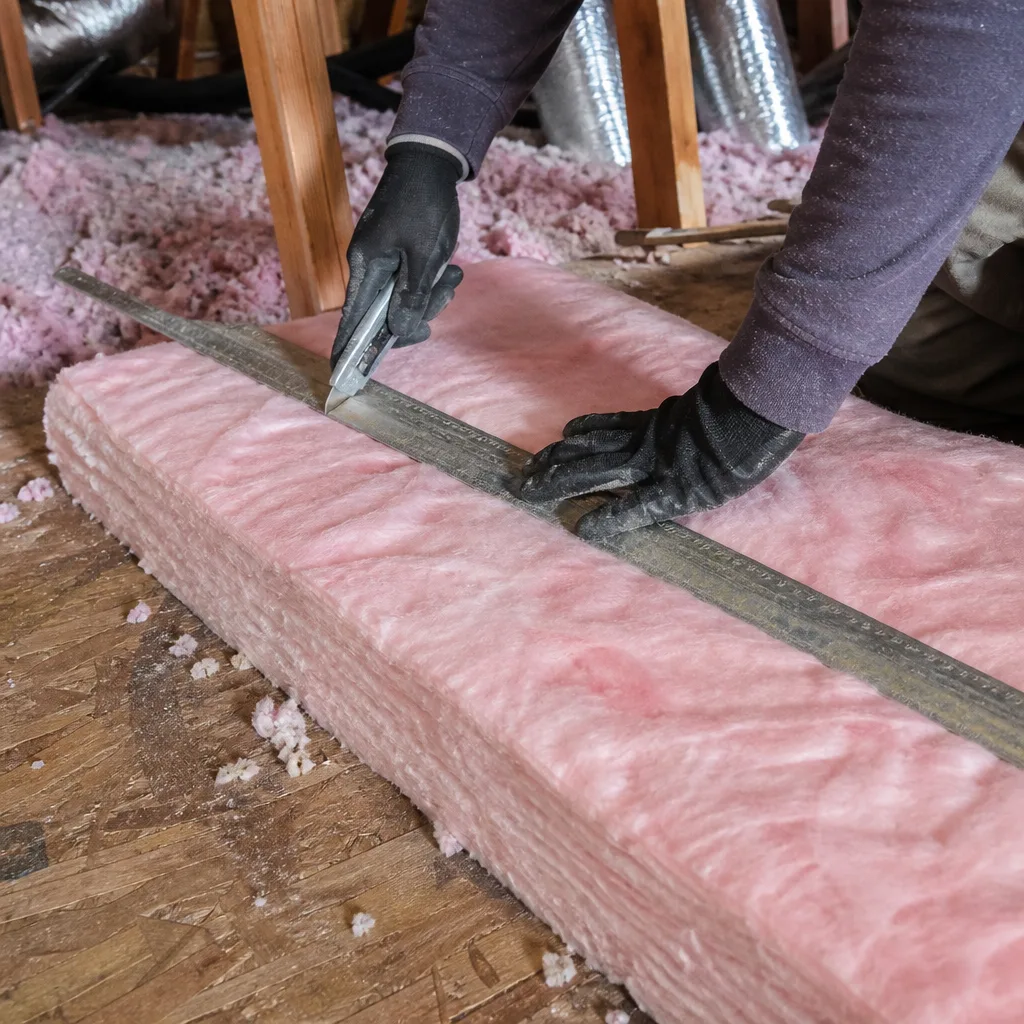
Six variables move the final number more than anything else. Here’s what each one actually does to your quote.
- Attic square footage and geometry. This is the primary cost driver. A simple rectangular attic over a 1,200 sq ft ranch in Altadena-adjacent North Pasadena prices out faster and lower than the same square footage spread across a craftsman with multiple dormers, low-pitch sections, and interior knee walls. Labor scales with complexity, not just area.
- Current insulation depth and condition. If your attic already has R-19 worth of material and you’re topping up to R-49, the scope is smaller. If the existing insulation is water-damaged from a past roof leak – something we see regularly in older homes near the Arroyo Seco watershed – it has to come out first, and that’s a separate line item. We document what we find with photos before recommending removal.
- Air sealing requirements. Pasadena’s older housing stock has a high rate of unsealed top plates, open soffits, and uninsulated can lights. These bypass points let conditioned air escape regardless of how deep the insulation is. At Envelope Insulation Co., air sealing is completed before any insulation is added – not as an upsell, but because adding insulation over an unsealed attic floor doesn’t perform the way the R-value math suggests it should. Expect $400-$900 for this scope depending on penetration count.
- Pasadena’s climate zone (Zone 10) requirements. California Energy Code places Pasadena in Climate Zone 10, which recommends attic insulation between R-38 and R-60 for most residential applications. If your current attic reads below R-19 – which is common in pre-1990 homes – you’re likely two to three full code cycles behind. Reaching R-49 or R-60 from near zero costs more than a simple top-up.
- Radiant barrier need. Pasadena averages over 280 sunny days per year, and summer afternoon attic temperatures in east-facing rooflines can exceed 150°F without a radiant barrier. Adding a foil barrier to the underside of the roof deck is a separate material and labor cost, but in Pasadena it pays back faster than in cooler Southern California markets. We see it most often quoted alongside insulation in homes in the Hastings Ranch and Chapman Woods neighborhoods where second-floor cooling costs are a recurring complaint.
- Access difficulty and job site conditions. An attic that requires moving stored items, a hatch that opens into a closet with a 22-inch opening, or a crawl-space-style attic under a low-slope roof all add labor time. We include a Documented Photo Record on every visit, so the site conditions we found are on record – which protects you and us if there’s any question later about what was there before we started.
Pasadena-Specific Notes: Climate, Code, and Old-Home Reality
Pasadena sits in a basin that traps heat in summer and sees occasional overnight lows in the high 30s in January and February. That temperature swing – sometimes 50°F between a July afternoon and a February night – means insulation here is doing real work year-round, not just in one season. An attic that’s under-insulated costs money in both directions: in summer through air conditioning load, and in winter through heating loss.
California’s Title 24 energy code applies to any permitted HVAC replacement or addition, and increasingly to insulation upgrades when they’re done as part of a broader permitted project. If you’re replacing a furnace or adding a mini-split to a room that’s currently served by the attic, a code-compliant insulation upgrade may be part of the permit requirement. We can walk through what applies to your specific situation before any work begins – that conversation happens during the estimate, not after the crew has already arrived.
One thing that comes up frequently in Pasadena’s older neighborhoods, specifically in the blocks between Orange Grove and the Rose Bowl, is that the attic contains both an aging HVAC duct system and existing blown-in insulation that has settled or been disturbed. Ducts that run through a poorly insulated attic lose a measurable amount of conditioned air to the unconditioned space. Sealing and insulating those ducts before re-insulating the attic floor is often worth doing in the same mobilization. It’s a separate scope with a separate line item, but the labor overlap makes it more cost-efficient than scheduling two visits.
For homeowners researching this more broadly, our Attic Insulation in Pasadena service page covers materials, process, and the full building-envelope scope we apply on every job. And for context on the full range of services under one roof – from crawl space encapsulation to home energy audits – the home page outlines what Envelope Insulation Co. does and how The Haven Standard applies to every project.
How to Save on Attic Insulation in Pasadena
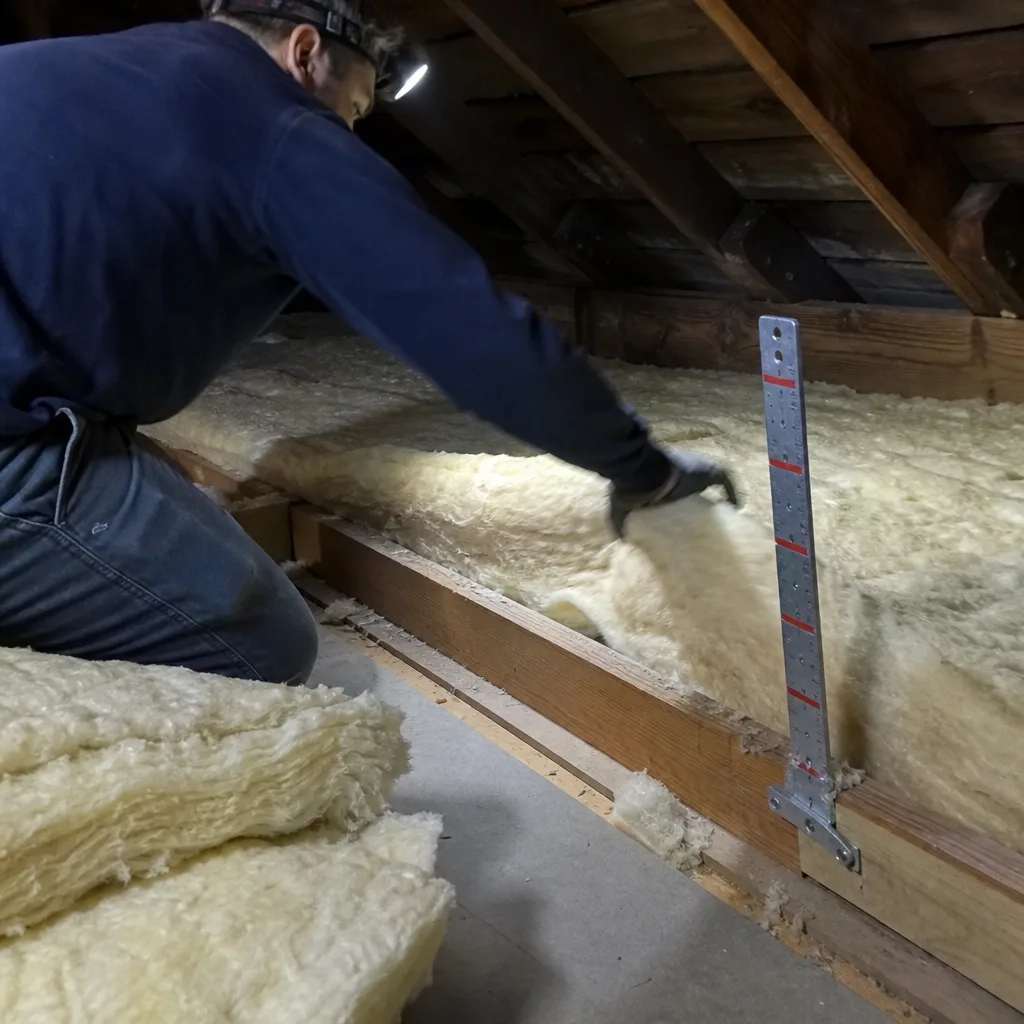
The most reliable way to spend less on attic insulation is to avoid doing part of the job twice. That sounds obvious, but it’s the source of most re-do calls we get. A homeowner has insulation blown in without air sealing; three years later the energy bills haven’t budged; they call again. Doing the air sealing first – even though it adds to the upfront cost – means the insulation you pay for actually performs at its rated R-value.
Beyond that, here’s what consistently saves money on a Pasadena attic insulation project:
- Get a written price before any work starts. Under Haven Standard Clause 1, every Envelope Insulation Co. quote is a flat, written price with a written scope and written warranty – before anyone lifts a tool. That means no scope creep, no “we found additional damage” surprises that weren’t documented in advance. You know the number going in.
- Check for utility rebates. Southern California Edison and SoCalGas both offer rebates for qualifying insulation upgrades. The amounts change by year and program cycle, so check current SCE and SoCalGas program pages directly – but in 2025 and into 2026, rebates of $100-$300 for qualifying blown-in insulation projects have been available for Pasadena-area customers. We can tell you whether the job as scoped is likely to qualify during the estimate.
- Use the federal energy efficiency tax credit. The 25C energy efficiency home improvement credit allows homeowners to claim up to 30% of qualified insulation costs (up to $1,200 per year) on federal taxes. Insulation materials that meet the IECC standard qualify. Keep the written invoice and the product spec sheets – both of which we provide.
- Bundle scopes in one mobilization. If you’re already pulling the crew in for insulation, adding radiant barrier installation or duct sealing in the same visit costs less than two separate appointments. The setup time and travel are absorbed once rather than twice.
- Get a second opinion on any written estimate. We offer a Free Second Opinion on any written estimate – bring us a competing quote and we’ll read through it with you. This isn’t a sales tactic; it’s an honest check on whether the scope and the price match what your attic actually needs. Call (213) 816-5351 to schedule that conversation – estimates are free and there’s no obligation.
FAQs: Attic Insulation Cost in Pasadena
How much does attic insulation cost in Pasadena for an average-size home?
Most single-story Pasadena homes with 1,200-1,500 sq ft of attic space pay between $1,800 and $3,200 for our Attic Insulation services, including attic air sealing of common penetration points. If the existing insulation needs to be removed first, add $700-$1,400 to that range. A two-story home or a craftsman with a complex roofline typically runs $3,000-$5,000 for a full install with air sealing. Call (213) 816-5351 for a written estimate specific to your home – the number on the page is the number we start from, not a teaser rate.
Is it cheaper to add insulation on top of the old insulation, or remove and replace?
Adding on top is less expensive upfront – typically $400-$800 less than a full Attic Insulation Replacement – but only makes sense if the existing material is dry, undamaged, and not contaminated. In Pasadena homes built before 1985, we find damaged or settled material in roughly 40% of attics we inspect. Blowing new insulation over wet or rodent-contaminated material traps the problem and reduces the actual performance of the new layer. We document the existing condition with photos before recommending either path, so you’re making the decision based on what’s actually there.
How long does attic insulation installation take in Pasadena?
A standard blown-in insulation job on a 1,000-1,500 sq ft Pasadena attic takes 4-7 hours for the full crew, including setup, air sealing, and insulation. Larger homes or jobs requiring full removal first typically run 1-2 days. We provide a named technician and a text when they’re on the way – Haven Standard: Arrive on schedule – so you’re not waiting in a four-hour window wondering when the crew will show up.
Does Pasadena require a permit for attic insulation?
A standalone attic insulation job – adding or replacing blown-in material without structural changes – does not typically require a permit in Pasadena under the current City of Pasadena Building and Safety requirements. However, if the project involves HVAC duct work, electrical modifications (such as addressing knob-and-tube wiring), or is tied to a permitted renovation, insulation work may fall under that permit’s scope. We’ll flag anything that looks like it might require coordination with Building and Safety during the estimate – before work starts, not after.
What R-value does Pasadena require for attic insulation?
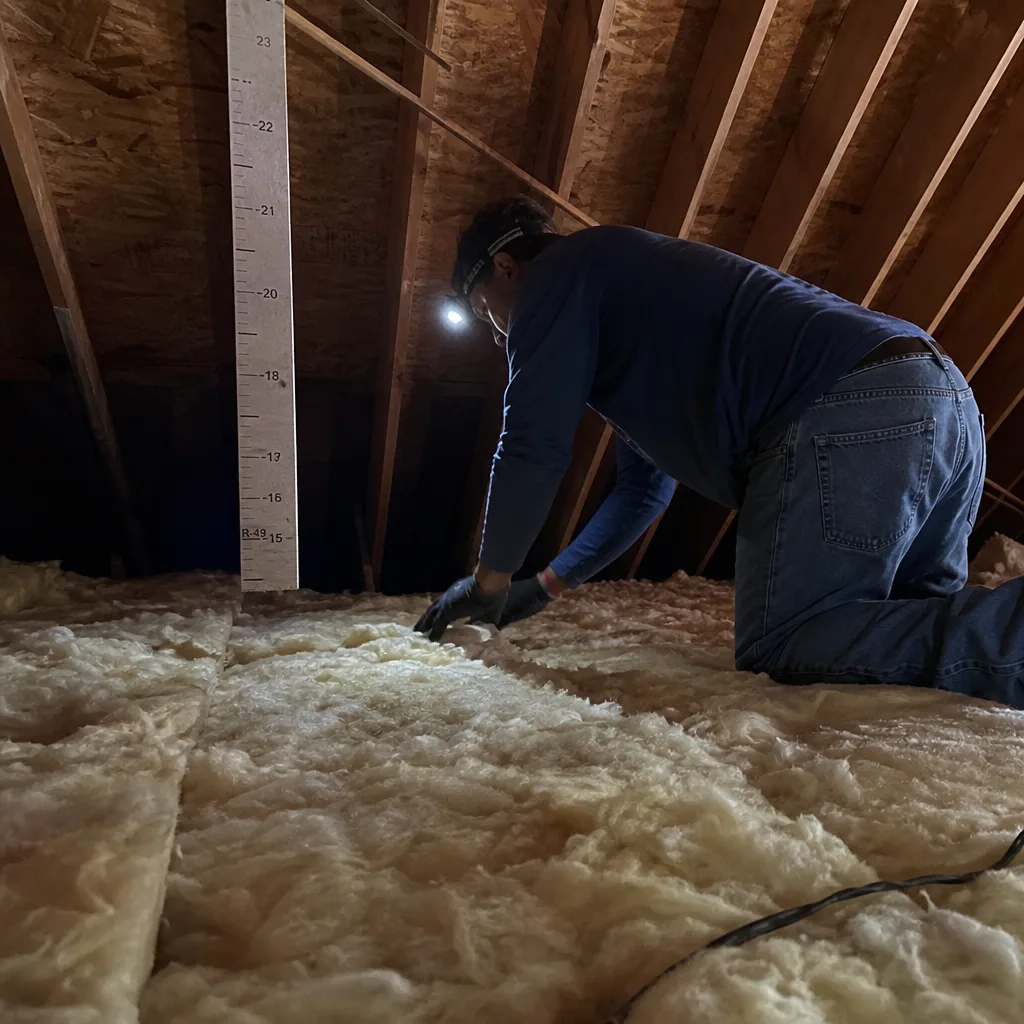
California Energy Code places Pasadena in Climate Zone 10. The recommended attic insulation level for existing homes in Zone 10 is R-38 minimum, with R-49 to R-60 being the target range for new construction or full replacement projects. Most pre-1990 Pasadena homes we inspect read between R-11 and R-19 – well below current recommendations. Reaching R-49 from near zero requires approximately 15-16 inches of blown-in fiberglass or cellulose. We measure the existing depth and calculate the required addition before quoting, so the scope is based on actual conditions, not a flat assumption.
Does attic insulation actually lower energy bills in Pasadena?
Yes, measurably – but the size of the reduction depends on how much air leakage was happening before. In Pasadena homes where we’ve completed air sealing followed by insulation and recorded before-and-after blower-door readings – a pressurization test that shows, in one number, how much conditioned air the building envelope was losing – we regularly see 30-50% reductions in air leakage rate. Homes in Bungalow Heaven that read 4,500 CFM50 before sealing have come in at 2,200-2,600 CFM50 after air sealing and insulation. That reduction translates to lower HVAC runtime, particularly in June through September when Pasadena’s heat index makes the attic the primary heat source for the rooms below. We publish those numbers on every applicable job so you’re not taking our word for it.
Why the Order of Operations Matters
This is the part most insulation contractors don’t talk about, because it complicates the sales conversation. Insulation slows the movement of heat through a surface. Air sealing stops conditioned air from leaking out of your home entirely. Both matter, but they solve different problems, and only one of them protects the other.
If you blow 16 inches of fiberglass over an attic floor that has 40 unsealed can-light penetrations and open top plates at every interior wall, the insulation sits on top of what are effectively open holes in your thermal envelope. Air carries heat far faster than it conducts through a solid material, so those gaps undermine the R-value of everything around them. This is why, at Envelope Insulation Co., we treat air sealing as a hard prerequisite – not a line item you can decline. The air sealing of top plates, can lights, and all penetrations is completed before any insulation is added. That’s the sequence, and it doesn’t change based on budget.
We also document it. Before we start, you have a written scope describing exactly what gets sealed and where. When we’re done, you have a photo record of the completed work and, on applicable jobs, a before-and-after blower-door reading. The blower-door number before work and the number after work are both on the record – so you can see, in a single figure, what the project actually accomplished.
That’s the Haven Standard: Have it in writing, do it in the right order, and show your work when you leave.
What Happens When You Call Envelope Insulation Co.
A live person answers when you call (213) 816-5351 – no voicemail, no callback queue. We schedule an on-site estimate at a time that works for you. The estimator arrives, inspects the attic, documents existing conditions with photos, and produces a flat written price with a written scope and written warranty before leaving your property. Under Haven Standard Clause 1, that written price is what the job costs – not a starting point for negotiation, not a number that changes when the crew opens the hatch.
If you already have a written estimate from another contractor, we offer a Free Second Opinion – we’ll read through it with you and tell you honestly whether the scope matches what your attic needs. That offer stands regardless of whether you hire us.
Wes Okafor leads every project under the same standard, and the 365-Day Done Right Promise applies to all completed work: if it’s not done right, we make it right – backed by the written warranty you received before anyone started.
Pasadena homeowners searching for Attic Insulation Near Me in Pasadena, CA who have run the research, read the reviews, and want a number on paper before making a decision – this is how we work. Call (213) 816-5351 or reach out through the site. The estimate is free, the price is written, and the work doesn’t start until you’ve signed off on both.
- Written price before any work starts – always
- Air sealing completed before insulation – no exceptions
- Before-and-after blower-door readings on applicable jobs
- Documented photo record on every visit
- 365-Day Done Right Promise, in writing
- Live person answers calls – no voicemail
- 9,000+ homes sealed and insulated since 2016
Written by Wes Okafor, Owner at Envelope Insulation Co. (operating as Topside Attic Insulation Pasadena), serving Pasadena, CA since 2016.
Pricing reflects the Pasadena market as of 2026. Topside Attic Insulation Pasadena offers free estimates – call (213) 816-5351.
What Our Customers Say
"The winter gas bill dropped by about a third. They had estimated a quarter, so they under-promised."
- Genevieve R."Crawl space encapsulation done properly. Photographs of the vapour barrier at every seam, and the damp smell in the hallway is gone."
- Ainsley P."Turned up on time, protected the hallway, and the written scope matched what was actually done."
- Bruno S.