
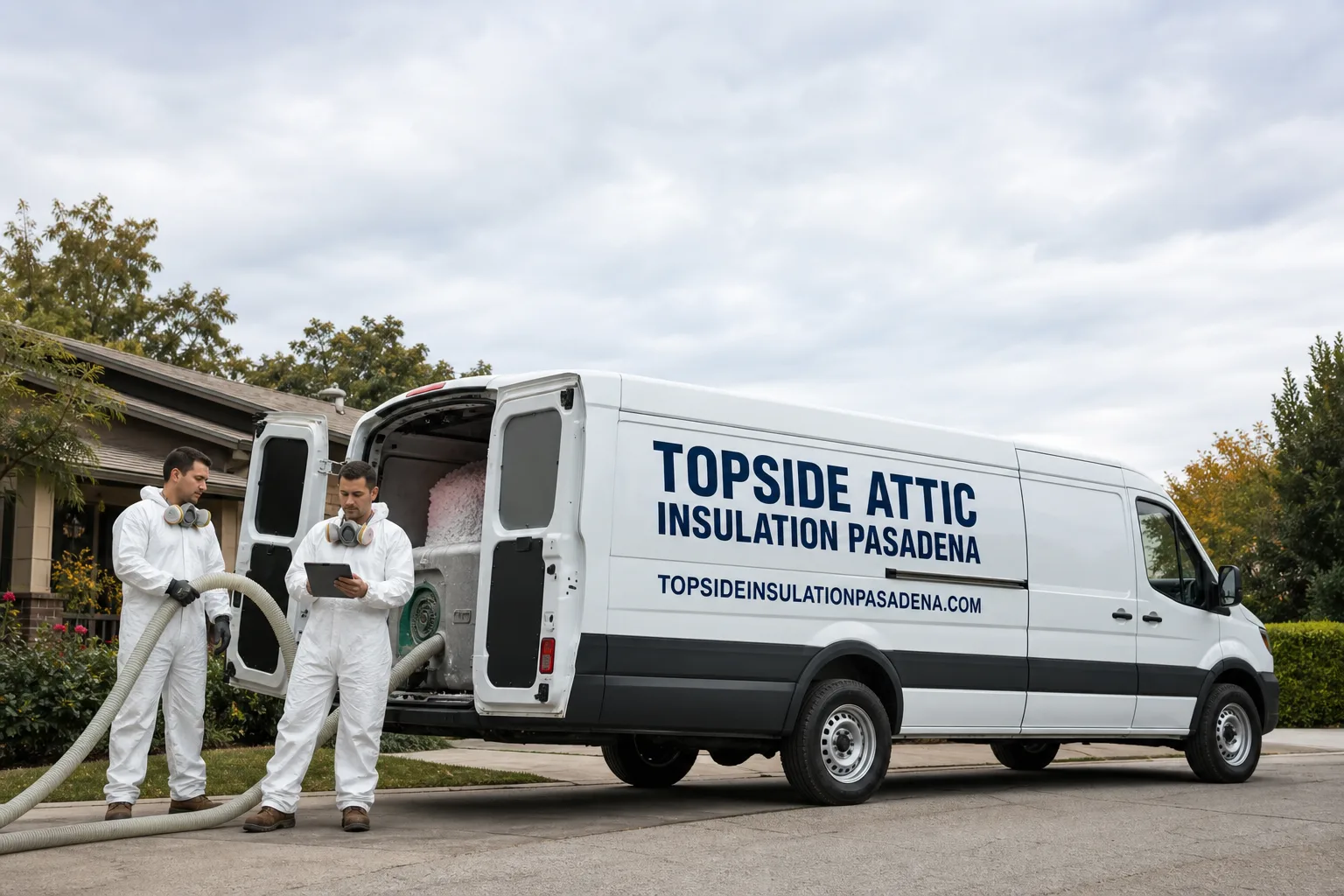
How Much Does Wall Insulation Cost in Pasadena?
Wall insulation in Pasadena, CA typically costs between $1.50 and $4.25 per square foot of wall area, depending on the insulation type, installation method, and whether air sealing is done first. For a 1,500-square-foot Pasadena home with standard 2×4 framing, most homeowners spend between $2,800 and $6,400 for a complete wall insulation job. Homes with open walls (during a remodel) run toward the lower end; homes requiring injection foam or dense-pack blown-in through closed walls run higher.
Wall Insulation Cost Breakdown (2026)
Our Wall Insulation services in Pasadena vary significantly in cost by method. The table below reflects what we see on actual jobs in this market – these are not national averages padded with disclaimers.
| Insulation Method | Cost Per Sq Ft (Wall Area) | Typical Total (1,500 sq ft home) | Best For |
|---|---|---|---|
| Fiberglass Batt (open wall) | $0.90 – $1.50 | $1,400 – $2,800 | Remodels, additions with open studs |
| Dense-Pack Blown-In Cellulose (closed wall) | $2.00 – $3.25 | $3,200 – $5,800 | Existing homes without gutting drywall |
| Dense-Pack Fiberglass (closed wall) | $2.25 – $3.50 | $3,400 – $6,000 | Existing homes, higher moisture tolerance |
| Injection Foam (closed wall) | $2.75 – $4.25 | $4,200 – $7,500 | Older Pasadena craftsmans, brick veneer walls |
| Open-Cell Spray Foam (open wall) | $1.75 – $2.75 | $2,800 – $5,000 | Remodels where air sealing is a priority |
| Closed-Cell Spray Foam (open wall) | $3.50 – $5.50 | $5,200 – $9,000 | Narrow cavities, moisture-prone walls |
| Mineral Wool Batt (open wall) | $1.25 – $2.00 | $2,000 – $3,600 | Fire resistance, sound control |
These ranges assume air sealing is completed before insulation is added – which is how every job at Envelope Insulation Co. is sequenced. If air sealing hasn’t been done, we do it first, price it separately as a line item, and document it with a blower-door test. That test – a pressurization reading that produces a single number showing how much air your building envelope was losing before and after the work – is what separates a documented job from a guess.
Labor typically accounts for 40 to 55 percent of a wall insulation invoice in Pasadena. Material costs are fairly stable across contractors in this market, so if you’re getting wide quote variation, the difference is almost always in what’s being skipped – air sealing, patching, or documentation.
Additional Cost Line Items to Expect
- Air sealing (top plates, penetrations, electrical boxes): $400 – $900 for a typical single-story Pasadena home, priced as a separate scope item at Envelope
- Blower-door test (before and after): Included on applicable jobs at no additional charge when air sealing is part of the scope
- Drywall patching (closed-wall injection/dense-pack): $300 – $800 depending on hole count and finish level; some contractors exclude this entirely
- Permit fees (City of Pasadena): Minor residential insulation work generally does not require a permit in Pasadena, but a full remodel adding insulation alongside structural work may trigger Title 24 compliance review – ask your contractor to confirm before work starts
- Access patching on exterior (drill-and-fill from outside): $200 – $600 for stucco or siding repair after exterior injection
What Affects Wall Insulation Pricing in Pasadena
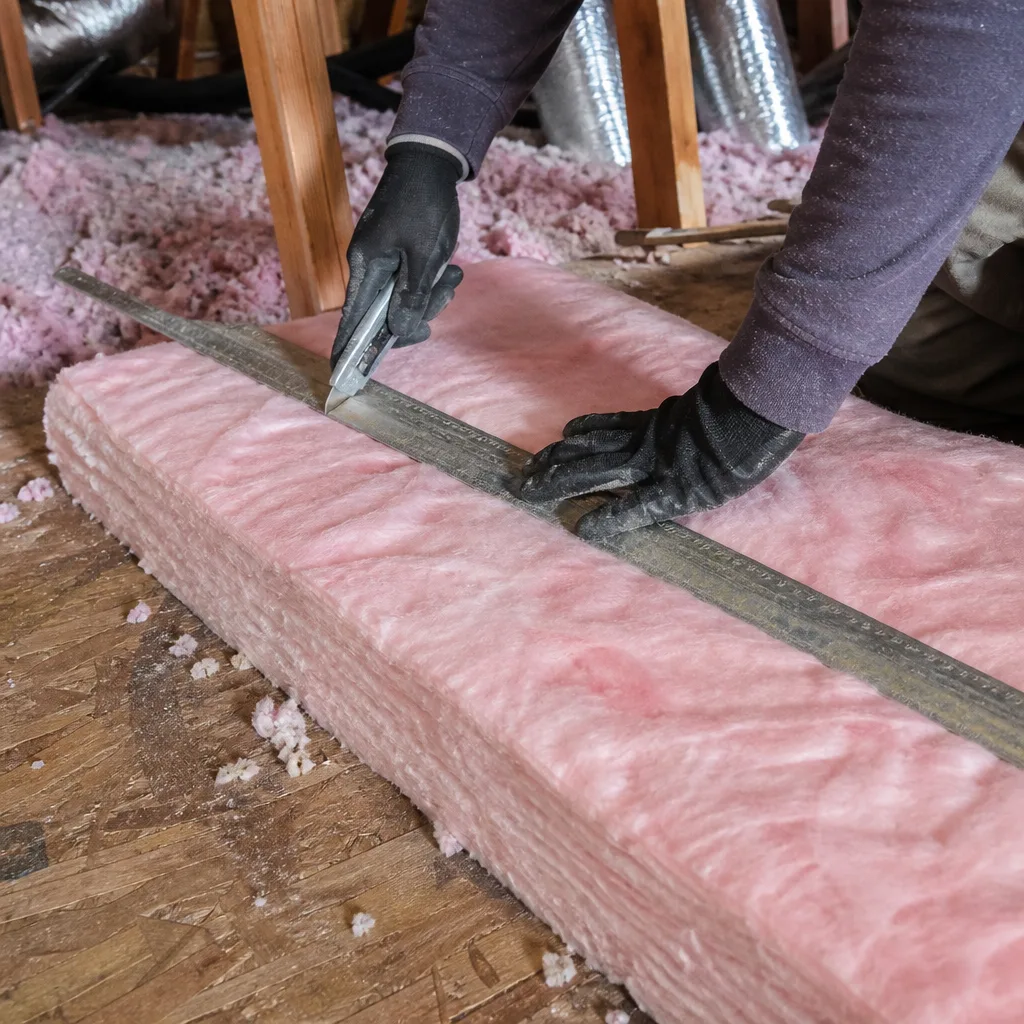
Pasadena has a housing stock that creates some specific pricing dynamics you won’t see in newer markets like Valencia or Irvine. Here’s what moves the number on your quote.
- Wall cavity access method. Homes with open studs (during a remodel or addition) cost significantly less to insulate than finished homes where material has to be injected through holes drilled in the drywall or exterior. In Pasadena’s older neighborhoods – South Pasadena-adjacent pockets, the Bungalow Heaven district, and pre-war homes along Sierra Madre Boulevard – closed-cavity work is almost always the situation, which pushes costs toward the middle and upper ranges in the table above.
- Wall framing depth. Most Pasadena craftsman bungalows and Spanish colonials built before 1950 use 2×4 framing, which gives you a 3.5-inch cavity. That limits maximum R-value without adding exterior continuous insulation. Homes built after 1990 often have 2×6 framing, which opens up better R-value options at lower material cost per R-point. The framing depth is the first thing we check before recommending a product.
- Existing insulation condition. About a third of the closed-wall jobs we see in Pasadena have degraded fiberglass batts that have compressed, slipped, or been colonized by rodents. Removing that material before re-insulating adds cost but is not optional – insulating over failed material doesn’t fix the problem, it hides it. We document what we find with photos before any new material goes in.
- Exterior wall material. Stucco exteriors – extremely common in Pasadena – require more precise drilling for exterior-access injection jobs and carry a higher patch cost than wood siding. Brick veneer walls, found in some Pasadena foothills homes, require injection foam rather than dense-pack because loose-fill material won’t bridge the air gap between brick and framing.
- Square footage and story count. Multi-story Pasadena homes – common in San Rafael Hills and Hastings Ranch – cost more per square foot than single-story homes due to scaffolding or lift requirements on the exterior, and because interior injection requires working from multiple floor levels. Two-story homes often see a 15 to 25 percent premium over single-story work of the same wall area.
- Material choice and R-value target. Pasadena’s climate sits in California Energy Commission Climate Zone 9, which has specific Title 24 R-value requirements for walls in new construction and permitted remodels. For existing homes doing non-permitted upgrades, there’s no mandated minimum, but hitting R-13 in a 2×4 cavity is the practical target for meaningful energy impact. Moving from R-13 fiberglass batts to R-15 mineral wool (Rockwool or equivalent) adds roughly $0.30 to $0.50 per square foot – often worth it in rooms facing west or south where afternoon heat gain is highest.
Pasadena-Specific Conditions That Change the Calculation
Most wall insulation cost guides are written for a generic American house. Pasadena isn’t that, and the pricing reflects it.
The San Gabriel Mountains sit directly north. That geography means Pasadena gets hot, dry Santa Ana wind events in fall and winter that push hot air through every unsealed penetration faster than almost anywhere else in Los Angeles County. A wall cavity with R-13 insulation and unsealed top plates still allows significant conditioned air loss during a Santa Ana event – the insulation does nothing for air movement, only for conductive heat transfer. That’s why we treat air sealing as a prerequisite, not an optional line item. We’ve seen blower-door readings on Pasadena craftsmans drop from over 5,000 CFM50 to under 2,000 CFM50 after sealing alone – before a single batt goes in. That number – CFM50, cubic feet per minute at 50 pascals of pressure – is the industry-standard measure of building envelope leakiness.
Pasadena also has a meaningful wildfire smoke consideration that doesn’t appear in most national insulation guides. Homes in the Altadena-adjacent foothills and east Pasadena neighborhoods near the Angeles National Forest experience periodic smoke infiltration events. A tighter building envelope, documented by a lower post-sealing blower-door number, measurably reduces particulate infiltration. That’s not a marketing claim – it’s physics.
For Wall Insulation in Pasadena, we start every job with a written scope that specifies the insulation type, the R-value target, the air sealing scope, and the blower-door measurement protocol. That document exists before anyone starts work – Haven Standard Clause 1.
How to Save on Wall Insulation in Pasadena
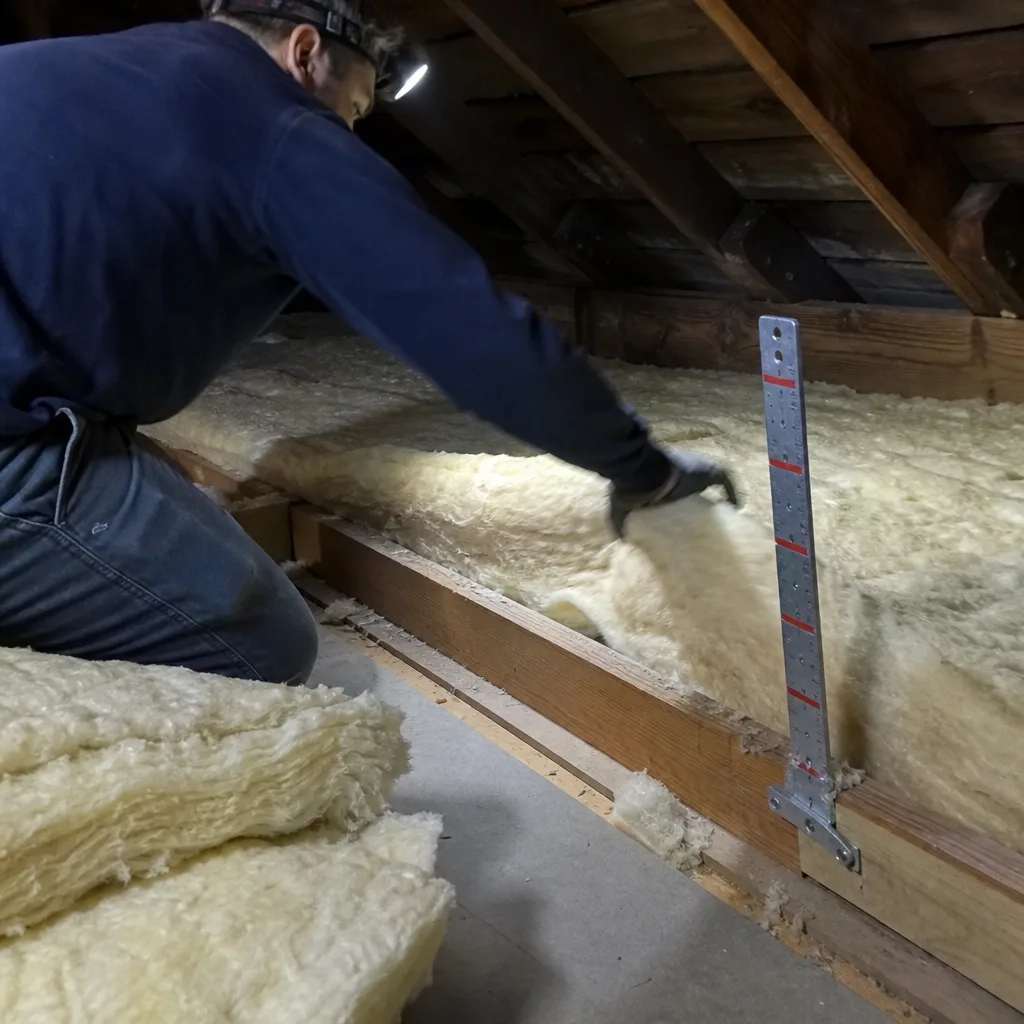
There are legitimate ways to reduce your wall insulation cost, and a few “savings” that aren’t actually savings.
What actually reduces cost
- Combine with a remodel or renovation. If walls are already open for electrical or plumbing work, labor costs for insulation drop significantly. In Pasadena’s older housing stock, this is the single biggest opportunity. If you’re planning a kitchen or bathroom remodel in the next year, coordinate with your insulation contractor before the drywall goes back up.
- Do walls and attic in the same mobilization. When a crew is already at your home for attic insulation, adding wall insulation to the same visit saves a mobilization charge – typically $150 to $350 – and often results in a lower combined price per square foot. The air sealing scope can cover both planes in one operation.
- Get a TECH Clean California rebate. The TECH Clean California program and Southern California Edison’s residential rebate offerings have both included insulation upgrades. Eligibility and amounts change year to year, but it’s worth confirming current availability before you sign a contract. We note any applicable rebate programs in the written scope.
- Prioritize by thermal load. If you can’t do the whole house, start with west- and south-facing walls. In Pasadena’s afternoon heat, those walls see the highest solar gain. A targeted approach – say, the master bedroom exterior wall facing west – delivers the most comfort improvement per dollar spent.
- Get a free second opinion on any written estimate. If you have a quote in hand from another contractor, bring it to us. We’ll read through it with you line by line – no charge. What you’re looking for: Is air sealing a named line item? Is drywall patching included or excluded? Does the scope specify R-value and material brand? A quote that doesn’t specify these things isn’t protecting you.
What isn’t actually a saving
Skipping air sealing to reduce the invoice is the most common false economy we see in Pasadena. You can fill every wall cavity to R-13 and still have significant conditioned air loss through unsealed penetrations. The insulation addresses conductive heat transfer; air sealing addresses infiltration. Both problems exist in almost every pre-1980 Pasadena home. Fixing one without the other leaves roughly half the energy problem unsolved.
Choosing the cheapest batt on the market is rarely the smart move either. The delta between standard fiberglass and mineral wool (Rockwool is one brand we use) is around $0.30 to $0.50 per square foot. Over the life of a wall installation – which should be 30-plus years – that premium is negligible against the performance difference in sound attenuation and fire resistance, both relevant in Pasadena’s dense residential neighborhoods.
To get a written price before any work starts, call (213) 816-5351. We’ll schedule a visit, document what we find, and hand you a flat-price written scope before anyone picks up a tool.
FAQs – Wall Insulation Cost in Pasadena
How much does wall insulation cost in Pasadena, CA in 2026?
Most wall insulation jobs in Pasadena run between $1.50 and $4.25 per square foot of wall area, or roughly $2,800 to $7,500 for a typical single-story home depending on the installation method. Open-wall batt work is on the lower end; injection foam or closed-cell spray foam in finished walls is at the upper end. Air sealing is priced as a separate line item – typically $400 to $900 for a single-story Pasadena home – and is completed before insulation goes in. Call (213) 816-5351 for a written price specific to your home’s framing and wall condition.
Is it cheaper to insulate walls from the inside or outside in Pasadena?
Interior access (drilling through drywall) is generally $0.25 to $0.75 per square foot cheaper than exterior access through stucco, because stucco patching costs more and requires more precise work than drywall patching. For Pasadena homes with stucco exteriors – the majority in neighborhoods like Madison Heights, Linda Vista, and the Bungalow Heaven area – interior drill-and-fill is usually the more cost-effective route. Exterior injection makes sense when interior access is obstructed or when the exterior is already being refinished for another reason. We specify the access method in the written scope before work starts.
How long does wall insulation last in Pasadena homes?
Properly installed wall insulation – whether dense-pack cellulose, mineral wool, or spray foam – should last 30 to 50 years or more without replacement under normal conditions. Pasadena’s climate doesn’t create significant thermal cycling stress on wall cavities compared to colder markets. The conditions that shorten insulation life here are moisture intrusion (rare in Pasadena’s dry climate but possible in poorly flashed walls) and rodent activity in attic-adjacent wall cavities. We document wall cavity condition with photos on every job so you have a record of what was found and what was installed.
Can you insulate interior walls for soundproofing in Pasadena?
Yes. Interior wall insulation for sound control typically costs $1.00 to $2.25 per square foot for mineral wool batts (Rockwool is one option we use) in open-cavity situations. For closed walls, dense-pack cellulose is the most effective closed-cavity sound treatment, typically running $2.00 to $3.25 per square foot installed. In Pasadena’s older homes with plaster walls and minimal interior insulation, the sound improvement between adjacent rooms can be significant – especially in homes near the 210 freeway corridor or on busier streets like Colorado Boulevard or Lake Avenue. Call (213) 816-5351 to discuss the specific walls you want treated.
Does wall insulation require a permit in Pasadena?
Standalone insulation upgrades in existing Pasadena homes generally do not require a building permit from the City of Pasadena. However, if wall insulation is part of a larger remodel that involves structural changes, electrical work, or HVAC modifications, the overall project may trigger a Title 24 energy compliance review that sets minimum R-value requirements. We confirm permit requirements as part of the written scope – if a permit is needed for any portion of the work, that’s noted before anyone starts. Never assume permit status without verifying with your contractor.
Is it worth insulating walls in a Pasadena home if the attic is already insulated?
In most cases, yes. Attic insulation addresses the largest single surface area, but uninsulated walls typically account for 15 to 25 percent of a home’s total heat gain and loss in a single-story structure. In two-story Pasadena homes, that percentage is higher because the wall-to-ceiling ratio shifts. Homes we’ve tested with a blower-door after attic work often still show significant infiltration through wall top plates and electrical penetrations – which is why air sealing scope covers both the attic plane and the wall plane. The two problems overlap at the same location in the building, and fixing one without the other leaves measurable energy loss on the table.
Key Takeaways
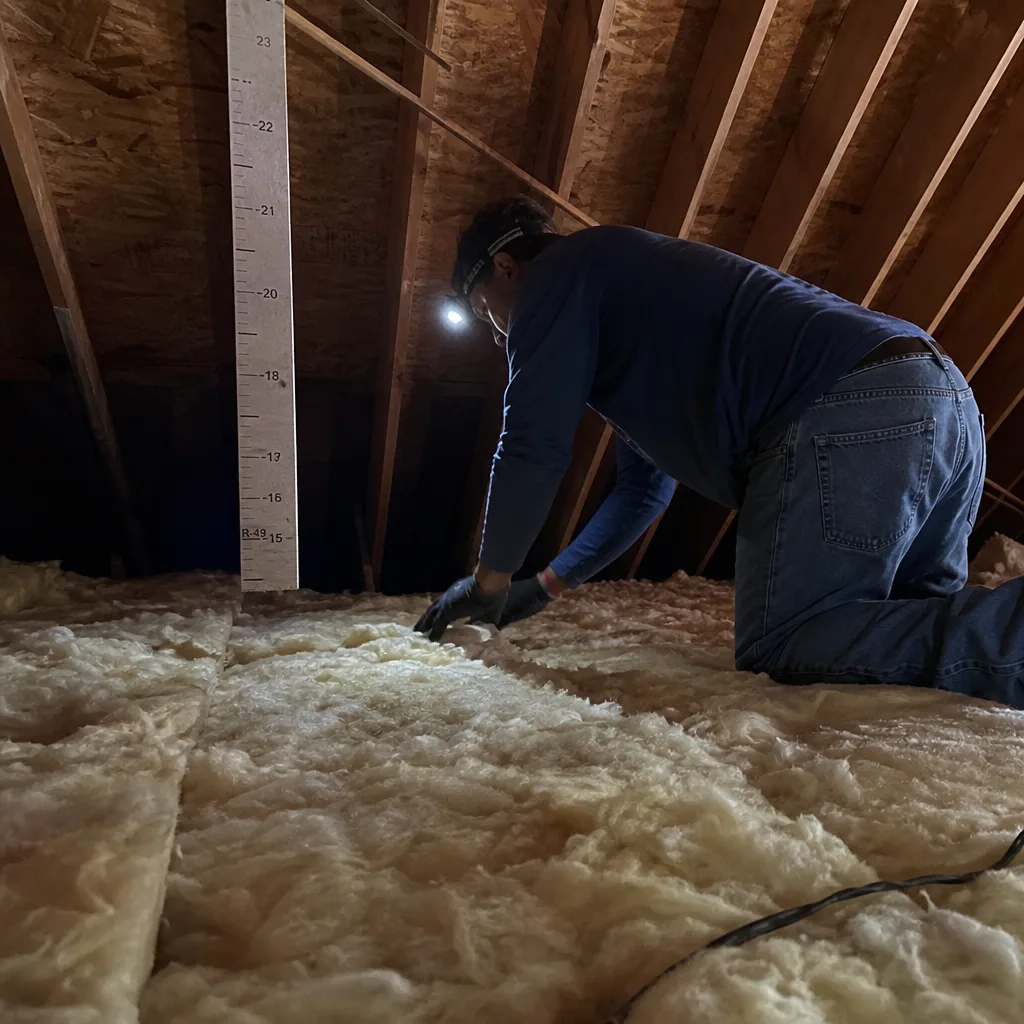
- Wall insulation in Pasadena costs $1.50 to $4.25 per square foot, or $2,800 to $7,500 for a typical home, depending on method and wall access.
- Closed-wall injection (dense-pack or injection foam) costs more than open-wall batt work but avoids the need to gut drywall.
- Air sealing is a separate, required line item – insulation alone doesn’t stop air infiltration, which is a significant energy loss factor in Pasadena’s Santa Ana wind season.
- Pasadena’s pre-1950 housing stock (craftsman, Spanish colonial, brick veneer) creates specific access and material constraints not present in newer homes.
- A written price before work starts, a documented photo record, and before-and-after blower-door readings are standard on every applicable job – not optional extras.
- The 365-Day Done Right Promise covers all completed work. If it’s not right, we make it right.
- The best way to reduce cost is to combine wall and attic insulation in a single mobilization, or coordinate wall work during an existing remodel when walls are already open.
Get a Written Price Before Any Work Starts
Wes Okafor and the crew at Topside Attic Insulation Pasadena have been documenting jobs in this market since 2016 – over 9,000 homes with a written price before work started and a documented record when the crew left. Every Pasadena wall insulation quote we provide is a flat price with a named scope: insulation type, R-value, air sealing locations, access method, and what patching is or isn’t included. No surprises mid-job.
If you have a competing written estimate, bring it. We offer a free second opinion on any written quote – we’ll read through it with you and identify what’s specified and what isn’t. That review is free regardless of whether you hire us.
To schedule a visit and get your written price: call (213) 816-5351. A live person answers – no voicemail, no callback window measured in business days. We’ll document what we find, tell you what it costs, and give you that in writing before anyone starts.
Written by Wes Okafor, Owner at Topside Attic Insulation Pasadena, serving Pasadena, CA since 2016. Pricing reflects the Pasadena market as of 2026. Topside Attic Insulation Pasadena offers free estimates – call (213) 816-5351.
What Our Customers Say
"Crawl space encapsulation done properly. Photographs of the vapour barrier at every seam, and the damp smell in the hallway is gone."
- Ainsley P."Turned up on time, protected the hallway, and the written scope matched what was actually done."
- Bruno S."Two other companies quoted to blow more insulation on top of what was there. These were the only ones who said the existing material had to come out first, and explained why."
- Clifford E.