
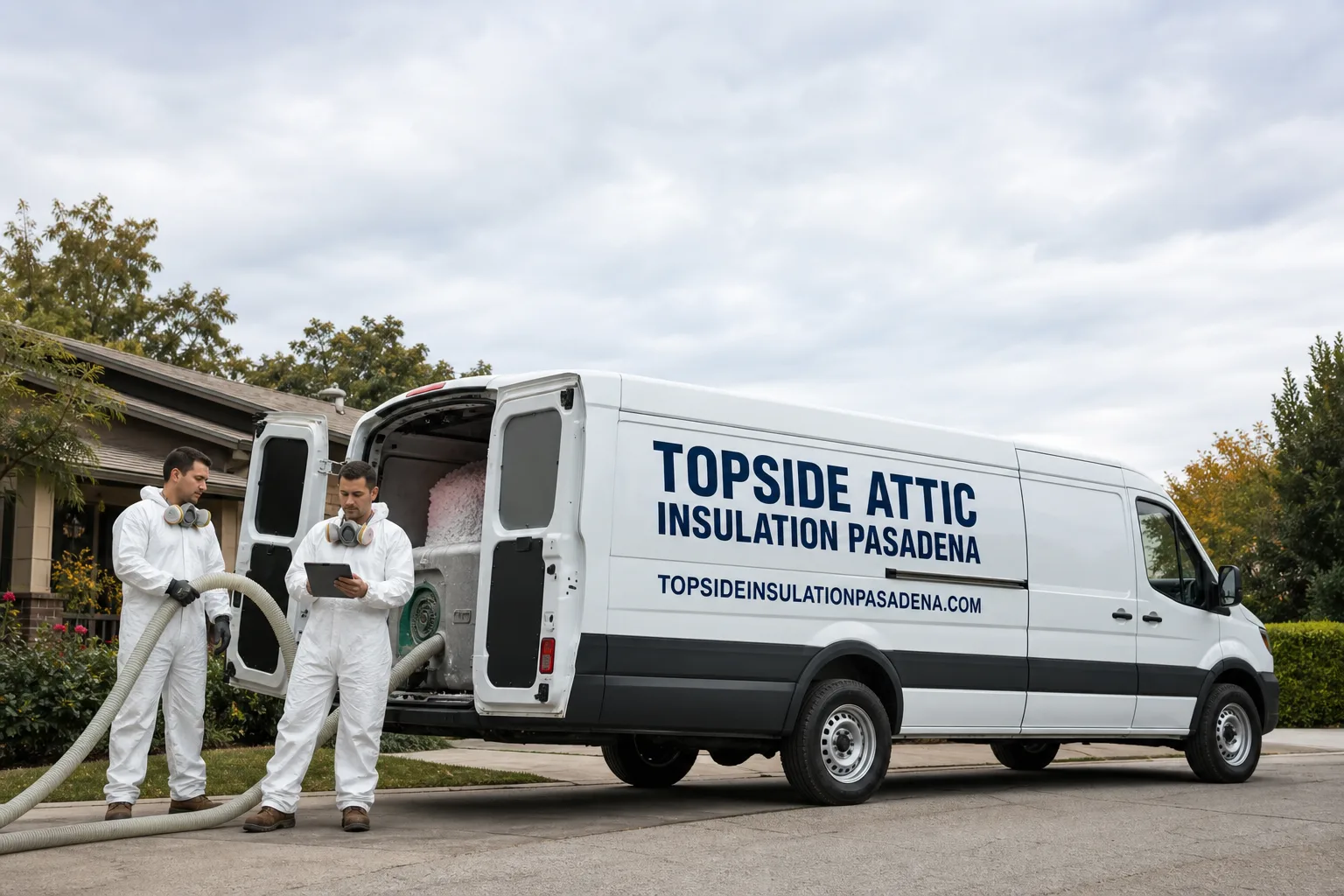
Fast, Reliable Spray Foam Insulation Across Alhambra
Spray foam insulation in Alhambra typically runs $3.80-$7.50 per board foot depending on open-cell or closed-cell product, with most whole-attic jobs landing between $2,400 and $5,800 for the bungalows and Spanish Colonial Revival homes that dominate this city’s housing stock. We’re usually on-site in Alhambra within 24-48 hours of your call, and same-day assessments are common for jobs off Valley Boulevard or near Alhambra Park. Our crews know the difference between a 1923 Craftsman on Marguerita Street and a 1955 ranch on Commonwealth Avenue, and that difference matters for what goes in your walls. Call (213) 816-5351 to book a free written estimate - we publish the price before anyone lifts a tool.
Dispatch and scheduling for Alhambra run from our Los Angeles office, but the crews that reach your door are working Alhambra homes weekly. They carry Johns Manville and Knauf materials specified for Southern California’s mixed-dry climate zone, and they’ve learned which Alhambra inspectors flag knob-and-tube proximity and which want to see blower-door documentation on the permit folder. That local fluency saves you a re-inspection.
Why Topside Attic Insulation Pasadena Is Alhambra’s Preferred Spray Foam Insulation Company
We’ve sealed and insulated over 9,000 homes since 2016, and a meaningful share of those have been in the San Gabriel Valley corridor that includes Alhambra. Our Alhambra customers leave reviews that mention the same things: we showed up when we said we would, we texted a photo of the technician en route, and we left behind a written scope, a written warranty, and a Documented Photo Record of every cavity we touched. The 365-Day Done Right Promise applies to every Alhambra job - if it’s not done right, we make it right.
Response time to Alhambra averages same-day to next-day for assessments, because our crews are already working Monterey Park and South Pasadena on most weeks. We don’t ask you to wait for a crew driving from the Valley or Orange County. When you call (213) 816-5351, a live person answers - no voicemail loop, no callback window measured in business days. That’s Haven Standard Clause 1: flat price, written scope, written warranty before anyone lifts a tool.
Our Alhambra fluency runs deeper than geography. We know that a pre-1940 bungalow on Second Street likely has active knob-and-tube wiring that an out-of-area contractor might foam right over. We know that the city’s inland heat island - summer highs 10-15°F above coastal LA - means your 1920s zero-wall-insulation home is fighting a thermal battle its builders never anticipated. And we know that Alhambra’s dense bungalow courts, with their shared walls and semi-attached framing, require rim-joist and party-wall detailing that standard suburban scoping misses entirely.
Our Spray Foam Insulation Services in Alhambra
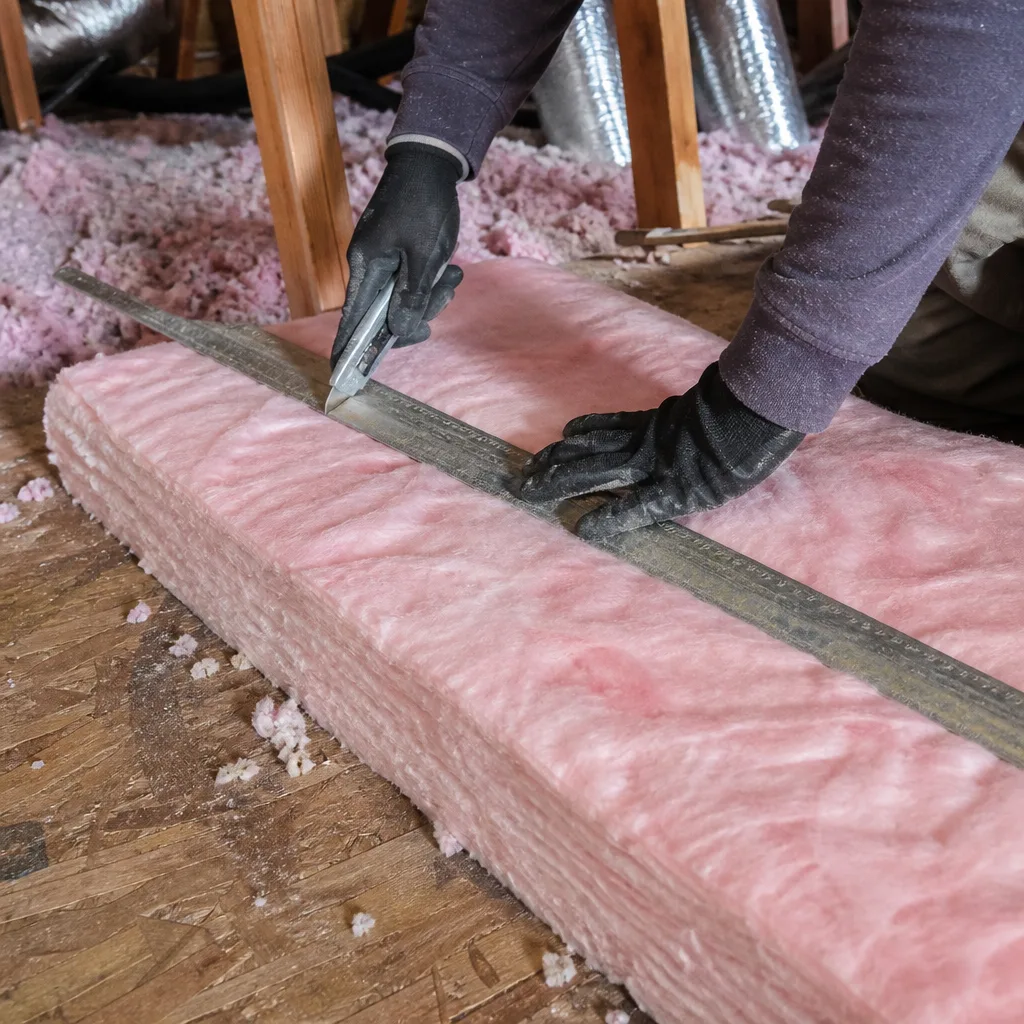
Open-Cell Spray Foam
Open-cell foam runs lighter and more permeable, about half a pound per cubic foot, and it excels in Alhambra attics where moisture management matters more than absolute R-value per inch. We use it on roof decks and in non-occupied attic spaces where the building envelope needs to breathe. In Alhambra’s older homes with original stucco exteriors, open-cell’s vapor permeability can be an advantage - though we always pair it with a blower-door test to confirm we haven’t created an unintended air path through lath-and-plaster wall assemblies.
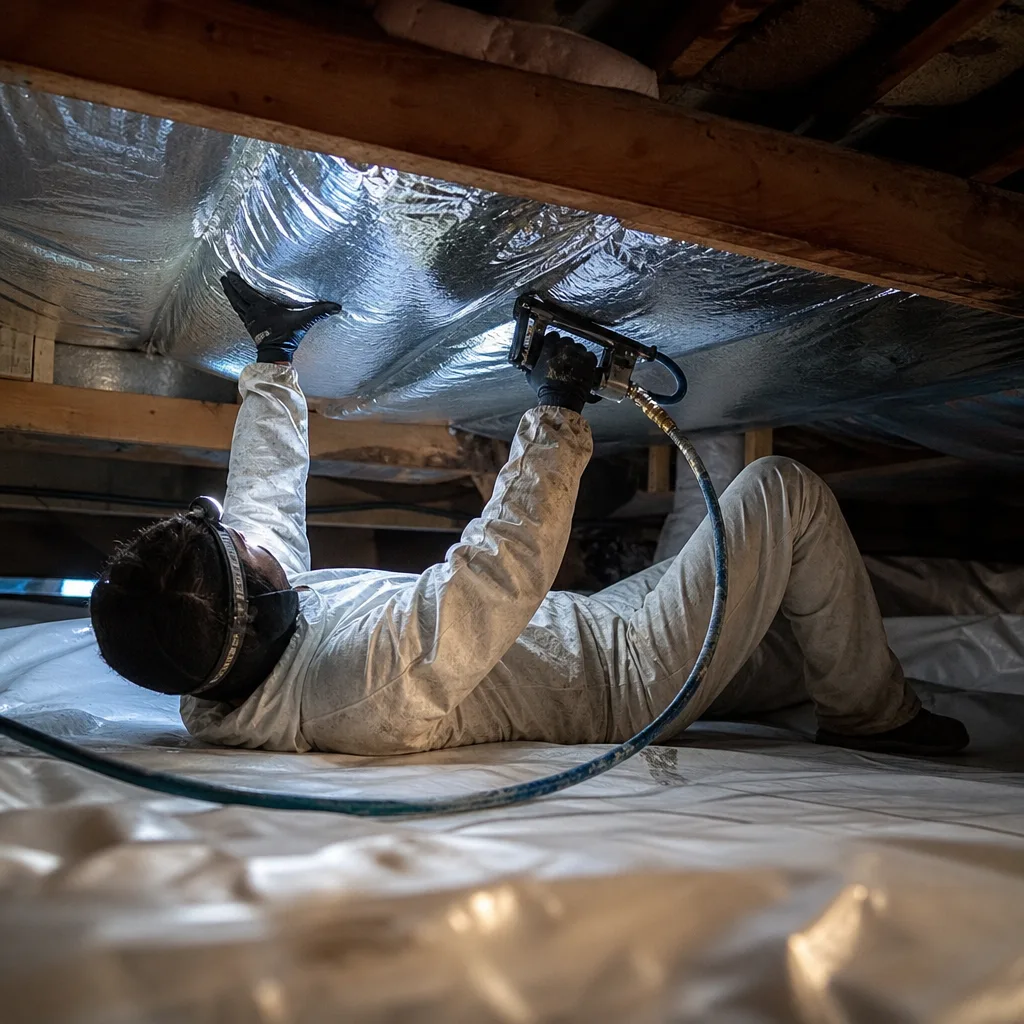
Closed-Cell Spray Foam
Closed-cell foam is our go-to for Alhambra’s 1920s-1940s bungalows. At roughly 2 pounds per cubic foot and R-6.5 per inch, it delivers structural rigidity and vapor barrier properties in one pass - critical for walls that were built with zero insulation and have survived a century of San Gabriel Valley heat expansion. On a Craftsman bungalow off South Marengo Avenue, our crew opened a wall cavity behind original lath and plaster to spray closed-cell foam and found active knob-and-tube conductors running through the stud bay. We stopped, had the homeowner’s electrician verify and reroute the circuit before we foamed, then filled the same bay with closed-cell to seal the 1920s stucco wall - the room’s afternoon heat gain dropped noticeably and the attic-side rim joist got the same treatment while we were there. That’s the sequence: electrician first, foam second, documentation always.
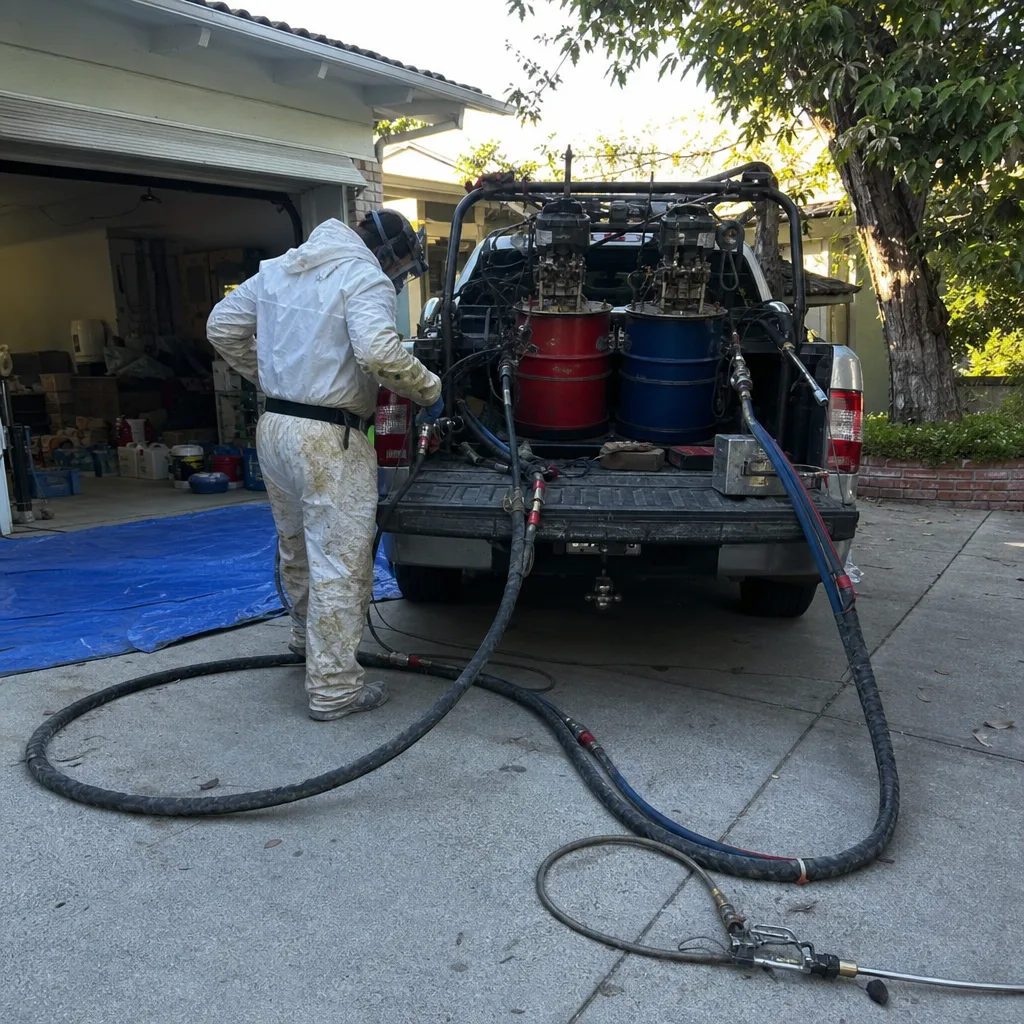
Rim Joist Spray Foam
The rim joist - where your foundation meets your first floor - is the single leakiest junction in most Alhambra bungalows. Original construction left these gaps wide open to the crawl space or exterior, and decades of settling have only worsened the bypass. We spray closed-cell foam directly to rim joists after sealing all penetrations, and we document the before-and-after with photos and blower-door readings. In Alhambra’s semi-attached bungalow courts, rim-joist work on one unit can affect air pressure in the neighbor’s crawl space if not scoped properly. We coordinate with adjoining owners when wall assemblies are shared, and we never foam a party-wall rim joist without confirming the separation plane.
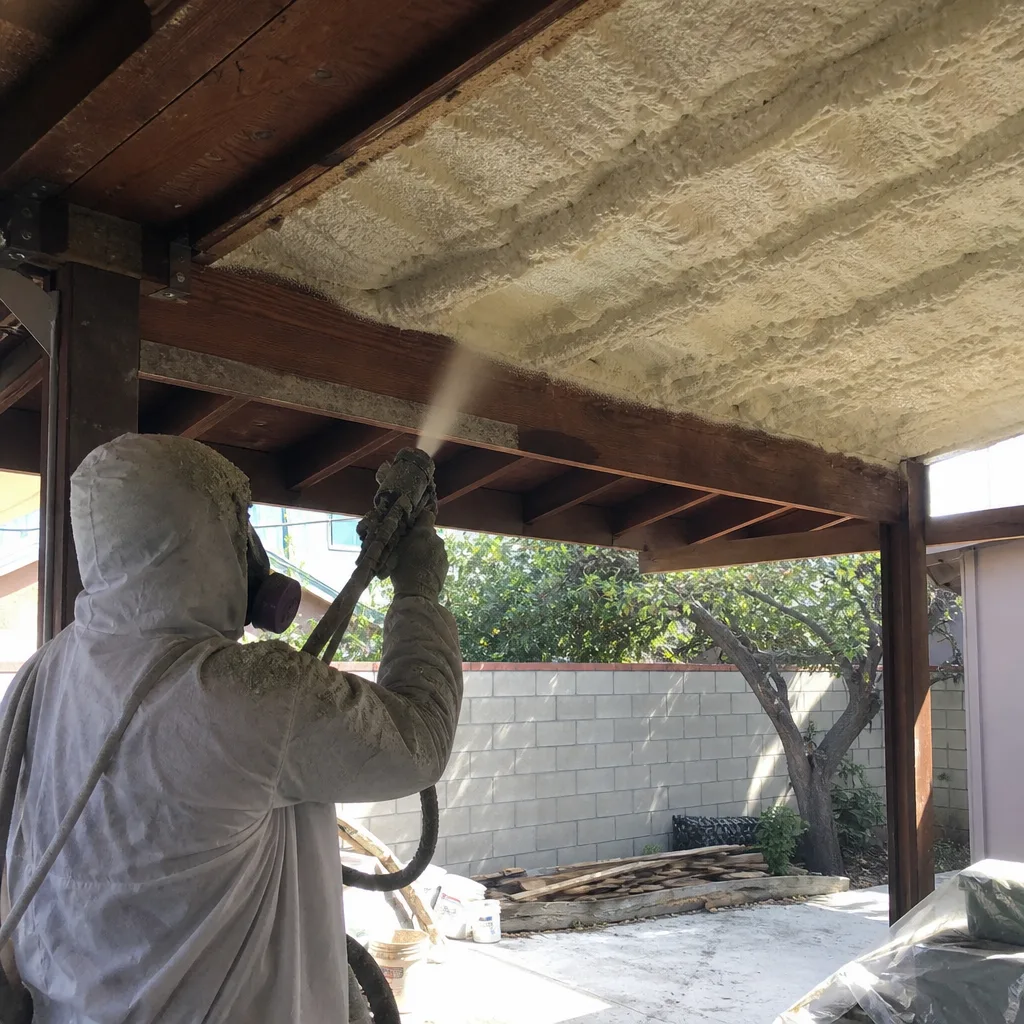
Garage Ceiling Spray Foam
Alhambra’s detached and attached garages, many converted from original carriage houses or added in the 1940s-1950s, share a common problem: the ceiling plane between garage and living space is rarely air-sealed, and any ductwork running through it is effectively conditioning the garage. We spray foam garage ceilings after sealing all top-plate penetrations, light boxes, and duct boots. The result is a thermal and air barrier that stops the garage from becoming a heat sink in July and a cold well in January. Every garage ceiling job gets a written scope specifying foam thickness, brand, and coverage area before we start.
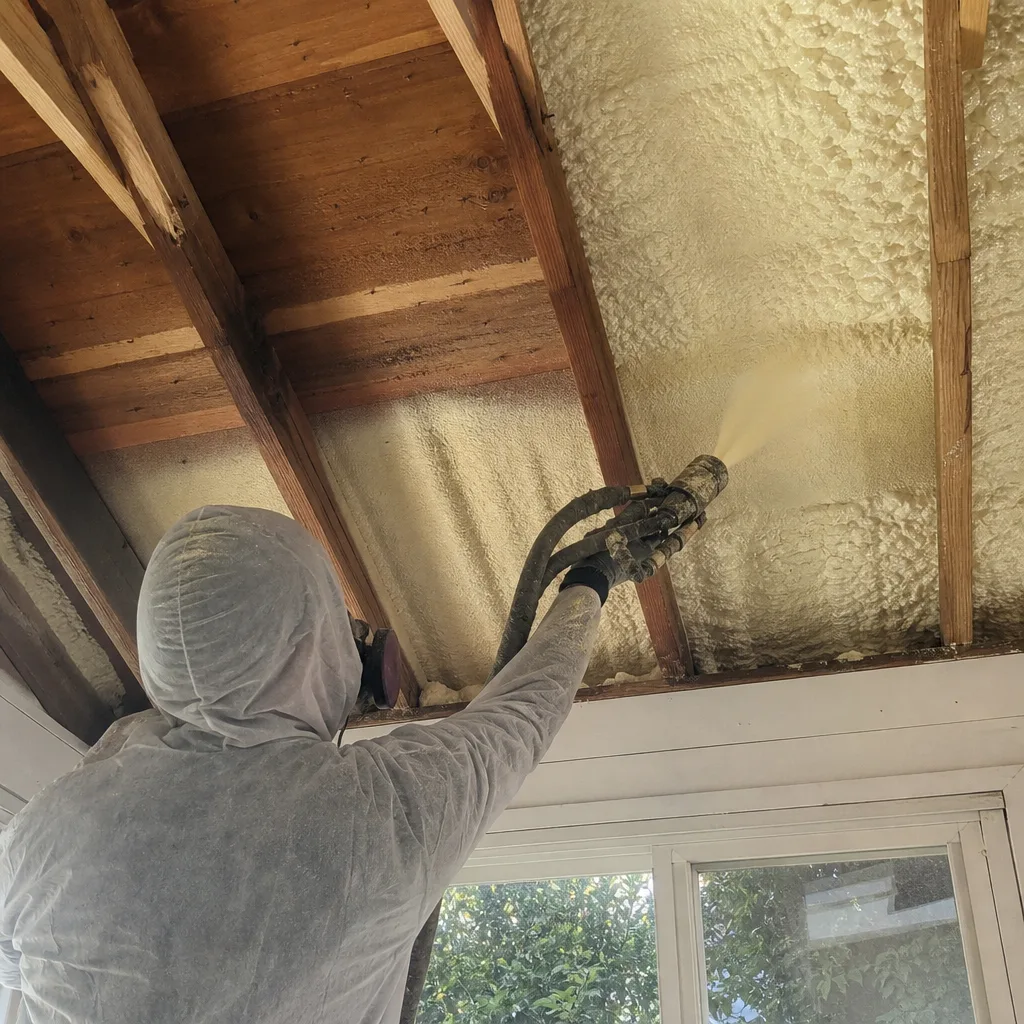
Spray Foam Roof Deck
Roof-deck spray foam turns your attic into conditioned space, which is often the right move for Alhambra homes with HVAC equipment or ductwork in the attic - a common retrofit from the 1980s and 1990s. We spray directly to the underside of the roof deck with closed-cell or open-cell product depending on your ventilation strategy, then verify with a blower-door test that we haven’t pressurized the attic into the living space. In Alhambra’s inland heat environment, a conditioned attic with spray foam on the roof deck can reduce cooling load by 25-35% compared to a vented attic with degraded batts on the floor. We publish those numbers. You get the before-and-after CFM50 reading in writing.
What happens when you call
- 1
A real person answersNo phone trees - you reach a local pro.
- 2
You get an upfront price rangeHonest numbers before anyone is dispatched.
- 3
A background-checked tech heads outLicensed & insured, dispatched right away.
- 4
You approve before work beginsNothing starts until you say go.
Trusted Brands We Service in Alhambra
We source spray foam materials from Johns Manville, Knauf, and CertainTeed among others - no proprietary lock-in, no single-source product. For Alhambra jobs, we stock closed-cell and open-cell formulations rated for California Title 24 compliance and Southern California climate zone 9 conditions. That means when your job is scoped, the material is already on our rack, not on a freight truck from out of state. We specify the brand, the density, and the R-value per inch in your written scope before work starts. If you want a second opinion on another contractor’s material spec, bring us their written estimate - we’ll read it with you, line by line, at no charge.
Common Spray Foam Insulation Problems We See in Alhambra Homes
- Knob-and-tube wiring concealed by foam. A large share of pre-1940 Alhambra homes still contain active knob-and-tube electrical wiring, which prohibits covering it with spray foam in attics and wall cavities without an electrician sign-off first. Out-of-area contractors unfamiliar with how much pre-war wiring survives in the San Gabriel Valley often miss this, and the result is a code violation that forces a costly re-do when an inspector or electrician later flags it.
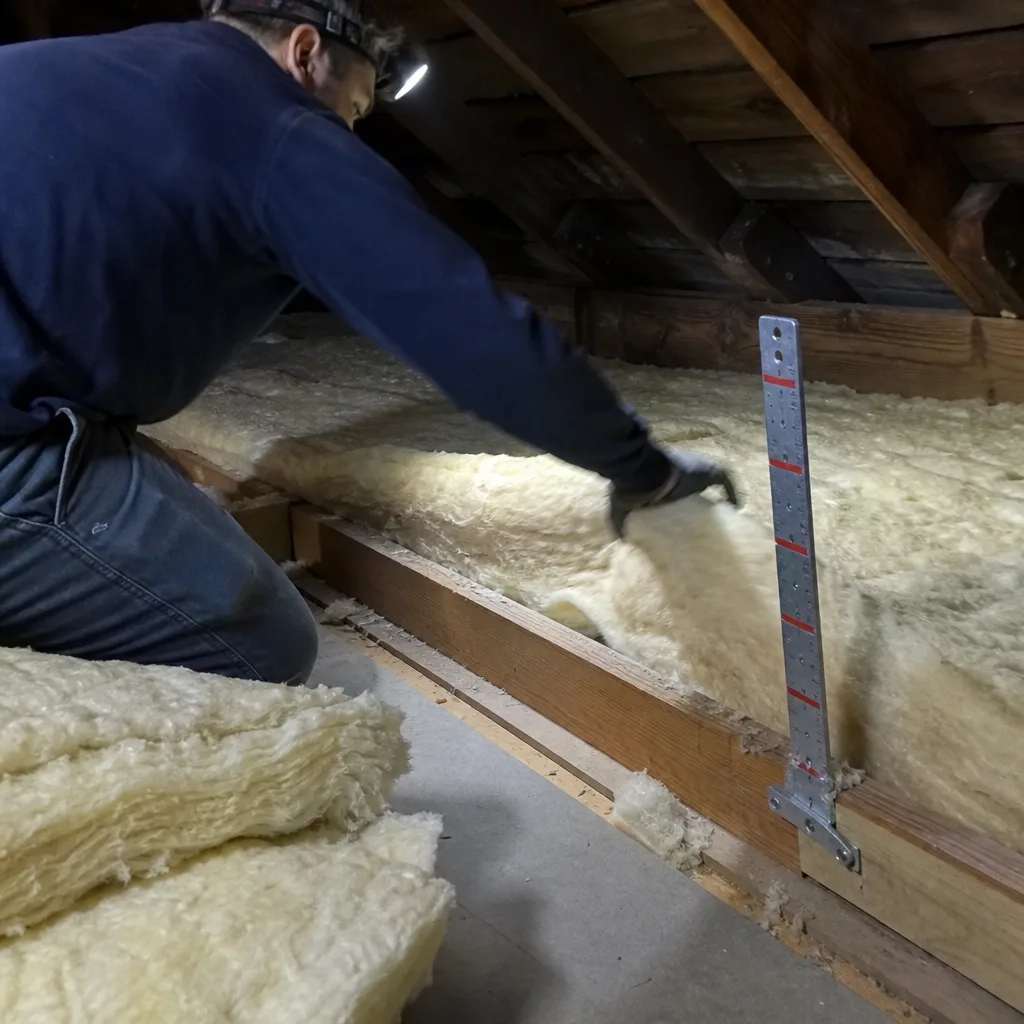
- Foam applied over compacted, degraded original batts. Alhambra attics that were never insulated or contain severely degraded original batts from the 1950s often get foam sprayed right over the old material. That traps the degraded insulation, defeats the air-seal the foam was meant to create, and can harbor moisture against the ceiling plane. We remove all old material before foaming - it’s specified in your written scope, and we photograph the empty cavity before we start.
- Skipped rim-joist and shared-wall detailing in bungalow courts. Alhambra’s high density of attached and semi-attached bungalow courts adds shared-wall complexity that affects retrofit insulation scoping. Skipping rim-joist sealing or party-wall air barriers lets foam in one unit push moisture and air into the neighbor’s side, creating callbacks and neighbor disputes. We map the separation plane before we spray.
- No blower-door verification. Spray foam is only as good as the air-sealing sequence that preceded it. Contractors who skip top-plate sealing, can-light boxing, and penetration detail before foaming leave the building envelope leaking at the same rate - you’ve paid for foam but haven’t bought performance. We air-seal first, insulate second, and we prove the result with before-and-after blower-door numbers on every applicable job.
Pricing for Spray Foam Insulation in Alhambra, CA
Most spray foam jobs in Alhambra fall into these ranges based on what we’ve priced in the San Gabriel Valley market over the past several years:
| Service | Typical Range in Alhambra |
|---|---|
| Open-cell spray foam (attic, per board foot) | $3.80 - $5.20 |
| Closed-cell spray foam (walls/rim joist, per board foot) | $5.50 - $7.50 |
| Whole-attic open-cell (typical 1,200 sq ft bungalow) | $2,400 - $3,800 |
| Whole-attic closed-cell (same footprint) | $3,800 - $5,800 |
| Garage ceiling spray foam | $1,800 - $3,200 |
| Rim joist sealing (crawl space or basement perimeter) | $1,200 - $2,400 |
| Roof deck spray foam (conditioned attic conversion) | $4,500 - $7,500 |
What moves you within these ranges: foam type (closed-cell costs more per board foot but delivers higher R-value and vapor barrier), cavity condition (knob-and-tube remediation adds electrician time), and accessibility (steep roof pitches, tight crawl spaces, or original lath-and-plaster that must be opened and repaired). Every Alhambra job starts with a free written estimate - flat price, written scope, written warranty before anyone lifts a tool. Call (213) 816-5351 to schedule. We also offer a Free Second Opinion on any written estimate from another contractor.
We Also Serve Cities Near Alhambra
Our crews work throughout the San Gabriel Valley corridor and adjacent communities. If you’re in Alhambra or nearby, we cover South Pasadena, Monterey Park, San Gabriel, and Rosemead with the same response standards and written pricing. The same Spray Foam Insulation crew that handles your Alhambra job likely finished a rim-joist seal in Monterey Park or a roof-deck conversion in South Pasadena the day before - that regional fluency matters when your home shares the same pre-war construction DNA as the rest of the valley.
Serving Alhambra, CA - Our Local Coverage Area
We’re based in the Alhambra area and know this community well. Use the map below to see our service coverage - if you’re nearby, we can almost certainly help.
FAQs - Spray Foam Insulation in Alhambra
No - not until a licensed electrician verifies the circuit is dead or reroutes it. Active knob-and-tube wiring cannot be encapsulated in spray foam per California electrical and fire code, and doing so voids most homeowners insurance policies. We find live knob-and-tube in a meaningful share of pre-1940 Alhambra homes, especially in the Bungalow Heaven-adjacent blocks and near Main Street’s original streetcar corridor. When we encounter it, we stop work, document the location with photos, and resume only after your electrician provides written clearance. Call (213) 816-5351 and we’ll walk through the sequence during your free estimate.
Alhambra sits 10-15 miles inland from the Pacific, in the San Gabriel Valley’s thermal trough, where summer highs routinely exceed 100°F while coastal LA stays in the low 80s. Your 1920s bungalow was built for that coastal mildness - the Pacific Electric streetcar suburbs marketed “perpetual spring” - with essentially zero wall insulation and minimal attic insulation. The same stucco shell that works fine in Santa Monica is fighting a thermal load in Alhambra that its framing was never designed for. Spray foam, particularly closed-cell in walls and open-cell or closed-cell on the roof deck, closes that performance gap by creating an air-tight thermal envelope. We measure the improvement with a blower-door test and give you the numbers.
We use closed-cell for most wall and rim-joist applications in Alhambra’s older bungalows, because its higher density and vapor-barrier properties suit the zero-insulation stucco walls common in 1920s-1940s construction. Open-cell has its place on roof decks and in certain attic applications where vapor permeability is desired. The choice depends on your specific assembly, your HVAC configuration, and whether we’re conditioning the attic or venting it. We specify the product, the density, and the R-value target in your written scope before work starts - no surprises, no upsell to a “premium” product you didn’t ask for.
We remove them. Compacted, degraded fiberglass or cellulose batts from the 1950s or 1970s - common in Alhambra attics - trap moisture and defeat the air-seal that spray foam is meant to create. Our crew vacuums out all old material, photographs the empty deck, air-seals all top plates, can lights, and penetrations, then sprays foam to a clean substrate. The removal and disposal is line-itemed in your written scope, not treated as an add-on. You get a Documented Photo Record of every stage.
Yes, but only with proper party-wall and rim-joist detailing. Alhambra’s dense bungalow courts - semi-attached and attached Craftsman units on common foundations - create shared air and thermal pathways that standard suburban scoping misses. We map the separation plane, seal rim joists on both sides of the party wall, and use closed-cell foam to create an air barrier that doesn’t pressurize your neighbor’s unit or create moisture migration. In some courts, we coordinate with adjoining owners to synchronize work and avoid cross-contamination. It’s more complex than a detached ranch in the San Gabriel Valley foothills, and we price and scope it accordingly - in writing, before we start.
Written by Wes Okafor, Owner at Envelope Insulation Co., serving Alhambra and the San Gabriel Valley since 2016.