
Rockwool Radiant Barrier Installation: The Pasadena Owner’s Guide
Rockwool radiant barrier installation in Pasadena typically runs $2,800-$4,600 for a standard 1,200-2,000 square foot attic, and we stock Rockwool AFB (Acoustic Fire Batt) and Comfortbatt compatible assemblies for same-day starts on most calls. The part that fails isn’t the batts themselves; it’s the radiant barrier facing or the fastening system that holds the assembly in place against Pasadena’s 110°F+ attic peaks and seasonal Santa Ana wind pressurization. Most owners notice the problem when their upstairs bedrooms won’t cool below 78°F even after sunset, or when their July electric bill jumps $80-$140 over the previous year.
Which Rockwool Models This Applies To
Rockwool does not manufacture a standalone radiant barrier product. What we install in Pasadena homes is a hybrid assembly: Rockwool stone wool batts (Comfortbatt R-23 or R-30 for 2×6 or 2×8 joist bays, AFB for drop-ceiling or cathedral applications) paired with a perforated radiant barrier foil or reflective sheeting installed on the attic-side face or as a standalone draped barrier. The compatibility question is whether your existing Rockwool batts can stay or must come out.
Comfortbatt, identifiable by its higher density and friction-fit design, handles the radiant barrier attachment better than older AFB installations because the batts don’t slump when foil tape or cap fasteners are applied. If your current batts are pre-2019 AFB with the older kraft facing, the adhesive bond between facing and batt often fails first in Pasadena’s dry heat; the radiant barrier detaches and folds into the joist bay, creating an air gap that actually increases convective heat transfer. We check this by lifting a corner in three attic locations. OEM Rockwool batts with factory-applied foil facing are rare in residential distribution; most assemblies use third-party radiant barrier from Reflectix or a comparable ASTM C1313-compliant product. We stock both Rockwool batts and Reflectix RB4812550 rolls on our Pasadena trucks, so we’re not waiting on a distributor run to Irwindale.
Signs Your Rockwool Radiant Barrier Installation Is Failing
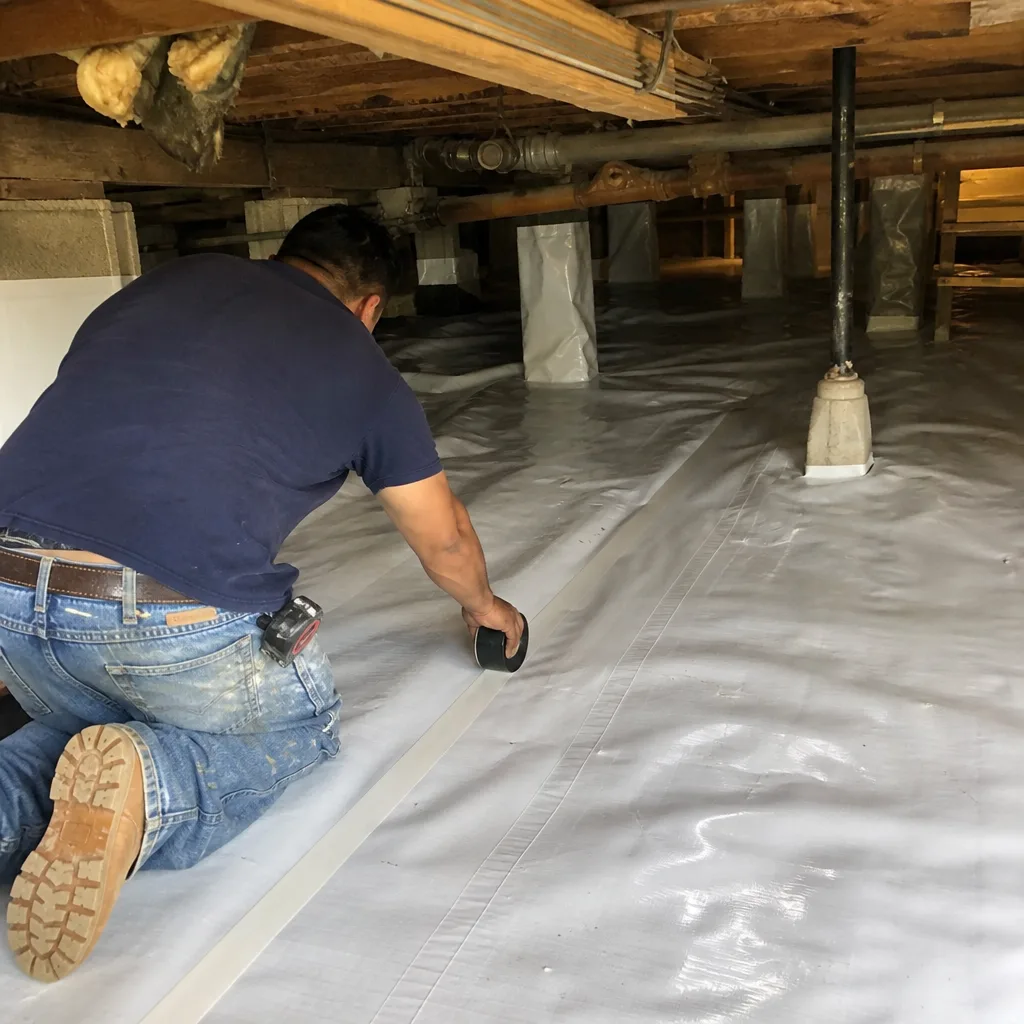
- Upstairs rooms stay hot past 10 p.m. - The radiant barrier has detached or torn, so stored heat in the roof deck radiates directly into the living space instead of being reflected back toward the roof. In Pasadena’s climate, a properly installed barrier drops radiant heat transfer by 40-60%; when it fails, you’re essentially heating your bedrooms with yesterday’s sunlight.
- Foil facing visible on the attic floor or draped over joists. - This means the mechanical fasteners (staples, cap nails, or foil tape) have pulled free. The 2019-2022 installation cohort in Pasadena saw this frequently when installers used standard staples instead of corrosion-resistant cap nails rated for mineral wool density.
- Hot spots on the ceiling directly below ridgeline or south-facing roof planes. - These are the highest-load zones. If the radiant barrier was installed as a single continuous sheet without expansion relief, thermal cycling cracks the foil at the ridge, creating a heat funnel precisely where insulation is thinnest.
- Condensation or mold on the attic-side of the radiant barrier. - Rockwool is hydrophobic and won’t mold, but an improperly perforated radiant barrier traps moisture from Pasadena’s occasional heavy winter rains against the batt face. The fix isn’t replacing the batts; it’s replacing the barrier with a perforated product and verifying attic ventilation meets the 1:300 ratio.
- Blower-door numbers that got worse after a “re-insulation.” - We’ve seen this in Madison Heights and the Bungalow Heaven historic district: a crew blew new material over a failed radiant barrier, compressing the Rockwool and creating thermal bridges. The house leaks more and insulates less. That’s why we test before and after.
Replacement Cost & What’s Included
| Component | Pasadena Price Range |
|---|---|
| Radiant barrier removal + disposal (existing failed material) | $340-$520 |
| New perforated radiant barrier (Reflectix or equivalent, attic-grade) | $1.10-$1.45/sq ft installed |
| Rockwool batt replacement (if compressed or moisture-damaged) | $2.80-$3.60/sq ft |
| Air sealing of top plates, can lights, penetrations (prerequisite) | $680-$1,200 |
| Before-and-after blower-door test with documented readings | Included |
Most Pasadena jobs in the 1,500-2,200 sq ft attic range total $2,800-$4,600. The wide range reflects whether we can salvage your existing Rockwool batts and how much air sealing the attic floor needs before the new barrier goes in. We don’t price by phone guess; we measure, photograph, and deliver a written scope with a flat price before anyone lifts a tool. That’s Haven Standard Clause 1. The 365-Day Done Right Promise covers the assembly, and you walk away with a Documented Photo Record and your blower-door numbers in writing.
DIY or Call Us?
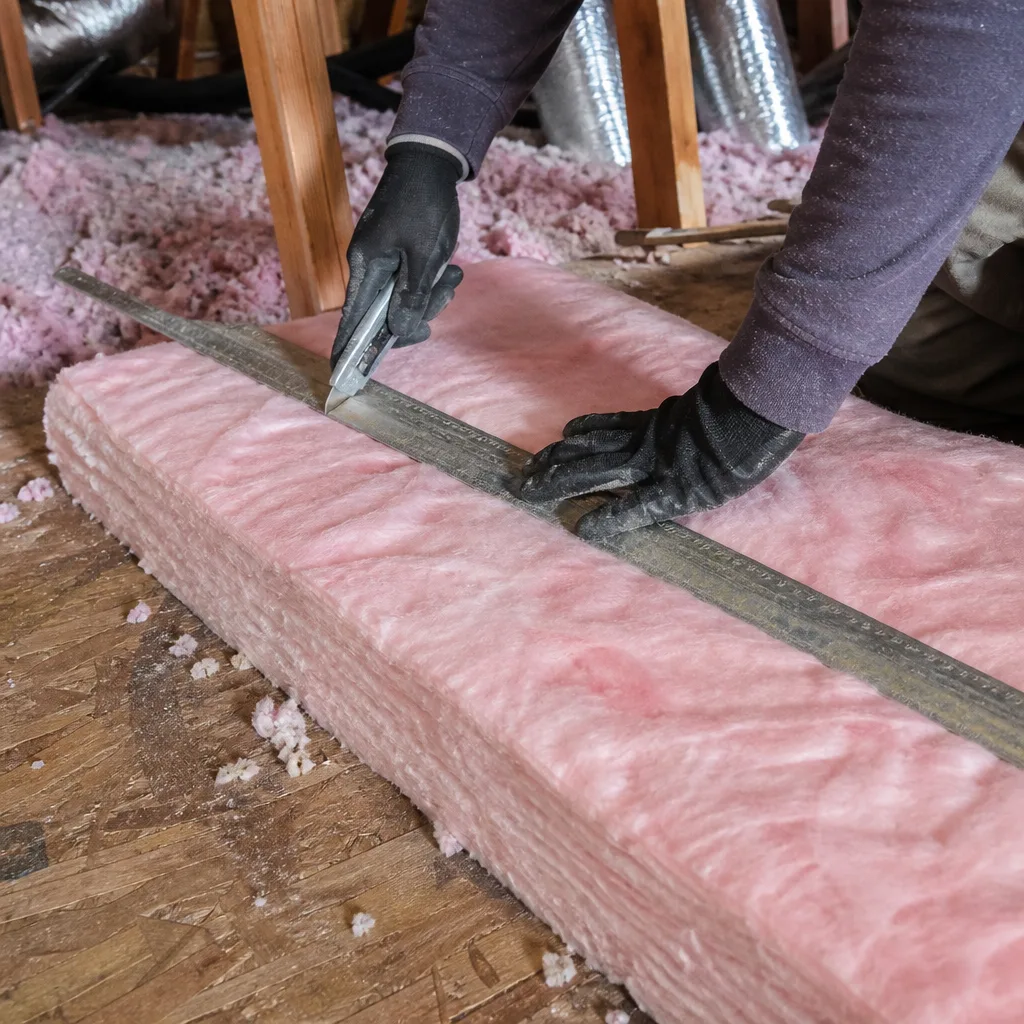
Here’s what you can safely check yourself: from the attic hatch, look for detached foil, staple pops, or batts that slide when nudged. Note any dark staining on the kraft or foil facing. That’s useful information, and you’re welcome to text us photos at (213) 816-5351 before we schedule.
What you shouldn’t do: try to re-staple radiant barrier across a 120°F attic in Pasadena July heat, or compress existing batts while crawling. The radiant barrier must hang with a minimum ¾-inch air gap to function; staple it tight to the batt face and you’ve built an expensive vapor retarder that doesn’t reflect. Worse, disturbing old vermiculite or rodent-affected insulation without PPE is a genuine health hazard. We carry the respirators, the negative-air setup if needed, and the liability coverage. Seal the leaks first. Then insulate. The numbers will tell you why.
FAQs
In Pasadena’s climate, a properly installed perforated radiant barrier paired with Rockwool batts lasts 15-25 years. The failure point is almost always mechanical (fastener corrosion, tape adhesive breakdown) rather than the foil itself. Attics west of Lake Avenue with less morning shade see faster UV degradation if any light leaks through ridge vents. Call (213) 816-5351 and we’ll check your specific attic conditions.
Patching works only if the failure is isolated to less than 10% of the attic area and the remaining material has intact perforations. Most Pasadena failures we see are systemic: wrong fasteners, non-perforated product, or installation without expansion gaps. A patch in those conditions buys you two summers before the rest fails. We give free second opinions on any written estimate that recommends patching; bring us the scope and we’ll read it with you.
A standard Pasadena attic of 1,500-2,000 square feet takes one full day for removal, air sealing, and new radiant barrier installation. If we’re replacing Rockwool batts as well, plan on two days. We don’t rush the blower-door test; it’s the last thing we do, and the number goes on your invoice before we pack up.
Yes. We carry Rockwool Comfortbatt R-23 and R-30, AFB for specialty assemblies, and Reflectix perforated radiant barrier in 48-inch and 60-inch widths. For non-standard joist spacing or cathedral ceiling assemblies, we can pull from our Irwindale supplier same-day. We are an independent service provider; Rockwool does not endorse or affiliate with installation contractors.
Written by Wes Okafor, Owner, Topside Attic Insulation Pasadena at Topside Attic Insulation Pasadena, serving Pasadena and nearby areas.