
Rockwool Crawl Space Encapsulation: The Pasadena Owner’s Guide
Rockwool crawl space encapsulation in Pasadena typically runs $3,200-$5,800 installed for a standard 1,200-square-foot crawl space, and we stock Rockwool-compatible vapor barriers, drainage matting, and rigid board insulation on our Pasadena trucks for same-day starts. Most homeowners realize something’s wrong when their first-floor hardwood starts cupping in May or they notice the musty smell doesn’t clear even after running the HVAC fan continuously. That’s usually the point where someone pulls back the old polyethylene and finds Rockwool Comfortboard 80 or Comfortboard 110 saturated against the foundation wall, doing more harm than good because the air sealing was skipped or the drainage plane failed.
Which Rockwool Models This Applies To
Rockwool doesn’t sell a branded “crawl space encapsulation kit,” which is where most Pasadena homeowners get stuck. What we encounter in local crawl spaces is Rockwool Comfortboard 80 (the 2-inch and 3-inch rigid boards, density 8.0 lbs/ft³) and Comfortboard 110 (denser at 11.0 lbs/ft³, often used where foundation walls need both insulation and fire blocking per Pasadena’s amended Title 24). The tell is the dark gray-brown color and the fibrous, not foam, edge when you cut it. Comfortboard 80 is hydrophobic - it doesn’t absorb liquid water - but it’s vapor-open, which means in a Pasadena crawl space with seasonal groundwater rise or poor perimeter drainage, it will wick moisture from the concrete and hold it against the framing if there’s no proper vapor barrier sequence behind it.
We also see older jobs where Rockwool AFB (Acoustical Fire Batts) was substituted incorrectly. AFB is not rated for below-grade exposure; the binders break down faster in the alkaline environment of a concrete foundation. If your label reads “AFB” and it’s touching dirt or concrete, that’s a misapplication regardless of when it was installed. For replacement, we source direct from Rockwool distribution in City of Industry or use Johns Manville and Knauf rigid board equivalents when the Comfortboard lead time runs long - same thermal performance, same fire rating, documented in your written scope.
Signs Your Rockwool Crawl Space Encapsulation Is Failing
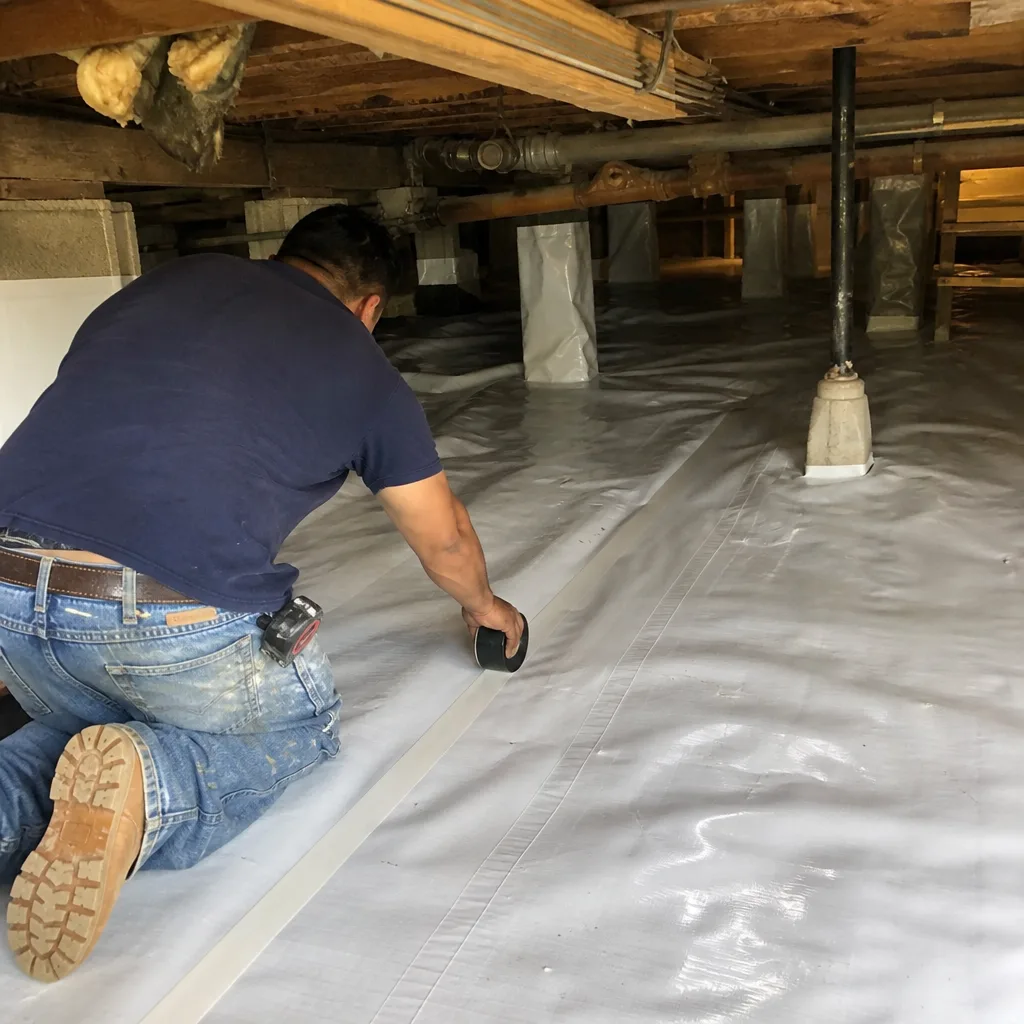
- Musty odor that intensifies after rain. Pasadena’s winter storms push groundwater against foundation walls; if your drainage matting is clogged or missing, water pools behind the Rockwool and the vapor barrier traps it. The smell is microbial growth on the wood framing, not the Rockwool itself.
- Hardwood cupping or tile tenting on the first floor. Moisture migrating through a failed encapsulation raises the subfloor’s moisture content above 14%. In Pasadena’s dry summers this reverses, but the seasonal cycling cracks finishes and loosens adhesives.
- Rockwool boards sagging or detaching from walls. Comfortboard 80 is rigid but not structural; if the mechanical fasteners corroded (common with zinc-coated pins in alkaline concrete) or the adhesive failed, the board falls and breaks the vapor barrier seal at the wall-to-floor junction.
- Insulation that looks dry but feels heavy. Rockwool doesn’t hold liquid water like fiberglass, but dust and mineral accumulation from years of wicking can double the board’s weight. Heavy board means it’s been breathing moisture for seasons.
- Visible mold on the polyethylene vapor barrier’s interior face. This means warm, humid exterior air is contacting a cold surface - your encapsulation is acting as a condenser, not a barrier, usually because the seal at the rim joist was never completed.
Replacement Cost & What’s Included
In Pasadena, a full Rockwool crawl space encapsulation replacement runs $3,200-$5,800 for a typical 1,200-square-foot footprint, with smaller partial jobs (vapor barrier only, no board replacement) starting around $1,800. The range depends on three things we measure during our free estimate: how much of the existing Rockwool can be salvaged and reinstalled after drying, whether the drainage matting and sump need replacement (add $800-$1,400), and the condition of the rim joist air sealing - which we complete before any insulation goes back in.
Every job includes removal and responsible disposal of failed materials, installation of a new 10-mil or 20-mil reinforced polyethylene vapor barrier (your choice, priced separately), reinstallation or replacement of Rockwool Comfortboard with proper mechanical fastening, and perimeter sealing with closed-cell spray foam at the rim joist. We publish before-and-after blower-door numbers on every encapsulation job - a pressurization reading that shows, in one figure, how much conditioned air was leaking through the crawl space before and after. Under Haven Standard Clause 1, you get a written price before any work starts, a written warranty, and a Documented Photo Record when the crew leaves. The 365-Day Done Right Promise covers all completed work.
DIY or Call Us?
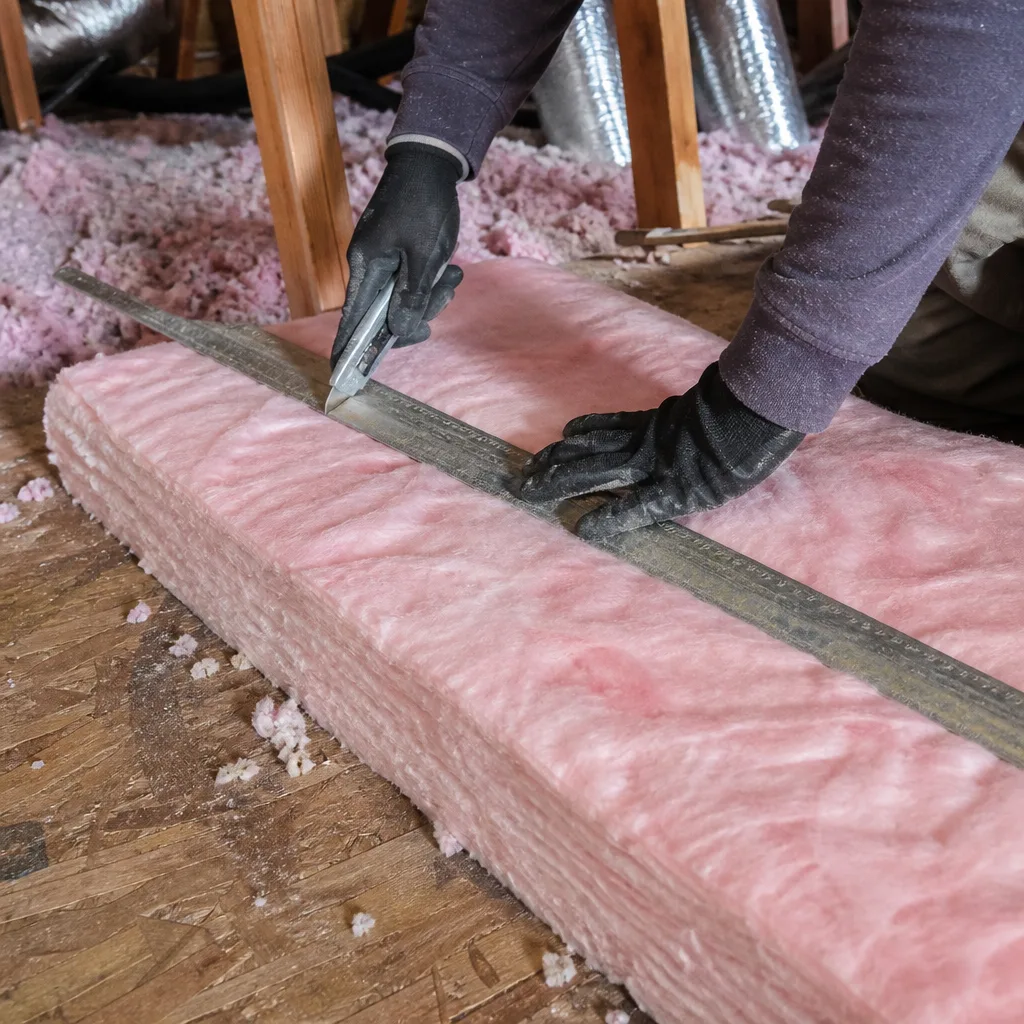
There’s a short list of things a Pasadena homeowner can safely check: confirm your sump pump runs (pour a bucket of water in the pit), look for standing water on the vapor barrier, and read the printed density on any exposed Rockwool board edge. What you cannot safely do is disturb old Rockwool in a confined crawl space without proper respirator fit and negative air setup - the fibers are mineral wool, not asbestos, but they’re not something you want in your lungs, and a crawl space with limited egress is the wrong place to learn that lesson.
The bigger risk is reinstalling without fixing the air leaks first. We’ve pulled back too many DIY encapsulations in Pasadena’s Bungalow Heaven neighborhood where the homeowner sealed the ground beautifully but left the rim joist leaking 400 CFM50 of conditioned air into the crawl space. The Rockwool got wet anyway, and the mold came back within two seasons. Seal the leaks first. Then insulate. The numbers will tell you why. Call (213) 816-5351 and we’ll read your situation with you - free estimate, written price, no work until you approve both.
FAQs
Properly installed Rockwool Comfortboard with a sealed vapor barrier and functional drainage lasts 20-25 years in Pasadena’s climate. The failure point is almost never the Rockwool itself - it’s the perimeter seal, the sump, or drainage matting clogging with sediment from our local decomposed granite soils. Call (213) 816-5351 for an exact quote - estimates are free.
Partial repair is viable if the Rockwool boards are dry, intact, and still mechanically secured - roughly 30% of the jobs we estimate in Pasadena qualify. We cut in new vapor barrier at seams, reseal the rim joist with closed-cell foam, and patch. If the boards have sagged, fractured, or show mineral staining, replacement is the only fix that lasts. Call (213) 816-5351 for an exact quote - estimates are free.
Most Rockwool crawl space encapsulation replacements in Pasadena take two to three days: one day for removal and air sealing, one day for Rockwool and vapor barrier installation, and a partial third day if we’re replacing drainage or sump components. We don’t rush the drying phase if boards are being salvaged. Call (213) 816-5351 for an exact quote - estimates are free.
We stock Rockwool Comfortboard 80 and 110 in 2-inch and 3-inch thicknesses, 10-mil and 20-mil reinforced polyethylene vapor barrier, and drainage matting on our Pasadena-area trucks. For odd sizes or Comfortboard 110 in 4-inch, we pull from Rockwool distribution in City of Industry with next-day availability. Topside Attic Insulation Pasadena is an independent service provider, not affiliated with Rockwool - we also stock Reflectix and Johns Manville equivalents when they better fit the job. Call (213) 816-5351 for an exact quote - estimates are free.
Written by Wes Okafor, Owner, Topside Attic Insulation Pasadena at Topside Attic Insulation Pasadena, serving Pasadena and nearby areas.