
Rockwool Attic Insulation: The Pasadena Owner’s Guide
Most Rockwool attic insulation installations in Pasadena run between $2.80 and $4.20 per square foot installed, with typical whole-attic jobs landing between $3,200 and $5,800 for a 1,200-2,000 square foot footprint. We stock Rockwool Comfortbatt, Comfortboard, and AFB evo unfaced batts on our trucks, and we can usually inspect, price, and start same-day if you call before noon. Homeowners usually figure out something’s wrong when their upstairs bedrooms won’t cool below 78 degrees even after sunset, or when they pull back a section of existing insulation and find it compressed to a hard mat, moisture-stained, or chewed through by rodents that got in through an unsealed top plate.
Which Rockwool Models This Applies To
Rockwool’s residential attic line breaks into three families, and getting the right one matters for Pasadena’s mixed climate - hot, dry summers and cool, wet winters that stress different material properties.
Comfortbatt is the battened semi-rigid product most homeowners picture: R-15 and R-23 in 3.5″ and 5.5″ thicknesses, sized for 16″ and 24″ stud or joist bays. The “semi-rigid” part matters - it holds its shape when friction-fit, which means no sagging in angled attic ceilings over time. We see the R-23 spec most often in Pasadena’s pre-1940 bungalows and Craftsmans, where the 2×6 joist depth is exactly 5.5″ and there’s no room to add height without building a raised storage platform.
Comfortboard 80 and 110 are the rigid boards, used when we’re insulating the attic hatch, creating a storage deck, or wrapping ductwork that runs through unconditioned attic space. The “80” and “110” refer to compressive strength in pounds per square foot - 80 is fine for vertical applications, 110 if someone’s walking on it or storing boxes above.
AFB evo (Acoustical Fire Batt) shows up in Pasadena’s newer construction and ADU conversions where fireblocking between units is code-required. It’s not primarily thermal insulation, but we get calls from homeowners who bought a property with it in the attic and don’t know whether it needs supplementing - it usually does, with a thermal layer on top.
Here’s the compatibility gotcha: Rockwool batts are sized metric at the factory and labeled in imperial at the distribution warehouse. A “15.25” width” Comfortbatt is actually 390mm, which friction-fits a 16″ on-center bay with slight compression. But a homeowner who measures their bay at exactly 16″ and orders a 16″ batt online ends up with a product that’s too wide to seat properly without bunching. We stock the friction-fit sizes on the truck and cut to fit for the odd bays - every Pasadena attic has them, especially around chimney chases and dormers.
OEM Rockwool versus aftermarket: for batt insulation, there’s no meaningful “aftermarket.” The mineral wool category includes Johns Manville Thermafiber and Owens Corning Thermafiber (same mineral wool, different corporate lineage), but the densities and fiber binders vary. We’ve tested side-by-side installations, and Rockwool’s higher-density batts - around 4.5 lbs per cubic foot for Comfortbatt - settle less over a decade than lower-density equivalents. If you’re matching existing Rockwool, we recommend staying with Rockwool. If you’re replacing something else, we can spec the right density so the thermal layer stays uniform.
Topside Attic Insulation Pasadena is an independent service provider, not affiliated with Rockwool. We source through standard distribution channels, same as any contractor, and we don’t push one brand over another - we stock Rockwool because Pasadena’s climate and housing stock call for what it does well.
Signs Your Rockwool Attic Insulation Is Failing
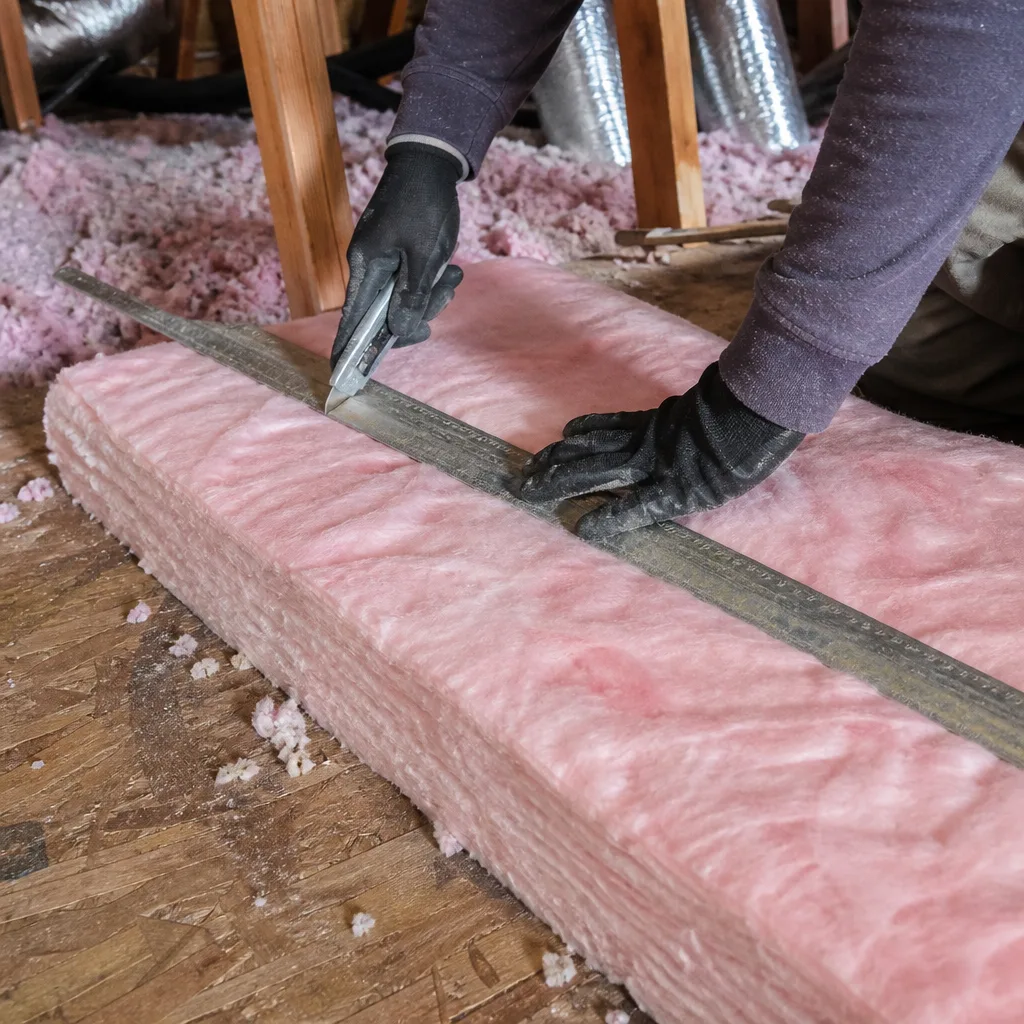
- Uneven temperatures room-to-room. Rockwool doesn’t degrade chemically, but it can shift, compress, or get displaced. In Pasadena’s older homes near Bungalow Heaven, we regularly find original Rockwool or early mineral wool that’s slid toward the eaves, leaving the center of the attic floor bare. The room below gets solar gain from the roof all afternoon and has no thermal barrier - that’s the hot bedroom.
- Insulation that’s wet, matted, or smelling musty. Rockwool is hydrophobic - water beads on it rather than soaking in - but that property fails if the binder breaks down or if the insulation sits in standing water from a roof leak. Once the fibers clump, the air pockets collapse and R-value drops by half or more. We see this most often after Pasadena’s winter rainstorms, when a small leak went unnoticed until the homeowner went up to store holiday decorations.
- Rodent tunnels and nesting material mixed through the batt layer. Rockwool isn’t food for rodents, but they’ll burrow through it to get to conditioned space. The telltale is compressed paths, droppings, and shredded paper or fabric dragged in. This isn’t just an insulation problem - it’s an air-sealing problem. The rodents got in somewhere, and that entry point is still open.
- Dust settling on attic surfaces below the insulation plane. If you can see the top of your ceiling joists, or if there’s a visible layer of fine gray dust on everything, your insulation has settled below its original depth. Rockwool settles less than cellulose - maybe 5% over ten years versus 20% - but vibration from HVAC equipment, foot traffic for maintenance, or initial under-density installation can accelerate it.
- Ice dams or heavy frost on roof nails in winter. Even in Pasadena’s mild climate, a cold snap after rain can create attic frost. Warm, moist interior air hits the cold roof deck and condenses. If your Rockwool insulation is intact and properly placed, that air shouldn’t reach the deck. Frost on nail points is a reliable indicator that you’ve got convection currents bypassing your thermal layer - usually at can lights, bath fan housings, or unsealed top plates.
Replacement Cost & What’s Included
For a typical Pasadena attic - 1,200 to 2,000 square feet of floor area, with 2×6 or 2×8 joists - Rockwool removal and replacement runs $3,200 to $5,800. That includes pulling the existing material, bagging and hauling it, air-sealing the attic floor (top plates, wire and pipe penetrations, can light enclosures, chimney chases, and the attic hatch perimeter), then installing new Rockwool to the depth that hits your target R-value.
What moves the number: accessibility (steep roof pitch, tight scuttle versus pull-down stairs), existing insulation that tests positive for asbestos (we’ve seen vermiculite mixed with early mineral wool in 1920s Pasadena homes), and whether we’re building a raised storage platform over the new insulation. The platform adds material and labor, but it also protects the thermal layer from compression - which is what killed the last installation.
Every job gets a written price before anyone starts, per Haven Standard Clause 1. The price on the page is the price you pay. We also publish before-and-after blower-door numbers on every job where air sealing is part of the scope - a pressurization reading that shows, in one figure, how much conditioned air your home was losing before and after the work. On Rockwool replacements, we typically see starting numbers around 3,500-4,500 CFM50 in a 1,500 square foot home, and 1,800-2,400 after sealing and re-insulating. The photo record and thermal images go in your folder before we leave.
The 365-Day Done Right Promise covers the installation and the air-sealing work. If the blower-door number doesn’t hold, or if you find a spot we missed, we come back and fix it.
DIY or Call Us?
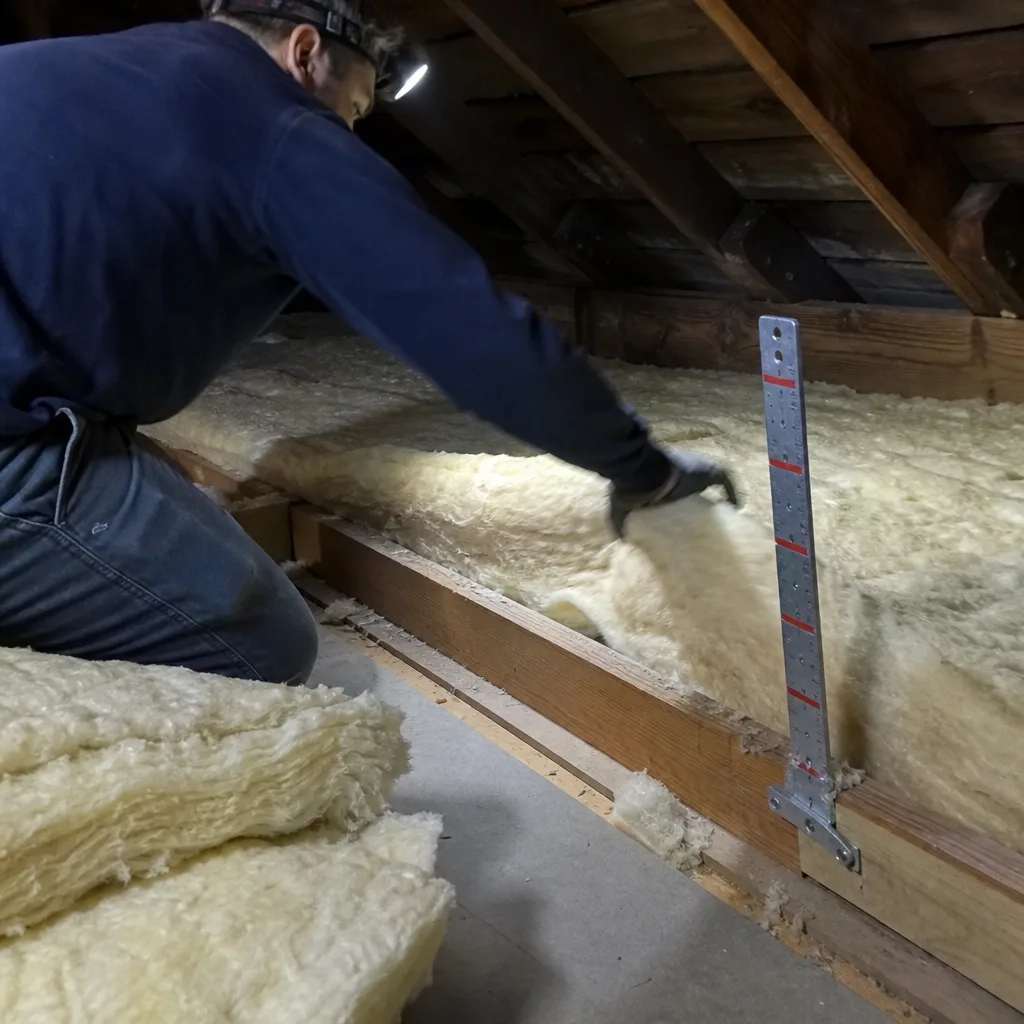
There’s nothing inherently dangerous about handling Rockwool - it’s mineral wool, not fiberglass, and the fibers don’t embed in skin the same way. But the dust is real, and a respirator rated N95 or better is non-negotiable. Long sleeves, gloves, and eye protection too. The fibers are sharp enough to irritate, and attic dust in an old Pasadena house can include rodent droppings, old asbestos-containing vermiculite, or degraded cellulose with fire-retardant chemicals.
What goes wrong with DIY: homeowners install over unsealed air leaks, which means the insulation becomes an air filter, not a thermal barrier. Or they compress the batts to fit - stuff a 5.5″ batt into a 3.5″ bay because they didn’t measure, or walk on it repeatedly while working. Compressed Rockwool loses R-value proportionally. A 50% compression drops the R-value by roughly 50%. We see this constantly in walk-up attics where someone installed a plywood deck directly on the batts.
What you can safely check: measure your existing insulation depth, look for water staining or rodent activity, and note any spots where the attic floor is visible through gaps. Take photos. Then call us at (213) 816-5351 with what you found. We’ll tell you whether it sounds like a full replacement, a supplement, or just air sealing with the existing insulation left in place. Free second opinion on any written estimate you already have - bring us their scope and we’ll read it with you.
FAQs
Rockwool itself doesn’t degrade chemically - the stone and steel slag fibers are inert - but its installed performance lasts 20 to 40 years depending on what happens to it. In Pasadena’s climate, the main killers are roof leaks (winter rain, summer monsoon humidity), rodent activity, and compression from storage or foot traffic. We’ve pulled Rockwool from 1980s installations in Orange Grove corridor homes that was still at 90% of original R-value, and we’ve replaced ten-year-old batts that were compressed to half thickness by a homeowner who stored file boxes directly on them. The material lifespan and the functional lifespan are two different numbers. Call (213) 816-5351 and we’ll check what condition yours is in - estimates are free.
Spot repair is possible if the failure is localized - a single wet area from a now-fixed roof leak, or a rodent tunnel in one corner. We cut out the damaged section, air-seal the underlying deck, and patch in new batt cut to fit. But if the insulation is more than 20 years old, has multiple failure zones, or was installed without air sealing underneath, partial repair usually costs more per square foot than starting fresh with a complete layer. We don’t do patch jobs that leave the homeowner with a thermal quilt of different ages and densities. Seal the leaks first. Then insulate. The numbers will tell you why. Call (213) 816-5351 for an exact quote on your situation - estimates are free.
A typical Pasadena attic - 1,200 to 2,000 square feet - takes one long day or two standard days. Day one is removal, air sealing, and blower-door testing to verify the seal. Day two is insulation installation, final blower-door verification, photo documentation, and cleanup. We can compress to a single day for smaller footprints or if the attic is already empty and accessible. Same-day start is usually available if you call before noon. Call (213) 816-5351 to check current scheduling - a live person answers 24/7.
We stock Comfortbatt R-15, R-23, and R-30; Comfortboard 80 and 110 in 1″ and 2″ thicknesses; and AFB evo for fireblocking applications. The metric-to-imperial sizing issue means we also carry a full cutting station - table saw with dust collection, batt knife set, and measuring jigs for the odd bays every old Pasadena attic throws at us. For Comfortboard in 3″ or 4″ thicknesses, or for large commercial quantities, we pull from distribution with a one-day lead time. For standard residential attic work, if we inspect today, we can usually start tomorrow. Call (213) 816-5351 to confirm stock for your specific R-value target - estimates are free.
Ready to see what your attic is actually doing? Call (213) 816-5351 now. A live person will answer, schedule a same-day or next-day inspection, and you’ll get a written price before any work starts - plus a documented photo record and blower-door numbers so you can verify the result yourself. Free second opinion on any estimate you already have; bring us their scope and we’ll read it with you.
Written by Wes Okafor, Owner, Topside Attic Insulation Pasadena at Topside Attic Insulation Pasadena, serving Pasadena and nearby areas.