
Owens Corning Vapor Barrier Installation: The Pasadena Owner’s Guide
Most Owens Corning vapor barrier installations in Pasadena run between $1,800 and $3,400 for a full crawl space or attic application, depending on square footage and whether the existing barrier needs complete removal. We stock Owens Corning-compatible 6-mil and 10-mil reinforced polyethylene barriers on our trucks, and we can typically schedule installation within 48 hours. Homeowners usually discover the problem during a home inspection, after noticing musty odors in older Bungalow Heaven or Orange Grove corridor homes, or when they pull back insulation and find polyethylene that’s gone chalky, torn at the seams, or separated from the foundation walls entirely.
Which Owens Corning Models This Applies To
Owens Corning does not sell vapor barriers under a single model number like their insulation batts. Instead, they distribute through their Enclosure Solutions and Building Science Solutions channels, with the actual product designated by mil thickness and reinforcement type: 6-mil clear, 6-mil reinforced, or 10-mil string-reinforced. The critical identifier is the ASTM E1745 Class A, B, or C rating printed on the roll edge, which tells you whether the barrier meets soil-gas resistance standards for Pasadena’s variable clay-loam soils.
To identify what you currently have, look for a faded print line running the length of the polyethylene. Owens Corning-sourced barriers typically show “OC” or “Owens Corning” in the repeating legend, along with the mil rating and ASTM class. If your existing barrier is unmarked or shows only a generic “6-mil” stamp, it was likely a builder-grade aftermarket install, not Owens Corning specification. We carry both OEM-grade Owens Corning-compatible 10-mil string-reinforced and a commercial-grade equivalent that exceeds ASTM E1745 Class A, because in Pasadena’s older crawl spaces with rocky soil and occasional groundwater intrusion, the reinforcement grid matters more than the brand stamp.
One compatibility gotcha: Owens Corning’s 10-mil reinforced barrier is 12 feet wide on the roll, while many aftermarket equivalents come 10 feet wide. If your crawl space or attic floor is 24 feet across, the seam pattern changes. Two 12-foot runs with a center seam taped properly beats three 10-foot runs with double the seam failure risk. We’ve re-done three Pasadena installs in the last two years where a previous contractor used 10-foot stock to save material cost and the seams failed within 18 months.
Signs Your Owens Corning Vapor Barrier Installation Is Failing
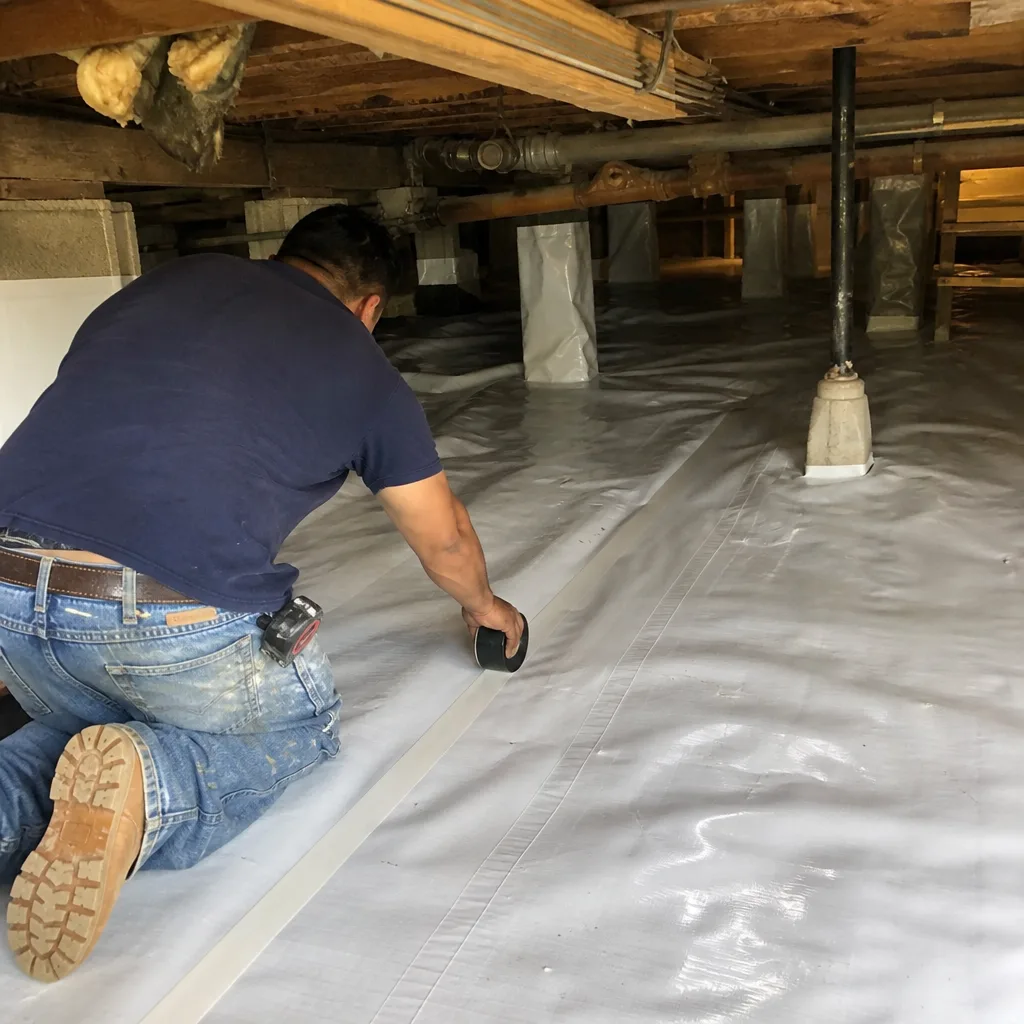
- Chalky or brittle polyethylene that tears when you touch it. Pasadena’s attic temperatures regularly hit 140°F in July, and UV degradation through gable vents or missing insulation accelerates the polymer breakdown. Once the plasticizers volatilize, the sheet loses flexibility and cracks under foot traffic during maintenance.
- Water pooling on top of the barrier instead of draining to the perimeter. This means the barrier was installed flat rather than with proper slope, or the seams have separated and groundwater is wicking up from below. In the clay-heavy soils around the Arroyo Seco, hydrostatic pressure finds every gap.
- Musty odors that return within days of running a dehumidifier. A functioning vapor barrier blocks the soil moisture that feeds mold growth on floor joists. If the smell persists, the barrier has lost its seal at the perimeter walls or around pier posts.
- Insulation batts sagging or showing water staining on the facing. Owens Corning kraft-faced batts are designed to dry to the interior, but a failed vapor barrier lets ground moisture migrate upward and condense against the cold side of the insulation. The facing delaminates, and the R-value drops by half.
- Visible gaps at the foundation walls or around plumbing penetrations. The barrier should extend 6 inches up the wall and be mechanically fastened with pressure-treated furring strips. Gaps here are the most common installation defect we find in pre-1990 Pasadena homes, where original builders often omitted this step entirely.
Replacement Cost & What’s Included
| Scope | Typical Range in Pasadena |
|---|---|
| Partial replacement (seamed repair, under 400 sq ft) | $1,800 - $2,400 |
| Full crawl space replacement (800-1,200 sq ft, 6-mil) | $2,400 - $3,000 |
| Full replacement with 10-mil reinforced, including seam taping and wall fastening | $2,800 - $3,400 |
| Removal of failed existing barrier (add-on) | $400 - $600 |
What drives the range: square footage, access difficulty (low-clearance crawl spaces add labor hours), whether we need to remove and dispose of old polyethylene, and if the job includes companion air sealing at the rim joist. Every quote under Haven Standard Clause 1 is a flat price with a written scope and written warranty before anyone lifts a tool. No hourly surprises. The 365-Day Done Right Promise covers all vapor barrier work, and you’ll receive a Documented Photo Record showing the completed installation and any before-and-after conditions we found.
DIY or Call Us?
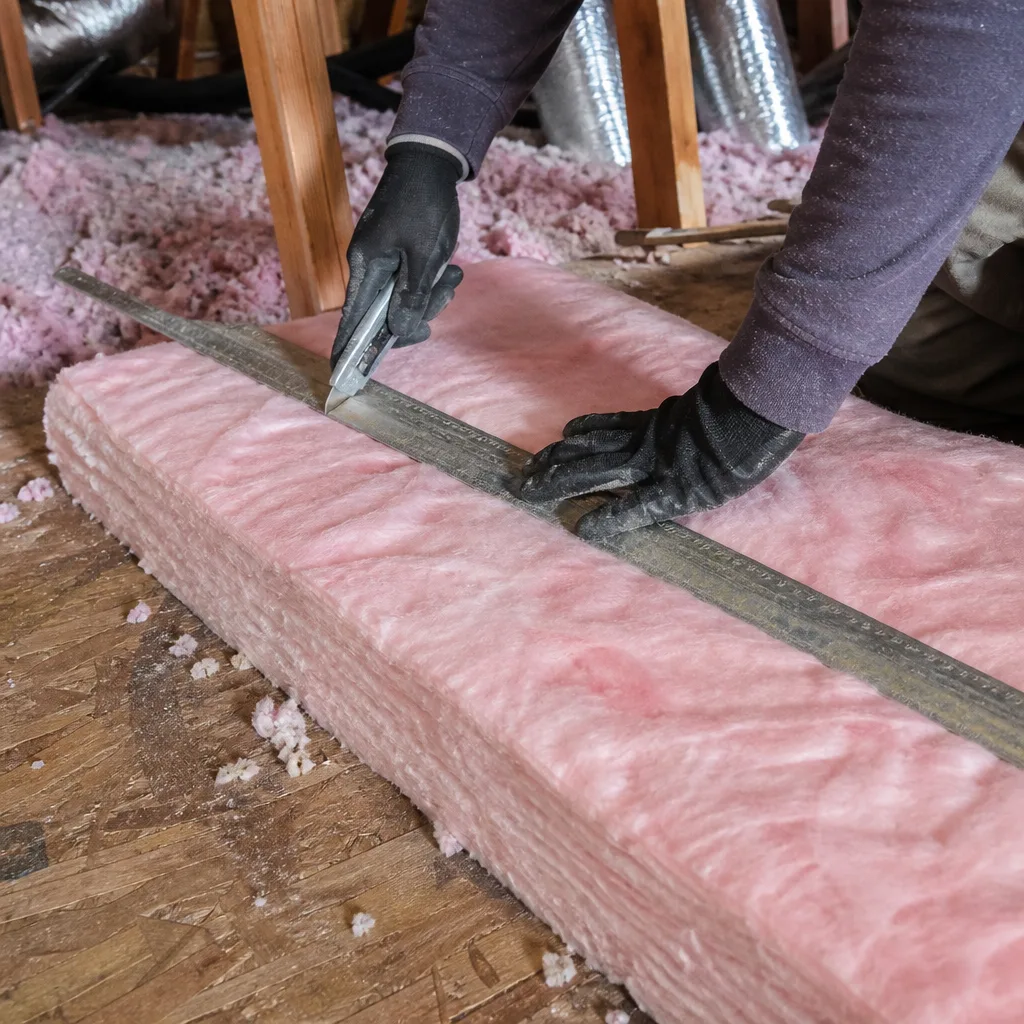
You can safely check what you have. Bring a flashlight and a utility knife to the crawl space, cut a small sample from an edge (not the field), and read the print line for mil thickness and ASTM rating. You can also verify whether the barrier extends up the foundation walls and whether seams are taped with compatible polyethylene tape, not duct tape, which fails in months.
Where DIY goes wrong: proper vapor barrier installation requires working in confined spaces with sharp foundation edges, handling large polyethylene rolls in tight quarters, and achieving continuous seams with a heat-welded or double-taped overlap that most homeowners don’t have the equipment to execute. More critically, if your crawl space has active moisture issues, installing a new barrier over wet soil traps water and accelerates rot in floor joists. We use a moisture meter on the soil and wood substrate before any new barrier goes down. In Pasadena’s older homes, particularly the 1920s Craftsmans with stone foundations and irregular piers, the fastening detail at each post takes experience to get right. Call (213) 816-5351 if you want a second opinion on what you’re seeing, or if the sample you pulled looks like the brittle, chalky failure we described above.
FAQs
A properly installed 10-mil reinforced barrier in a ventilated crawl space typically lasts 15 to 20 years in Pasadena’s climate. Attic applications see faster degradation from heat exposure, often 10 to 12 years, which is why we prefer 10-mil stock for attic installs even when 6-mil would technically suffice. Call (213) 816-5351 if you’re unsure of your install date, estimates are free.
Small punctures or tears under 6 inches can be patched with compatible polyethylene tape if the surrounding material is still flexible. If the polyethylene is chalky, brittle, or the damage is near a seam, patching is a short-term fix that usually fails within a year. We evaluate this on every site visit and will tell you honestly if a patch is worth attempting. Call (213) 816-5351 for an exact quote, estimates are free.
Most residential crawl spaces in Pasadena, 800 to 1,200 square feet, take one full day with a two-person crew. Larger homes in the Linda Vista or San Rafael Hills areas, or jobs requiring old barrier removal and disposal, may extend to a second day. We schedule arrival windows and text when the crew is en route, Haven Standard: Arrive on schedule.
We carry 6-mil and 10-mil reinforced polyethylene barrier compatible with Owens Corning specifications, along with seam tape, mechanical fasteners, and pressure-treated furring strips. For jobs requiring specific Owens Corning-branded product, we can source through their distribution channel with a 3 to 5 day lead time. In most cases, the compatible stock we carry meets or exceeds the same ASTM E1745 Class A standard. Call (213) 816-5351 to confirm availability for your specific job.
Ready to Get It Done Right
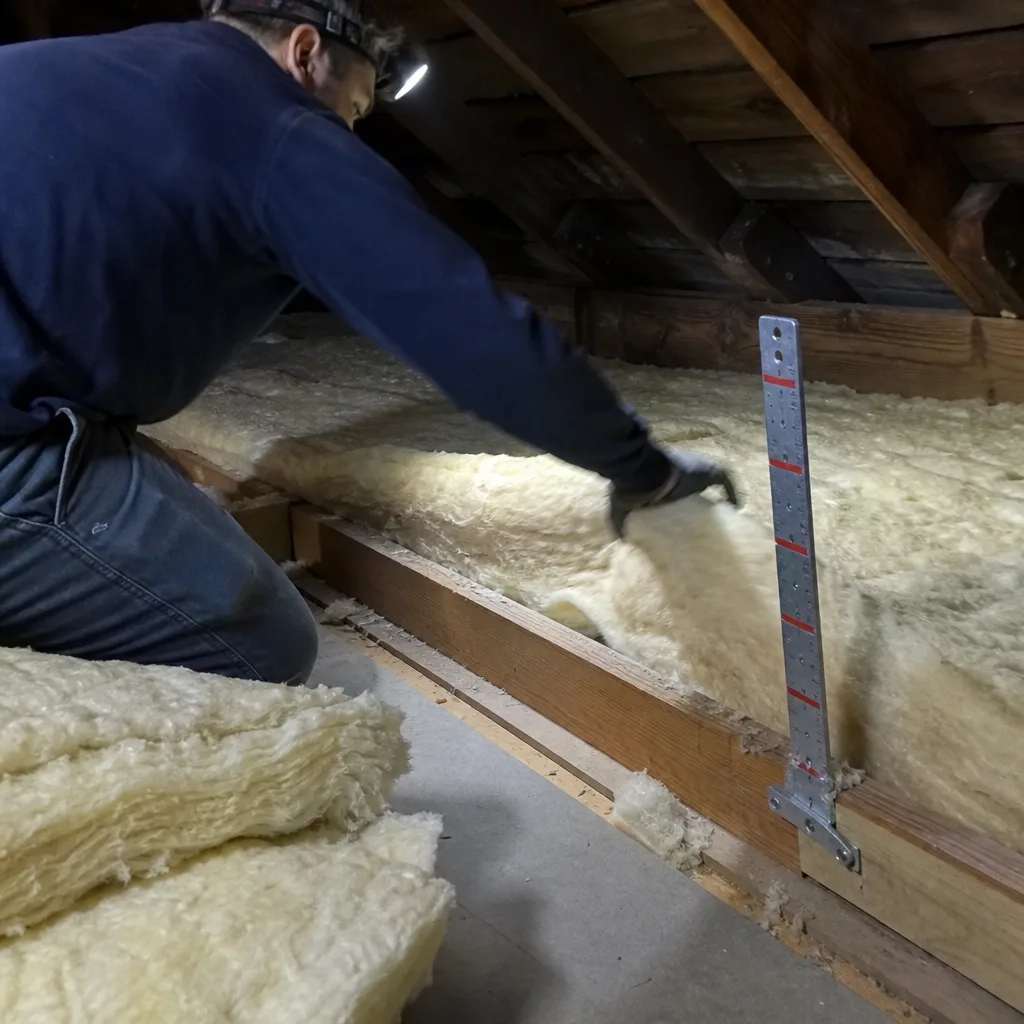
We’ve been in attics and crawl spaces across Pasadena since 2016, from the tight hillside foundations below the Colorado Street Bridge to the full basements in the Caltech vicinity. Every vapor barrier job starts with a written price, includes a Documented Photo Record, and is backed by our 365-Day Done Right Promise. If you’re seeing chalky polyethylene, pooling water, or musty air rising from below, the barrier has already told you what it needs. Seal the leaks first. Then insulate. The numbers will tell you why. Call (213) 816-5351 today for a free estimate, or bring us a competing written quote and we’ll walk through it with you, line by line.
Written by Wes Okafor, Owner, Topside Attic Insulation Pasadena at Topside Attic Insulation Pasadena, serving Pasadena and nearby areas.