
Knauf Vapor Barrier Installation: The Pasadena Owner’s Guide
Knauf vapor barrier installation in Pasadena typically runs $1,800-$3,400 for a standard crawl space or attic application, and we stock Knauf Insulation’s EcoSeal and IntegriSeal vapor barrier systems on our trucks for same-day starts. Most homeowners discover the problem when they pull back insulation in a Bungalow Heaven crawl space or notice musty odors spreading from the Orange Grove corridor’s older homes with dirt-floor foundations. We see it regularly: a vapor barrier installed without proper air sealing underneath, or poly sheeting that’s degraded after eight to twelve years of Pasadena’s dry heat followed by winter moisture intrusion.
Which Knauf Models This Applies To
Knauf manufactures vapor barrier materials as part of its complete insulation system line, not as standalone branded “models” in the way mechanical parts are cataloged. What we install are Knauf’s specified vapor barrier accessories: poly sheeting rated 6-mil minimum (we prefer 10-mil for Pasadena’s seismic movement and rodent pressure), Knauf-recommended seam tapes, and mechanical fastening systems designed for their fiberglass batts and blown-in applications.
Identification starts with what’s currently in your crawl space or attic floor. Look for Knauf labeling on existing batts - the kraft facing or poly facing will carry the Knauf logo and R-value stamp. For vapor barrier retrofits, we match the permeance rating (measured in perms, where lower means less moisture transmission) to your local climate zone. Pasadena sits in California Climate Zone 8, where the California Energy Code requires Class I or II vapor retarders on the interior side in most applications.
The OEM-versus-aftermarket question here is straightforward: Knauf does not manufacture proprietary vapor barrier fasteners or tapes that lock you into their ecosystem. We source 10-mil reinforced poly, butyl seam tape, and mechanical fasteners from the same supply chain Knauf specifies. The difference is in installation protocol - we seal the leaks first, then insulate. The numbers will tell you why.
Signs Your Knauf Vapor Barrier Installation Is Failing
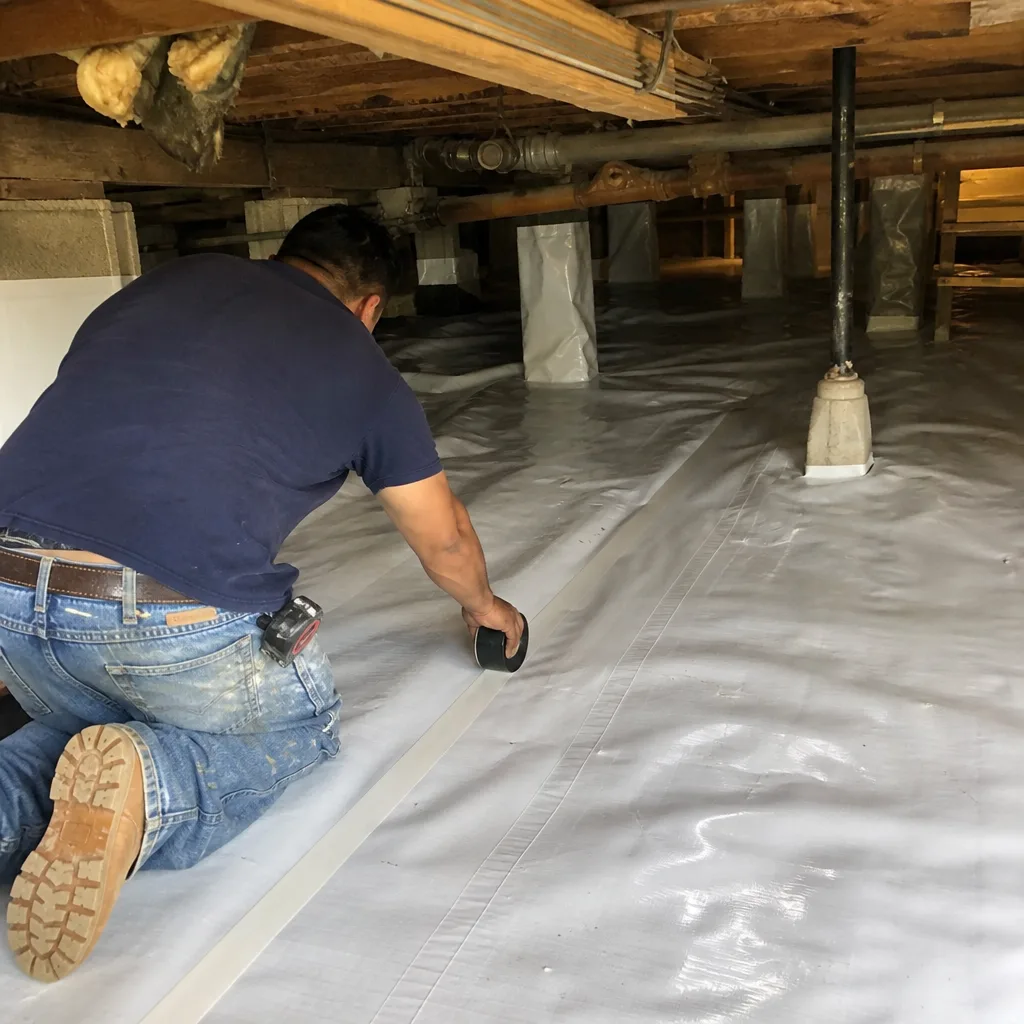
- Condensation pooling on the poly surface. This means warm, moist interior air is contacting the cooler vapor barrier surface because the perimeter isn’t sealed to the foundation walls, or because air leaks through rim joists are bypassing the barrier entirely. In Pasadena’s older Craftsmans, we find this where the original redwood sill plate meets the concrete foundation.
- Mold or mildew on the facing of fiberglass batts. Once the kraft facing hits 20% moisture content, mold colonizes in 24-48 hours. The vapor barrier has either torn at a seam or was never continuous across the full floor plane. We document this with photos for every customer folder.
- Musty odors that worsen after rain. Pasadena’s winter storms push moisture through crawl space vents; a functioning vapor barrier blocks soil moisture evaporation. If you smell earthiness in your HVAC intake, the barrier has likely separated at the seams or rodent damage has created openings.
- Sagging or displaced insulation. Wet batts compress and fall away from floor joists. The vapor barrier beneath them has failed, allowing ground moisture to wick upward. We’ve pulled back Knauf batts in Linda Vista homes that had lost half their R-value to compression from trapped moisture.
- Increased energy bills with no thermostat change. A failed vapor barrier lets moisture degrade insulation performance and increases the latent load on your air conditioner. Your blower-door numbers - that pressurization reading showing how much air your envelope leaks - often climb because the humid crawl space is now connected to conditioned space through gaps in the floor.
Replacement Cost & What’s Included
For a typical Pasadena crawl space between 800 and 1,400 square feet, Knauf-compatible vapor barrier installation runs $1,800-$3,400. That range reflects three variables: crawl space accessibility (height and obstructions), whether we need to remove and replace existing insulation, and the condition of the substrate - gravel or dirt floor, and whether rodent damage requires sanitation before new poly goes down.
Our price includes 10-mil reinforced polyethylene sheeting, butyl seam tape at all overlaps (minimum 12-inch overlap per manufacturer specification), mechanical fastening to foundation walls, and sealing of all perimeter penetrations. We include a Documented Photo Record of the completed work and, where applicable, before-and-after blower-door readings to verify that air sealing was completed before the vapor barrier went in. Under Haven Standard Clause 1, you receive a written price before any work starts, a written scope, and a written warranty. The 365-Day Done Right Promise applies to all completed vapor barrier work.
Materials are sourced from our standard supply chain including Knauf, Owens Corning, Johns Manville, and other manufacturers - no proprietary lock-in. Topside Attic Insulation Pasadena is an independent service provider, not affiliated with Knauf.
DIY or Call Us?
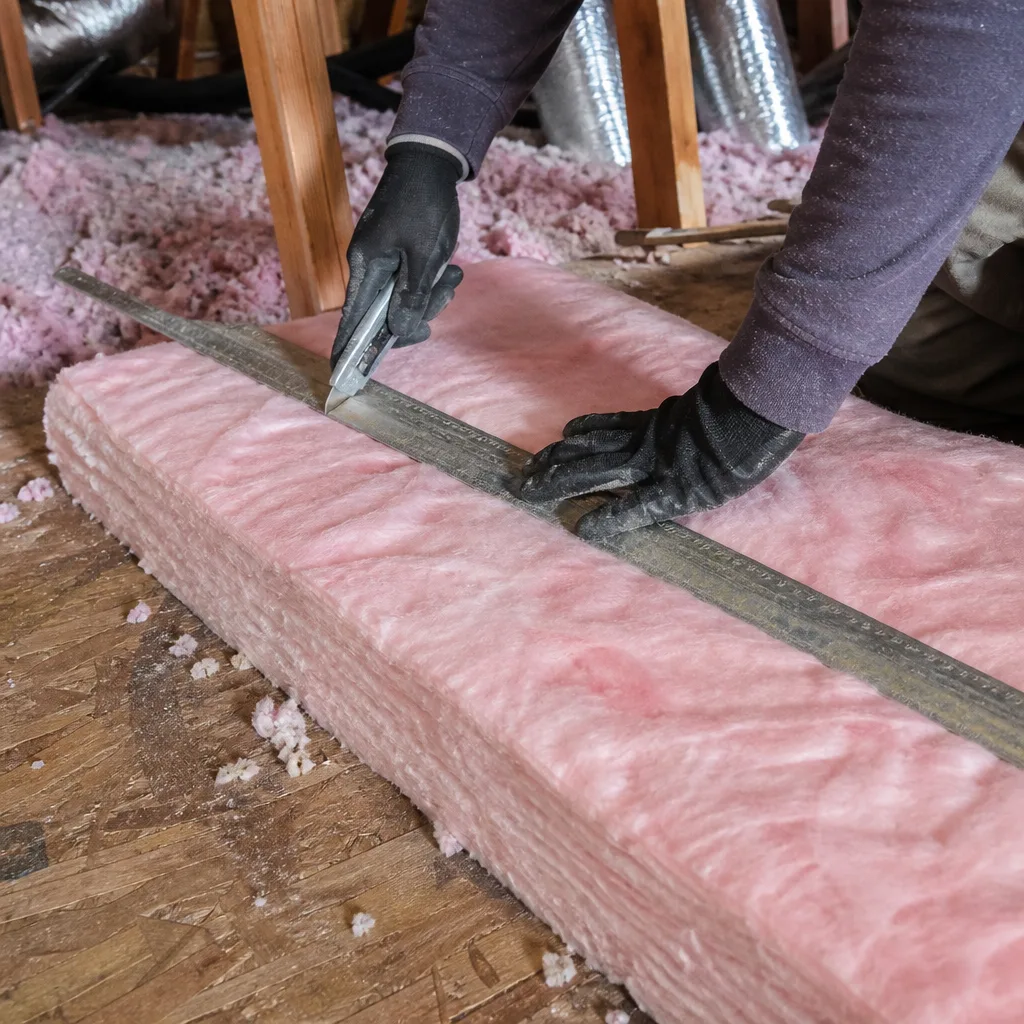
What you can safely check: verify that your crawl space vents are open or closed per season, look for visible tears or displacement in existing poly sheeting, and note any moisture or odor. These observations help us diagnose faster when you call.
Where DIY goes wrong: vapor barrier installation without prior air sealing traps moisture instead of managing it. We’ve found homeowners in Pasadena who laid new poly over unsealed rim joists, creating a greenhouse effect that accelerated mold growth. Proper installation requires sealing top plates, can lights, and penetrations before the barrier goes down - the sequence matters. Crawl space work also involves confined-space entry, sharp fasteners, and potential asbestos in older homes. For these reasons, we recommend professional installation.
Call (213) 816-5351 for a free estimate. We’ll bring a written price to the visit, and our Free Second Opinion applies to any written estimate you already have.
FAQs
In Pasadena’s dry climate, a properly installed 10-mil reinforced vapor barrier typically lasts 15-20 years, though seam tape adhesion can degrade faster if the substrate wasn’t cleaned before application. The bigger variable is rodent activity - we’ve replaced barriers after five years in homes near the Arroyo Seco where ground squirrels accessed crawl spaces. Call (213) 816-5351 for an exact assessment of your current barrier’s condition; estimates are free.
Small punctures or tears under six inches can be patched with compatible butyl tape and an overlapping poly patch, but widespread seam failure or degradation of the main sheet requires full replacement. We won’t patch a barrier that was installed without proper air sealing underneath - it’s a temporary fix that masks the root problem. Call (213) 816-5351 and we’ll show you what’s actually happening under your floor.
Most residential crawl spaces in Pasadena take one to two days: half a day for air sealing preparation, and half a day to a full day for vapor barrier placement, seam taping, and perimeter fastening. Larger homes in the San Rafael Hills or jobs requiring insulation removal and replacement may extend to three days. We provide a written schedule with your written price before work starts.
Yes - we carry 10-mil reinforced poly sheeting, butyl seam tape, and mechanical fastening systems compatible with Knauf specifications on every vapor barrier job. For Knauf fiberglass batts or blown-in insulation that accompanies the barrier, we order to spec after measuring your space. Same-day starts are available for most Pasadena locations when you call (213) 816-5351.
Written by Wes Okafor, Owner, Topside Attic Insulation Pasadena at Topside Attic Insulation Pasadena, serving Pasadena and nearby areas.