
Icynene Vapor Barrier Installation: The Pasadena Owner’s Guide
Icynene vapor barrier installation in Pasadena typically runs $2,800-$4,600 for an average crawl space or basement envelope, and we stock Icynene-compatible membrane and seam-sealing materials on every truck. Most Pasadena homes built between 1940 and 1985, especially the raised foundation bungalows in Bungalow Heaven and the hillside Craftsmans near Orange Grove Boulevard, were built without adequate vapor barrier protection. Homeowners usually discover the problem when they pull back insulation and find rusted ductwork, white mineral deposits on block walls, or a musty smell that the HVAC system pushes through the whole house. The Icynene membrane is a 10-mil or 15-mil reinforced polyethylene sheet, seam-sealed with acrylic-based tape, that blocks ground moisture from entering the conditioned envelope. When it fails, it’s usually at the seams or where the membrane meets the foundation wall, not the sheet itself.
Which Icynene Models This Applies To
Icynene doesn’t sell a standalone “vapor barrier kit” to end users. What we install is the Icynene-recommended membrane system: a cross-laminated polyethylene sheet, either 10-mil for standard crawl spaces or 15-mil where rodent traffic or rough substrate is expected, paired with Icynene’s specified acrylic seam tape and mechanical fastening to the sill plate. The compatibility question isn’t model-specific, it’s assembly-specific. We match the membrane to the Icynene spray foam or open-cell application already in place, or to the planned foam thickness if we’re doing both.
To identify what you need, check three things: the existing foam label (look for “Icynene MD-R-200,” “Icynene Classic Max,” or “Icynene LD-C-50” on the spray foam substrate), the crawl space or basement dimensions, and whether the existing membrane is original black polyethylene (usually 6-mil, often degraded) or a previous upgrade. OEM Icynene-specified membrane runs thicker and carries a 25-year degradation warranty under normal soil conditions. Aftermarket equivalents from Stego or Polyguard meet the same permeance ratings (0.03 perms or less) at lower cost, but we only use them when the homeowner specifically requests it, because the seam-tape chemistry differs and we’ve seen adhesion failures where incompatible tapes meet Icynene’s specified acrylic formulation. Topside Attic Insulation Pasadena is an independent service provider, not affiliated with Icynene.
Signs Your Icynene Vapor Barrier Installation Is Failing
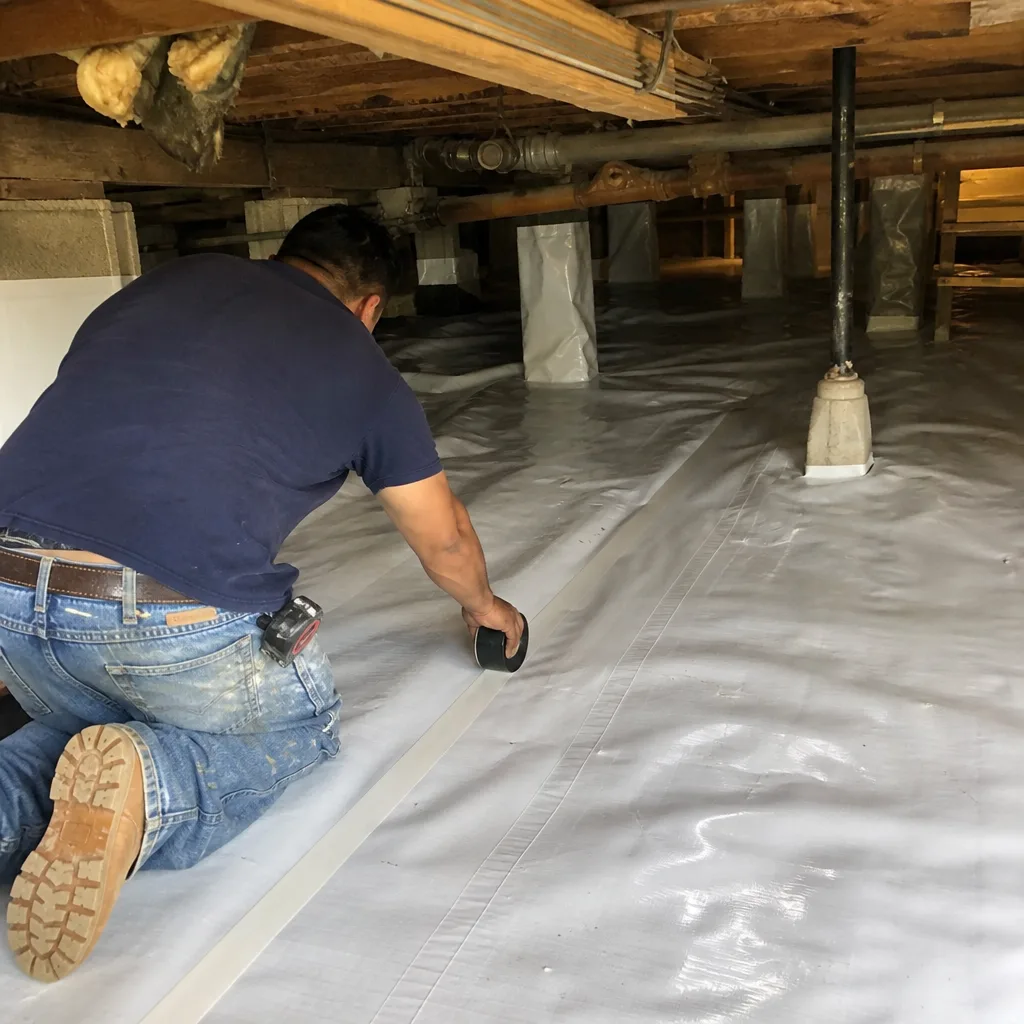
- White efflorescence on block or concrete walls. This is mineral salts left behind when moisture evaporates through the wall. It means vapor is moving through the envelope faster than the barrier can block it, usually because the membrane has pulled away from the wall or the seam tape has lost adhesion in Pasadena’s dry-heat cycles.
- Rust on HVAC ducts or metal fasteners. Condensation forms when warm, moist crawl space air meets cool duct surfaces. A functioning vapor barrier keeps relative humidity below 60%, which is the threshold where metal corrosion accelerates. Rust means the barrier isn’t doing that.
- Musty odor that intensifies when the furnace or AC runs. The HVAC return pulls air from the crawl space through floor penetrations. If the vapor barrier has failed, that air carries mold spores and geosmin, the compound that produces “basement smell.” We see this most often in Pasadena’s older homes with original floorboard construction and no subfloor air sealing.
- Sagging or torn membrane, especially at seams. The 6-mil black poly installed in most Pasadena homes before 2000 becomes brittle after 8-12 years of UV exposure, even in a crawl space. Icynene-specified 10-mil and 15-mil cross-laminated material resists this, but if a previous installer used standard poly, it’ll tear at the slightest disturbance.
- Increased energy bills with no equipment change. Wet insulation loses R-value. If your crawl space has fiberglass batts touching a failed barrier, they’re likely holding moisture and conducting heat rather than resisting it. The blower-door test, a pressurization reading that shows in one number how much air your building envelope is losing, will often reveal elevated leakage at the rim joist even when the barrier is the primary failure.
Replacement Cost & What’s Included
| Scope | Typical Range in Pasadena |
|---|---|
| Standard crawl space (800-1,200 sq ft), 10-mil membrane, seam-sealed, sill plate fastened | $2,800-$3,600 |
| Large or irregular crawl space (1,200-2,000 sq ft), 15-mil membrane, pier wrapping included | $3,600-$4,600 |
| Basement perimeter wall application, Icynene-compatible membrane with drainage mat | $4,200-$5,800 |
| Add full crawl space air sealing (top plates, penetrations, rim joist) before membrane | +$1,200-$1,800 |
What drives the range: accessibility (a 14-inch clearance crawl space in a 1920s Bungalow Heaven home takes longer than a full-height basement in a 1970s ranch), existing debris or old insulation removal, and whether we need to address drainage or grading first. Every job gets a written price before any work starts, per Haven Standard Clause 1. The price includes membrane, tape, mechanical fasteners, debris removal, and a Documented Photo Record of the completed installation. We also publish before-and-after blower-door numbers on applicable jobs so you can verify the air-sealing result. The 365-Day Done Right Promise applies to all work. We stock Reflectix radiant barrier materials as well, for homeowners combining vapor barrier and thermal barrier upgrades.
DIY or Call Us?
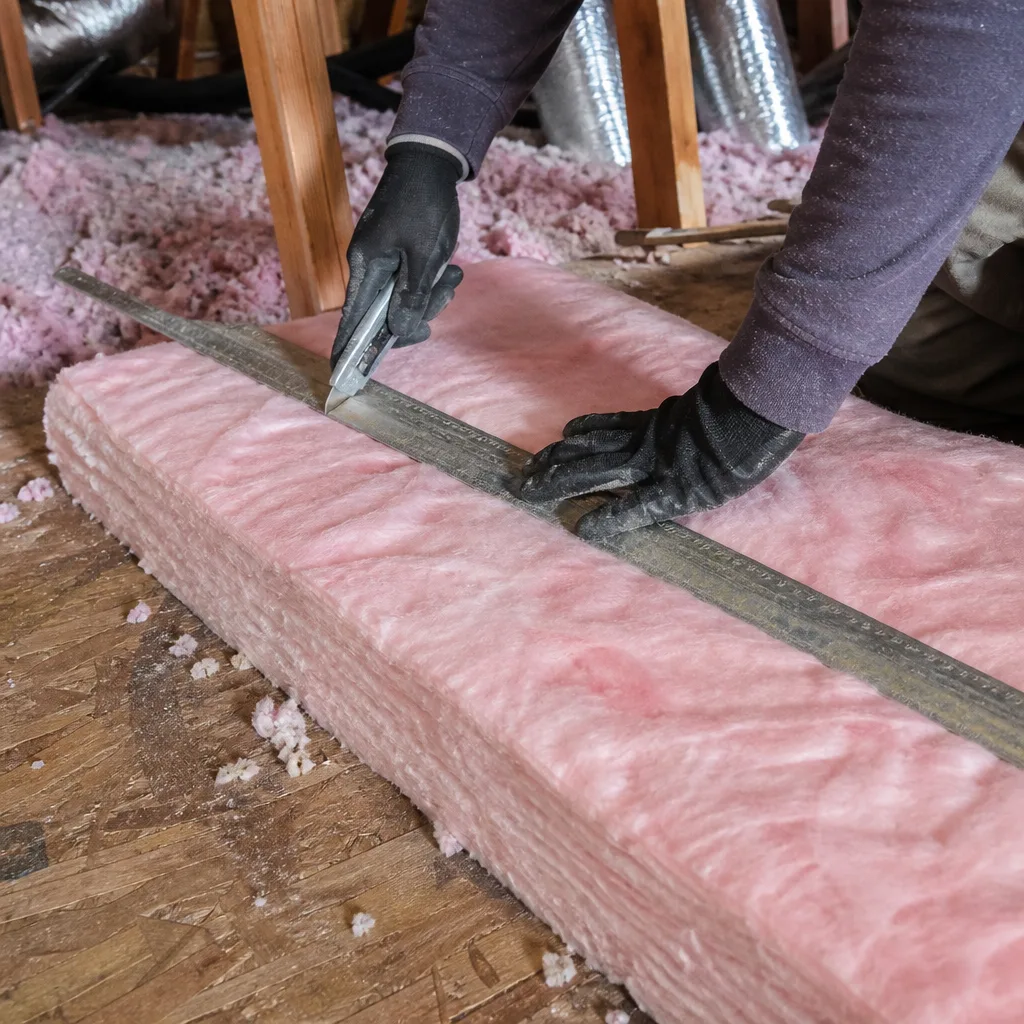
What you can safely check: look at the membrane color and condition from the crawl space access. Black, brittle, or torn material needs replacement. Note any standing water, which indicates a drainage problem that membrane alone won’t fix. Measure your crawl space roughly, and photograph any labels on existing spray foam.
Where DIY goes wrong: proper vapor barrier installation requires complete seam sealing with the correct tape chemistry, mechanical fastening to the sill plate that won’t pull out, and integration with any existing insulation or HVAC components. More critically, crawl spaces in Pasadena’s older neighborhoods often contain deteriorated duct tape on old flex ducts, exposed wiring, or asbestos-containing pipe insulation. We background-check and uniform our technicians for a reason. The work isn’t high-tension dangerous like electrical panel work, but the environment itself carries real hazards, and a poorly sealed barrier fails faster than no barrier at all because it traps moisture against the substrate.
Call (213) 816-5351 and we’ll read your situation with you. Estimates are free, and we offer a Free Second Opinion on any written estimate you’ve already received.
FAQs
A properly installed 10-mil or 15-mil cross-laminated membrane with acrylic seam tape typically lasts 20-25 years in Pasadena’s dry Mediterranean climate, though homes with poor drainage or seasonal groundwater may see reduced lifespan. The 6-mil black poly found in most pre-2000 installations usually fails in 8-12 years. Call (213) 816-5351 for an assessment of your existing barrier’s condition.
Patching is possible for isolated tears in otherwise sound membrane, but seam failures, widespread brittleness, or incorrect original material almost always warrant full replacement. We’ve repaired enough patch jobs in Pasadena’s Orange Grove corridor to know that homeowners spend more on repeated callbacks than on doing it once correctly. We provide a written scope and written warranty before any work starts.
Most standard crawl spaces in Pasadena are completed in one day, with the crew arriving between 8 and 9 a.m. and finishing by late afternoon. Larger basements, debris removal, or combined air-sealing work may extend to a second day. You’ll receive a text when your technician is on the way, and a Documented Photo Record before the crew leaves.
We stock 10-mil and 15-mil reinforced polyethylene membrane, Icynene-compatible acrylic seam tape, and mechanical fasteners on every truck. Same-week installation is standard; same-day is often possible for urgent moisture intrusion situations. Call (213) 816-5351 to confirm current availability for your specific crawl space or basement dimensions.
Seal the leaks first. Then insulate. The numbers will tell you why.
Written by Wes Okafor, Owner, Topside Attic Insulation Pasadena at Topside Attic Insulation Pasadena, serving Pasadena and nearby areas.