
Icynene Radiant Barrier Installation: The Pasadena Owner’s Guide
Icynene radiant barrier installation in Pasadena typically runs $2,800-$4,200 for a 1,200-2,000 square foot attic, including material, labor, and the air-sealing prep that makes it actually work. Most homeowners who call us notice the problem in July or August, when their upstairs rooms won’t cool below 78 degrees despite the AC running nonstop, or when their summer electric bill jumps 30-40% year-over-year. We stock Icynene-compatible radiant barrier material and can usually schedule installation within 48 hours; same-day starts are available when the attic access is clear and the preliminary air-sealing work is already complete.
Which Icynene Models This Applies To
Icynene doesn’t manufacture a standalone radiant barrier product under its own label. What Pasadena homeowners are usually referring to is a radiant barrier system installed in conjunction with Icynene open-cell or closed-cell spray foam, or a hybrid assembly where Icynene foam seals the envelope and a reflective foil barrier reduces radiant heat gain across the attic space. The specific compatibility question is whether your existing Icynene foam layer can stay in place while the radiant barrier goes in above or below it.
For Icynene Classic Plus (open-cell, 3.5-4.0 lbs/ft³ density) and Icynene ProSeal (closed-cell, 2.0 lbs/ft³), the radiant barrier is typically installed on the attic side of the roof deck or as a draped system over the rafters, not in contact with the foam itself. The critical spec is the existing foam thickness: if your Icynene layer is below 3 inches in open-cell or 2 inches in closed-cell, adding a radiant barrier without addressing the R-value shortfall is putting a reflective bandage on an under-insulated wound. We measure that on arrival.
Topside Attic Insulation Pasadena is an independent service provider, not affiliated with Icynene. We source Icynene-compatible radiant barrier material from our regular suppliers - including Reflectix for foil-faced assemblies - and we also stock Reflectix rolls in 16-inch, 24-inch, and 48-inch widths for common Pasadena roof framing. OEM-spec radiant barrier for Icynene hybrid systems is typically a perforated, double-sided aluminum product with an emissivity rating below 0.05; aftermarket equivalents meeting ASTM C1313 perform identically at lower material cost, which we pass through in our written price.
Signs Your Icynene Radiant Barrier Installation Is Failing
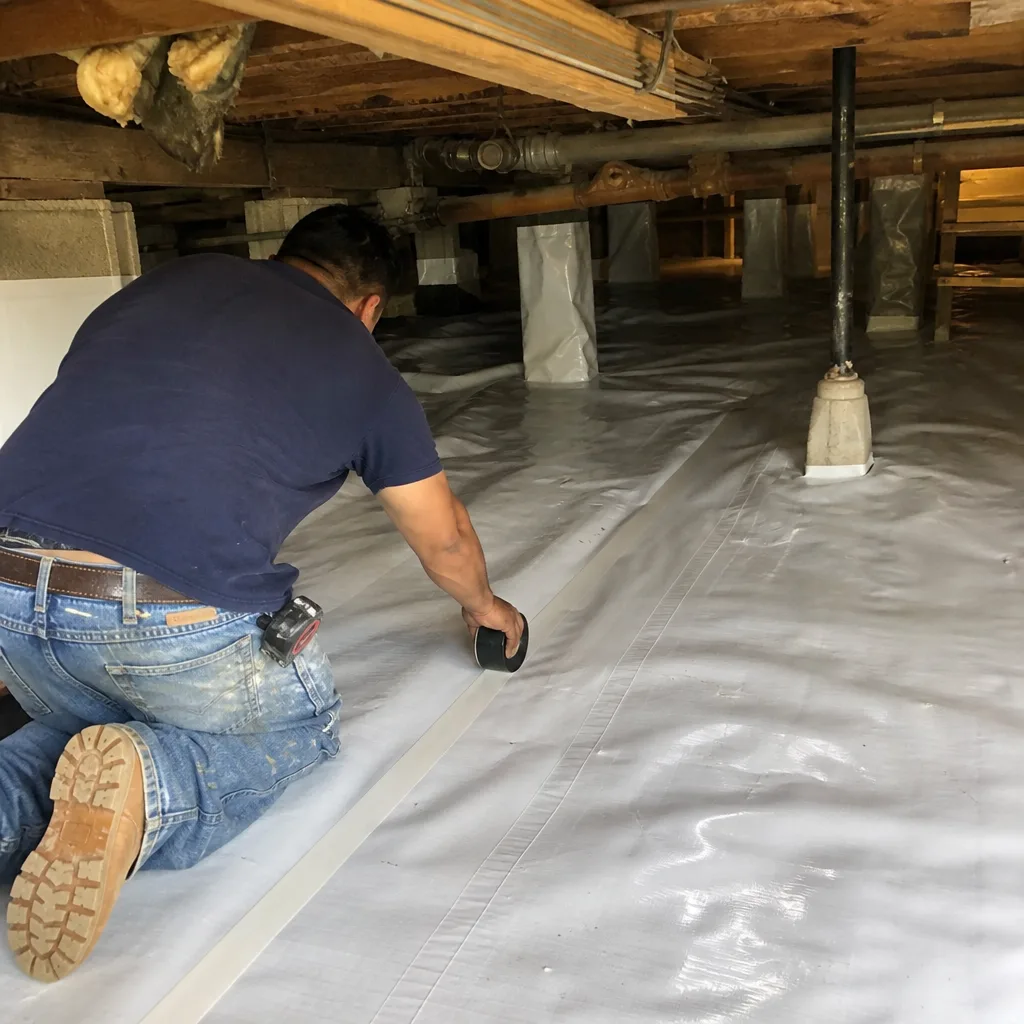
- Upstairs rooms heat up by 2-4 PM and won’t recover until after sunset. This is the classic pattern in Pasadena’s Zone 9 climate: radiant heat penetrates a degraded or improperly installed barrier, overwhelms the Icynene foam’s conductive resistance, and thermal mass in the drywall releases that heat into living space hours later. We see this most in south-facing attics above 1,200 square feet.
- AC runtime increases 25% or more versus the same month last year. When the radiant barrier tears, delaminates, or was never sealed at the seams, the attic floor temperature can climb from 110°F to 140°F on a Pasadena August afternoon. Your Icynene foam still insulates, but it’s fighting a much hotter boundary condition.
- Visible dust streaks or black marks on the radiant barrier surface. Dust accumulation raises emissivity - the surface becomes less reflective, more absorptive. In Pasadena’s Santa Ana wind seasons, fine particulate gets pulled through ridge vent gaps and settles on upward-facing foil. A clean barrier reads 0.03-0.05 emissivity; a dusty one can read 0.20 or higher, which negates most of the benefit.
- Tears, gaps, or sagging sections visible from the attic hatch. Staple failure is common in older installations where 1/4-inch staples were used instead of 3/8-inch cap nails on 24-inch centers. In the dry heat of Pasadena’s summer attic cycles, the OSB roof deck expands and contracts; inadequate fastener grip works loose over 3-5 years.
- Hot spots on infrared camera or uneven ceiling temperatures. We document these with thermal imaging on every assessment. A failed radiant barrier shows as a ceiling temperature variation of 8-15°F between rooms, even when the Icynene foam layer is continuous underneath. The barrier’s job is to even out that radiant load; when it fails, the pattern becomes unmistakable.
Replacement Cost & What’s Included
| Component | Price Range (Pasadena) |
|---|---|
| Radiant barrier material (perforated foil, 500-1,000 sq ft attic) | $0.75-$1.25 / sq ft |
| Air sealing of top plates, can lights, penetrations (prerequisite) | $450-$850 |
| Labor: removal of failed barrier, installation of new | $1,200-$2,100 |
| Before-and-after blower-door test (applicable jobs) | Included |
| Documented Photo Record | Included |
| Typical total installed | $2,800-$4,200 |
What drives the range: attic square footage, roof pitch (steeper = slower work), whether the existing barrier needs full removal or can be overlaid, and the condition of the air sealing beneath it. We never quote radiant barrier alone - Haven Standard Clause 1 requires air sealing first, because a leaky attic pressurizes with conditioned air and the barrier becomes a convection bypass path. Our written price includes material, labor, disposal, the blower-door test where applicable, and the 365-Day Done Right Promise. Warranty on the radiant barrier installation itself is 10 years against fastener failure and seam separation.
DIY or Call Us?
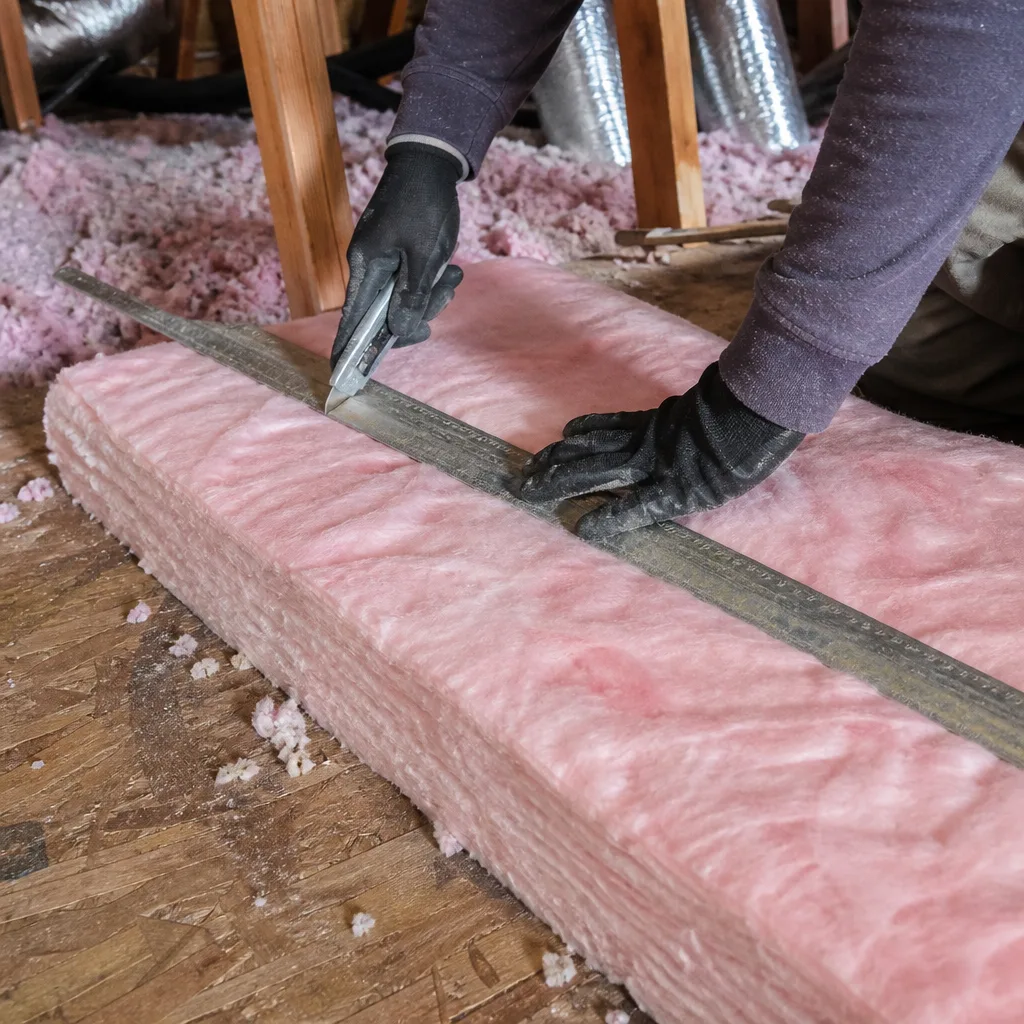
There’s a safe middle ground here, and then there’s where DIY stops making sense.
What you can check yourself: from the attic hatch, look for the five symptoms above - tears, sagging, dust streaking, staple pops, or gaps at the ridge. Note your roof orientation and any sections where the barrier is missing entirely. That’s useful information to relay when you call.
Where DIY goes wrong: radiant barrier installation in a Pasadena attic in July is not a Saturday morning project. Attic temperatures exceed 140°F, dehydration risk is real, and working on joists or roof decking while heat-stressed leads to falls. More specifically, the barrier must be installed with the reflective side oriented correctly (draped: down; stapled to rafters: facing the attic air gap), seams overlapped and taped with aluminum tape rated to 180°F, and all penetrations sealed to prevent convection loops. Get any of this wrong and you’ve paid for material that actively underperforms. The Icynene foam layer beneath also cannot be disturbed - it’s a finished air barrier, not a walking surface.
We carry Icynene-compatible radiant barrier material and Reflectix stock on our trucks. Call (213) 816-5351 and we’ll read your situation with you - no charge for the assessment, and we’ll give you a written price before any work starts.
FAQs
A properly installed perforated aluminum radiant barrier in Pasadena’s dry climate lasts 15-25 years before emissivity degradation from dust accumulation becomes significant. The actual material doesn’t “wear out,” but dust loading and mechanical damage from tradespeople working in the attic reduce performance starting around year 10. We inspect for this during routine maintenance calls and can clean or replace sections as needed. Call (213) 816-5351 for an assessment - estimates are free.
Partial repair is viable if the damage is localized - a torn section near the attic hatch, a single sagging run, or seam separation limited to one roof plane. We patch with matching material and aluminum tape, then verify with thermal imaging. If the barrier is more than 30% compromised, or if it was installed without proper air sealing beneath it, full replacement with corrected prep work is the only approach that produces documented results. Call (213) 816-5351 and we’ll show you the thermal images so you can decide.
Most Icynene radiant barrier replacements in Pasadena finish in one day: 4-6 hours for attics under 1,500 square feet, 6-8 hours for larger or steeper roofs. That includes air sealing prep, barrier removal and disposal, new installation, and cleanup. Jobs requiring blower-door testing add 45 minutes for pre- and post-readings. We schedule starts at 7 AM to beat attic heat buildup. Call (213) 816-5351 to check next available start date.
Yes - we keep perforated double-sided aluminum radiant barrier and Reflectix rolls in 16-inch, 24-inch, and 48-inch widths on our trucks, along with aluminum seam tape and 3/8-inch cap nails for Pasadena’s common 24-inch rafter spacing. For unusual roof geometries or Icynene hybrid systems requiring specific facing orientation, we can source next-day. No waiting on material is part of our standard scheduling. Call (213) 816-5351 to confirm stock for your specific attic layout.
Seal the leaks first. Then insulate. The numbers will tell you why.
We’ve been in attics from Bungalow Heaven to the older Craftsmans along Pasadena’s Orange Grove corridor, and we’ve learned that a radiant barrier installed over unsealed top plates is just a shiny ceiling for your conditioned air to escape through. Wes Okafor and our crew start every job with a blower-door test - a pressurization reading that shows, in one number, how much air your building envelope is losing - so we know what we’re fixing before we quote the fix. Under Haven Standard, you get that number in writing, the written price before anyone lifts a tool, and the documented photo record when we leave. That’s been our process since 2016, across 9,000+ homes, and it doesn’t change for radiant barrier work.
Call (213) 816-5351 for a free estimate. A live person answers, 24/7.
Written by Wes Okafor, Owner, Topside Attic Insulation Pasadena at Topside Attic Insulation Pasadena, serving Pasadena and nearby areas.