
Demilec Vapor Barrier Installation: The Pasadena Owner’s Guide
Demilec vapor barrier installation in Pasadena typically runs $2,800-$4,600 for a standard crawl space or attic application, and we stock Demilec-compatible poly sheeting and seam-sealing components for same-day starts on most jobs. Most homeowners notice the problem first as a musty crawl space odor or warping laminate floors after Pasadena’s winter rains, when ground moisture pushes through a compromised or missing vapor barrier and into the living space. We carry 6-mil and 10-mil reinforced Demilec-compatible rolls on our trucks, along with butyl tape and acoustic sealant for perimeter fastening.
Which Demilec Models This Applies To
Demilec produces vapor barrier materials under several product lines, and matching the right spec matters more than matching a brand logo. We install Demilec Heatlok HFO-compatible poly sheeting for conditioned attic applications, Demilec SEALECTION 500-compatible reinforced barriers for crawl spaces, and standard 6-mil cross-laminated polyethylene for unconditioned basement walls. The key identifier is the mil rating printed on the roll edge, not the marketing name: 6-mil for basic moisture blocking, 10-mil for high-traffic crawl spaces where technicians will crawl, and 15-mil reinforced for rocky or rodent-active soils common in the foothill neighborhoods near Eaton Canyon.
Demilec’s OEM vapor barrier rolls ship in 12-foot and 20-foot widths; we stock both on our Pasadena trucks because a seam in the wrong place defeats the purpose. Aftermarket equivalents from Johns Manville and Owens Corning meet the same ASTM E1745 Class A standard and often cost 15-20% less, but the seam tape must match: Demilec’s butyl-based tape adheres differently to non-Demilec poly, so we source compatible tape by the case. If your existing barrier has “Demilec” stamped in the corner every 24 inches, it’s OEM; if the stamp reads “ASTM E1745” only, it’s aftermarket and we’ll match the mil rating, not the brand.
Signs Your Demilec Vapor Barrier Installation Is Failing
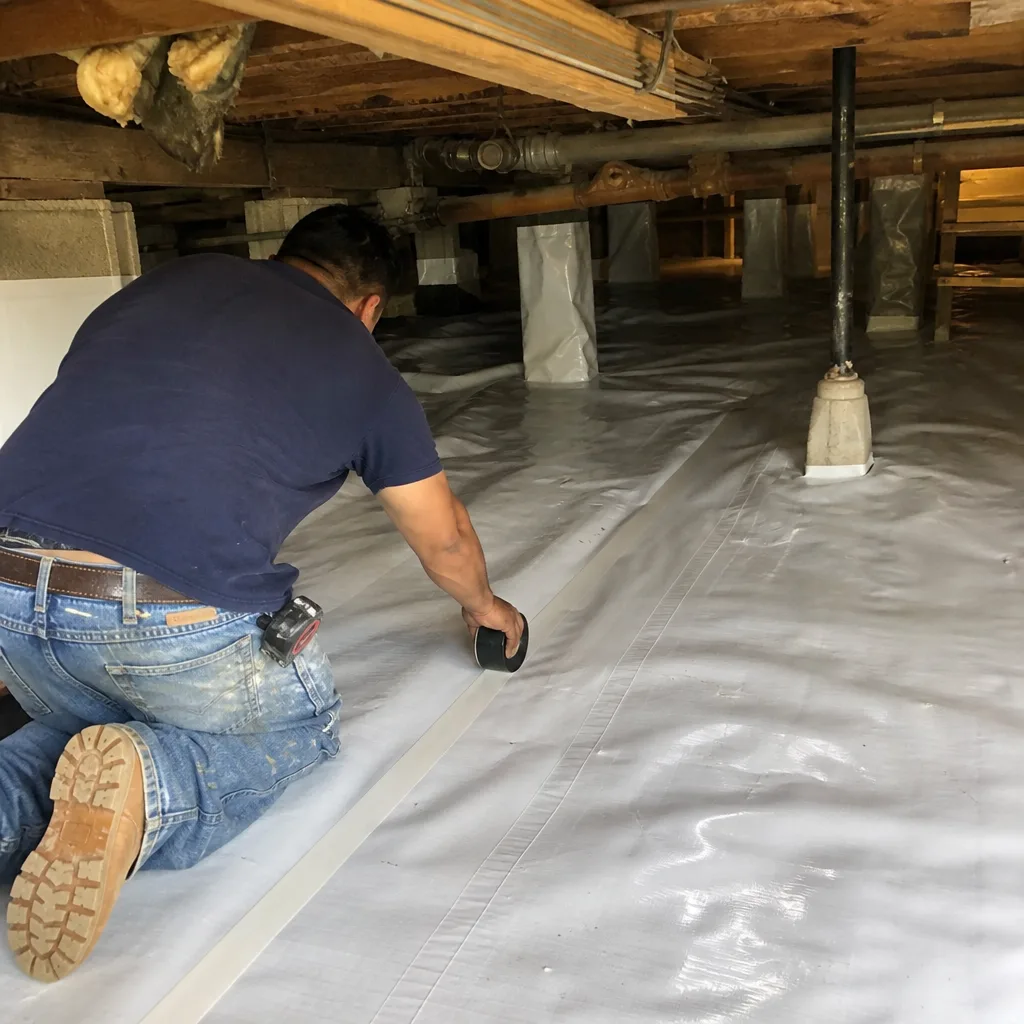
- Musty odors rising from floor level. When the vapor barrier tears at seams or pulls from perimeter walls, soil gas and evaporating ground moisture enter the crawl space. In Pasadena’s clay-heavy soils near the Arroyo Seco, this happens faster because seasonal expansion and contraction stress the tape bonds.
- Condensation on ductwork or insulation below the floor. Warm, moist air hits cool HVAC ducts and fiberglass batts, creating drip points. We see this most in 1950s ranch homes in the Madison Heights area where original 4-mil barriers have degraded to brittle fragments.
- Buckling hardwood or laminate flooring. Moisture vapor pressure from below pushes upward through subfloor gaps. The damage usually appears first in hallways and kitchens where the subfloor has the most fasteners and therefore the most penetration points.
- White or gray mold on floor joists. Surface mold on wood indicates relative humidity above 70% in the crawl space, which a properly sealed vapor barrier should prevent year-round. Pasadena’s Mediterranean climate means mold cycles: active in winter, dormant but stained in summer.
- Pest activity increasing in crawl space. Ripped vapor barrier creates humid harborage for termites, silverfish, and rodents. We’ve pulled back barriers in the Bungalow Heaven historic district where Norway rats had tunneled through 6-mil poly that was technically intact but installed without mechanical fastening at the walls.
Replacement Cost & What’s Included
Most Demilec vapor barrier replacements in Pasadena run $2,800-$4,600 for a 1,200-2,000 square foot crawl space, with attic applications at the lower end and full-perimeter encapsulations at the higher end. The range depends on three factors: mil rating (6-mil vs. 10-mil vs. reinforced 15-mil), seam density (fewer seams cost less but perform worse), and whether we need to remove and dispose of existing degraded material, which adds $400-$700 in labor and dump fees.
Every job includes the barrier material, butyl tape perimeter sealing, mechanical fastening with pressure-treated stakes or masonry fasteners, and a post-installation moisture meter reading documented in your photo record. Under our Haven Standard, you get a written price before any work starts, a 365-Day Done Right Promise on the installation, and before-and-after crawl space humidity readings when applicable. We don’t upcharge for Demilec-branded material; we charge for the mil rating and installation quality that solves the problem.
DIY or Call Us?
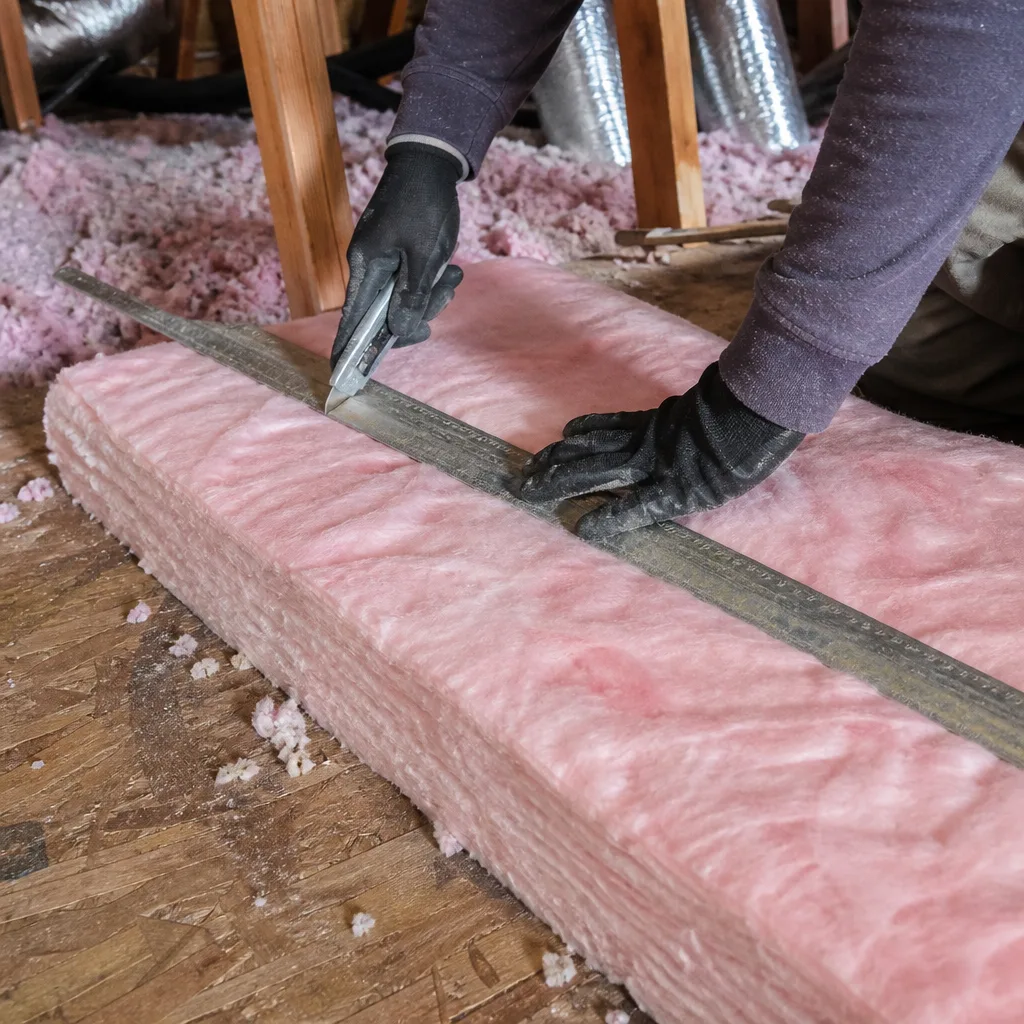
What you can safely check: crawl your perimeter and photograph any tears, pulled seams, or areas where the barrier has detached from walls. Note the mil rating if visible. This diagnostic work costs nothing and tells us exactly what we’re replacing.
Where DIY goes wrong: vapor barrier installation looks like unrolling plastic, but performance lives in the details. Seams must overlap 12 inches and be sealed with compatible tape, not duct tape, which degrades in crawl space humidity within two Pasadena summers. Perimeter attachment must withstand soil expansion; we see homeowner jobs where the barrier looked fine in March and had pulled six inches from the wall by August. The work also involves confined-space entry, sharp foundation edges, and working around electrical and plumbing penetrations. We carry the liability insurance and have the confined-space training; most homeowners don’t, and shouldn’t need to.
Seal the leaks first. Then insulate. The numbers will tell you why. Call (213) 816-5351 for a written price and a free second opinion on any competing estimate.
FAQs
A properly installed 10-mil vapor barrier lasts 15-20 years in Pasadena’s climate, though clay soil movement in foothill neighborhoods can shorten that to 10-12 years at perimeter attachment points. The 6-mil basic product typically shows seam stress or brittleness after 8-12 years. Call (213) 816-5351 and we’ll inspect yours at no charge, with a photo record of what we find.
Small punctures under two inches can be patched with compatible tape if the surrounding material is still flexible, but seam failures or widespread brittleness mean replacement. We don’t patch brittle poly; it tears again within a season, and we won’t warranty a repair on degraded substrate. For an honest assessment of patch-vs-replace on your specific barrier, call (213) 816-5351 for a free estimate.
Most residential crawl spaces in Pasadena take one day for removal and replacement, or two days if we find significant air sealing needed at rim joists or penetrations before the barrier goes down. Attic vapor barrier applications typically finish in four to six hours. We don’t start without a written price, and we don’t leave without a documented photo record.
We stock 6-mil, 10-mil, and reinforced 15-mil Demilec-compatible rolls on our Pasadena trucks, along with butyl tape, acoustic sealant, and mechanical fasteners. Same-day starts are available for most jobs booked before noon. Topside Attic Insulation Pasadena is an independent service provider, not affiliated with Demilec, and we also stock Reflectix radiant barrier materials for combined vapor-and-thermal applications.
Written by Wes Okafor, Owner, Topside Attic Insulation Pasadena at Topside Attic Insulation Pasadena, serving Pasadena and nearby areas.