
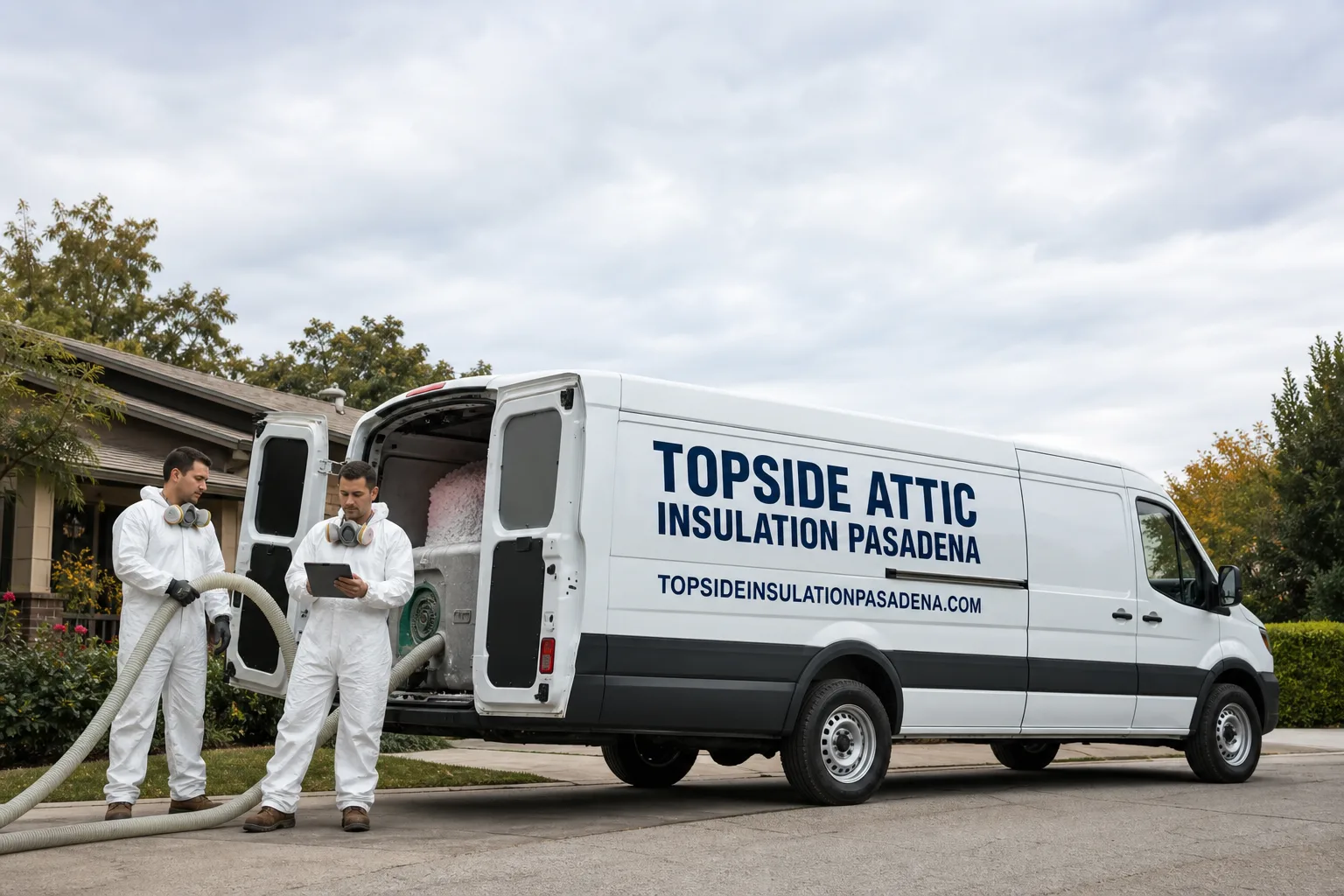
Fast, Reliable Blown-In Insulation Across Altadena
Blown-in insulation in Altadena typically runs $1.80-$3.20 per square foot of attic floor, with most complete attic jobs falling between $2,400 and $5,800 depending on whether air sealing and existing material removal are needed first. We dispatch crews to Altadena from our Los Angeles office, and most homeowners along Lake Avenue, Mariposa Street, and the foothill streets below Millard Canyon see us within 24-48 hours of calling. If you’re in the Eaton Fire rebuild zone or working with a legacy 1920s bungalow near Lincoln Avenue, the material spec and sequencing matter more here than in flatland Pasadena, and we’ve done enough of both to know the difference.
Call (213) 816-5351 for a written price before any work starts. Estimates are free.
Why Topside Attic Insulation Pasadena Is Altadena’s Preferred Blown-In Insulation Company
We’ve worked in Altadena since before the Eaton Fire, and the post-fire rebuild wave hasn’t changed our process: air seal first, insulate second, document everything. Our Blown-In Insulation crews have handled everything from top-ups in intact 1950s ranch homes near New York Drive to full envelope specs on Eaton Fire rebuilds along Fair Oaks Avenue where Chapter 7A compliance is non-negotiable.
Altadena homeowners leave reviews that mention the same things: the written price that arrived before anyone touched the attic, the photo record they received at the end, and the blower-door number that proved the air sealing worked. We don’t chase stars; we document results. Calls are answered by a live person 24/7, and our technicians are background-checked, uniformed, and named in the text you get when they’re en route.
Our response time to Altadena averages same-day or next-day for standard calls, and we carry the full material line, including the mineral wool and closed-cell foam specs that LA County inspectors are now requiring on rebuilds in the Very High Fire Hazard Severity Zone.
Our Blown-In Insulation Services in Altadena
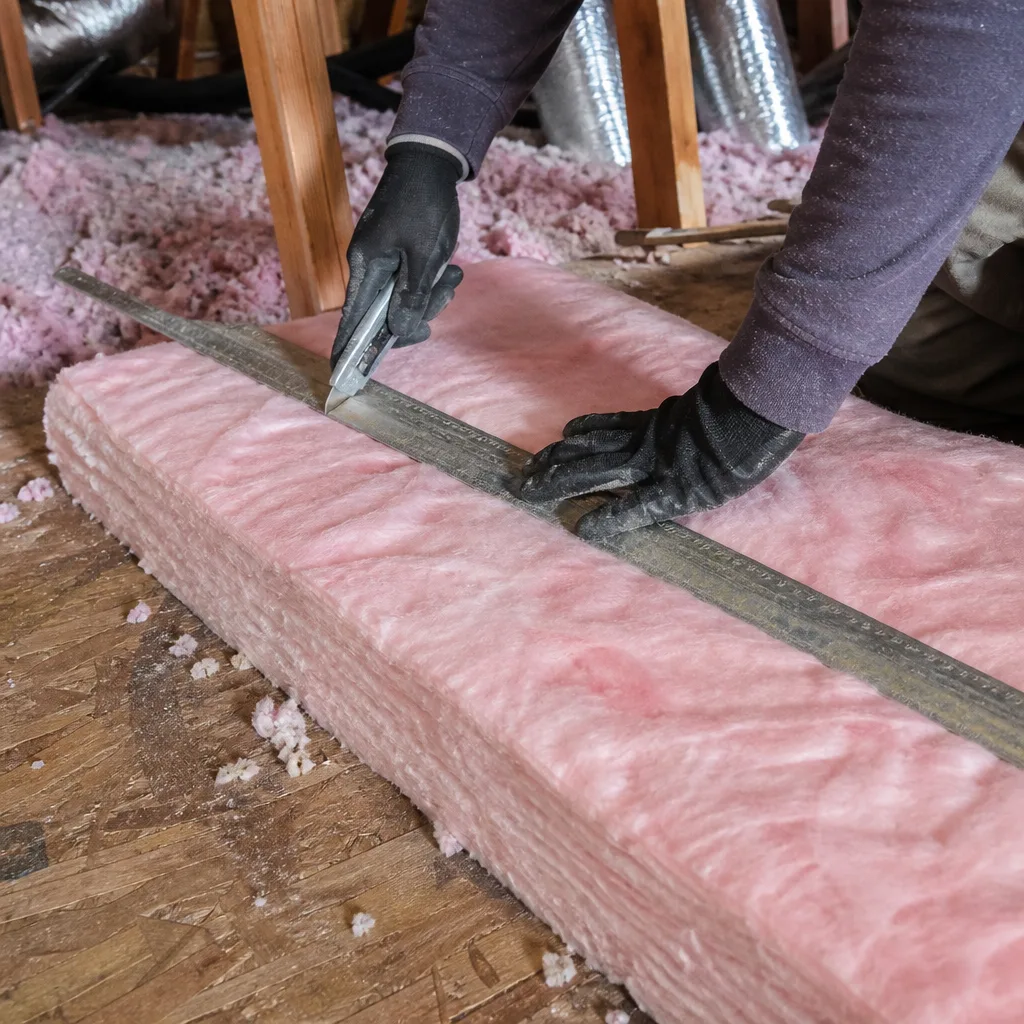
Blown-In Cellulose
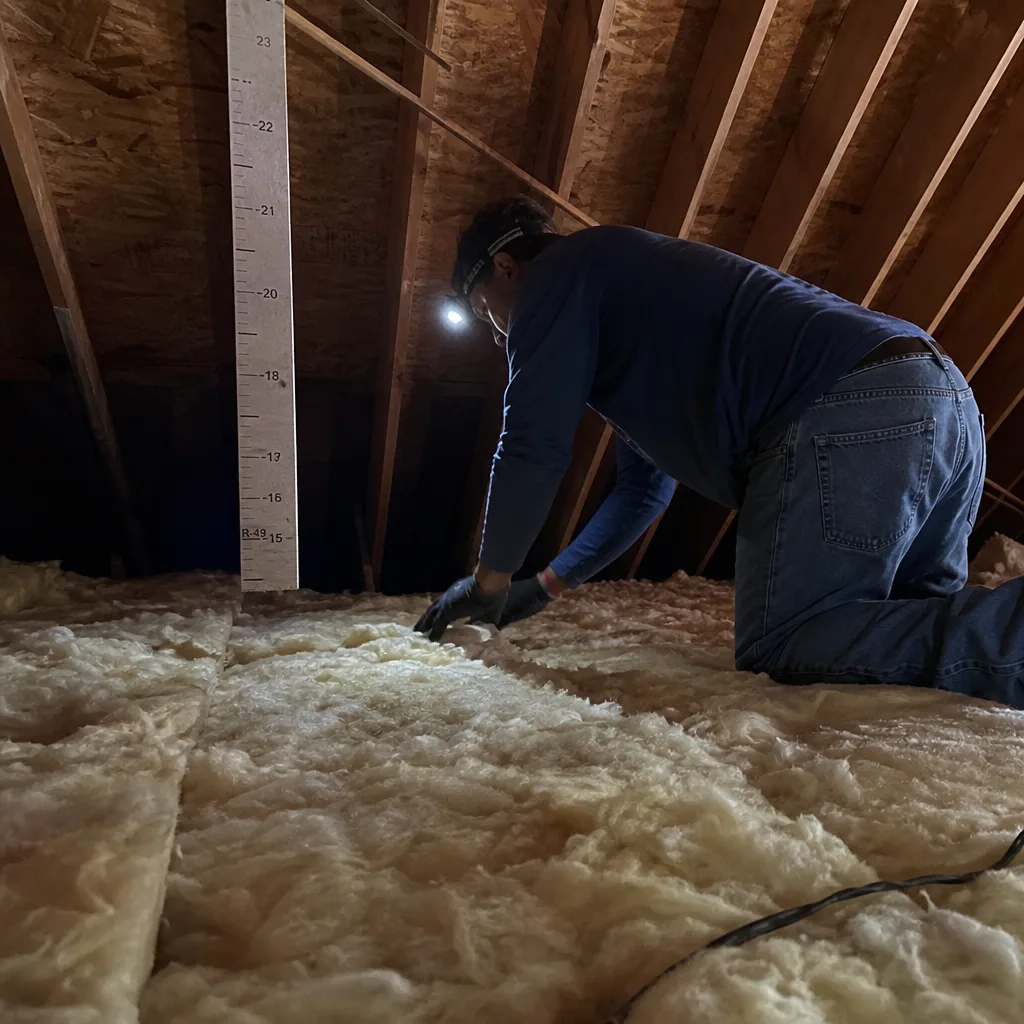
Blown-in cellulose remains the workhorse for intact Altadena homes outside the active rebuild zone, especially the Craftsman bungalows and Spanish Colonial revivals where we’re topping up degraded legacy fill. We source GreenFiber cellulose, a borate-treated recycled paper product that resists pests and fire smolder. In Altadena’s 800-1,400 foot elevation, that extra R-value per inch matters for heating loads during January cold snaps that drop below what Pasadena experiences. We never blow cellulose over an unsealed attic floor. Top plates, can lights, and soffit bypasses get sealed first. Then we blow to the target depth, mark it with depth strips, and photograph the coverage.
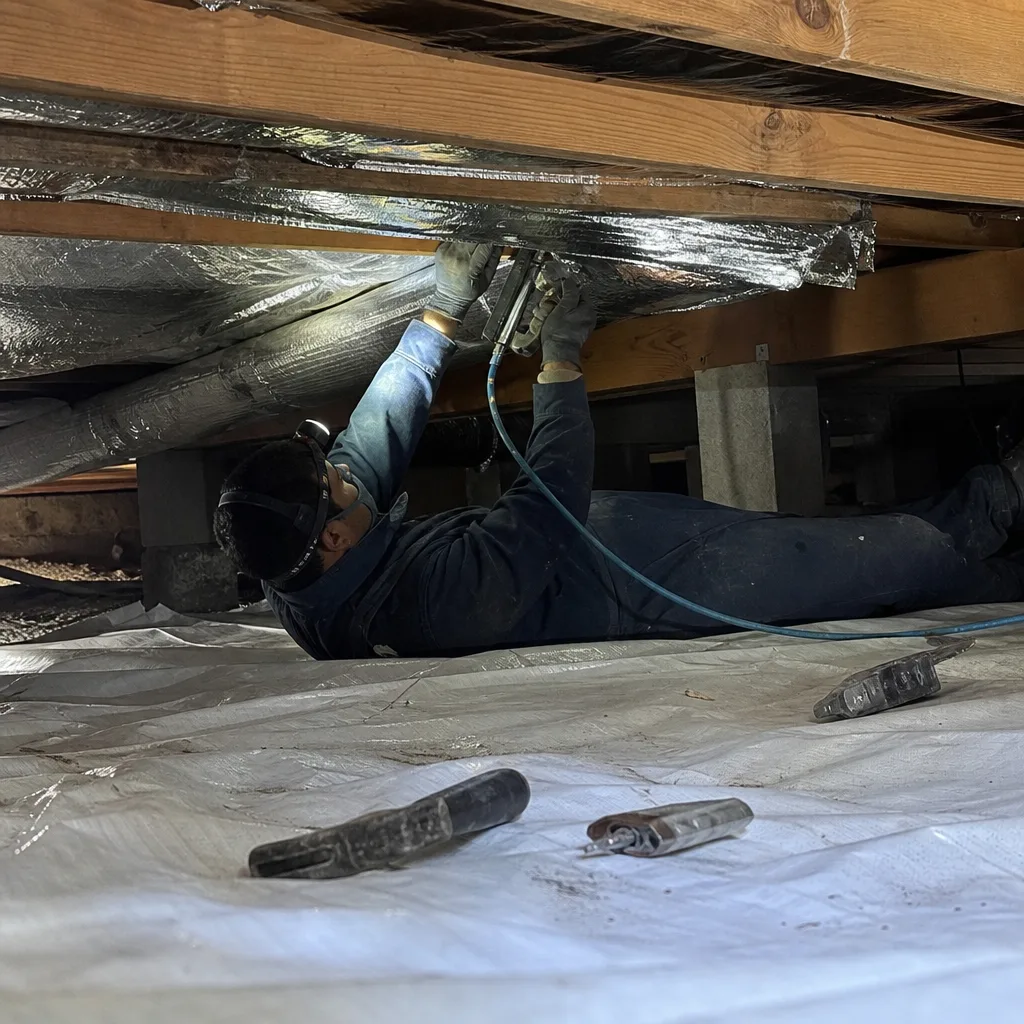
Blown-In Fiberglass
Blown-in fiberglass from Owens Corning and Johns Manville works well in Altadena’s mid-century ranch homes with open attic floors and minimal penetrations. It’s lighter than cellulose, doesn’t settle as aggressively, and suits the shallow roof pitches common near Altadena Drive where headroom limits how much depth we can achieve. That said, we’re careful where we specify it. In the Eaton Fire rebuild areas, standard fiberglass often fails Chapter 7A plan check for WUI compliance. We’ll tell you straight if fiberglass fits your job or if the county inspector and your insurance carrier are expecting mineral wool or closed-cell foam instead.
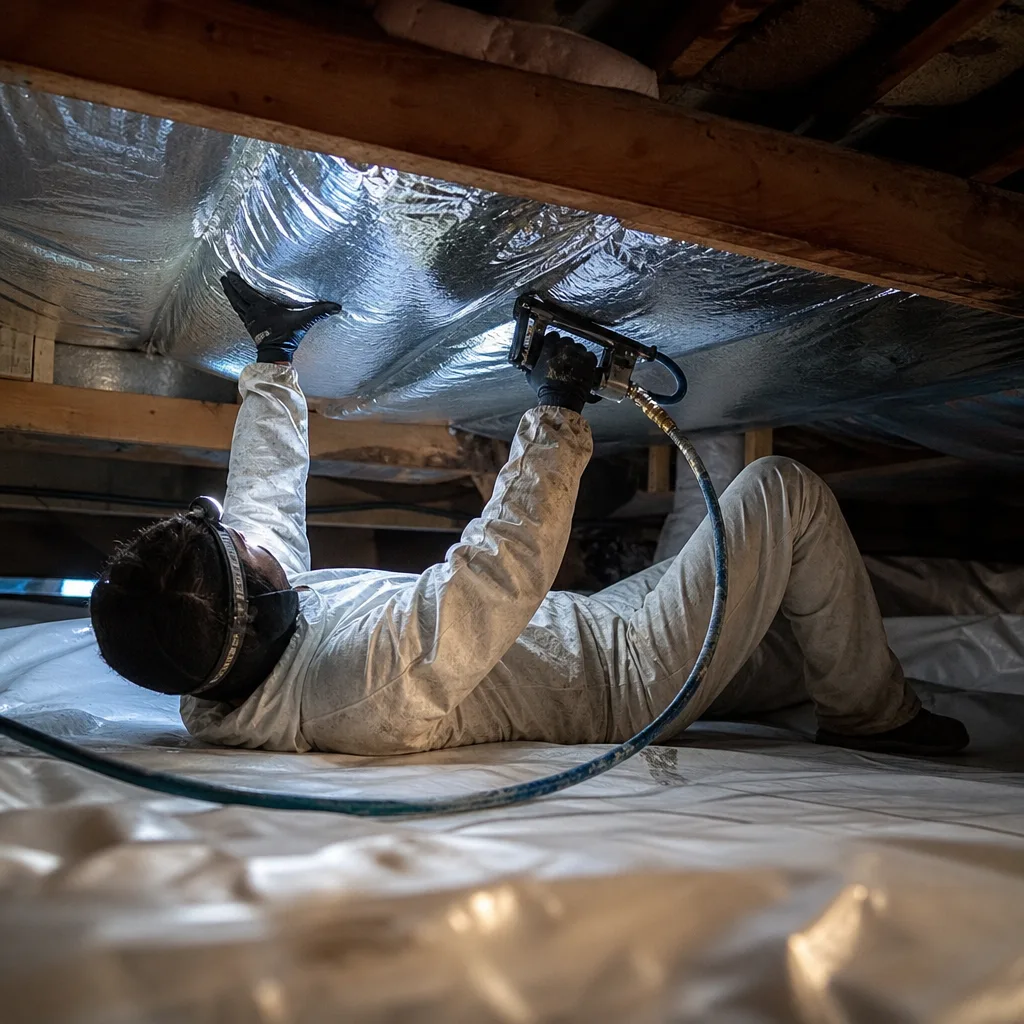
Dense-Pack Wall Insulation
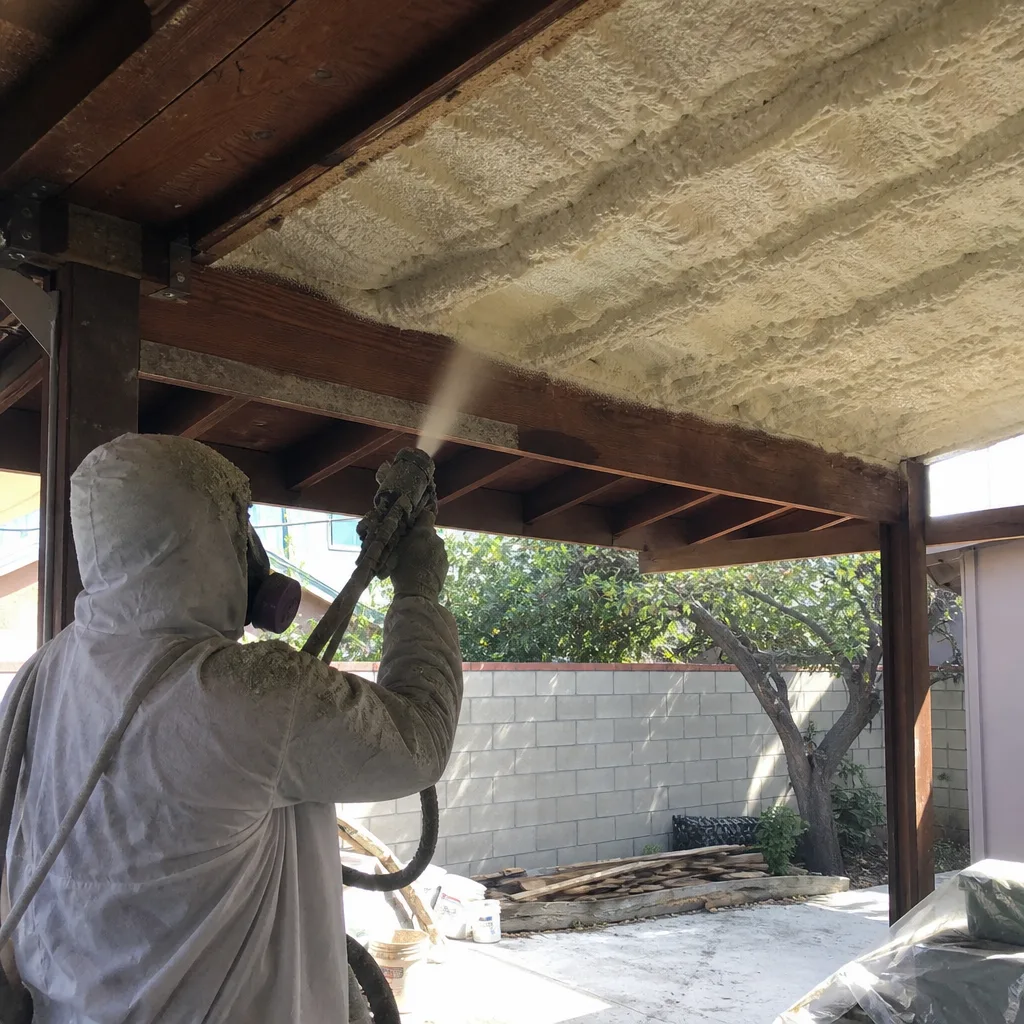
Altadena’s balloon-frame walls, common in pre-1940 construction, are empty cavities that move air vertically from basement to attic. Dense-pack wall insulation, blown at 3.5 pounds per cubic foot of cellulose or fiberglass, fills those cavities and slows both conductive heat loss and convective air looping. This matters in Altadena more than most LA County communities. The Santa Ana winds pressurize wall cavities through attic bypasses and soffit gaps. Without dense-pack and proper air sealing, that pressure drives cold air into living spaces in winter and can pull ember-laden drafts during wildfire events. We dense-pack from the interior or exterior depending on siding type, and we always seal the top plate connection to the attic before blowing.
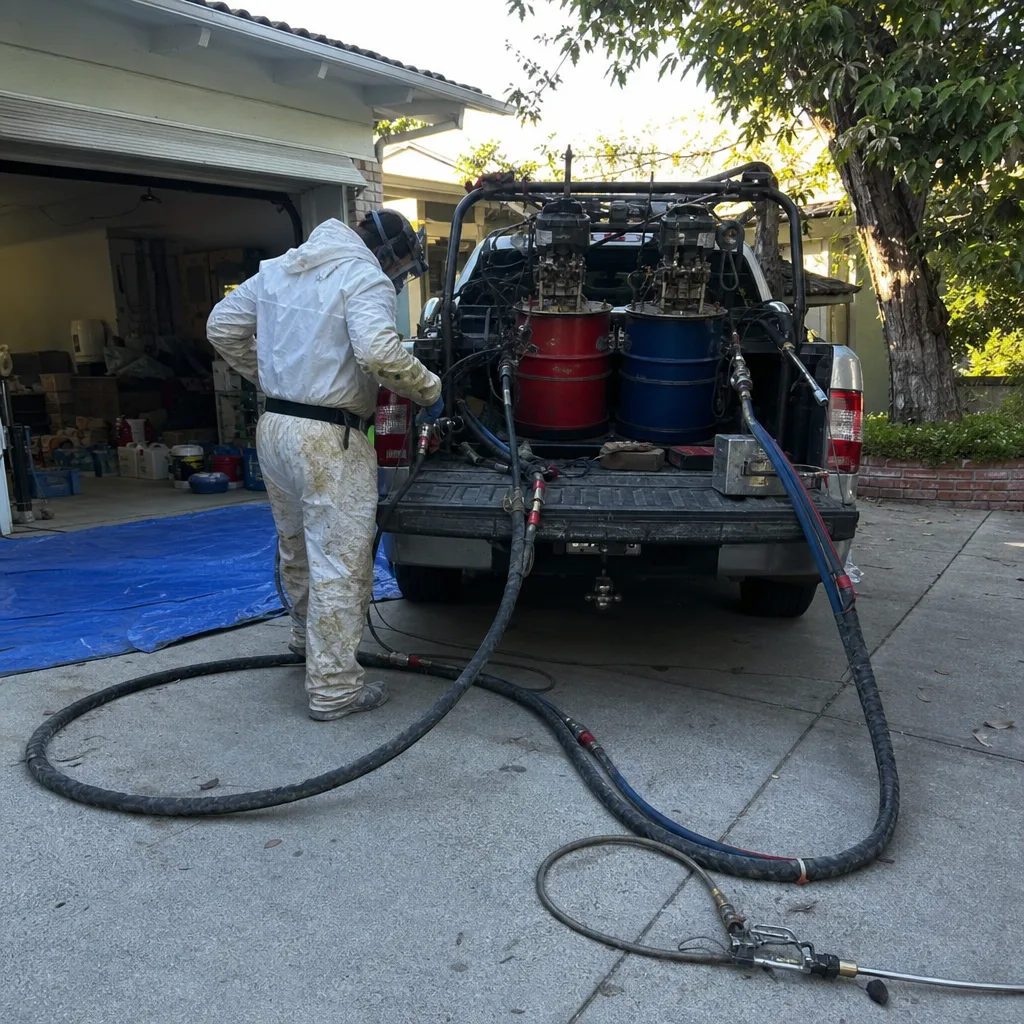
Blown-In Top-Up
The most common call we get in intact Altadena neighborhoods is the top-up. Original rock wool or 1970s cellulose has settled, compacted, or been disturbed by rodent activity, leaving R-values at a fraction of what’s on the label. A blown-in top-up adds new material over the existing layer, but only after we assess what’s there. Compacted rock wool gets removed if it’s below 2 inches and degraded. Clean, level existing fill gets marked, air sealing happens, then we blow to the target depth. For Altadena’s elevation and heating-degree days, we typically specify R-49 in attics, which at cellulose density means about 14 inches of settled depth.
What happens when you call
- 1
A real person answersNo phone trees - you reach a local pro.
- 2
You get an upfront price rangeHonest numbers before anyone is dispatched.
- 3
A background-checked tech heads outLicensed & insured, dispatched right away.
- 4
You approve before work beginsNothing starts until you say go.
Trusted Brands We Service in Altadena
We stock and install materials from Owens Corning, Johns Manville, Knauf, and GreenFiber, with mineral wool from Rockwool available for Chapter 7A rebuilds. No proprietary lock-in means we spec what the job actually needs. For Altadena crews, that increasingly means mineral wool batts or blown product on Eaton Fire rebuilds where ember resistance and zero flame spread are written into the permit. We carry enough inventory locally that most Altadena jobs don’t wait on material delivery. If your architect or LA County plan checker specifies a brand we don’t stock, we’ll source it and still deliver a written price before work starts.
Common Blown-In Insulation Problems We See in Altadena Homes
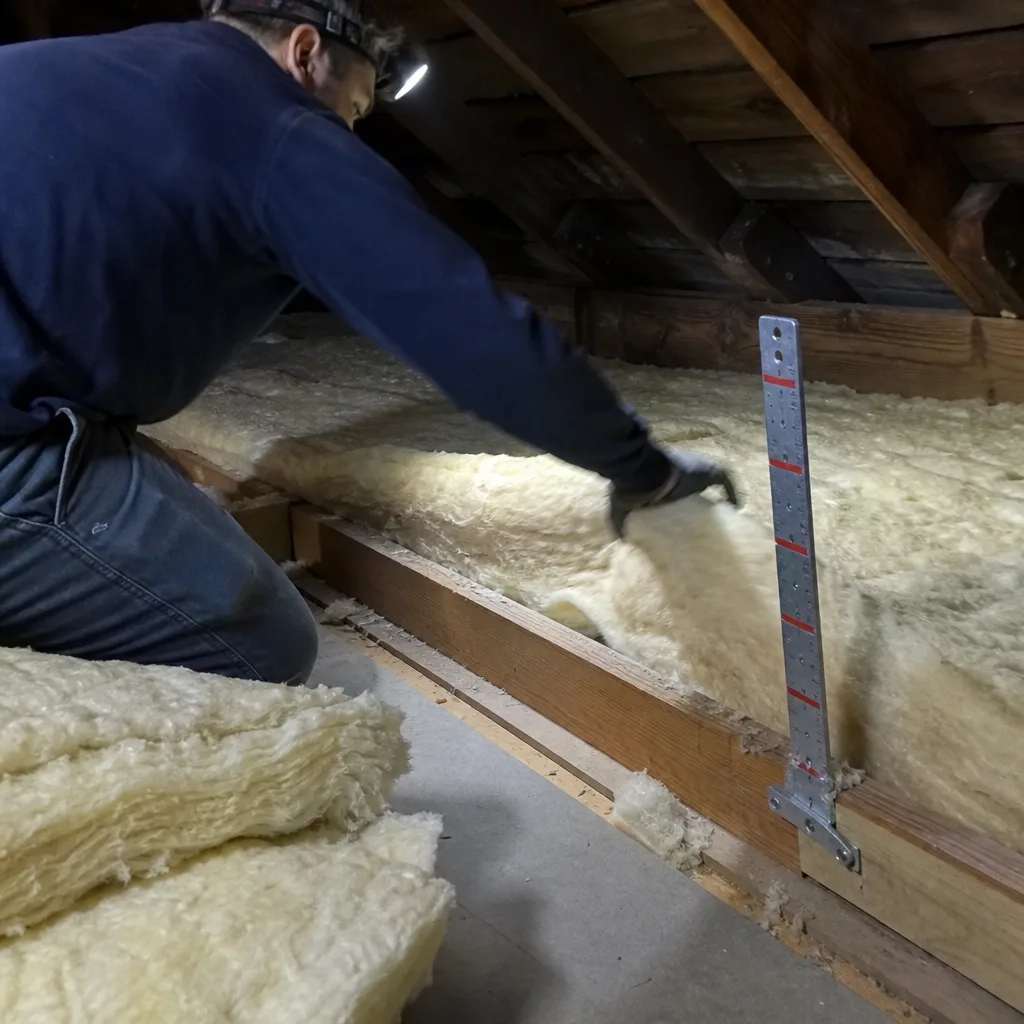
- Settled legacy rock wool in pre-1960 attics. We regularly find original rock wool near Altadena’s historic districts compacted to less than 2 inches, sometimes contaminated with rodent debris. The top plates sit nearly bare. Cold air from the San Gabriel foothills drops straight through.
- Blown-in installed without air sealing on balloon-frame homes. Convection loops inside wall cavities rob insulation of its rated performance. In Altadena’s older stock, this isn’t a minor efficiency loss. It’s a pathway for Santa Ana wind drafts and, in wildfire conditions, ember intrusion.
- Chapter 7A plan-check failures on rebuilds. Contractors unfamiliar with post-Eaton Fire requirements sometimes spec standard fiberglass blown-in for WUI-zone rebuilds. LA County rejects it. The re-spec to mineral wool or closed-cell foam costs time and money.
- Soffit bypasses left open during top-ups. Even experienced crews miss the connection between attic and soffit in Altadena’s older homes with continuous eaves. Unsealed, these bypasses act as intake vents for wind-driven air, undermining whatever insulation gets blown overhead.
Pricing for Blown-In Insulation in Altadena, CA
Here’s what blown-in insulation costs in Altadena’s current market:
| Service | Typical Range |
|---|---|
| Blown-in cellulose attic top-up (air seal + blow to R-38) | $2,400 - $4,200 |
| Blown-in cellulose attic fill to R-49 with full air sealing | $3,800 - $5,800 |
| Dense-pack wall insulation (per square foot of wall) | $2.20 - $3.80 |
| Existing insulation removal + disposal | $1.40 - $2.60 per sq ft |
| Mineral wool blown-in or batts (Chapter 7A rebuilds) | $3.50 - $5.20 per sq ft |
What moves the number: attic square footage, whether we’re removing degraded material first, the extent of air sealing required, and whether the job is in the WUI zone with mineral wool or closed-cell foam spec’d by LA County. Every quote is flat, written, and delivered before anyone starts. Bring us a competing written estimate and we’ll review it with you, free. Call (213) 816-5351 for your written price.
We Also Serve Cities Near Altadena
Our crews work throughout the San Gabriel Valley, including Pasadena, South Pasadena, San Gabriel, and Alhambra. Each city has its own permitting authority, housing stock, and climate considerations. Altadena’s LA County permitting and foothill elevation create specific requirements you won’t find in Pasadena’s city-permitted jobs or Alhambra’s flatland conditions. We know the difference because we’ve worked in all of them.
Serving Altadena, CA - Our Local Coverage Area
We’re based in the Altadena area and know this community well. Use the map below to see our service coverage - if you’re nearby, we can almost certainly help.
FAQs - Blown-In Insulation in Altadena
Yes, in existing homes outside active rebuild permits, but Chapter 7A compliance on new construction and major remodels increasingly requires non-combustible or ignition-resistant assemblies. For intact homes, borate-treated cellulose meets smolder-resistance standards. On Eaton Fire rebuilds, LA County plan checkers and insurance carriers often push for mineral wool or closed-cell foam at the roof deck. We read your permit conditions and spec accordingly. Call (213) 816-5351 and we’ll walk through what your specific project requires.
Sometimes, but usually not without prep first. Compacted rock wool below 2 inches has lost its R-value and often harbors rodent debris or moisture staining. We remove degraded material, air seal the attic floor, then blow new cellulose or fiberglass to target depth. In a 1930s Spanish Colonial revival near Lincoln Avenue, we found exactly this scenario. After removing the compacted fill and sealing balloon-frame wall tops, we blew GreenFiber cellulose to R-49 while the owner planned the Chapter 7A-compliant rebuild of the adjacent burned wing. Call for a free assessment of what’s actually in your attic.
Yes. Altadena’s 800-1,400 foot elevation produces colder winter nights and sharper temperature swings than Pasadena or Alhambra. We typically specify R-49 in Altadena attics versus R-38 for coastal-adjacent communities. The heating load difference is real. Our blower-door tests on Altadena homes consistently show higher air leakage rates during Santa Ana events, which makes the insulation depth and the air sealing quality equally important. The written scope we deliver specifies both numbers: target R-value and target air leakage reduction.
Significantly. Eaton Fire rebuilds in Altadena’s WUI zone face Chapter 7A requirements that don’t apply to standard remodels in Pasadena or San Gabriel. We’re seeing mineral wool batts or blown product in walls and closed-cell spray foam at roof decks instead of the fiberglass or cellulose common elsewhere. Material costs run higher, crew training requirements differ, and LA County inspection schedules are stricter. We’ve adapted our spec sheets and inventory to match. If you’re rebuilding, bring us your approved plans and we’ll align our scope with what passed plan check.
Blowing insulation without first air sealing the top plate and any attic bypasses. Balloon-frame walls are open chases from basement to attic. Fill them with dense-pack and leave the top unsealed, and you’ve created a chimney that moves air year-round. In Altadena, that means winter heat loss and, during Santa Ana wind events, potential ember drafting. We seal first, then dense-pack, then verify with blower-door testing. The before-and-after numbers go in your documented record. Call (213) 816-5351 for a free second opinion if another contractor’s scope skips the air sealing step.
Written by Wes Okafor, Owner at Envelope Insulation Co., operating under The Haven Standard since 2016.