
Demilec Crawl Space Encapsulation: The Pasadena Owner’s Guide
We stock and install Demilec-compatible crawl space encapsulation systems in Pasadena, with most full encapsulations running between $4,200 and $8,500 installed depending on crawl footprint and whether the foundation needs active dehumidification tied in. Same-day assessments are available, and we carry Demilec vapor barrier materials and seam tapes on our trucks for jobs up to 2,000 square feet of crawl footprint. Most homeowners discover a failure when they notice a sharp musty smell returning after months of absence, or when their dehumidifier runs continuously without pulling the relative humidity below 65 percent - both signs that the vapor barrier has torn at seams, the tape has delaminated, or the Demilec closed-cell spray foam band at the sill plate has pulled away from masonry.
Which Demilec Models This Applies To
Demilec’s crawl space product line centers on Heatlok HFO Pro and Heatlok XT for the spray foam sill seal, paired with their 10-mil and 16-mil reinforced polyethylene vapor barriers. The critical compatibility gotcha in Pasadena’s older housing stock: pre-1940s foundation piers with irregular concrete surfaces will not hold a standard adhesive-backed tape bond, and Demilec’s seam tape requires a mechanically fastened termination bar at pier bases or it will release within 18 months. We see this constantly in the Bungalow Heaven district and along the Orange Grove corridor, where 1920s Craftsman piers have that characteristic rough aggregate finish.
To identify your specific Demilec system, check the spray foam band at the sill plate for a stamped date code and R-value marking - Heatlok HFO Pro will read “HFO” and carry a 6.9 per inch R-value; Heatlok XT reads “XT” with 6.5 per inch. The vapor barrier should have “Demilec” embossed in the seam overlap every 24 inches. If your installer used a generic barrier, the Demilec tape will still bond to any clean polyethylene surface, but the warranty chain breaks if the original installer specified an integrated system.
OEM Demilec vapor barrier runs roughly 35 percent higher material cost than equivalent 16-mil reinforced polyethylene from Johns Manville or CertainTeed, but the seam tape chemistry is proprietary and performs better in Pasadena’s summer crawl space conditions, where slab-adjacent temperatures hit 95°F and standard acrylic tapes soften. We stock both OEM Demilec tape and a compatible butyl-based aftermarket equivalent rated to 180°F; we specify which we’re using in the written scope, and both carry the same 365-Day Done Right Promise.
Signs Your Demilec Crawl Space Encapsulation Is Failing
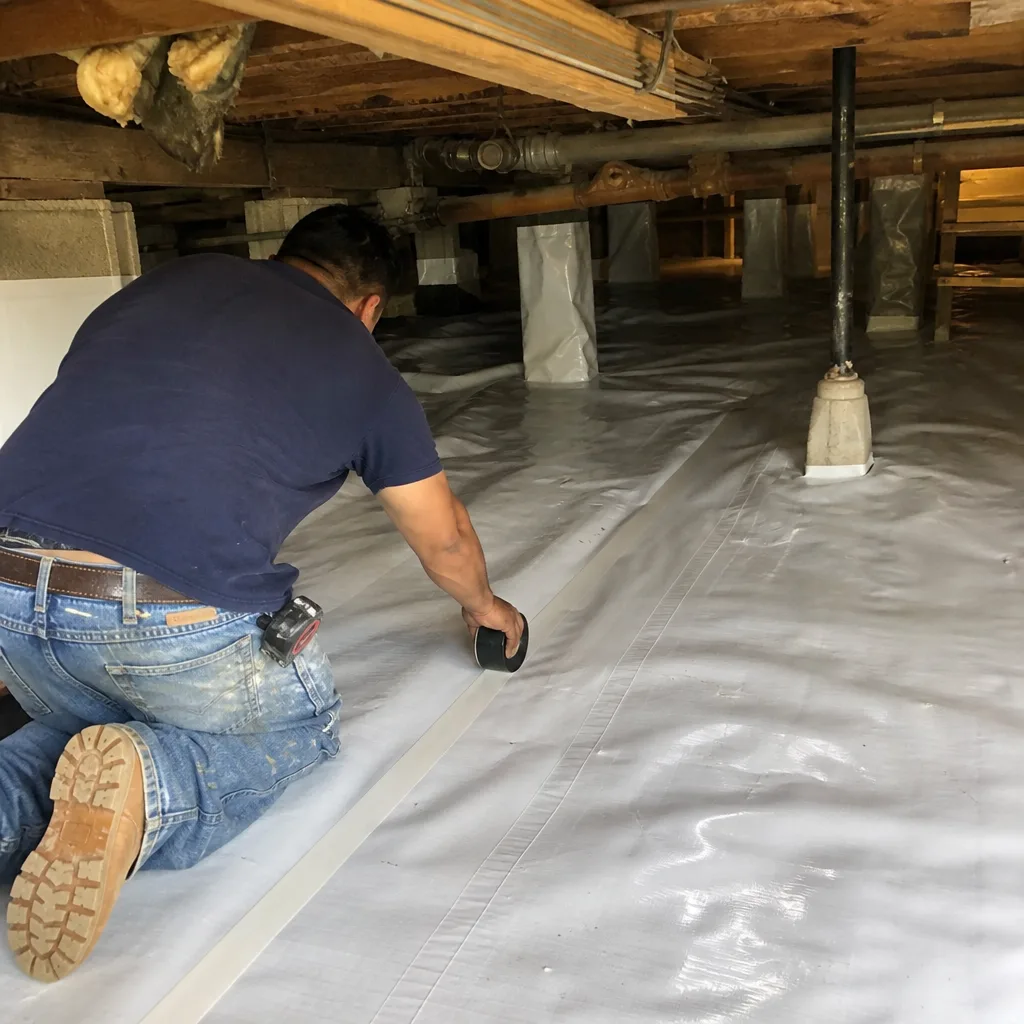
- Musty odor returning in conditioned space. This means the vapor barrier’s effective seal is compromised, allowing soil gas and moisture to bypass the encapsulation. In Pasadena’s clay-heavy soils, especially in the lower-lying neighborhoods near the Arroyo Seco, ground moisture drives vapor upward at higher rates than the dehumidifier can extract if the barrier has even a 6-inch gap at a seam.
- Dehumidifier running continuously without reaching set point. The encapsulation is supposed to shrink the dehumidifier’s load to maintenance-only; if the unit cannot pull below 65 percent relative humidity, the treated air volume is leaking out and untreated air is entering, usually at a failed tape seam or a pulled sill seal.
- Visible droplets or sheen on the vapor barrier underside. Condensation forming between the barrier and the soil indicates the barrier is no longer in continuous contact with the substrate, creating a micro-climate where warm moist air hits the cooler poly surface. This accelerates tape delamination and can breed mold on the barrier itself.
- Spray foam band detaching from sill plate or rim joist. Demilec’s closed-cell foam should form a permanent bond to clean, dry wood; detachment means either the substrate was damp at installation, the foam was applied below manufacturer-specified temperatures, or rodent activity has compromised the edge. In Pasadena, roof rat pressure is significant, and they will tunnel at foam edges if the crawl access is not rodent-proofed.
- Utility bill climbing without HVAC equipment change. A failed encapsulation allows unconditioned air to infiltrate through the floor system, increasing heating and cooling load. We verify this with a blower-door test - a pressurization reading that shows, in one number, how much air the building envelope is losing - before and after any remediation; in encapsulation failures, the floor leakage component typically doubles from the post-installation baseline.
Replacement Cost & What’s Included
Most full Demilec crawl space encapsulation replacements in Pasadena run $4,200 to $8,500, with partial repairs - single seam zones or sill band re-foam - starting at $1,800. The driver is crawl footprint and access: a 1,200-square-foot crawl with a standard 24-by-30-inch access hatch runs at the lower end; the same footprint with a 16-inch foundation vent as the only entry point, requiring temporary enlargement, adds $600 to $900 for access labor and re-sealing.
Our price includes removal of failed barrier and tape, surface prep with mechanical abrasion at pier bases, new Demilec or equivalent vapor barrier with factory-taped seams and termination bar fastening at all vertical penetrations, re-application of closed-cell sill seal where needed, and a post-job blower-door reading if the encapsulation ties into whole-house air sealing. We deliver a written scope before anyone lifts a tool, a Documented Photo Record of the completed work, and the 365-Day Done Right Promise in writing. No work starts without a written price - that’s Haven Standard Clause 1.
DIY or Call Us?
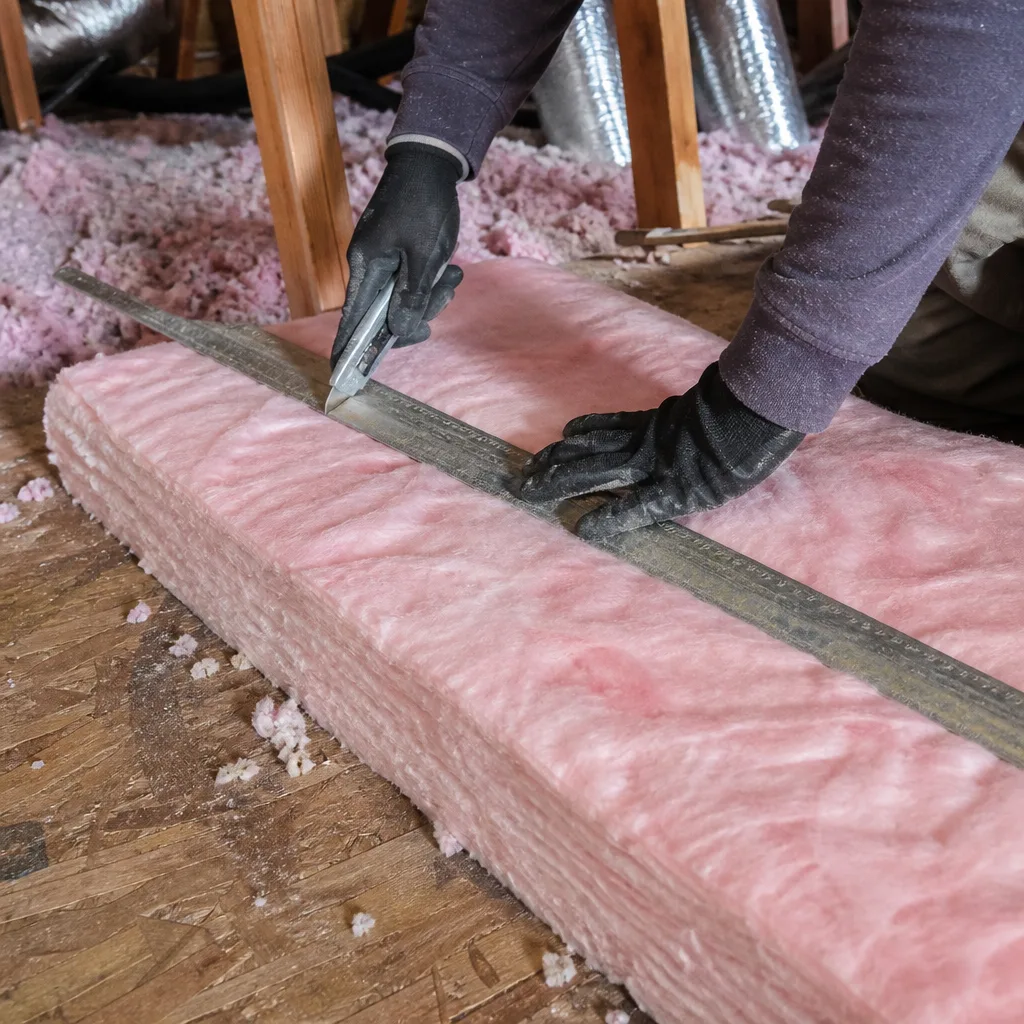
An owner can safely inspect their own crawl space for the symptoms above - bring a bright light, check for tape gaps at seams, and photograph any foam detachment for documentation. What goes wrong fast: working in a confined space with extension cords and moisture creates a legitimate electrocution hazard, and the butyl seam tape application requires a roller pressure most homeowners don’t own to achieve the 15 PSI bond pressure Demilec specifies. Worse, re-foaming a sill band means handling two-component closed-cell foam with isocyanate exposure risk; without a supplied-air respirator and proper ventilation, this is not a weekend project.
We carry Demilec-compatible materials on our trucks, and most encapsulation repairs in Pasadena complete in one working day. Call (213) 816-5351 for a free assessment - we’ll read the existing system with you, specify exactly what failed and why, and deliver a written price before any work starts.
FAQs
A properly installed Demilec encapsulation should perform for 15 to 20 years in Pasadena’s climate, though the intense summer heat in unvented crawl spaces - we regularly measure 95°F at the slab edge in August - can accelerate tape aging at termination points. Annual visual inspection of seam zones, which we include as a no-charge add-on for any prior customer, catches early delamination before it propagates. Call (213) 816-5351 to schedule - estimates are free.
Partial repair is viable when the failure is isolated: a single torn seam zone, localized tape delamination, or a detached sill band under one room. We do not patch over widespread tape failure or barrier embrittlement, because new tape will not bond reliably to oxidized polyethylene, and the labor to prep old barrier exceeds replacement cost. Our written scope specifies repair versus replace with a clear boundary; no guesswork. Call (213) 816-5351 for an exact quote - estimates are free.
Most full replacements in a standard Pasadena crawl space - 1,000 to 1,500 square feet - complete in one eight-hour day, with the home’s HVAC off for four to six hours during the spray foam curing window. Larger footprints or restricted access may extend to a second day; we specify the schedule in the written scope before work starts, and we do not charge hourly overruns. Call (213) 816-5351 to confirm availability for your crawl footprint.
We carry Demilec-compatible 10-mil and 16-mil vapor barrier, proprietary seam tape, and Heatlok HFO Pro closed-cell foam on our trucks for jobs up to 2,000 square feet of crawl footprint; larger jobs or specific OEM color-matching may require a 48-hour material pull from the regional distributor in City of Industry. We confirm material status when we deliver the written scope, never after arrival. Call (213) 816-5351 to check current truck stock for your job size.
Topside Attic Insulation Pasadena is an independent service provider, not affiliated with Demilec. We also stock parts for Reflectix radiant barrier systems.
Seal the leaks first. Then insulate. The numbers will tell you why.
Written by Wes Okafor, Owner, Topside Attic Insulation Pasadena at Topside Attic Insulation Pasadena, serving Pasadena and nearby areas.