
Icynene Crawl Space Encapsulation: The Pasadena Owner’s Guide
We stock and install Icynene-compatible crawl space encapsulation systems in Pasadena, with most full encapsulations running between $3,800 and $7,200 depending on crawl footprint and existing moisture damage. Same-day service is available when we have your liner spec on the truck, which we do for the common Icynene LD-C-50 and MD-R-200 series vapor barrier formulations. Most Pasadena homeowners figure out something’s wrong when the musty smell returns after a winter rain, or when they notice the fiberglass insulation above the crawl space sagging and turning black at the tips.
Which Icynene Models This Applies To
Icynene’s crawl space line breaks into two vapor barrier families: the LD series (light-duty, 6-mil to 10-mil polyethylene) and the MD series (medium-duty, 12-mil to 20-mil reinforced). The LD-C-50 is the white vapor barrier you’ll see in Pasadena ranch homes built between 1945 and 1975, typically covering 800 to 1,400 square feet of dirt crawl. The MD-R-200 adds a woven polyethylene reinforcement layer, spec’d for heavier foot traffic if your crawl stores HVAC equipment or if a plumber needs regular access.
To identify what you have, look for the stamped code along the seam overlap, usually every 36 inches. LD-C-50 carries a “C50” stamp and feels like thick painter’s plastic; MD-R-200 has “R200” and a crosshatch texture you can see when you angle a flashlight across it. We also see the occasional MD-R-300 in newer Pasadena builds near the Arroyo Seco, where builders spec’d heavier mil ratings for the seasonal moisture swing.
OEM Icynene liner runs about 15% to 20% above quality aftermarket equivalents from brands like Stego or Crawlspace Depot. The aftermarket 12-mil woven products match MD-R-200 permeance specs (0.03 perms or lower) and carry the same 25-year rated lifespan in dry-stack applications. Where we default to OEM is when the original installation used Icynene’s proprietary seam tape, which has a different adhesive chemistry than standard butyl tape and can delaminate if you pair it with a non-matching liner.
Signs Your Icynene Crawl Space Encapsulation Is Failing
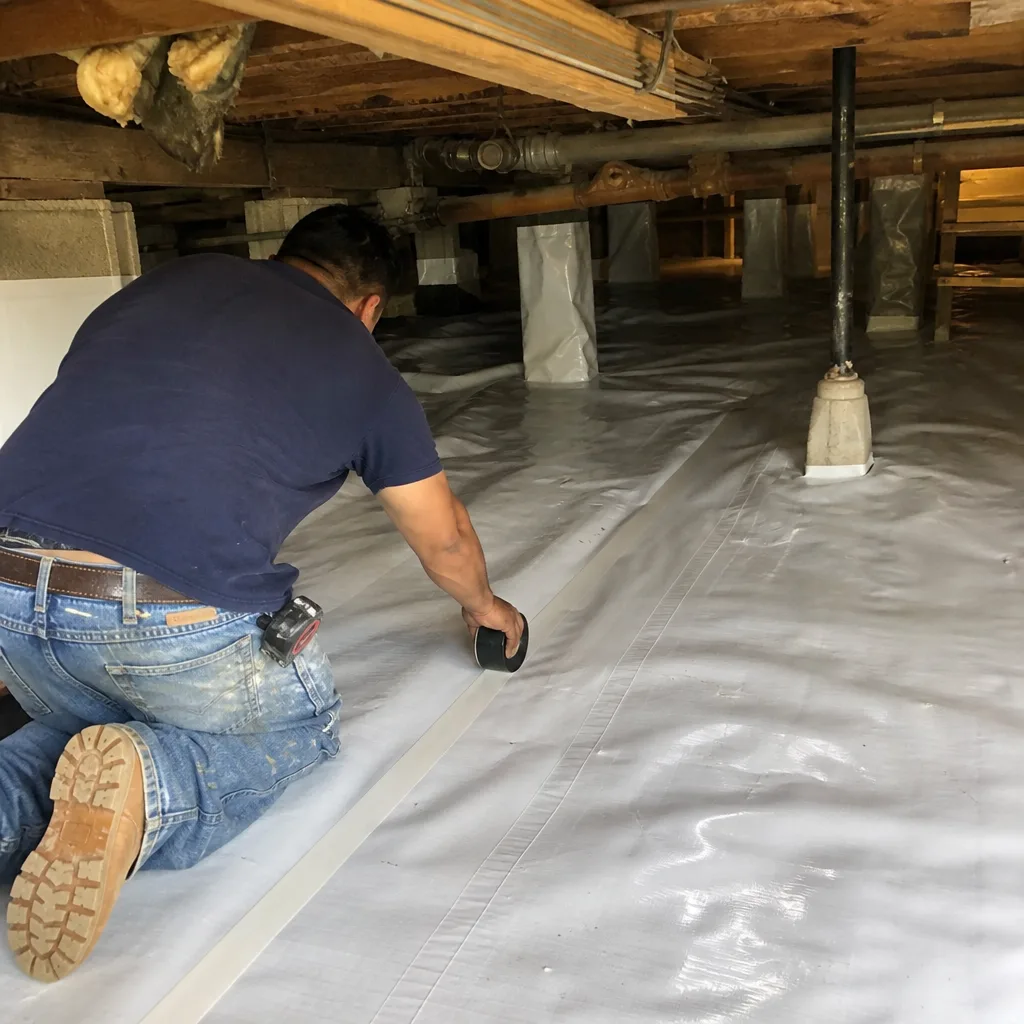
- White vapor barrier has turned cloudy or brown in patches. This is UV degradation hitting polyethylene that wasn’t rated for the light exposure it got, or more commonly in Pasadena, oxidation from the clay-heavy soil off the San Gabriel Valley. Once the plasticizers break down, the liner becomes brittle and tears under its own weight when disturbed.
- Seams have separated at the overlap, or tape is hanging in strips. Icynene’s pressure-sensitive seam tape loses adhesion when installed over damp substrate, which happens in older Pasadena crawl spaces where the dirt grade holds winter moisture into April. The tape looks fine from above until you brush it with a glove and it falls away.
- Condensation beads on the “dry” side of the liner after a hot day. This means the vapor barrier is no longer blocking soil moisture diffusion. In Pasadena’s summer, ground temperatures stay in the low 60s while crawl space air hits 80-plus; that temperature differential drives vapor straight through a compromised liner.
- Fiberglass insulation above the crawl is sagging, black at the ends, or falling. Failed encapsulation lets relative humidity climb above 70% consistently, which is the threshold for mold colonization on organic material. We’ve pulled saturated batts from between floor joists in Bungalow Heaven homes where the liner failed two years prior and nobody went down to check.
- Musty odor returns within 48 hours of ventilation. A working encapsulation holds odor down by blocking the source. If airing out the house helps briefly and the smell comes back fast, your vapor barrier has likely torn at a penetration point, usually where a pier block or plumbing stack breaks the plane.
Replacement Cost & What’s Included
In Pasadena, a full Icynene-compatible crawl space encapsulation replacement runs $3,800 to $7,200 installed. The low end covers a clean, rectangular crawl under 1,000 square feet with good access and intact piers. The high end includes larger footprints, debris removal from previous rodent activity (common in the older neighborhoods between Colorado Boulevard and the 210), and replacing degraded foundation vents with sealed, insulated plugs.
That price includes liner material, seam tape, mechanical fasteners at the foundation wall terminations, and a new vapor-rated access door if yours is rotted. We break out parts and labor on the written scope, and we flag any surprises before we start. Every encapsulation job carries our 365-Day Done Right Promise, documented in writing before the crew arrives.
We don’t upsell dehumidifiers unless your crawl space has active bulk water issues or your HVAC ducts run below the floor line and sweat. In those cases, we’ll show you the thermal image and explain why.
DIY or Call Us?
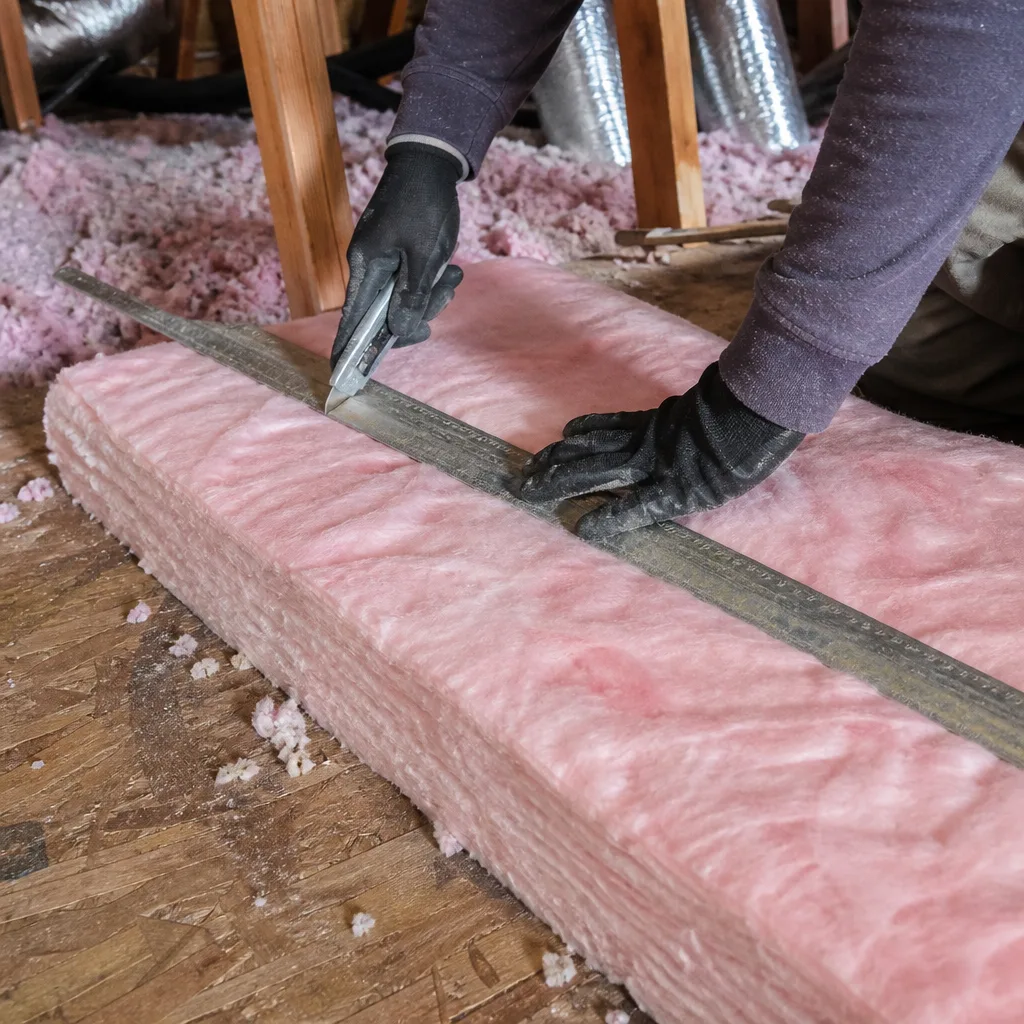
There’s nothing inherently dangerous about laying polyethylene in a crawl space, but there are ways DIY goes wrong that cost more to fix than the original job. Homeowners can safely check: access door condition, visible tears or seam separation, and whether the liner is still fastened at the perimeter walls. Use a headlamp, not a phone flashlight, and watch for low-clearance ductwork in pre-1950 Pasadena homes.
Where DIY fails is in surface prep and seam work. You can’t tape to damp concrete or dirty polyethylene and expect adhesion. The Icynene spec calls for a 6-inch minimum overlap with roller pressure, not hand pressure, and most homeowners don’t own a J-roller. Worse, if you trap moisture behind a new liner by sealing over wet soil, you accelerate mold growth in the joist bays above.
We’re not affiliated with Icynene, but we match their material specs and we’ve handled warranty-adjacent jobs where the original installer is no longer in business. Call (213) 816-5351 and we’ll read your situation with you, no charge.
FAQs
A properly installed Icynene-spec vapor barrier lasts 20 to 25 years in Pasadena’s climate, though the clay soils in the San Rafael Hills area can shorten that to 15 years if the ground stays damp. The key failure point is usually the seam tape, not the liner itself. Call (213) 816-5351 for an exact condition check, estimates are free.
Small punctures under 4 inches can be patched with compatible tape if the surrounding material is still flexible, but seam separation or multiple tears mean replacement. Patched liners carry no warranty and often fail again within 18 months. Call (213) 816-5351 for an exact quote, estimates are free.
Most residential crawl spaces in Pasadena take one to two days: half a day for prep and surface drying, a full day for liner layout and sealing. Larger homes in the Linda Vista area or those requiring debris removal may run into a third day. Call (213) 816-5351 to schedule, estimates are free.
We carry 10-mil and 12-mil reinforced polyethylene in standard widths on every crawl space crew truck, and we can source OEM Icynene liner within 48 hours for jobs requiring exact material matching. Same-day installation is available for most LD-C-50 and MD-R-200 replacements. Call (213) 816-5351 to confirm your spec.
Seal the leaks first. Then insulate. The numbers will tell you why.
Written by Wes Okafor, Owner, Topside Attic Insulation Pasadena at Topside Attic Insulation Pasadena, serving Pasadena and nearby areas.