
Knauf Attic Air Sealing: The Pasadena Owner’s Guide
Knauf attic air sealing components installed in Pasadena homes typically run $340-$780 for a complete top-plate and penetration seal, depending on attic square footage and accessibility. Most jobs we book are completed same-day, with Knauf Ecoseal or comparable acrylic latex sealant systems matched to your existing assembly. If you’re noticing dust streaks around ceiling fixtures, rooms that won’t hold temperature, or a blower-door reading that’s climbed since your original insulation was installed, the air barrier your Knauf system was meant to maintain has likely failed.
We stock Knauf-compatible sealants, backer rod, and fire-rated caulk on every truck serving Pasadena, from the 1940s bungalows near Caltech to the newer builds up toward Hastings Ranch where top-plate gaps were never sealed at all during original construction.
Which Knauf Models This Applies To
Knauf’s attic air sealing line in Southern California has primarily been the Ecoseal System, an acrylic latex sealant applied over backer rod to top plates, electrical penetrations, and chase openings. You’ll find the original application date and product batch on any remaining tube labels, or more commonly, on your home’s insulation paperwork from the original install. The Ecoseal line is compatible with Knauf’s Jet Stream blown-in fiberglass and EcoFill cellulose systems, but the critical match point is the backer rod diameter - 3/8-inch, 1/2-inch, or 5/8-inch - which must fit the gap width without compression.
We’ve also encountered Knauf Insulation Seal, a water-based caulk used primarily around recessed can lights and duct boots in Pasadena homes built between 2012 and 2019. The OEM part is Knauf’s branded tube, but we carry Tremco Acoustical Sealant and OSI SC-175 as quality aftermarket equivalents that meet the same ASTM C834 flexibility standard and bond to the Knauf substrate without delamination. One compatibility gotcha: Ecoseal applied over dusty OSB or old cellulose residue won’t adhere properly, which is why we vacuum the seam path before any new sealant goes down. If your original Knauf seal was installed directly over loose fill without surface prep, that’s usually why it’s cracking now.
Signs Your Knauf Attic Air Sealing Is Failing
- Dust streaks or dirt patterns around ceiling edges and fixtures. These are thermal tracking marks - conditioned air leaking out carries dust particles that deposit on the ceiling surface. In Pasadena’s dry climate, these streaks show up within 18-24 months of seal failure, faster if you run forced-air heating in winter.
- Rooms that stay 5-10 degrees off from the thermostat setting. When top-plate seals fail, the conditioned air you’re paying for escapes into the attic before it reaches the register. We see this most in second-story bedrooms over unsealed garages in the Chapman Woods area, where the thermal bypass is dramatic once the Knauf barrier breaks down.
- Ice damming or moisture staining on the roof deck underside. Warm, moist air leaking through failed seals condenses on cold sheathing. Even in Pasadena’s mild winters, December and January nights drop into the 30s, enough to create condensation cycles that rot OSB edges.
- Blower-door reading 15% or higher than your original post-work number. If your home was originally tested at 2,800 CFM50 and now reads 3,400 or above, the air barrier has degraded. We keep a database of Pasadena blower-door histories and can compare your current leak rate to your baseline if you have the documentation.
- Insulation that appears settled or disturbed along attic floor edges. Air moving through a failed seal carries fiberglass particles with it, creating visible depressions or “bald spots” where the Knauf blown-in has migrated. This isn’t normal settling - it’s evidence of sustained airflow.
Replacement Cost & What’s Included
In the Pasadena market, most Knauf attic air sealing replacements fall between $340 and $780 installed. The lower end covers a focused repair - resealing top plates in a 1,200-square-foot attic with good access and minimal existing insulation disturbance. The upper end applies to full perimeter sealing with insulation removal, surface prep, and reinstallation, common in older homes near Orange Grove Boulevard where multiple penetrations and irregular framing complicate the work.
Every price we write includes: sealant and backer rod, labor, surface vacuuming, and a post-job blower-door test to verify the result. Under Haven Standard Clause 1, you get that price in writing before anyone enters the attic. The 365-Day Done Right Promise covers material and workmanship; if the seal fails or the blower-door number doesn’t hold, we return and fix it. We also stock Reflectix radiant barrier tape and compatible sealants for hybrid systems where Knauf insulation meets reflective assemblies.
DIY or Call Us?
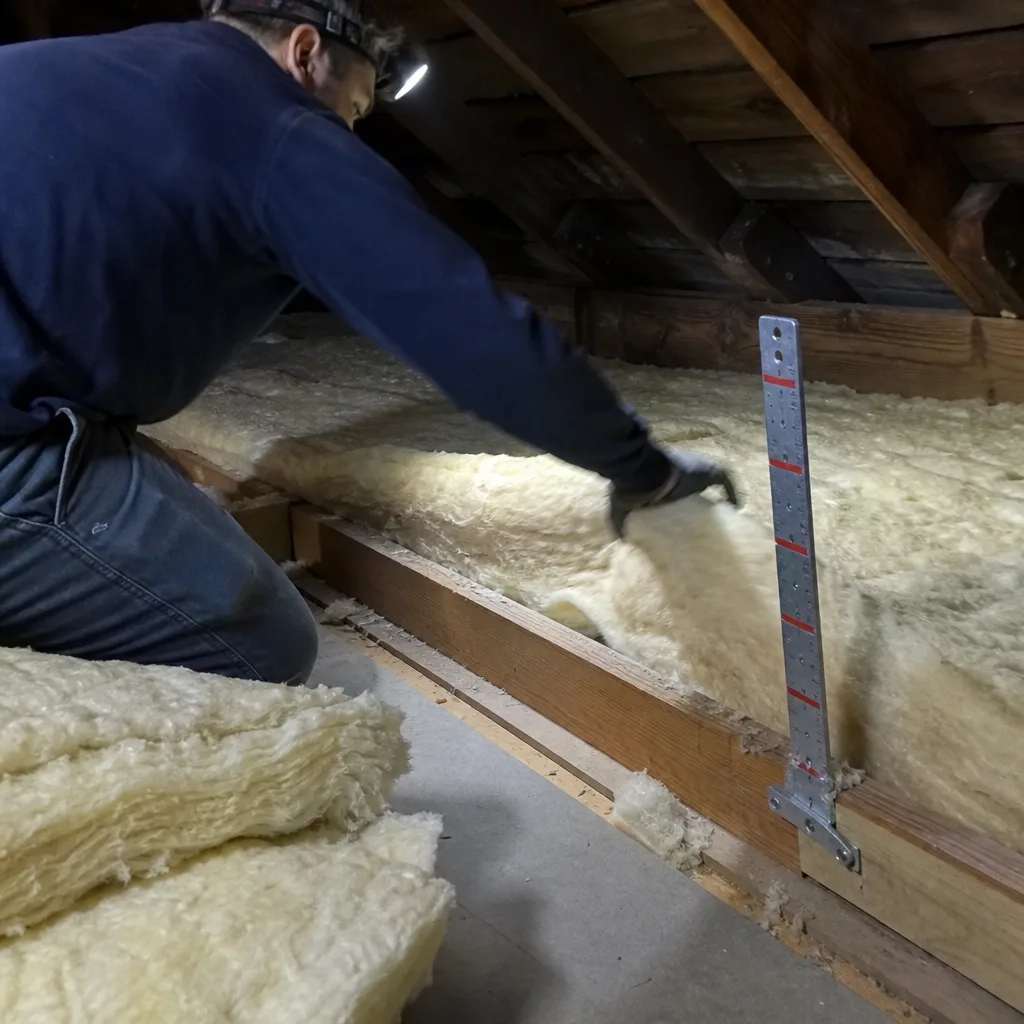
There’s a short, honest list of what a Pasadena homeowner can safely check: look for visible gaps at the attic hatch, around vent stacks, and where wiring drops through top plates. A flashlight and a steady ladder are enough for that inspection. Mark what you find with tape, and you’ve done the reconnaissance we’d do first anyway.
Where DIY goes wrong is in the execution. Attic air sealing requires working in 130-150°F summer temperatures, on joists spaced 24 inches apart, over ceilings you’re trying not to step through. More critically, fire-rated sealants are required around chimney chases, recessed lights, and any penetration through a rated assembly - standard hardware-store caulk doesn’t meet California’s Title 24 requirements and can create a legitimate liability issue. We carry CA-approved fire caulk on every truck, and our technicians are trained to read the original permit drawings to identify which penetrations need rated material. For the actual sealant work, especially on Knauf systems where substrate compatibility determines whether the repair lasts two years or fifteen, we’d rather you call (213) 816-5351 and let us write you a price you can compare.
FAQs
Properly applied Knauf Ecoseal lasts 15-20 years in Pasadena’s dry, hot-summer climate, though UV exposure through attic vents can degrade exposed beads in as little as 8-10 years. The bigger variable is whether the original application included proper surface prep - sealant over dust or loose fill fails in 3-5 years regardless of product quality. Call (213) 816-5351 for a free inspection and we’ll tell you what condition yours is in.
Spot repair is viable if the failure is isolated - a single cracked bead around a new fixture, for instance. If the original sealant is brittle throughout the attic or was applied without backer rod (common in pre-2015 Pasadena work), partial repair creates hard seams between old and new material that crack within two years. We recommend full replacement in those cases, and we’ll show you why with photos before we write the price.
Most residential jobs in Pasadena take 4-6 hours for a crew of two, including setup, surface prep, application, and blower-door verification. Homes with vaulted ceilings or attics under 3 feet at the ridge line take longer due to access constraints. Same-day completion is standard for jobs booked before noon.
We stock Knauf Ecoseal-compatible acrylic latex sealant, backer rod in all standard diameters, and fire-rated caulk on every truck serving Pasadena. We’re an independent service provider - not affiliated with Knauf - and we source from multiple distributors to avoid supply delays. If your system requires a specific Knauf OEM color match for visible areas, we can typically source it within 48 hours.
Seal the leaks first. Then insulate. The numbers will tell you why.
Ready to see what your blower-door reading looks like now? Call (213) 816-5351 for a free estimate. We’ll write you a flat price before any work starts, and you’ll get the before-and-after numbers in writing when we finish.
Written by Wes Okafor, Owner, Topside Attic Insulation Pasadena at Topside Attic Insulation Pasadena, serving Pasadena and nearby areas.