
Johns Manville Radiant Barrier Installation: The Pasadena Owner’s Guide
We stock and install Johns Manville-compatible radiant barrier systems in Pasadena homes, with most attic installations running between $1,800 and $3,400 depending on roof complexity and square footage. Same-day service is available when you call before 10 a.m. Most Pasadena homeowners discover their radiant barrier is failing when attic temperatures spike above 140°F in July, the upstairs AC runs nonstop, or they notice the original foil has torn away from rafters after a Santa Ana wind season. If your Johns Manville barrier was installed before 2018, the adhesive-backed staples or tape may have degraded in our dry heat, which is the most common failure we see in older Pasadena homes.
Which Johns Manville Models This Applies To
Johns Manville produces radiant barrier products under the Attic Protector and ComfortTherm lines, plus the JM Formaldehyde-free kraft-faced batts that are often paired with reflective foil in hybrid attic systems. The critical identifier is the JM lot code printed on the kraft paper backing or foil edge, a 10-digit string starting with the plant code and manufacture date. For radiant barrier specifically, look for AP-2X (double-sided reinforced) or AP-1X (single-sided) markings on the foil scrim.
We do not use Johns Manville OEM tape or fasteners exclusively. The JM-specified acrylic adhesive tape performs well in Pasadena’s dry climate but fails faster than 3M 468MP or Nashua 324A in homes near the Arroyo Seco where humidity spikes in winter. Our crews carry both JM-original and aftermarket equivalents rated for 180°F continuous exposure, and we match based on your existing substrate - OSB rafters take a different fastener pattern than dimensional lumber. If your original installation used JM’s staple-on system with plastic washers, we stock those washers; they’re a known compatibility gotcha because the JM part number changed in 2019 and the older #8-15 x 7/8″ staple with 1″ washer is no longer manufactured. We source compatible substitutes from Midwest Fastener that seat flush without tearing the scrim.
Topside Attic Insulation Pasadena is an independent service provider, not affiliated with Johns Manville.
Signs Your Johns Manville Radiant Barrier Installation Is Failing
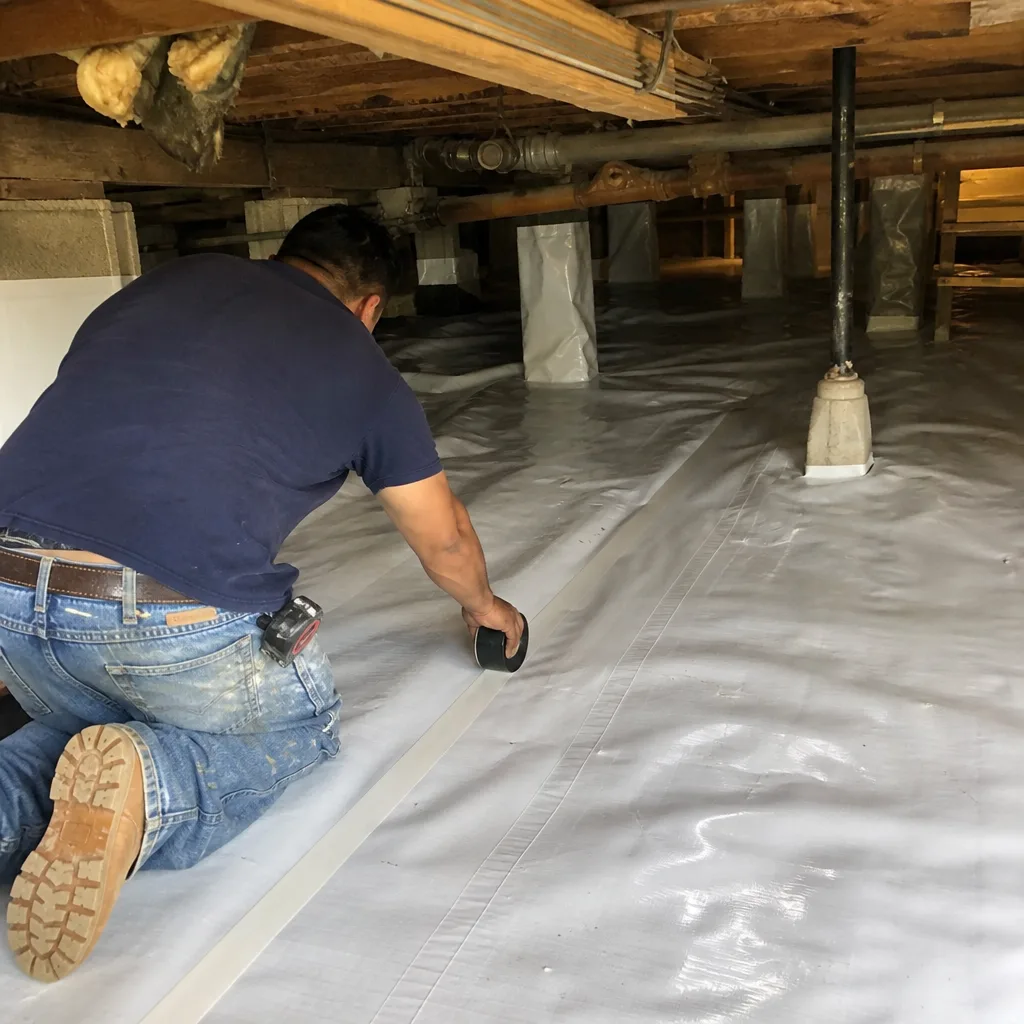
- Attic temperature reads 130°F+ on a 90°F Pasadena afternoon. A functioning radiant barrier should drop peak attic temps 20-40 degrees below unconditioned space. When the reflective surface oxidizes or delaminates, it reverts to absorbing rather than reflecting radiant heat. We measure this with an infrared thermometer during our initial walkthrough.
- Foil has pulled away from rafters in strips, especially near ridge vents. The Santa Ana winds that hit Pasadena each fall create pressure differentials in vented attics. JM’s original plastic-capped staples fatigue after 7-10 years of thermal cycling; the caps crack, the staple loosens, and the foil flaps. In the older homes near Bungalow Heaven, we’ve seen entire sheets peel down onto the attic floor.
- Upstairs rooms stay hot until 10 p.m. even with AC running. This is thermal mass loading - the roof deck and framing have absorbed heat all day because the barrier isn’t reflecting it back out. The conditioned space below then radiates that stored heat for hours after sunset. Your blower-door numbers won’t change, but your cooling load does.
- Visible dust accumulation on the foil surface turning it dull gray. Reflectivity is the entire mechanism. A clean JM AP-2X sheet measures 0.03 emissivity; dust-covered foil can hit 0.30 or higher, a 10x performance drop. Pasadena’s combination of construction dust from ongoing remodels and dry conditions makes this a recurring issue in neighborhoods like Madison Heights where teardown-rebuild activity is heavy.
- Water staining on the kraft paper backing, usually near chimney penetrations. JM’s kraft facing is not a vapor barrier in the direction you need. If your original installer placed the radiant barrier directly against the roof deck without the required 3/4″ air gap, condensation forms in winter when Pasadena’s rare cold snap hits a sun-warmed roof. The paper delaminates, the foil sags, and mold follows.
Replacement Cost & What’s Included
| Scope | Price Range | What’s Included |
|---|---|---|
| Partial repair (localized tear, re-fastening) | $340 - $680 | JM-compatible fasteners or tape, infrared verification of seal, photo documentation |
| Full re-sheet, standard gable roof under 2,000 sq ft | $1,800 - $2,600 | Removal of failed material, new AP-2X or equivalent, proper air gap installation, blower-door test if air sealing is added |
| Full re-sheet, complex roof (multiple dormers, low pitch) | $2,600 - $3,400 | Above plus custom cutting for penetrations, extended labor for tight attic access |
| Hybrid upgrade (radiant barrier + blown-in insulation top-up) | $3,200 - $4,800 | Full barrier replacement plus cellulose or fiberglass to current R-38, air sealing of top plates and penetrations, before-and-after blower-door numbers |
What drives the range: attic accessibility (truss spacing, existing decking), whether we can walk the space or need rolling platforms, and whether the original installation used adhesive that now requires mechanical removal. We do not price by the square foot alone because that ignores the labor reality of a 1920s Pasadena craftsman with 24″ on-center rafters and a 4-foot attic height. Every job gets a written price before work starts - Haven Standard Clause 1 - and that price includes our 365-Day Done Right Promise. Materials carry the manufacturer’s warranty; our labor warranty is written and delivered before the crew lifts a tool.
DIY or Call Us?
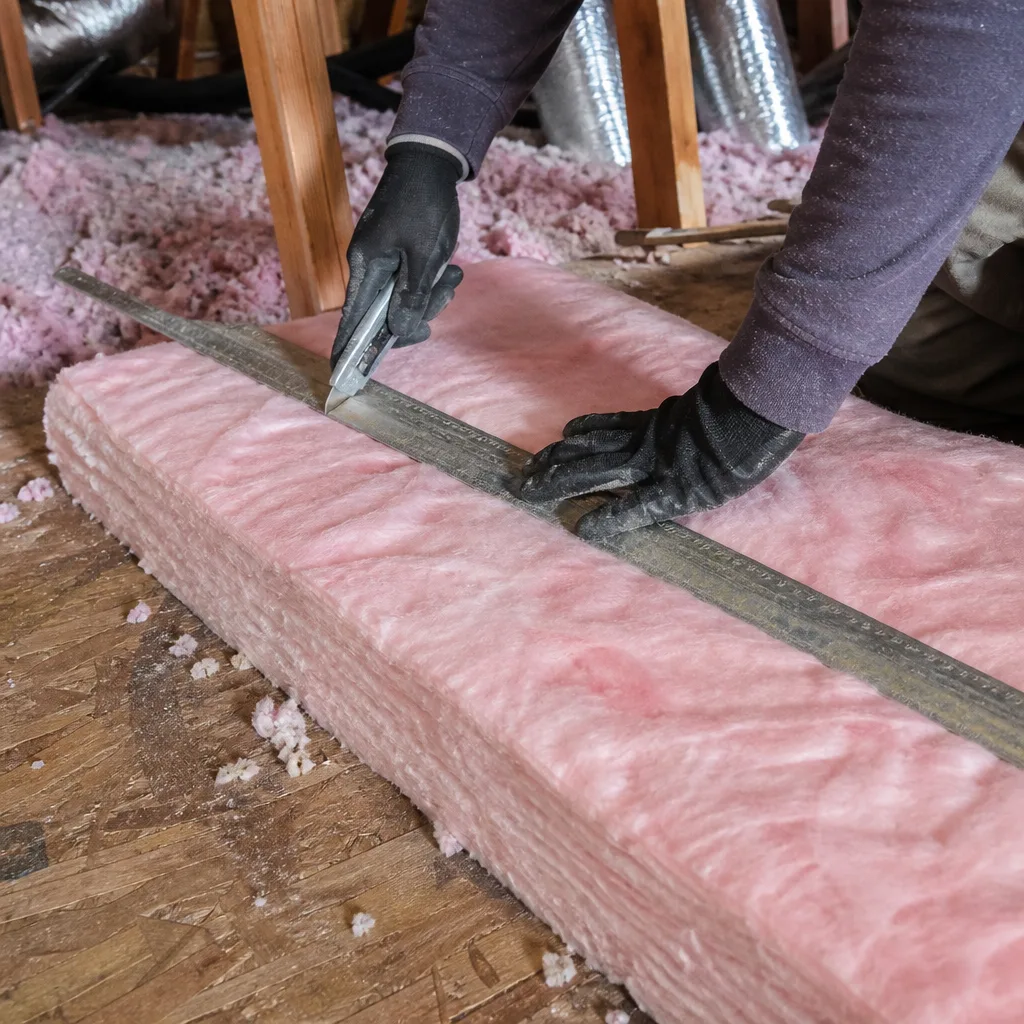
There’s one thing a homeowner can safely check: whether the foil is still physically attached. A flashlight and a camera phone will tell you if sheets have detached or if dust coverage is visible. Do not attempt to walk in an unfinished attic - the drywall ceiling below you is not structural, and a misstep puts a foot through a bedroom. The fall risk is real, and Pasadena’s older homes often have nominal 2×4 ceiling joists that won’t support concentrated weight between trusses.
Where DIY goes wrong: radiant barrier installation requires a continuous air gap, proper emissivity orientation (dull side down, reflective side up toward the roof deck), and fastening patterns that won’t tear under thermal expansion. We’ve been called to fix homeowner installations where the foil was stapled directly to the deck with no gap, or where the wrong tape created a vapor trap that rotted roof sheathing. The materials are not expensive; the failure modes are. Call (213) 816-5351 and we’ll read your situation with you - free second opinion on any written estimate you’ve already received.
FAQs
In Pasadena’s climate, a properly installed JM AP-2X barrier lasts 15-20 years, though the fastening system often fails first at 8-12 years. The foil itself doesn’t degrade in dry heat, but thermal cycling between 40°F winter nights and 150°F attic peaks fatigues staples and adhesives. Annual inspection after year 7 is worth the 10 minutes. Call (213) 816-5351 to schedule - estimates are free.
Yes, if the tear is under 12 inches and the surrounding foil is still firmly attached. We patch with JM-compatible foil tape rated for 180°F, overlapping 3 inches on all sides. Repairs larger than that, or multiple tears, indicate systemic fastener failure and warrant full replacement - patching becomes false economy when the next section peels in the next wind season. Call (213) 816-5351 for an exact quote - estimates are free.
A standard Pasadena attic of 1,200-1,800 square feet takes one crew day, 6-8 hours including cleanup and photo documentation. Complex roofs with multiple dormers or restricted access, common in the Linda Vista area, may run into a second day. We arrive with materials on the truck - no return trip, no delay. Call (213) 816-5351 to check same-day availability.
We stock JM-compatible AP-2X and AP-1X foil, plus the Midwest Fastener staple-and-washer system and 3M 468MP tape for repairs. For full replacements, we confirm measurements on the initial visit and cut sheets to length on-site - no waiting for a supplier run. We also carry Reflectix if your home has a mixed-manufacturer installation and you prefer material consistency. Call (213) 816-5351 to confirm stock for your specific repair.
Seal the leaks first. Then insulate. The numbers will tell you why. We’ve been in attics from Bungalow Heaven to the older Craftsmans along Pasadena’s Orange Grove corridor, and the pattern is consistent: the homes that perform best are the ones where someone took the time to read the blower-door numbers before adding material. Wes Okafor and our crew have been doing this work across Southern California since before we founded Envelope Insulation Co. under The Haven Standard in 2016. Every job still begins with a written price and ends with a documented record - no exceptions.
Written by Wes Okafor, Owner, Topside Attic Insulation Pasadena at Topside Attic Insulation Pasadena, serving Pasadena and nearby areas.