
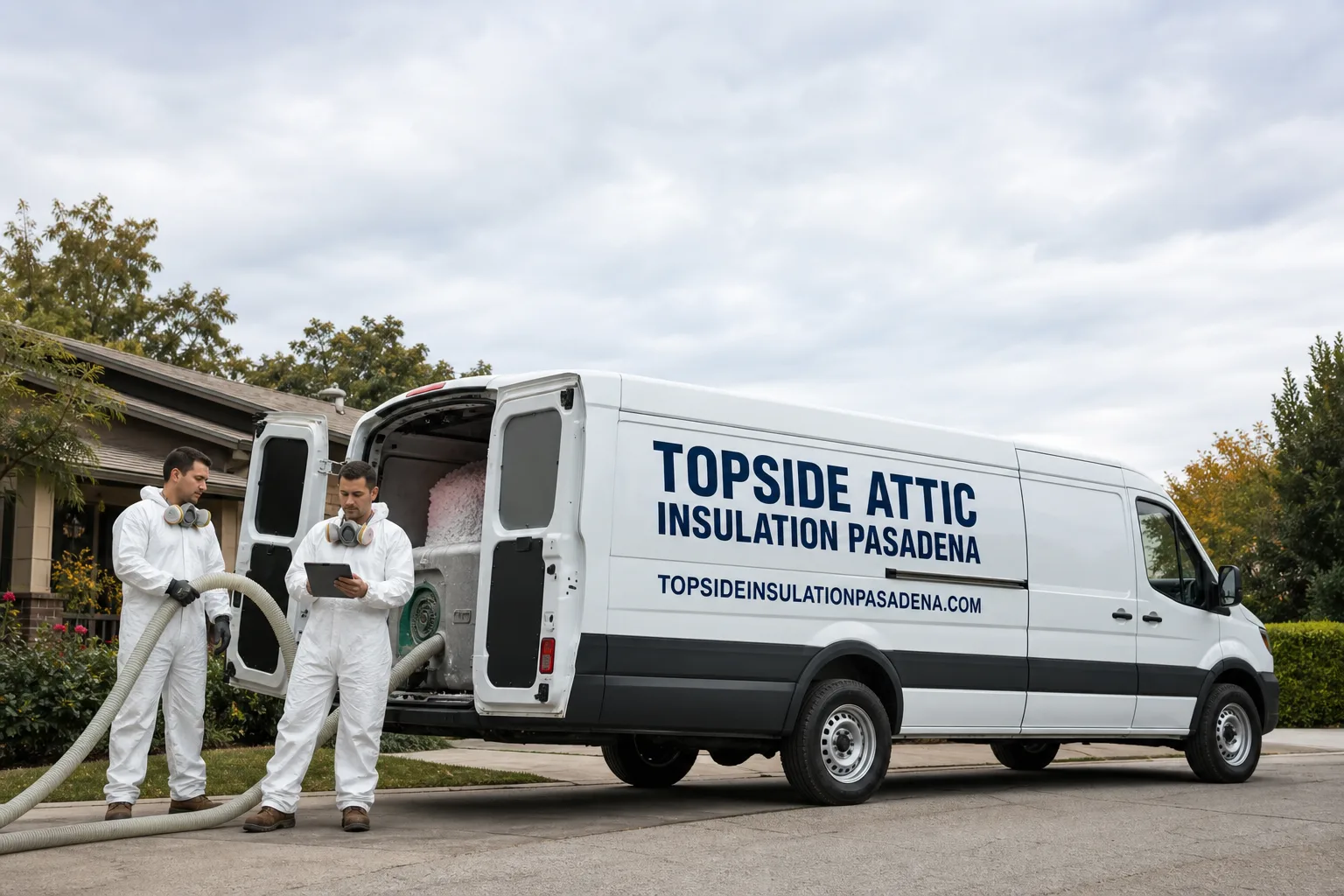
How Much Does Spray Foam Insulation Cost in Pasadena?
Spray foam insulation in Pasadena, CA typically costs between $1.50 and $4.50 per board foot, depending on foam type, application area, and total project scope. Most homeowners in Pasadena pay between $2,800 and $7,500 for a full attic or crawl space job, with larger whole-home applications running $9,000 to $18,000. Those numbers are based on what we see in this market in 2026 – not national averages pulled from a content database.
If you want to explore what Spray Foam Insulation in Pasadena actually involves before looking at the numbers, that page walks through the full scope of work. But if you’re here for pricing, keep reading.
Spray Foam Insulation Cost Breakdown (2026)
Our Spray Foam Insulation services have two pricing factors: the type of foam and where it goes. Open-cell and closed-cell behave differently, perform differently, and cost differently. Here’s what the Pasadena market looks like right now:
| Application / Project Type | Foam Type | Typical Cost Range |
|---|---|---|
| Attic floor (1,000 sq ft, 2-in open-cell) | Open-cell | $1,200 – $2,200 |
| Attic floor (1,000 sq ft, 2-in closed-cell) | Closed-cell | $2,000 – $3,800 |
| Attic rafters / roof deck (conditioned attic conversion) | Closed-cell | $4,500 – $9,500 |
| Crawl space encapsulation + spray foam | Closed-cell | $3,200 – $7,000 |
| Rim joists and band joists (per linear foot) | Closed-cell | $3.00 – $5.50/bd ft |
| Garage ceiling or walls (500 sq ft) | Open-cell or closed-cell | $900 – $2,400 |
| Whole-home envelope (walls + attic + crawl) | Mixed | $9,000 – $18,000+ |
| Air sealing only (top plates, penetrations, can lights) | Two-component foam + sealant | $600 – $1,800 |
Open-Cell vs. Closed-Cell: What You’re Actually Paying For
Open-cell foam – sometimes called half-pound foam – expands aggressively and gives you a good R-value per inch (around R-3.7) at a lower material cost. It’s vapor-permeable, which matters in humid conditions, and it’s excellent at filling irregular cavities. For interior attic floors and interior wall cavities in Pasadena homes, it works well.
Closed-cell foam runs closer to R-6.5 per inch, acts as its own vapor barrier, and adds measurable structural rigidity to the surface it bonds to. It costs significantly more – typically 50 to 80 percent more per board foot – but in a market where you’re fighting both summer heat gain from the San Gabriel Valley floor and the occasional cold week in January, the higher R-value-per-inch matters when you’re working with limited rafter depth in a 1940s bungalow in Bungalow Heaven or a post-war ranch in Hastings Ranch.
A board foot, to be clear, is one square foot of foam at one inch of thickness. When a contractor quotes “$3.00 per board foot,” that means a 1,000-square-foot attic floor at two inches of closed-cell foam uses 2,000 board feet and would run $6,000 in material and labor at that rate.
What Drives the Price Up in Pasadena Specifically
Three things push spray foam costs higher in Pasadena compared to national averages. First, labor costs in Los Angeles County run higher than most of the country – experienced spray foam technicians command $30 to $50 per hour more here than in inland markets. Second, the local housing stock skews older: many homes in districts like Madison Heights, San Rafael Hills, and the Civic Center area were built between 1920 and 1960, with non-standard joist spacing, existing blown insulation that may need removal first, and knob-and-tube wiring considerations that slow the prep work. Third, material transport and regional supply chain pricing have added roughly 8 to 12 percent to foam costs since 2022.
What Affects Spray Foam Insulation Pricing in Pasadena
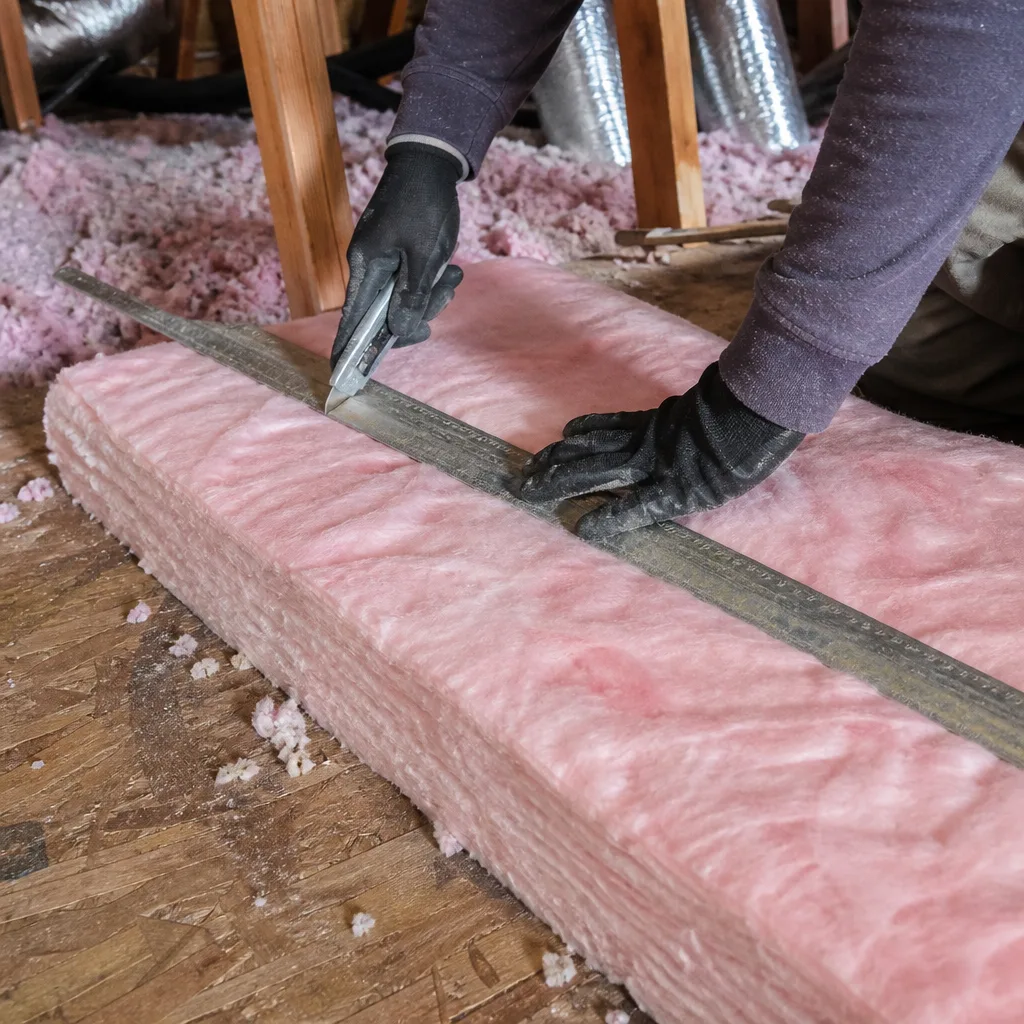
- Foam type and R-value target: Closed-cell costs 50 to 80 percent more per board foot than open-cell. The required R-value for Pasadena’s Climate Zone 10 is R-38 for attics in most remodels and R-49 for new construction – hitting those numbers with foam changes the thickness required and thus the total board footage billed.
- Application area and access difficulty: A flat, clear attic floor with good headroom costs less to spray than a low-slope roof deck with 14-inch-deep rafters partially blocked by old knob-and-tube. Homes in Altadena (just north of Pasadena) and the foothill areas often have steep hillside foundations or cramped crawl spaces that add setup time and affect the final price.
- Existing insulation removal: If old fiberglass batts or deteriorated cellulose are present, they typically need to come out before foam goes in. Insulation removal in Pasadena runs $1.00 to $2.00 per square foot depending on depth and contamination – rodent activity, which is common in attics in the Arroyo Seco corridor, can push this higher because of the required sanitizing work.
- Air sealing prerequisites: At Envelope Insulation Co., air sealing of top plates, can lights, plumbing penetrations, and electrical chases is completed before any foam or blown material goes in – because insulation over an unsealed attic floor is a well-documented waste of money. That step costs $600 to $1,800 depending on the home’s size and the number of penetrations, and it’s built into every job scope up front with a written price, not added on afterward.
- Permits and inspections: The City of Pasadena Building and Safety Division requires permits for insulation work that affects conditioned space or structural assemblies in some cases. Permit fees are generally $150 to $400, and any required inspections add scheduling time. We handle permit research as part of the job assessment – you’ll know what’s required before work starts, in writing.
- Rebates and utility programs: Southern California Edison and SoCalGas both offer rebates for qualifying insulation work. The SCE Home Energy Savings program, current as of 2026, offers rebates up to $450 for attic insulation improvements. These reduce net cost but require documentation – we provide the photo record and blower-door data you’ll need to file.
Spray Foam vs. Other Insulation Types: A Direct Comparison
Homeowners in Pasadena often compare spray foam against blown-in fiberglass or cellulose before committing. Here’s a factual side-by-side:
- Blown-in fiberglass (e.g., Owens Corning AttiCat or Johns Manville SpiderBlow): $0.50 to $1.20 per square foot installed at R-38. Lowest upfront cost, easiest to add R-value quickly. Requires a fully sealed attic floor first to perform as rated – which is why we air-seal before we blow. Does not stop air movement on its own.
- Fiberglass batts: $0.30 to $0.80 per square foot. Lowest cost, worst real-world performance because batts are almost never installed without gaps, compressions, or bypass paths around them. We see a lot of homes in the Bungalow Heaven Historic District where batts were added in the 1980s and the measured air leakage is still 4,000+ CFM50 because no one sealed anything first.
- Blown-in cellulose (e.g., GreenFiber): $0.60 to $1.40 per square foot. Good thermal mass, better real-world air resistance than batts, but it settles over time and requires a vapor management strategy in Pasadena’s mixed climate.
- Closed-cell spray foam: $3.00 to $4.50 per board foot. Highest upfront cost. Stops air, stops vapor, adds R-6.5 per inch, and bonds structurally. For conditioned attic conversions in older homes, it’s often the only product that delivers the combination of performance and code compliance in the available space.
- Open-cell spray foam: $1.50 to $2.50 per board foot. Lower cost than closed-cell, vapor-permeable, good for interior applications. Requires a separate vapor retarder in some California code applications.
The right choice depends on where the foam is going, what the assembly looks like, and what your performance goal is. That’s a conversation that should happen before any quote, not after.
How to Save on Spray Foam Insulation in Pasadena
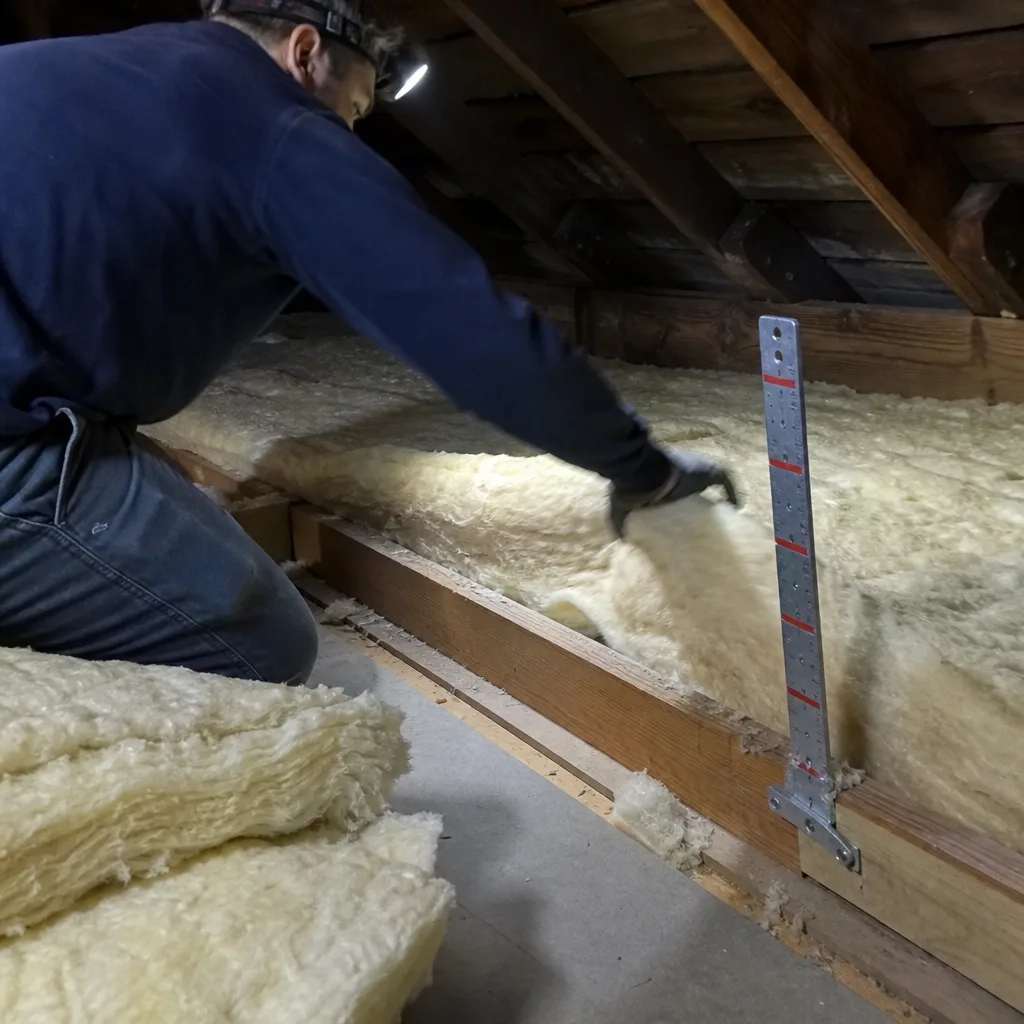
1. Don’t Skip Air Sealing to Save Money
The most common way homeowners waste money on insulation is skipping air sealing to reduce the upfront quote. We’ve done blower-door tests on Pasadena homes with two inches of spray foam on the attic floor that still read 3,800 CFM50 because the top plates and can lights were never sealed. The foam was doing nothing. The money was gone. Sealing first – then insulating – is the only sequence that produces the performance you’re paying for. A blower-door test before and after the work lets you verify that in a single number.
2. Combine Work Into One Mobilization
Spray foam crews charge a mobilization fee that’s built into every job – typically $300 to $600 to set up the rig, mix components, and meet California’s VOC handling requirements. If you’re doing an attic floor, do the rim joists and any garage ceiling work at the same time. Adding a second area to an existing mobilization usually costs a fraction of what it would cost as a separate trip.
3. File for Utility Rebates – But Get the Documentation First
Southern California Edison’s 2026 rebate program requires documentation: before-and-after blower-door readings, a photo record, and in some cases an energy audit baseline. We provide all of that on every applicable job – it’s part of the written scope, not a fee-for-service add-on. If you’re working with a contractor who can’t produce those numbers, the rebate filing will fail or be audited.
4. Get a Written Estimate – Then Get a Second Opinion
Under Haven Standard Clause 1, you receive a written price before any work starts. Always. No estimate over the phone, no “we’ll firm it up once we start.” If you have a written estimate from another contractor, bring it in – we offer a free second opinion on any written quote, and we’ll read it with you line by line. The goal isn’t to automatically undercut; it’s to make sure you understand what you’re buying.
To get a written estimate for your Pasadena home, call (213) 816-5351. A live person answers – no voicemail, no callback queue measured in days.
5. Understand the Federal Tax Credit
The Inflation Reduction Act’s 25C tax credit covers 30 percent of the cost of insulation and air sealing improvements, up to $1,200 per year, for qualifying primary residences. Spray foam and air sealing materials both qualify. Your Pasadena home likely qualifies if it was built before 2000 and you own it as a primary residence. We provide the documentation you need to file – product specification sheets, installed R-values, and a written record of the work performed.
What Our Process Looks Like Before a Dollar Is Spent
Before any crew arrives at a Pasadena home, we run a written assessment. That means a site visit, measurements, a conversation about what you’re experiencing (high utility bills, rooms that won’t hold temperature, humidity issues in the crawl), and a written scope with a flat price. Not a range. A number.
On applicable jobs, we run a blower-door test before any work starts – that’s a pressurization reading, expressed in CFM50 (cubic feet per minute at 50 pascals of pressure), that tells us and you exactly how much conditioned air the building envelope is losing. After the air sealing is complete, we run it again. The before-and-after numbers go into your job record. You leave with documentation you can share with a home energy auditor, a real estate agent, or a utility rebate program.
Since 2016, we’ve completed work on more than 9,000 homes this way. Every one of them got a written price before anyone touched a tool, and a photo record when the crew left. Wes Okafor built that standard into the company from day one because the alternative – verbal quotes, after-the-fact surprises – is how homeowners end up with insulation that doesn’t perform and no way to prove it.
Explore the full range of what we do on our home page if you’re still researching the scope of the work.
Local Factors Unique to Pasadena’s Housing Stock
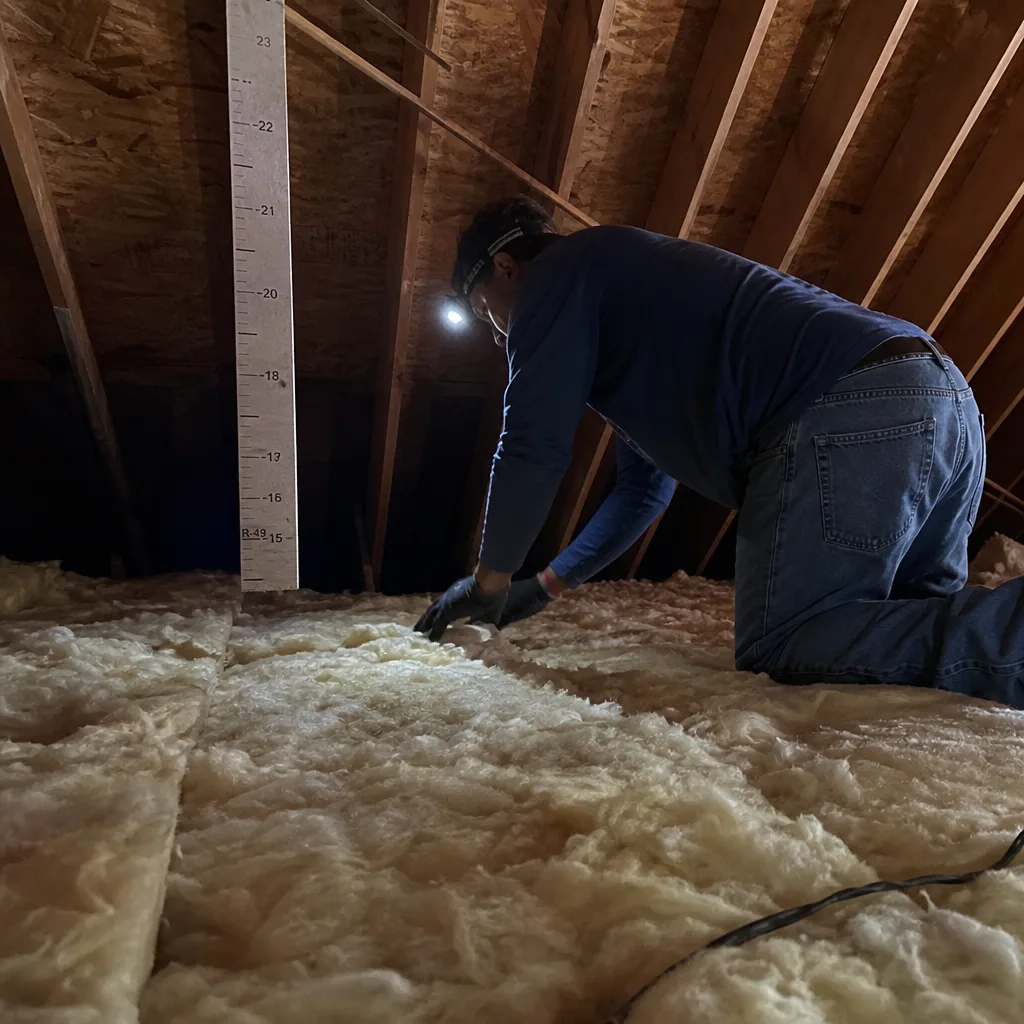
Pasadena’s climate sits in IECC Climate Zone 10, which is hotter and drier than coastal LA but still sees enough cold-season variation to make both heating and cooling season performance matter. Summer attic temperatures in a poorly insulated home in areas like Linda Vista or San Pasqual Valley can reach 150 to 160 degrees Fahrenheit – that radiant load drives air conditioner runtime and utility costs significantly. Closed-cell foam on the underside of the roof deck, at 5.5 to 6 inches, converts the attic into conditioned space and eliminates that radiant load almost entirely.
Older homes in the Madison Heights neighborhood and the Civic Center area frequently have original plaster-and-lath walls with zero insulation. Injection foam – a less common variant of spray foam that’s injected through small holes rather than sprayed from an open nozzle – can be used to insulate existing walls without full drywall removal. That runs $3.50 to $5.50 per board foot in the Pasadena market and is worth getting a separate line item for if wall insulation is part of the conversation.
Homes built on hillside lots in San Rafael Hills and Linda Vista often have crawl spaces that are part-exposed-foundation, part-dirt-floor, and very difficult to access. Spray foam for those applications requires flexible staging and sometimes smaller crew configurations. The pricing reflects that – expect to pay toward the upper end of the crawl space range for homes with significant topographic complexity.
The Air Sealing Conversation Every Pasadena Homeowner Should Have
California’s Title 24 energy code, which applies to permitted work in Pasadena, increasingly requires air barrier continuity in insulation assemblies. That’s not just a code checkbox – it’s physics. Insulation slows conductive heat transfer; air sealing stops convective heat transfer, which is the movement of warm or cool air through gaps, cracks, and penetrations. You need both. Doing one without the other produces partial results at full cost.
The number we look for after air sealing is a blower-door reading below 5 ACH50 (air changes per hour at 50 pascals) for existing homes, and closer to 3 ACH50 for newer construction. On most Pasadena homes built before 1970, we see pre-sealing readings of 8 to 14 ACH50. Post-sealing readings typically fall to 4 to 6 ACH50, sometimes lower. That reduction is verifiable, documented, and worth more to your utility bills than adding extra inches of insulation on top of a leaky floor.
A safety note for homeowners considering DIY air sealing: two-component spray foam kits sold at home improvement stores are real polyurethane chemistry. Improper mixing ratios produce foam that off-gasses isocyanates – compounds that are genuinely hazardous to respiratory health. If you’re looking at any application beyond sealing a single small gap, this is work that should be done by trained technicians with proper respirators and ventilation protocols. We’re not saying that to sell jobs; we’re saying it because the chemistry is real.
FAQs – Spray Foam Insulation Cost in Pasadena
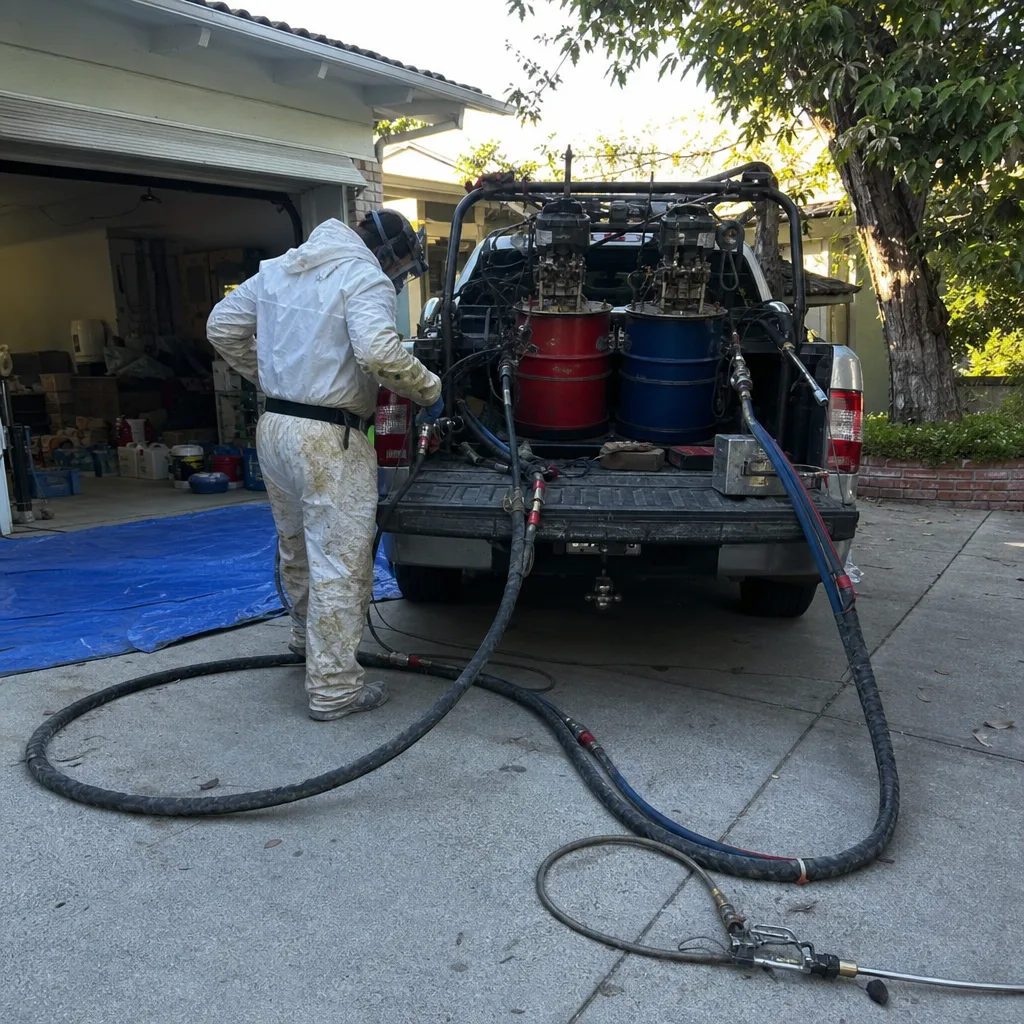
How much does spray foam insulation cost per square foot in Pasadena?
Spray foam in Pasadena runs $1.50 to $4.50 per board foot, which translates to roughly $3.00 to $9.00 per square foot at two inches of thickness – the typical starting point for attic floor applications. Open-cell foam at two inches runs $3.00 to $5.00 per square foot installed; closed-cell at two inches runs $5.50 to $9.00. Those ranges reflect 2026 labor and material costs in Los Angeles County. Call (213) 816-5351 for a written estimate on your specific home – that number is flat, not a range that expands once work starts.
Is spray foam insulation worth the higher cost compared to blown-in?
For attic floor applications in already-accessible spaces, blown-in fiberglass or cellulose over a properly air-sealed floor often delivers comparable performance at 40 to 60 percent lower cost. Spray foam’s cost premium is most justified in three situations: conditioned attic conversions (where closed-cell on the roof deck is the practical solution), crawl spaces with moisture risk (closed-cell’s vapor impermeability matters there), and rim joists and band joists where the geometry makes batts or blown-in unworkable. For straight attic floor R-value increases, blown-in over sealed penetrations frequently wins on cost-per-performance-unit. We’ll tell you which makes sense for your home’s specific assembly before you spend anything.
How long does spray foam insulation last in a Pasadena home?
Properly installed closed-cell spray foam has a documented service life of 80+ years in most building assemblies. Open-cell foam is similarly durable in conditioned or semi-conditioned spaces, though it’s more susceptible to moisture damage if the assembly allows bulk water intrusion. The foam itself doesn’t degrade from heat – a relevant point given Pasadena attic temperatures. The failure mode we see is not foam degradation but improper installation: inadequate thickness, foam applied over unsealed penetrations, or foam applied to a surface that was wet at time of installation. That’s why the documentation matters – photos at install, blower-door before and after, written scope specifying thickness and product. You have proof of what was done, not just what was promised.
Can spray foam be added on top of existing insulation?
Sometimes, but not always, and the answer matters to cost. Spray foam bonds to the substrate it touches – if existing batts or blown-in are in the way, they typically need to come out first for the foam to bond properly and achieve code-required R-values. For rim joists and band joists, existing batts almost always come out before foam goes in. For attic roof deck applications (rafter underside), the deck is usually exposed, so there’s nothing to remove. The assessment visit clarifies what’s present, what needs to go, and what the removal adds to the total cost – in writing, before any decision is made.
Does Pasadena require a permit for spray foam insulation?
The City of Pasadena Building and Safety Division requires permits for insulation work that involves conditioned space changes, structural assemblies, or that triggers a California Title 24 compliance review. A simple attic floor insulation addition typically does not require a permit; a conditioned attic conversion (spray foam on the roof deck) usually does. Permit fees run $150 to $400. We research permit requirements as part of the job assessment and include the permit cost in the written price if one is required – no after-the-fact “oh, we forgot to include the permit fee” situations. Call (213) 816-5351 and we’ll clarify what your specific project requires before anything else.
What rebates are available for spray foam insulation in Pasadena in 2026?
Two programs apply to most Pasadena homeowners in 2026. Southern California Edison’s Home Energy Savings rebate offers up to $450 for qualifying attic insulation improvements; SoCalGas offers rebates on air sealing work as part of their energy efficiency programs. The federal 25C tax credit covers 30 percent of qualifying insulation and air sealing costs, up to $1,200 per year for primary residences. Filing for any of these requires documentation – blower-door readings, product spec sheets, and a record of installed R-values. We provide all of that on every applicable job. Combined, these programs can reduce net project cost by $800 to $2,000 on a typical Pasadena attic or crawl space job.
Key Takeaways
- Spray foam in Pasadena costs $1.50 to $4.50 per board foot; most attic or crawl space projects run $2,800 to $9,500 depending on foam type and scope.
- Closed-cell costs 50 to 80 percent more than open-cell but delivers R-6.5 per inch vs. R-3.7 – the choice depends on the application, not just the budget.
- Air sealing before insulation is not optional – it’s what makes the insulation perform as rated. A blower-door test before and after verifies the result in a single number.
- Federal 25C tax credits and SoCal utility rebates can reduce net cost by $800 to $2,000 on a qualifying project – but you need the documentation to file.
- Every job at Envelope Insulation Co. starts with a written flat price and ends with a documented photo record and blower-door readings. That’s the Haven Standard, not a talking point.
- Wes Okafor built this process from the ground up in 2016 because homeowners deserve to know what they paid for and have proof it was done.
Get a Written Estimate for Your Pasadena Home
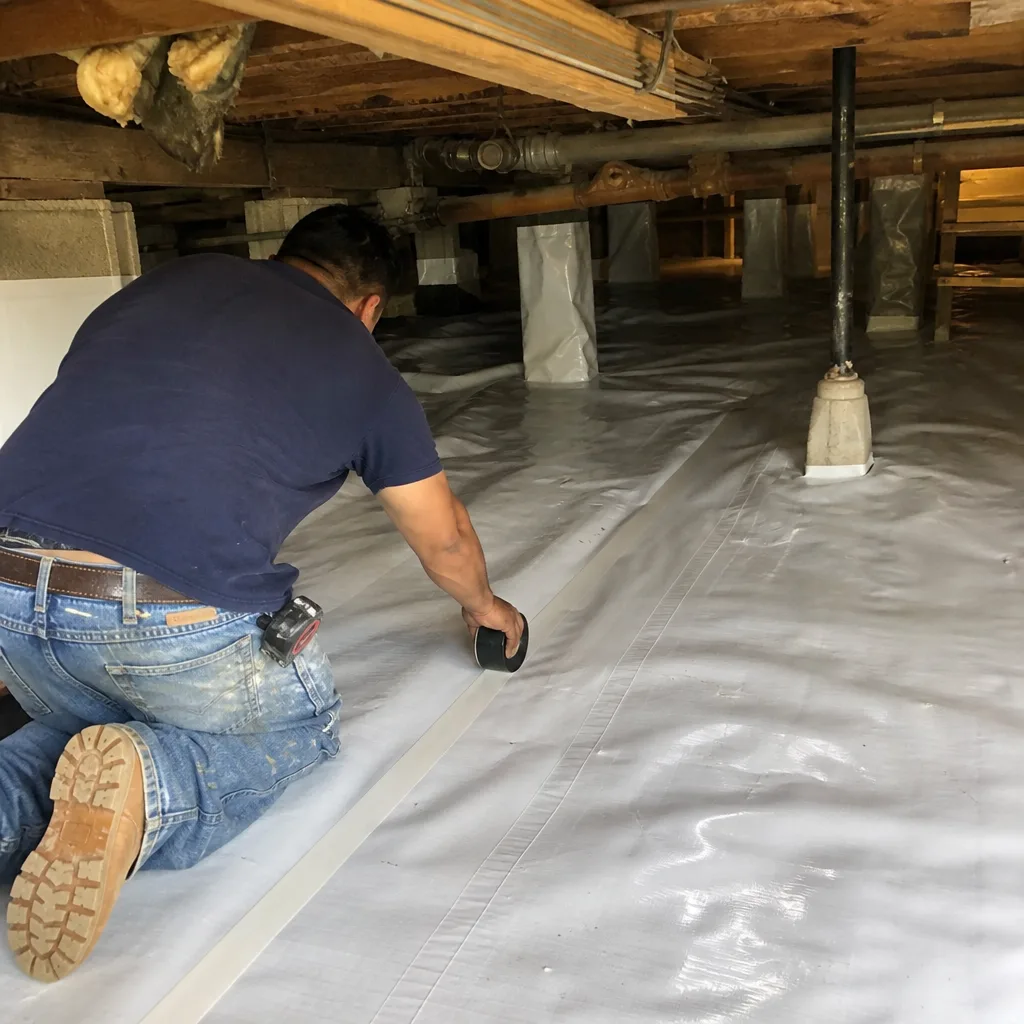
If you’re trying to figure out what spray foam insulation will actually cost for your specific home – not a national average, not a range so wide it tells you nothing – the next step is a site visit and a written number. Wes Okafor and the team at Envelope Insulation Co. have been doing this in Pasadena and the surrounding San Gabriel Valley since 2016. Every assessment ends with a flat written price and a clear scope. No work starts before you have both.
Call (213) 816-5351 to schedule. A live person answers. If you have a written estimate from another contractor, bring it – we’ll review it with you at no charge under our Free Second Opinion offer. The estimate itself is free, the second opinion is free, and the written price you walk away with reflects exactly what we’ll do and what it costs.
Pricing reflects the Pasadena market as of 2026. Written by Wes Okafor, Owner at Envelope Insulation Co., serving Pasadena, CA since 2016.
What Our Customers Say
"Crawl space encapsulation done properly. Photographs of the vapour barrier at every seam, and the damp smell in the hallway is gone."
- Ainsley P."Turned up on time, protected the hallway, and the written scope matched what was actually done."
- Bruno S."Two other companies quoted to blow more insulation on top of what was there. These were the only ones who said the existing material had to come out first, and explained why."
- Clifford E.