
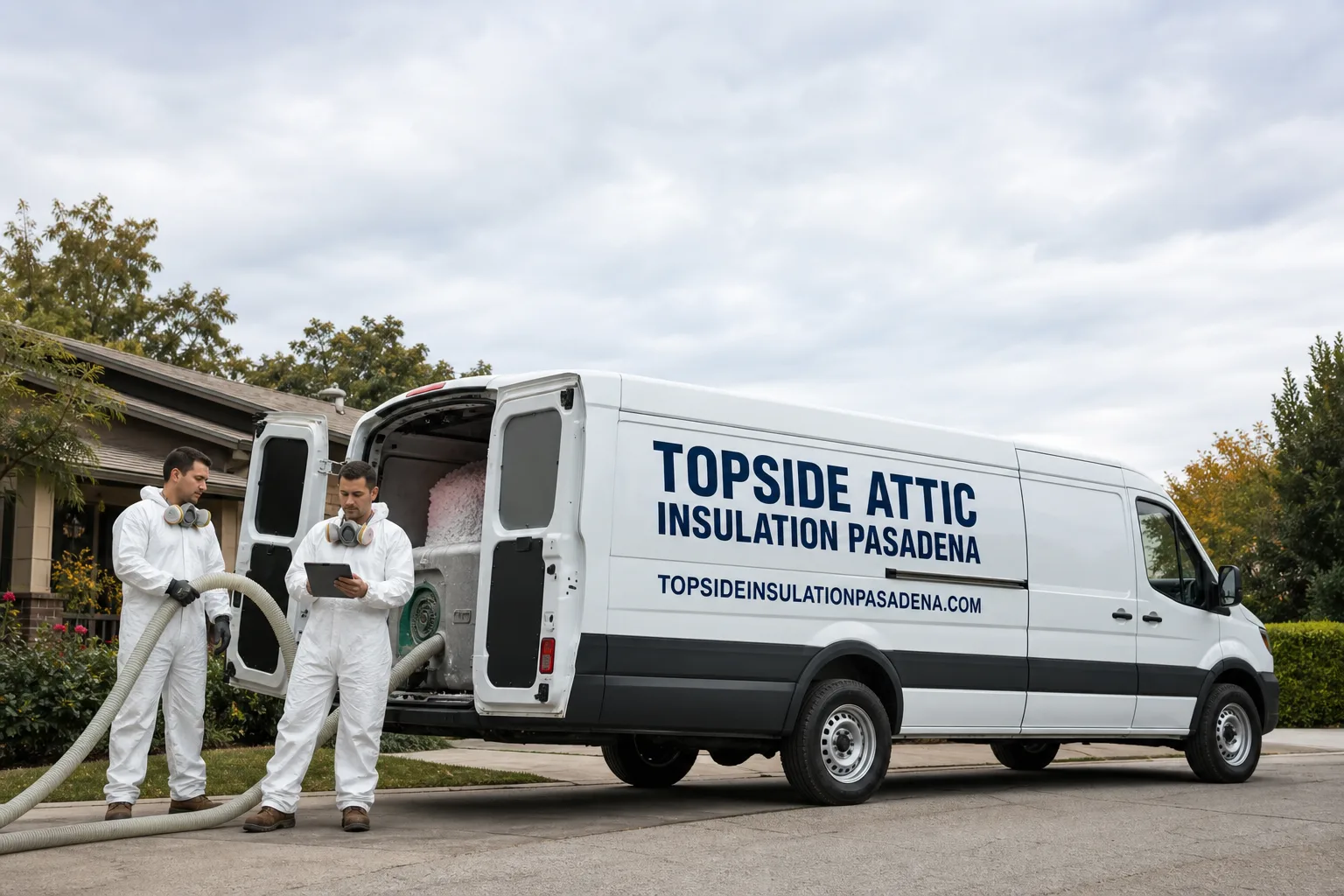
Fast, Reliable Spray Foam Insulation Across West Hollywood
Spray foam insulation in West Hollywood typically costs $2.80-$7.50 per square foot depending on open-cell versus closed-cell application, and most residential jobs are completed in one to two days with crews dispatched from our Los Angeles office. We’re familiar with the flat-roof stucco buildings that dominate WeHo’s blocks, from the dingbat apartments along Fountain Avenue to the courtyard complexes near Melrose. If your unit runs hot by noon or your PG&E bill spikes every July, the building envelope is the problem. Call (213) 816-5351 for a written price before any work starts.
Why Topside Attic Insulation Pasadena Is West Hollywood’s Preferred Spray Foam Insulation Company
We’ve sealed and insulated buildings throughout West Hollywood since 2016, from rent-stabilized courtyard complexes off Larrabee Street to condo conversions along Santa Monica Boulevard. Our 9,000+ completed jobs include hundreds in WeHo, and every one began with a written price and ended with a Documented Photo Record.
Response time to West Hollywood is typically same-day or next-morning. Our crews understand the local permitting landscape, including how the city’s Rent Stabilization Ordinance affects tenant access for energy retrofits. We don’t ask you to navigate that alone.
Reviews from West Hollywood customers consistently cite our blower-door documentation and the 365-Day Done Right Promise. Under Haven Standard: Have it in writing, you get the numbers that prove the work, not just a promise that it helped.
Our Spray Foam Insulation Services in West Hollywood
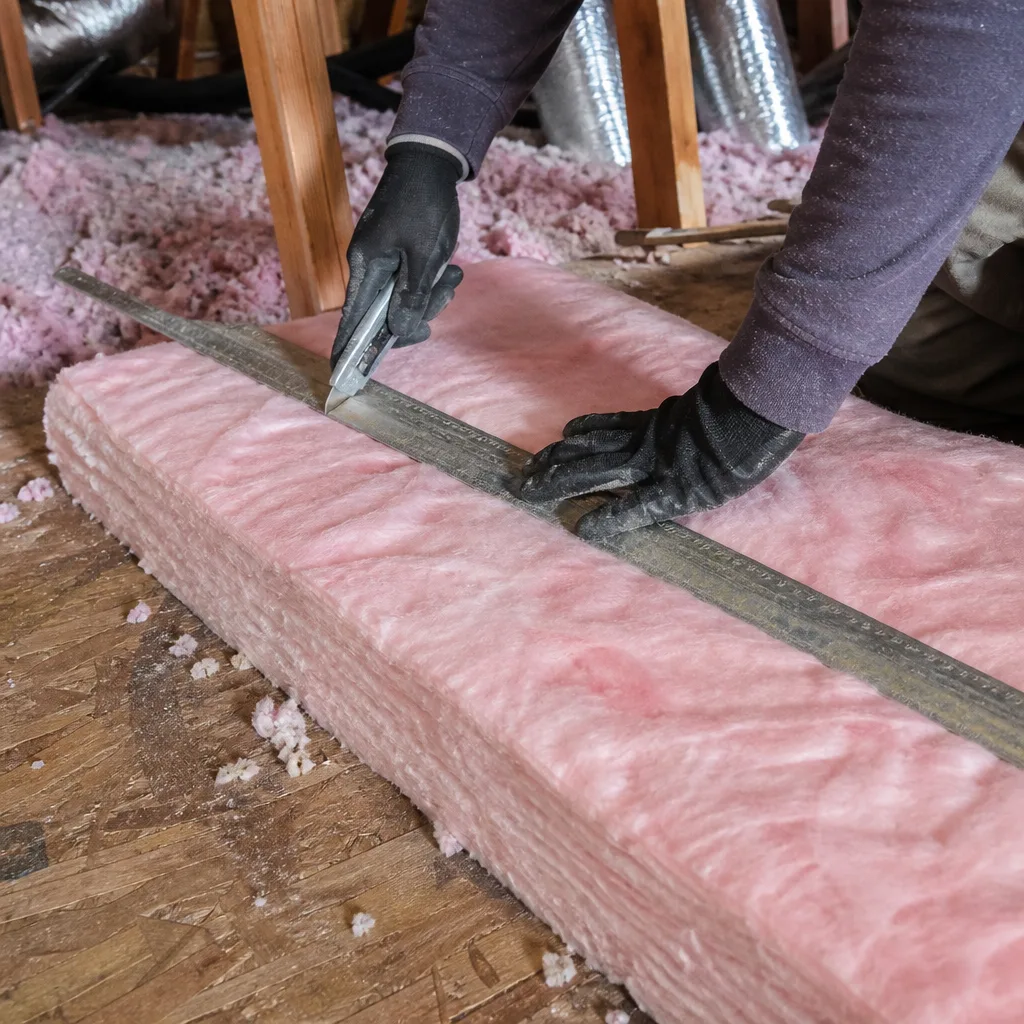
Closed-Cell Spray Foam
Closed-cell spray foam is our default recommendation for West Hollywood’s sun-baked flat roof decks and exterior stucco walls. At 2.0 lbs per cubic foot, it adds structural rigidity and delivers R-6.5 per inch while acting as its own vapor barrier. On pre-1979 dingbat buildings with minimal roof cavity depth, this density matters. Our crew was called to a 1960s two-story courtyard building off Larrabee Street where upper units sat directly over a ground-floor retail space, and the top-floor tenant complained of both afternoon heat gain through the flat roof and club noise bleeding up from the Sunset Strip corridor. We applied closed-cell spray foam to the roof deck for radiant-heat blocking and added open-cell foam in the shared ceiling cavity for acoustic decoupling, then sealed the rim joists where the stucco met the wood framing. The owner cited the Green Building Ordinance retrofit push, and the tenant reported the unit finally held steady on 90-degree afternoons without running the AC constantly.
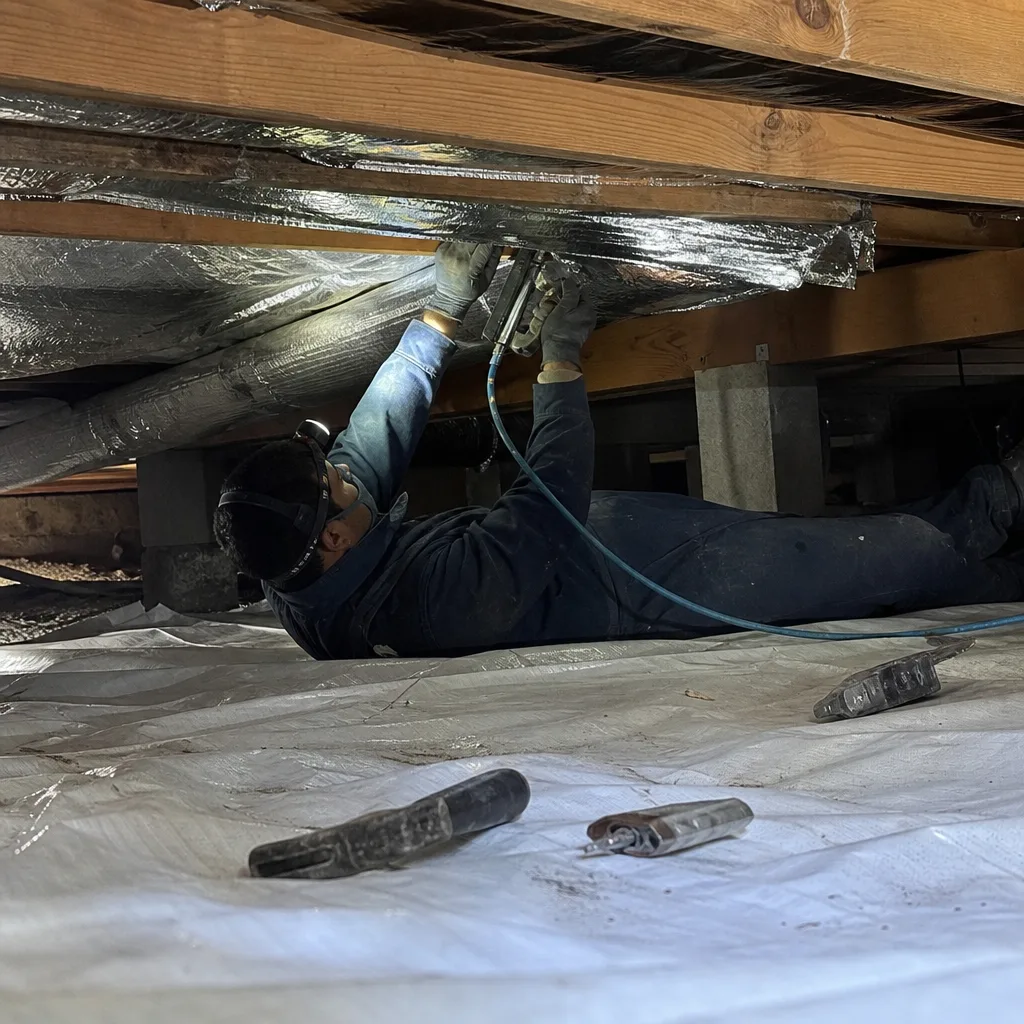
Spray Foam Roof Deck
West Hollywood’s urban canyon effect along Sunset and Santa Monica Boulevards intensifies heat island conditions, making roof-deck insulation one of the highest-ROI retrofits for flat-roof buildings. We apply closed-cell foam directly to the underside of roof decking on low-slope structures, creating a continuous thermal and air barrier. This is particularly critical for 1950s-1970s dingbats where the original roof assembly was often just tar and gravel over plywood with no insulation whatsoever. Before-and-after blower-door numbers are published on every applicable job so you can verify the air-sealing result.
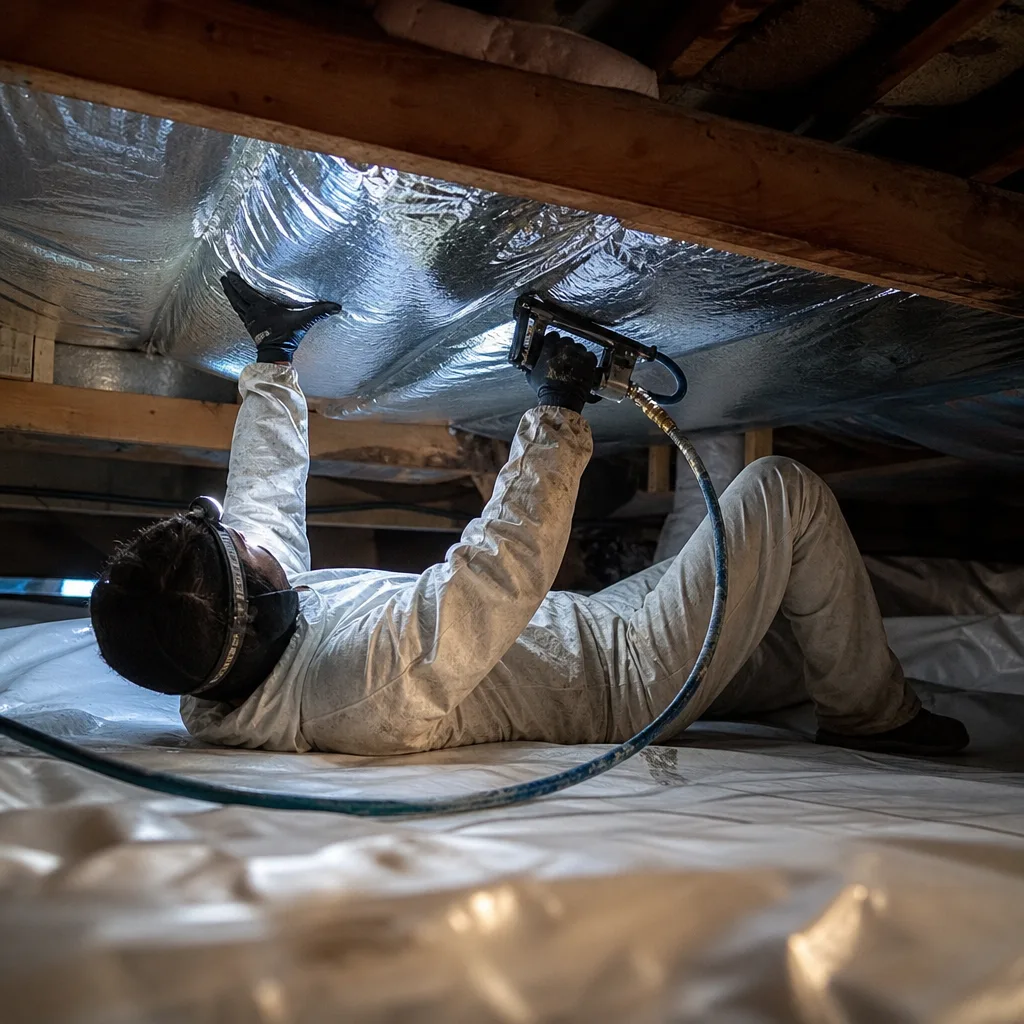
Open-Cell Spray Foam
Open-cell foam at 0.5 lbs per cubic foot delivers R-3.6 per inch and excels at acoustic dampening in shared ceiling cavities and interior partition walls. In West Hollywood’s Sunset Strip corridor, where club and rooftop-venue noise bleeds into residential units above and adjacent to commercial spaces, sound-rated assemblies are a standard line item in our bids, not an occasional specialty upgrade. Open-cell is not appropriate for sun-exposed roof decks, it cannot handle the radiant heat load and thermal cycling that closed-cell manages on WeHo’s flat roofs.
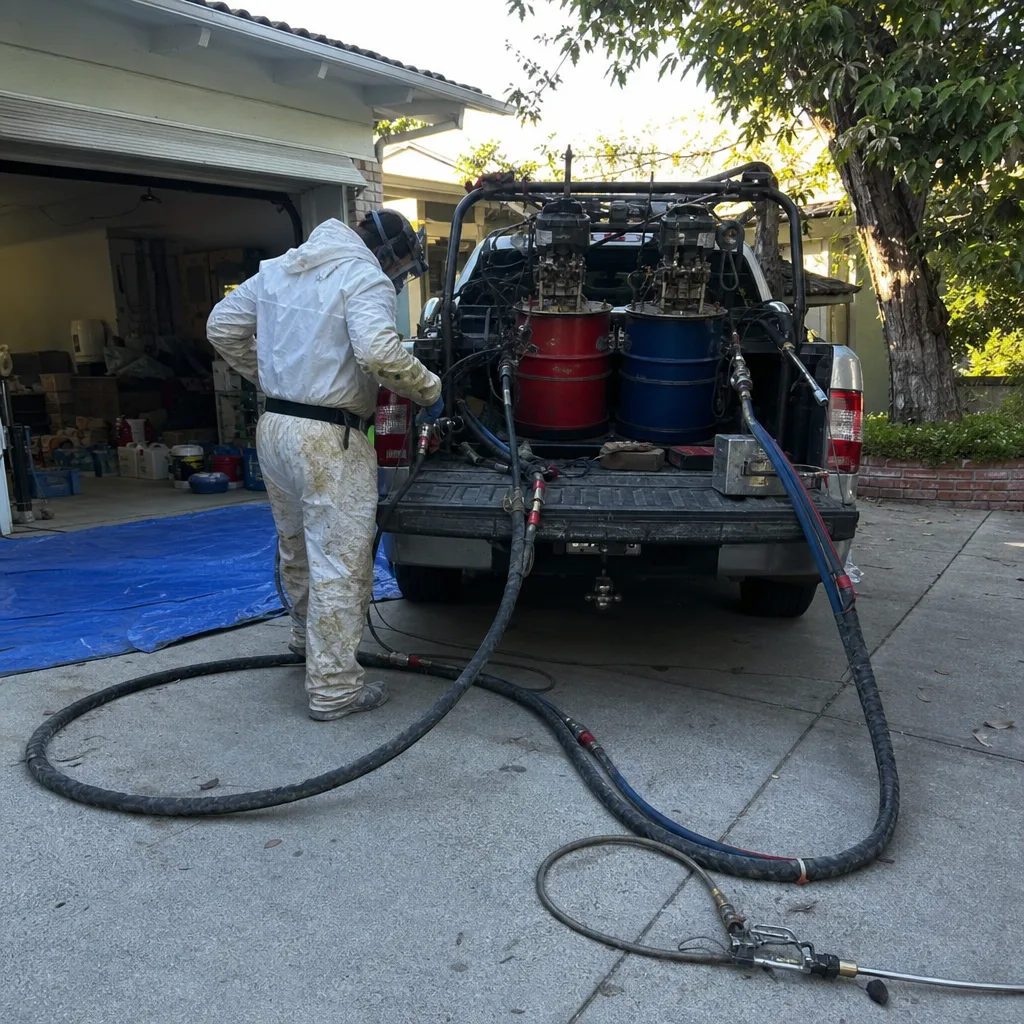
Rim Joist Spray Foam
The rim joist, where the stucco exterior meets the wood floor framing, is one of the most consistent air-leakage points we find in West Hollywood’s older stucco buildings. These gaps were never sealed under original construction, and they connect conditioned space directly to exterior wall cavities. We foam these junctions with closed-cell product to eliminate thermal bridging and block the stack effect that pulls hot attic air down into living spaces.
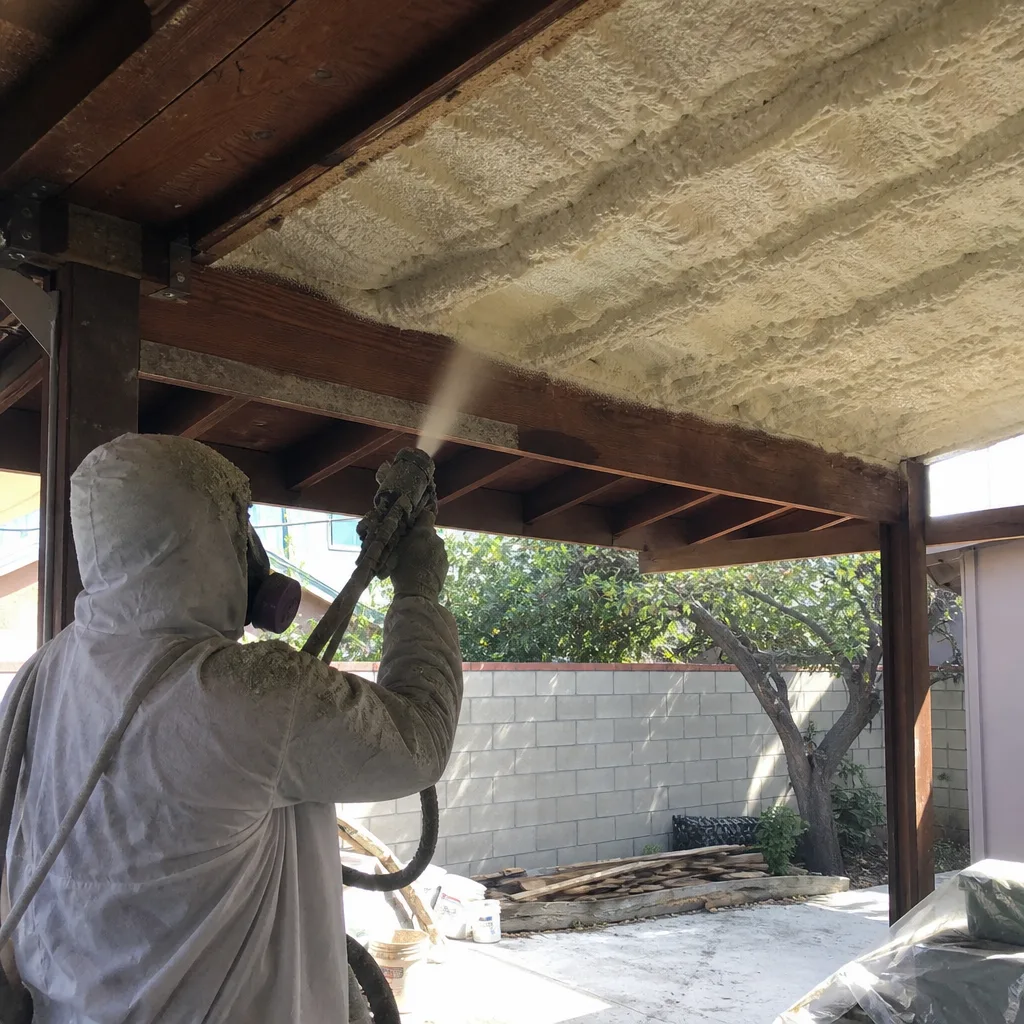
Garage Ceiling Spray Foam
Garage ceilings in West Hollywood’s courtyard complexes often separate parking from living space above. Uninsulated, they become thermal bridges and odor conduits. Closed-cell foam applied to the garage ceiling creates a code-compliant fire barrier while sealing the envelope. This is standard scope in Green Building Ordinance compliance work.
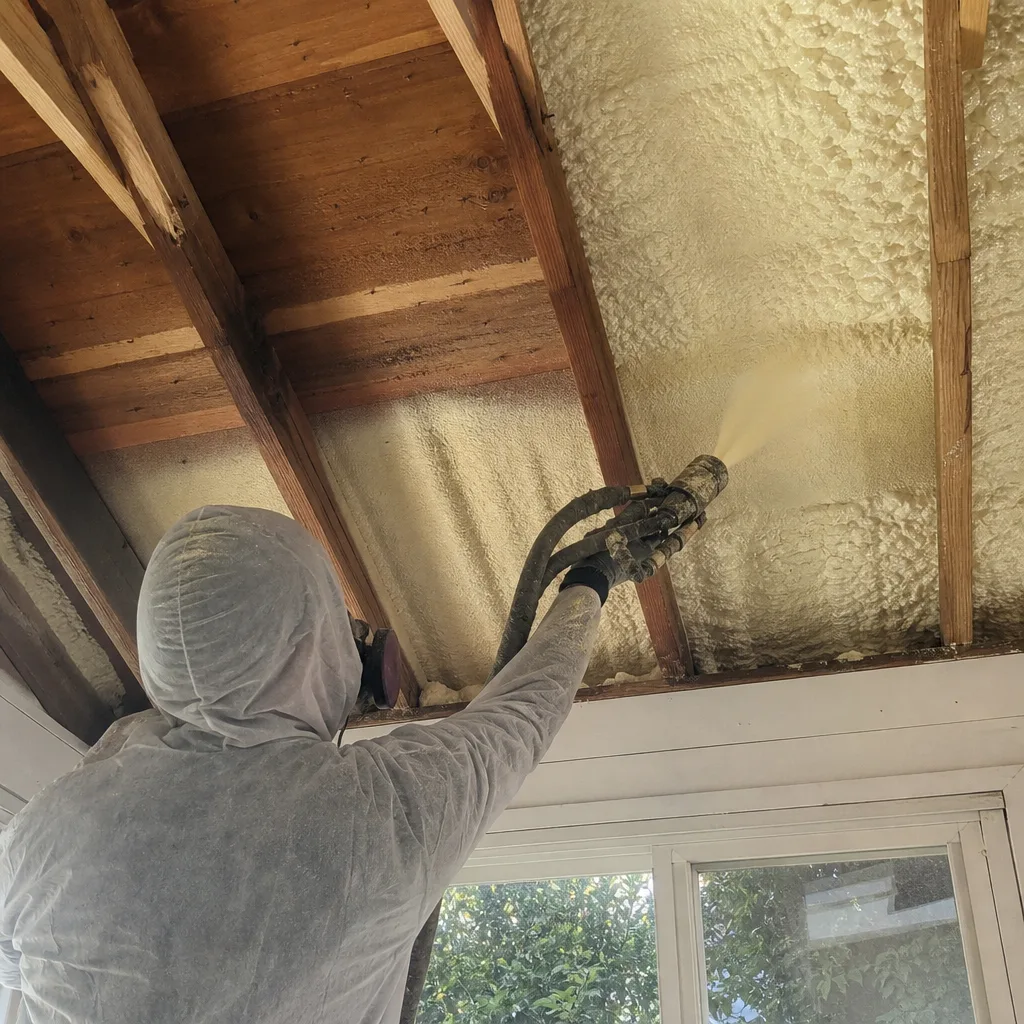
What happens when you call
- 1
A real person answersNo phone trees - you reach a local pro.
- 2
You get an upfront price rangeHonest numbers before anyone is dispatched.
- 3
A background-checked tech heads outLicensed & insured, dispatched right away.
- 4
You approve before work beginsNothing starts until you say go.
Trusted Brands We Service in West Hollywood
We source spray foam materials from Johns Manville, Knauf, and CertainTeed among others, with no proprietary product lock-in. For West Hollywood customers, this means we specify the right chemistry for the assembly rather than pushing a house brand. Closed-cell HFO formulations from Johns Manville are our typical specification for roof-deck work in WeHo’s climate. Knauf’s open-cell products perform well in acoustic assemblies. CertainTeed’s intumescent coatings meet fire-barrier requirements where code demands. We stock local inventory for standard jobs, and crews carry photo-documented batch records on every application.
Common Spray Foam Insulation Problems We See in West Hollywood Homes
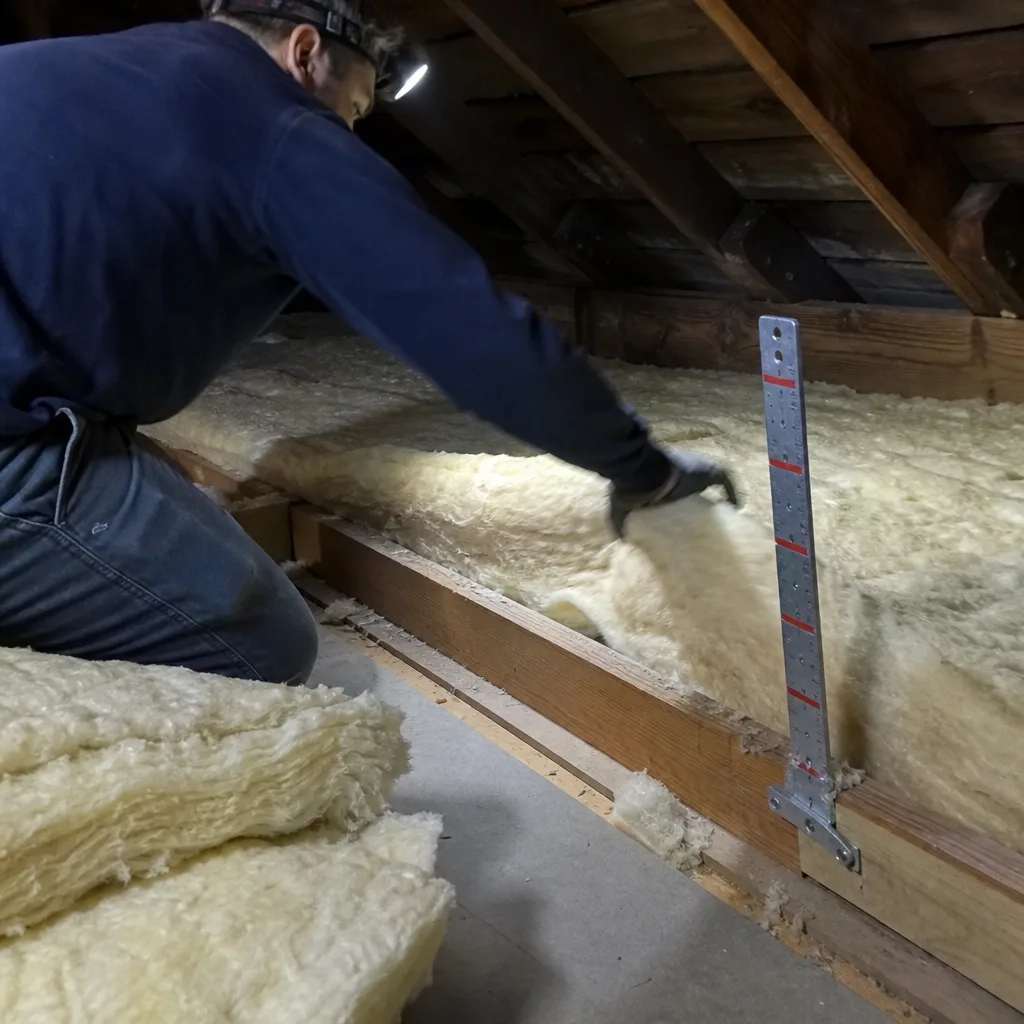
- Open-cell foam on sun-baked flat roof decks. We encounter this on pre-1979 stucco buildings where a previous contractor used the wrong product. Open-cell can’t handle the radiant heat load and thermal cycling; it degrades, discolors, and loses R-value. Closed-cell is the correct specification for WeHo roof decks.
- Skipped acoustic assemblies in Sunset Strip corridor buildings. Noise from clubs and rooftop venues bleeds directly into residential units above and adjacent to commercial spaces. Thermal-only bids that ignore sound transmission miss a major comfort factor that affects rentability and tenant retention.
- Foam applied over unsealed wall cavities. Original wood-frame construction in WeHo’s dingbats predates Title 24 air-sealing requirements. Blowing foam without first sealing top plates, can lights, and penetrations leaves thermal bridging and air leakage that defeats the insulation. We seal first, then insulate, in that order.
- RSO tenant-access complications. West Hollywood’s Rent Stabilization Ordinance creates a uniquely complex permitting and access dynamic that doesn’t exist in the same form just across the line in Beverly Hills or unincorporated LA County. Contractors unfamiliar with WeHo’s process often stall out on scheduling or fail to secure proper documentation.
Pricing for Spray Foam Insulation in West Hollywood, CA
A typical open-cell spray foam job in a West Hollywood apartment unit runs $2.80-$4.20 per square foot installed. Closed-cell applications, including roof decks and exterior walls, run $5.50-$7.50 per square foot. Rim joist sealing in a standard two-bedroom dingbat unit typically falls between $1,200 and $2,400. Garage ceiling work starts around $2,000 for a single-car footprint.
What moves the number: cavity depth (older WeHo buildings often have 2×4 walls with limited space), access complexity (RSO buildings require coordinated tenant scheduling), acoustic upgrades for Sunset Strip proximity, and whether air sealing is needed before foam application. We don’t foam over unsealed assemblies.
Every estimate is a written price before any work starts, Haven Standard Clause 1. Free Second Opinion on any written estimate from another contractor. Call (213) 816-5351 for exact numbers on your building.
We Also Serve Cities Near West Hollywood
Our crews work throughout the metro area, including Spray Foam Insulation in West Hollywood and surrounding cities: Glendale, Burbank, South Pasadena, and Pasadena. Dispatch and scheduling are coordinated from our Los Angeles office; crews serve West Hollywood locally with same-day or next-morning response.
Serving West Hollywood, CA - Our Local Coverage Area
We’re based in the West Hollywood area and know this community well. Use the map below to see our service coverage - if you’re nearby, we can almost certainly help.
FAQs - Spray Foam Insulation in West Hollywood
Yes, tenant-occupied units under West Hollywood’s Rent Stabilization Ordinance require specific notice periods and access coordination that differ from owner-occupied or Beverly Hills properties. We handle this documentation as part of our standard scope, including landlord notification templates and permit filings with the city’s Building Division. Call (213) 816-5351 and we’ll walk through the timeline for your specific building.
West Hollywood’s Mediterranean climate means summer radiant heat gain through sun-baked stucco walls and flat roofs is the dominant load, not winter heating demand. The urban canyon effect along Sunset and Santa Monica Boulevards intensifies this. Properly specified spray foam blocks that radiant transfer at the roof deck and wall assembly, reducing AC runtime by 30-50% in typical WeHo units. A blower-door test before and after shows the exact improvement.
Yes, open-cell spray foam in shared ceiling cavities provides acoustic decoupling that reduces airborne sound transmission from commercial spaces below or adjacent to residential units. In the Sunset Strip corridor, we scope this as standard, not as an upgrade. For maximum performance, we combine open-cell foam with resilient channel isolation. The field vignette from our Larrabee Street job is a typical result.
Closed-cell spray foam is the correct specification for flat roof decks on pre-1979 West Hollywood buildings. It withstands the radiant heat load and thermal cycling that degrades open-cell product, adds structural rigidity to aging roof decking, and acts as its own vapor barrier. R-value per inch is nearly double open-cell, critical where cavity depth is limited. We never specify open-cell for sun-exposed roof applications.
Yes, rim joist sealing is standard scope on every West Hollywood retrofit we perform. These junctions between stucco exterior and wood floor framing are consistently the largest unsealed leakage point in 1950s-1970s construction. We foam them with closed-cell product after blower-door testing identifies the exact CFM50 contribution. The before-and-after numbers are included in your documented record.
Written by Wes Okafor, Owner at Envelope Insulation Co., serving West Hollywood since 2016.