
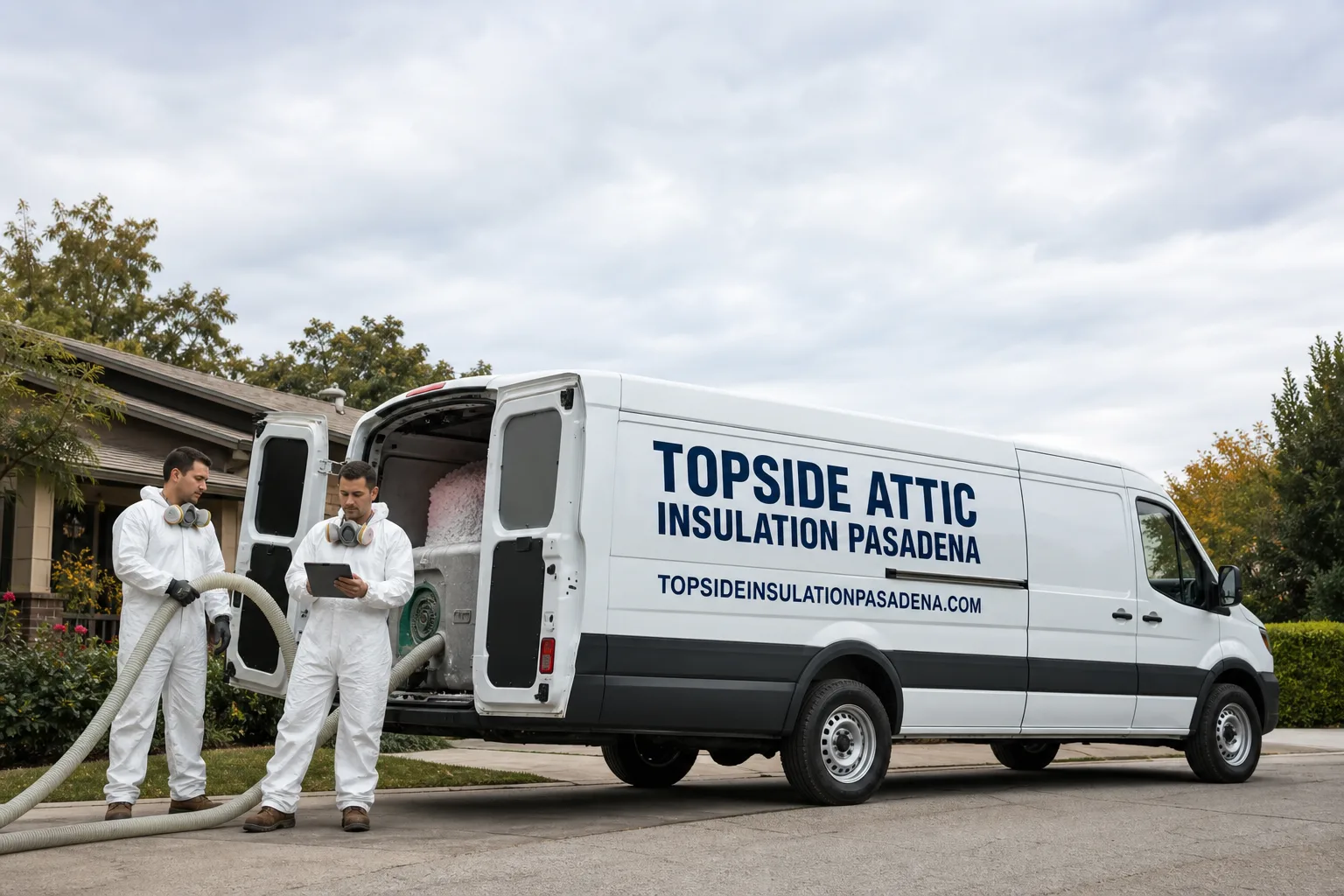
Fast, Reliable Blown-In Insulation Across Temple City
Blown-in insulation in Temple City typically runs $2.80-$5.40 per square foot of attic floor, with most complete retrofits on 1950s-1960s ranch homes falling between $3,200 and $6,800 depending on attic size, ventilation corrections, and whether air sealing is needed first. Our crews are dispatched from the Los Angeles office and usually reach Temple City properties within 45-60 minutes during standard scheduling windows. We’ve worked the ranch tracts off Longden Avenue, the streets bordering Temple City Park, and the wood-frame homes near Las Tunas Drive long enough to know that no two attics here are the same, even when the floor plans are identical.
Call (213) 816-5351 for a free estimate. We’ll give you a written price before anyone lifts a tool, and that price includes the ventilation assessment that most Temple City homes need but few contractors mention upfront.
Why Topside Attic Insulation Pasadena Is Temple City’s Preferred Blown-In Insulation Company
We’ve sealed and insulated more than 9,000 homes since 2016, and a disproportionate share of our blower-door records come from the San Gabriel Valley basin. Temple City’s housing stock is almost purpose-built for our approach: pre-code ranch homes with no ridge vents, blocked soffits, and attic cavities that hit 150°F on peak summer days. Our Blown-In Insulation team doesn’t treat ventilation as an upsell. Under Haven Standard Clause 1, we air-seal first, ventilate second, insulate third, and we document every step.
Temple City homeowners review us on the same platforms they use to research every other contractor, and they read the three-star reviews as closely as the five-stars. We publish before-and-after blower-door numbers on every applicable job so you can verify the performance change, not take our word for it. Response time to Temple City averages under an hour for scheduled appointments, and a live person answers calls 24/7. No voicemail loops. No callback windows measured in business days.
We know the local building department’s expectations for Title 24 compliance on insulation retrofits, and we know which Temple City neighborhoods were built by which developers in which decade, which matters when you’re predicting what you’ll find under the hatch.
Our Blown-In Insulation Services in Temple City
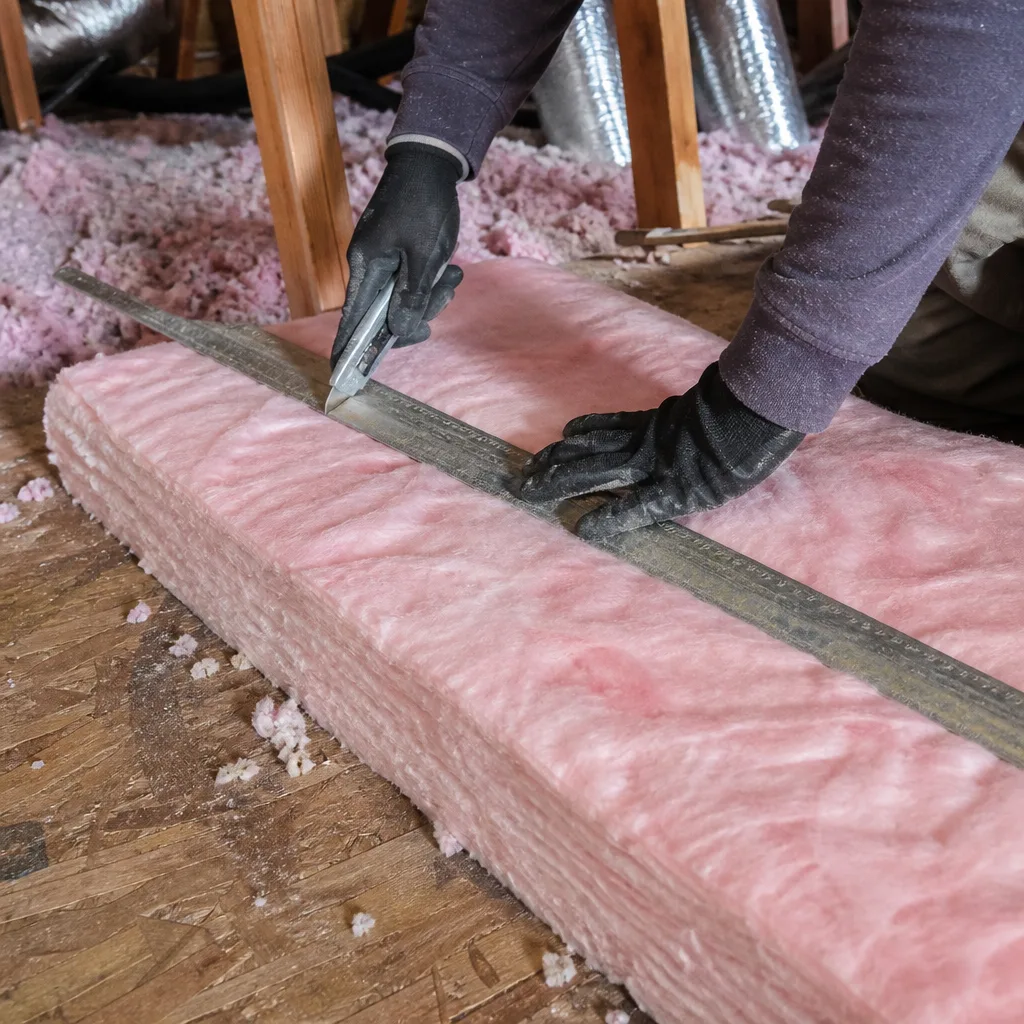
Blown-In Fiberglass
We use Owens Corning and Johns Manville blown-in fiberglass for most Temple City attic retrofits. The material doesn’t absorb moisture, which matters in attics where ventilation corrections are still pending, and it maintains its R-value at the high densities we need to hit R-38 in shallow ranch attics. On a 1958 ranch off Longden Avenue, we found the original batts collapsed to about R-8 and soffit vents blocked by decades of paint and dust; our crew installed Owens Corning blown-in fiberglass to R-38 after cutting in a ridge vent and clearing soffit baffles, and the homeowner reported their 4 p.m. indoor temperature drop of six degrees on the next 104°F day. The before-and-after blower-door test read 3,800 CFM50 pre-work and 2,400 after sealing and insulating.
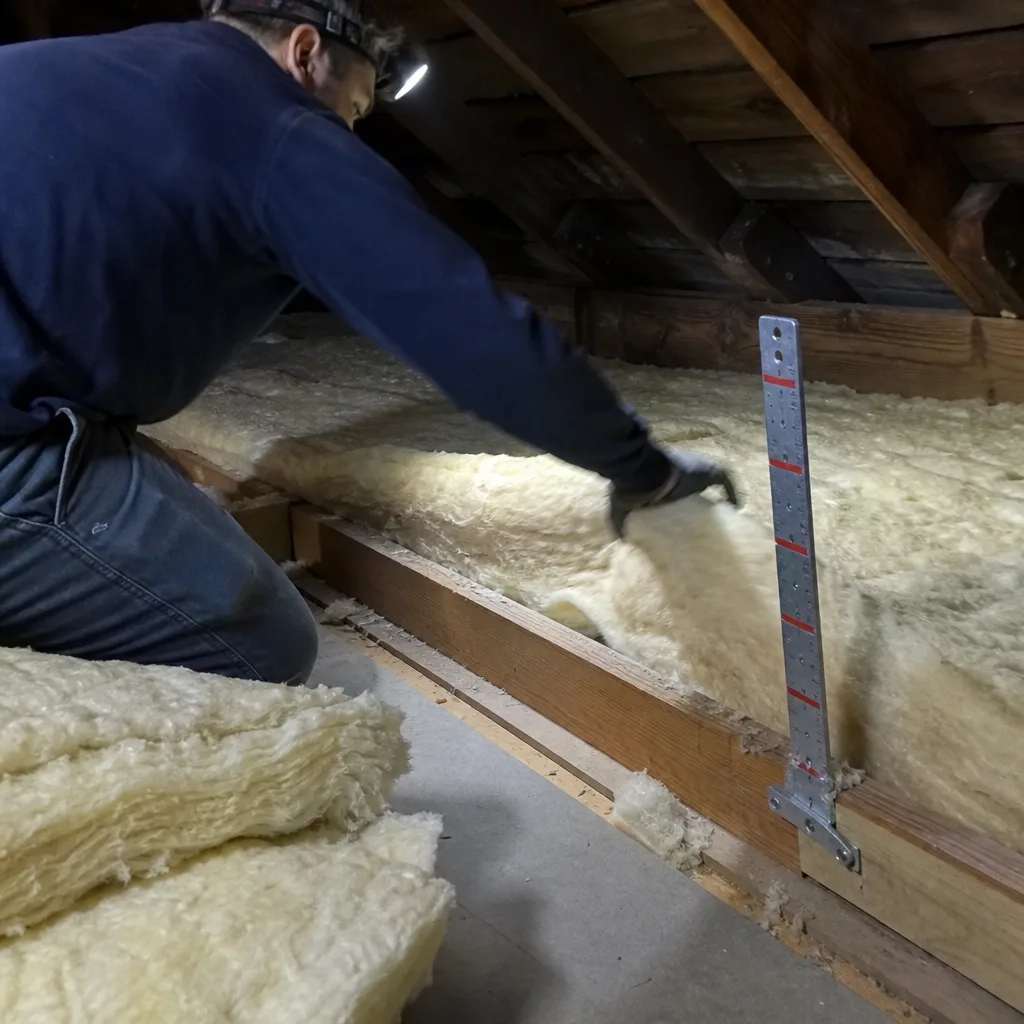
Blown-In Cellulose
Knauf cellulose works well in Temple City homes where we’re dense-packing wall cavities or topping attics that already have adequate ventilation. It’s treated with borate fire retardant and fills irregular framing bays better than batts in the non-standard additions common off lower Las Tunas Drive. We don’t blow cellulose deep into a Temple City ranch attic without first verifying ridge and soffit venting. The material can hold moisture if the attic can’t breathe, and we’ve seen sheathing decay follow within a single season when contractors skip that step. Haven Standard requires us to document venting with photos before the blower truck arrives.
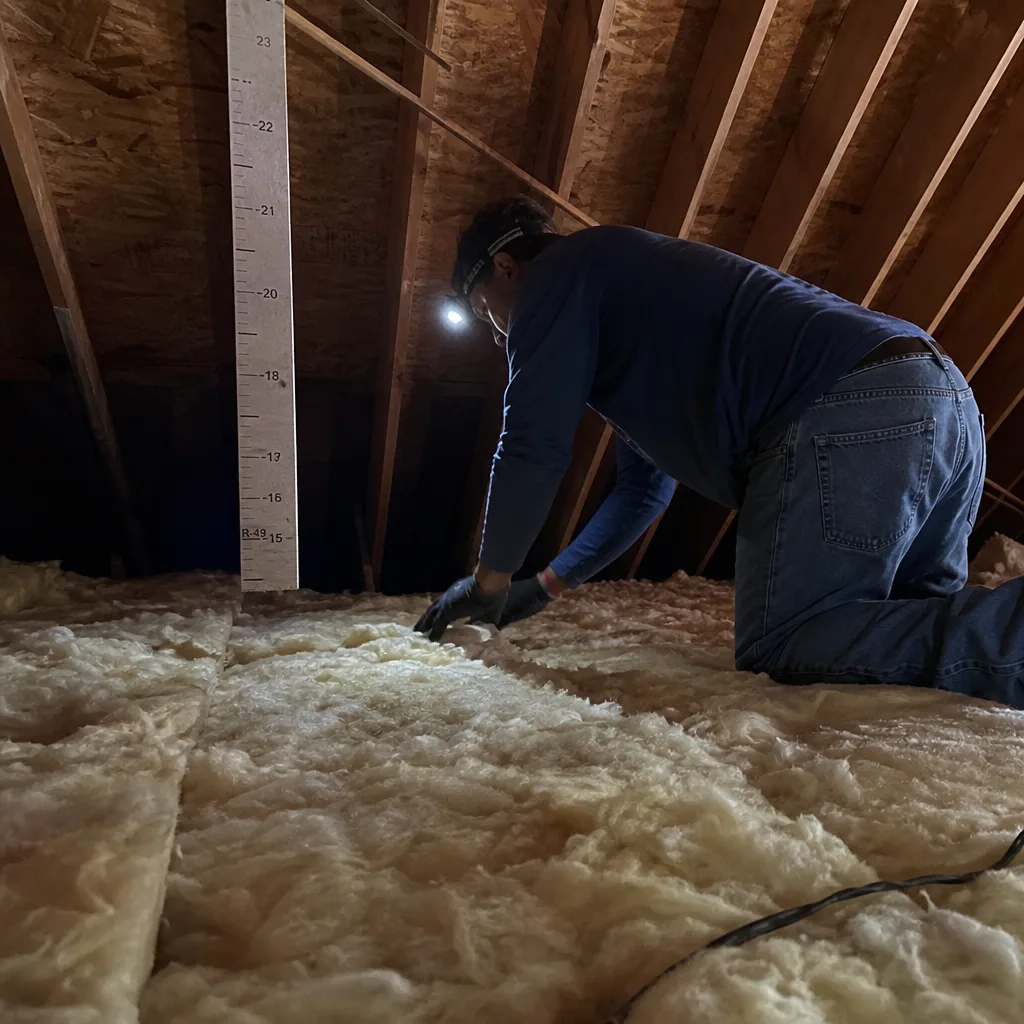
Dense-Pack Wall Insulation
Temple City’s 2×4 exterior walls were built empty in most cases, and dense-packing them with cellulose or fiberglass at 3.5 pounds per cubic foot cuts conductive heat loss through the wall plane without removing drywall. This matters in a climate where winter nights drop cold enough that heating costs bite, not just summer cooling. We drill and fill from exterior or interior, patch, and match texture. The work is slower than attic blowing, but for homes with uninsulated walls facing west toward the afternoon sun, the temperature stratification reduction is immediate and measurable.
Blown-In Top-Up
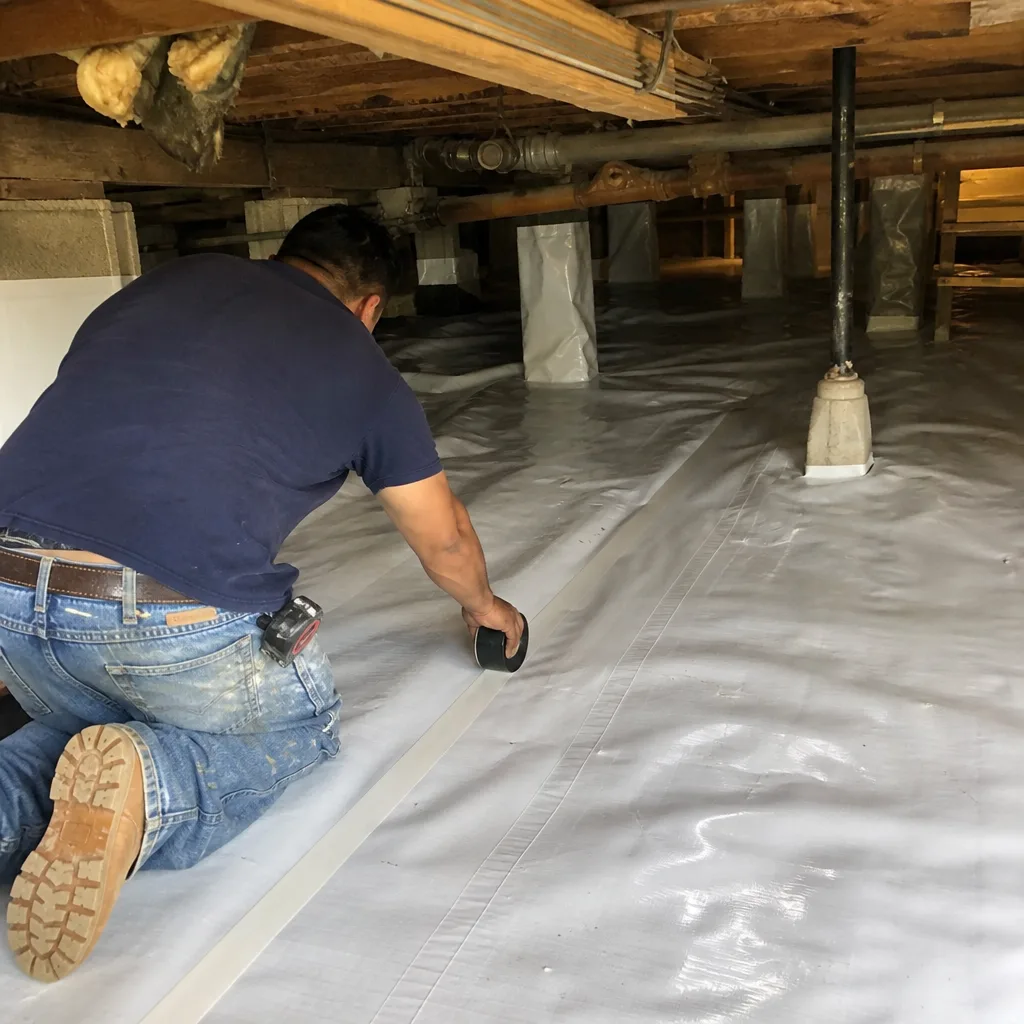
Some Temple City homeowners call us because their utility bills spiked and they assume the attic just needs more material. Often they’re right, but sometimes they’re topping up over compressed, dust-caked 1960s batts without addressing the air leaks that cooked the original insulation in the first place. Our top-up jobs start with a scope: we photograph existing conditions, measure actual R-value, seal recessed can lights and top plates, then blow new material to uniform depth. The written price covers the whole sequence, not just the blowing. If your attic is ventilated and the batts are merely thin, a top-up runs leaner. If we find blocked soffits and unsealed penetrations, we’ll tell you before we start, not after.
What happens when you call
- 1
A real person answersNo phone trees - you reach a local pro.
- 2
You get an upfront price rangeHonest numbers before anyone is dispatched.
- 3
A background-checked tech heads outLicensed & insured, dispatched right away.
- 4
You approve before work beginsNothing starts until you say go.
Trusted Brands We Service in Temple City
We source blown-in materials from Owens Corning, Johns Manville, Knauf, and Rockwool, among others. No proprietary lock-in means we specify what performs for your specific attic geometry and ventilation condition, not what moves our inventory. For Temple City ranch homes with minimal soffit venting and low-pitch roofs, we typically lean toward Owens Corning fiberglass at higher density because it resists drift at the eaves where baffles are absent or undersized. We stock common densities and blower configurations locally, so most Temple City jobs don’t wait on material delivery. The brand name goes in your written scope, along with the specified R-value and the ventilation correction detail.
Common Blown-In Insulation Problems We See in Temple City Homes
- Moisture-trapped sheathing from insulation-over-ventilation. Because most Temple City ranch homes were built with no ridge vent and only minimal soffit venting, blowing in insulation to reach R-38 also caps the roof deck’s only exhaust path. Title 24 requires us to correct ventilation before or alongside the insulation, or attic moisture and sheathing decay follow within a season or two. We’ve opened hatches to find plywood delaminating because a previous contractor blew deep cellulose over blocked soffits and called the job complete.
- Convective leaks undermining new R-value. Topping up over compressed, dust-caked 1960s batts without air-sealing the recessed can lights and top plates first means the new R-value is undermined by the same convective leaks that cooked the original insulation. We see this most in the post-war tracts near Temple City Park where can lights were added in the 1980s without sealing the housings to the drywall plane.
- Material drift in low-pitch attics. Using light, loose fiberglass at the wrong density in a low-pitch 2×4 ranch attic where soffit baffles are near-absent lets the material drift and thin out at the eaves, leaving the hottest part of the ceiling plane under-insulated. Temple City’s shallow-pitched gable and hip roofs are especially prone to this. We specify density and install baffles where they’re missing.
- Original batts collapsed below R-8. The 1950s-1970s batts in Temple City’s housing stock were often installed at R-11 or R-19 when new, and sixty years of compression, rodent traffic, and dust accumulation have collapsed many to effective R-8 or lower. Homeowners feel the difference walking from hallway to bedroom on a 110°F afternoon. The fix isn’t more of the same; it’s removal, air sealing, ventilation correction, and blown-in material to modern depth.
Pricing for Blown-In Insulation in Temple City, CA
Most complete blown-in attic retrofits on Temple City ranch homes run $3,200-$6,800. Blown-In Fiberglass to R-38 with ventilation correction: $3,800-$6,200. Blown-In Cellulose to R-38 with ventilation correction: $3,400-$5,800. Blown-In Top-Up over existing adequate insulation: $1,800-$3,200. Dense-Pack Wall Insulation: $2.40-$4.20 per square foot of wall area.
| Service | Typical Range in Temple City |
|---|---|
| Blown-In Fiberglass attic (R-38, with vent correction) | $3,800 - $6,200 |
| Blown-In Cellulose attic (R-38, with vent correction) | $3,400 - $5,800 |
| Blown-In Top-Up (existing adequate base) | $1,800 - $3,200 |
| Dense-Pack Wall Insulation | $2.40 - $4.20 / sq ft wall |
| Attic Air Sealing (standalone, before insulation) | $1,200 - $2,400 |
What moves the price: attic square footage, accessibility (some Temple City ranches have hatches in closets with 18-inch clearances), whether we need to cut in ridge venting and soffit baffles, and the extent of air sealing required at can lights, top plates, and chimney chases. Every quote is a written price before any work starts, with no change orders unless you add scope. Free Second Opinion on any written estimate from another contractor. Call (213) 816-5351 for your exact number.
We Also Serve Cities Near Temple City
Our crews work the full San Gabriel Valley basin, including Temple City and the surrounding cities of El Monte, San Gabriel, Arcadia, and Rosemead. The same Haven Standard applies: written price first, documented record last, blower-door numbers when applicable. Dispatch and scheduling are coordinated from our Los Angeles office.
Serving Temple City, CA - Our Local Coverage Area
We’re based in the Temple City area and know this community well. Use the map below to see our service coverage - if you’re nearby, we can almost certainly help.
FAQs - Blown-In Insulation in Temple City
Yes, if your home lacks ridge venting or has blocked soffit vents, which describes most 1950s-1960s ranch homes here. Title 24 requires adequate attic ventilation as a prerequisite to insulation upgrades, and blowing material over an unvented roof deck traps moisture that rots sheathing within one to two seasons. We assess venting during our initial scope and include any correction in your written price before work starts. Call (213) 816-5351 for a free estimate that includes the ventilation check.
Usually not without first removing the degraded material and air-sealing the attic floor. Original batts in this area have typically compressed to R-8 or lower, and they’re often dust-caked, rodent-compromised, or moisture-stained. Topping up over that base traps the same convective leaks that undermined the original installation. Our approach: remove, seal, ventilate, then blow new material to uniform depth. The written price covers the full sequence. Call (213) 816-5351 and we’ll show you photos from similar homes we’ve worked.
We typically specify Owens Corning or Johns Manville blown-in fiberglass for unvented or minimally vented Temple City attics because it doesn’t absorb moisture and maintains R-value at the densities required for shallow ranch attics. Cellulose performs well in properly ventilated spaces or wall cavities. The material choice goes in your written scope, and we explain why we’re specifying it for your specific attic condition. Call (213) 816-5351 to schedule a scope and we’ll recommend based on what we find.
Yes, measurably, when installed after proper air sealing and ventilation correction. The gap between Temple City’s 100-110°F summer peaks and the conditioned space below is extreme, and uninsulated or under-insulated attics radiate that heat downward through the ceiling plane. Our before-and-after blower-door tests document the reduction in air leakage, and homeowners consistently report shorter AC run times and lower peak-hour indoor temperatures. The six-degree drop on that Longden Avenue ranch we worked is typical, not exceptional. Call (213) 816-5351 for a free estimate with projected performance targets.
Most complete retrofits, including air sealing, ventilation correction, and blowing to R-38, finish in one to two days. Single-day jobs are common on smaller ranches with straightforward access and minimal sealing work. Two days are typical when we need to cut in ridge venting, install soffit baffles, or address extensive can-light sealing. We give you a day estimate in your written price before anyone starts, and we don’t leave until the Documented Photo Record and blower-door numbers are in your hands. Call (213) 816-5351 to schedule.
Written by Wes Okafor, Owner at Envelope Insulation Co., independently owned and operated under The Haven Standard since 2016.